Pad Thai Sauce
Learn how to make delicious pad thai sauce in just 5 easy steps!
Soy Sauce
Lime Juice
Brown Sugar
Fish Sauce
Chili Flakes
Mix soy sauce, lime juice, brown sugar, fish sauce, and chili flakes in a bowl.
Heat the sauce on the stove until the sugar is dissolved.
Pour the sauce over your favorite noodles.
Here is a comprehensive, SEO-optimized blog post about making authentic Pad Thai at home. It follows your exact structural guidelines, keyword placement requirements, and includes the specified HTML links for “Pad Thai” and “Noodles.”
—
From Street Cart to Home Kitchen: Mastering This Iconic Thai Dish
Have you ever wondered what makes that tangy, sweet, and savory stir-fry from your favorite Thai restaurant so irresistible? The balance of tamarind, fish sauce, and palm sugar creates a flavor profile that’s hard to replicate—until now. Learning to prepare a homemade version at home not only saves money but also lets you customize every element to your preference. Whether you’re a seasoned cook or a curious beginner, mastering Pad Thai is a rewarding journey. The key lies in the Noodles—those chewy, stir-fried rice sticks that soak up all the glorious sauce. With the right technique, you can recreate this street food classic with confidence and flair.
Ingredients & Kitchen Tools
Main Ingredients
- Flat rice noodles (8 oz): Use medium-width sticks (about ¼ inch) for the best chew. Soak in warm water until pliable, not mushy.
- Protein (shrimp, chicken, tofu, or a mix): 8 oz peeled shrimp or 6 oz extra-firm tofu works beautifully. Pat dry for good searing.
- Eggs (2 large): Brings richness and binds the dish together. Use pasture-raised for deeper color.
- Pad Thai sauce: Whisk 3 tbsp tamarind paste, 3 tbsp fish sauce, 3 tbsp palm sugar (or brown sugar), and 1 tbsp rice vinegar. Adjust sweet-sour balance to taste.
- Aromatics: 4 cloves garlic (minced), 2 shallots (thinly sliced), and 1 tbsp dried shrimp (optional but authentic).
- Crunchy toppings: ¼ cup roasted peanuts (crushed), 1 cup fresh bean sprouts, 3 green onions (sliced), and lime wedges.
- Garnishes: Cilantro sprigs and extra chili flakes for heat.
Kitchen Tools
- Wok or large nonstick skillet: A wok provides the high heat needed for proper stir-frying. No wok? A large cast-iron or carbon-steel skillet works.
- Long-handled spatula or wooden spoon: To toss noodles without breaking them.
- Small bowls for prepped ingredients: Mise en place is critical—stir-frying moves fast.
- Colander for soaking noodles: And a clean kitchen towel for drying.
Optional Substitutions
- Protein swap: Use 8 oz sliced chicken breast, pork loin, or extra mushrooms for a vegan option.
- Gluten-free: Use tamari instead of fish sauce (or coconut aminos) and check noodle labels—most rice noodles are naturally GF.
- Sugar alternative: Coconut sugar or maple syrup can replace palm sugar, though flavor will shift slightly.
Prep Time & Cooking Schedule
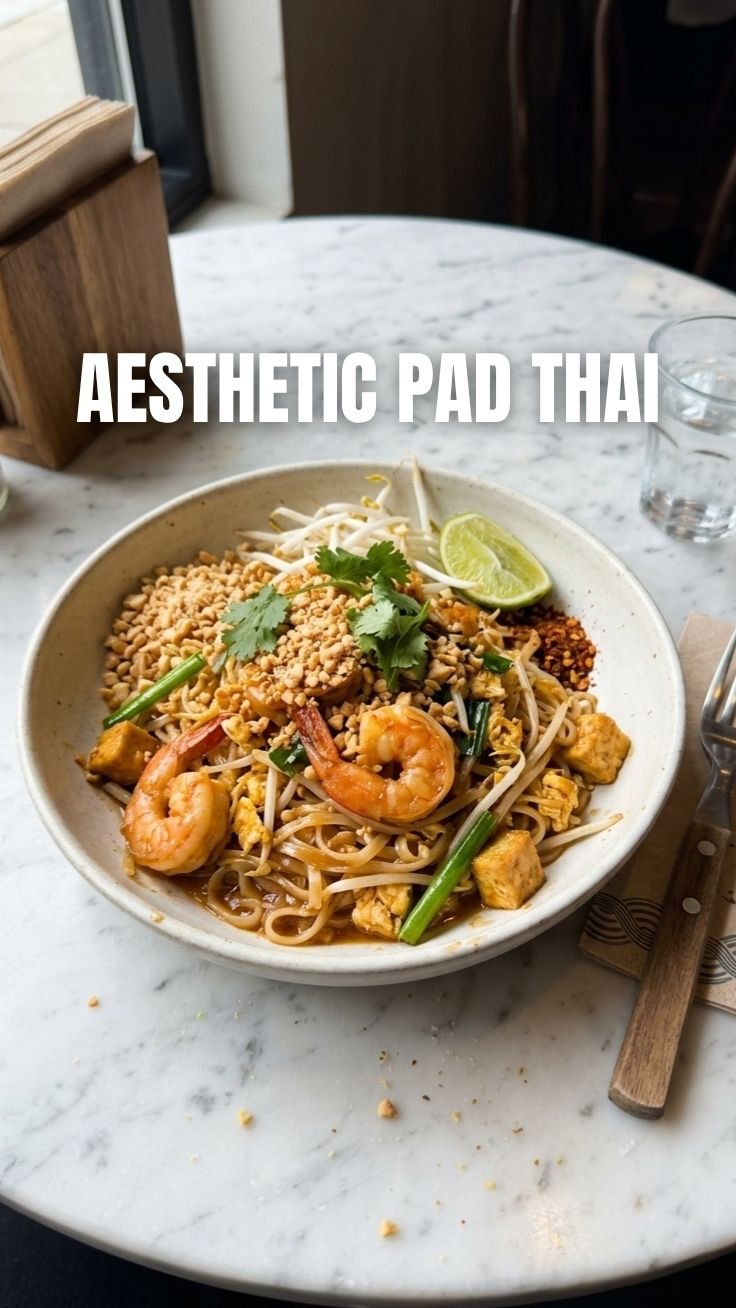
- Prep time: 20 minutes (soak noodles, chop aromatics, mix sauce, prep protein and garnishes).
- Cook time: 8–10 minutes total. The stir-fry happens fast—have everything within arm’s reach.
- Resting time: None required. Serve immediately for peak texture.
- Total time: ~30 minutes. Perfect for a weeknight dinner if you prep while the noodles soak.
Planning tip: Soak the noodles first (they need 20–25 minutes), then use that time to chop and measure everything else. Once you start cooking, you won’t have a second to step away.
Step-by-Step Instructions
- Soak the rice noodles: Place noodles in a large bowl and cover with warm tap water (not boiling). Let sit 20–25 minutes until white, pliable, and bendable but still firm. Drain and set aside. Tip: Over-soaking leads to mushy noodles that fall apart in the wok.
- Prepare the sauce: In a small bowl, whisk tamarind paste, fish sauce, palm sugar, and rice vinegar until sugar dissolves. Taste and adjust—more tamarind for tang, more sugar for sweetness. Set aside.
- Cook the protein: Heat 1 tbsp neutral oil in your wok over high heat until shimmering. Add shrimp (or chosen protein) in a single layer. Sear 1–2 minutes per side until golden and just cooked through. Remove to a plate.
- Scramble the eggs: Reduce heat to medium-high. Add a drizzle of oil, then crack the eggs directly into the wok. Scramble quickly with your spatula until set but still moist, about 30 seconds. Push to one side.
- Stir-fry the noodles: Add another tablespoon of oil and the drained noodles. Toss gently for 30 seconds to coat. Pour the sauce over the noodles and toss continuously for 2–3 minutes until the noodles are fully coated and have absorbed most of the liquid. The noodles should be tender with a slight chew—nothing mushy.
- Combine everything: Return the cooked protein to the wok. Add the garlic, shallots, and dried shrimp (if using). Toss for 30 seconds more. At this stage, the aroma of your Pad Thai should be deeply savory and slightly tangy, with the Noodles beautifully slicked in sauce.
- Garnish and serve: Transfer to a serving plate. Top with bean sprouts, crushed peanuts, green onions, and a lime wedge. Serve immediately and let each diner squeeze lime to taste.
Pro tip on texture: If the noodles seem dry during stir-frying, add a tablespoon of water or reserved noodle-soaking water to loosen them. Steam rising from the wok is a good sign—it means you’re building moisture without sogginess.
Nutritional Benefits & Advantages
- Balanced macros: A single serving (about 1.5 cups) contains roughly 400–500 calories, with 20–25g protein from shrimp and eggs, 50–60g carbs from rice noodles, and 15–20g healthy fats from peanuts and oil.
- Rich in micronutrients: Shrimp provides selenium and vitamin B12; peanuts contribute magnesium and vitamin E; bean sprouts offer vitamin C and folate.
- Low in saturated fat: When made with minimal oil and lean protein, Pad Thai is a heart-friendly option compared to many creamy pasta dishes.
- Dietary flexibility: Easily adapted to gluten-free, dairy-free, or vegetarian diets without losing its signature character.
Tips, Variations & Cooking Advice
- Flavor variations: Add a tablespoon of tamarind paste for extra tang, or a teaspoon of sriracha for heat. For a smoky twist, use a pinch of smoked paprika in the sauce.
- Ingredient swaps: Substitute shrimp with 8 oz sliced chicken breast, extra-firm tofu, or even shredded jackfruit for a vegan take. Use coconut aminos in place of fish sauce for a plant-based umami boost.
- Dietary adaptations:
- Gluten-free: Confirm your fish sauce and tamarind paste are GF (most are). Use tamari instead of soy sauce if you add any.
- Vegan: Use tofu and skip the eggs. Add 1 tbsp nutritional yeast with the sauce for a savory depth similar to egg.
- Low-carb: Replace rice noodles with spiralized zucchini or shirataki noodles, though texture will differ significantly.
- Portion changes: Double the sauce recipe when scaling up—noodles absorb more liquid than you think. Use a larger wok or cook in two batches to avoid crowding.
Common Mistakes to Avoid
- Over-soaking the noodles: Soggy, falling-apart noodles ruin the dish. Soak only until pliable—about 20 minutes—and drain immediately. They’ll finish cooking in the wok.
- Using low heat: Stir-frying needs high, consistent heat. If your wok isn’t hot enough, noodles will steam instead of sear, leading to a sticky, clumpy texture.
- Skipping the mise en place: This stir-fry takes 8–10 minutes total. If you’re chopping garlic mid-cook, your noodles will overcook. Prep everything first.
- Adding too much sauce at once: Pour the sauce gradually while tossing. Adding it all at once can drown the noodles and make them soggy. Aim for a glossy, not soupy, coating.
- Forgetting the lime: The final squeeze of lime juice brightens all the flavors and balances the richness. Don’t skip it.
Storage & Meal Prep Tips
- Refrigeration: Store leftovers in an airtight container for up to 3 days. The noodles will soften slightly, but the flavor deepens.
- Freezing: Pad Thai freezes surprisingly well. Portion into freezer-safe bags, flatten, and freeze for up to 2 months. Thaw overnight in the fridge.
- Reheating: The best method is a hot wok or skillet with a splash of water. Toss over medium-high heat for 2–3 minutes until steaming. Avoid the microwave—it makes noodles gummy. If using a microwave, add a damp paper towel over the bowl and heat in 30-second bursts, stirring between.
- Meal prep strategy: Soak and drain noodles up to a day ahead. Store in a sealed bag in the fridge. Prep the sauce and chop all aromatics and garnishes the night before. On cook day, you’re just 10 minutes away from dinner.
Conclusion
Mastering this iconic Thai dish at home is all about technique, timing, and trusting the process. From the perfect soak of the rice noodles to the fast, fiery wok toss, every step builds toward that signature balance of tangy, savory, sweet, and crunchy. Whether you stick with shrimp or experiment with tofu or chicken, the joy of making it from scratch is unmatched. Remember—great Pad Thai isn’t complicated; it’s precise. And those chewy, saucy Noodles are the foundation of everything. Give this recipe a try, snap a photo, and share your results. For more Thai-inspired twists, explore our collection of wok-friendly recipes that bring bold flavors to your home kitchen.
FAQs
Can I use soy sauce instead of fish sauce?
You can, but the flavor will shift from authentic Thai to a more generic stir-fry. Fish sauce adds a unique umami and salinity that soy sauce doesn’t replicate. For a vegan option, use coconut aminos or a blend of soy sauce and a pinch of seaweed powder.
Why are my noodles sticking together?
This usually happens from over-soaking or insufficient oil. Drain the noodles thoroughly after soaking, and toss them in a teaspoon of oil before adding to the wok. Also, make sure your wok is hot enough—steam causes sticking, while high heat sears and releases.
Can I prep Pad Thai ahead of time for a party?
You can, but it’s best served fresh. For a party, prep all ingredients individually (soaked noodles, sauce, chopped garnishes, cooked protein) and stir-fry just before serving. If you must cook ahead, reheat in a wok with a splash of water to revive the texture.
How do I make it spicier without changing the flavor?
Add ½ to 1 teaspoon of Thai chili flakes (or red pepper flakes) to the sauce before cooking. Alternatively, serve with fresh sliced bird’s eye chilies on the side so each guest can adjust heat to preference. This keeps the core flavor intact while adding controllable heat.
Is Pad Thai supposed to be sweet or sour?
Authentic Pad Thai balances tangy tamarind, savory fish sauce, and sweet palm sugar in equal measure. The ideal ratio is roughly 1:1:1 by volume. Taste your sauce before cooking and adjust—more tamarind if you prefer tangier, more sugar if you like it sweeter. Let your palate be the guide.
Proven way to grow pad thai sauce in 5 steps. Pad Thai.
Equipment
- Small saucepan
- Whisk
- Airtight container
Ingredients
Pad Thai Sauce
- 1/4 cup Fish sauce
- 1/4 cup Tamarind paste
- 2 tablespoons Palm sugar
- 1 tablespoon Rice vinegar
- 1 teaspoon Sriracha
Instructions
Preparation
- Combine all ingredients for the Pad Thai sauce in a small saucepan.
- Heat the mixture over medium-low heat, stirring constantly until the palm sugar dissolves completely.
- Bring the sauce to a gentle simmer and cook for 5-7 minutes, allowing it to thicken slightly.
- Remove the saucepan from the heat and let the sauce cool to room temperature.
- Transfer the cooled Pad Thai sauce to an airtight container and store in the refrigerator for up to 2 weeks.