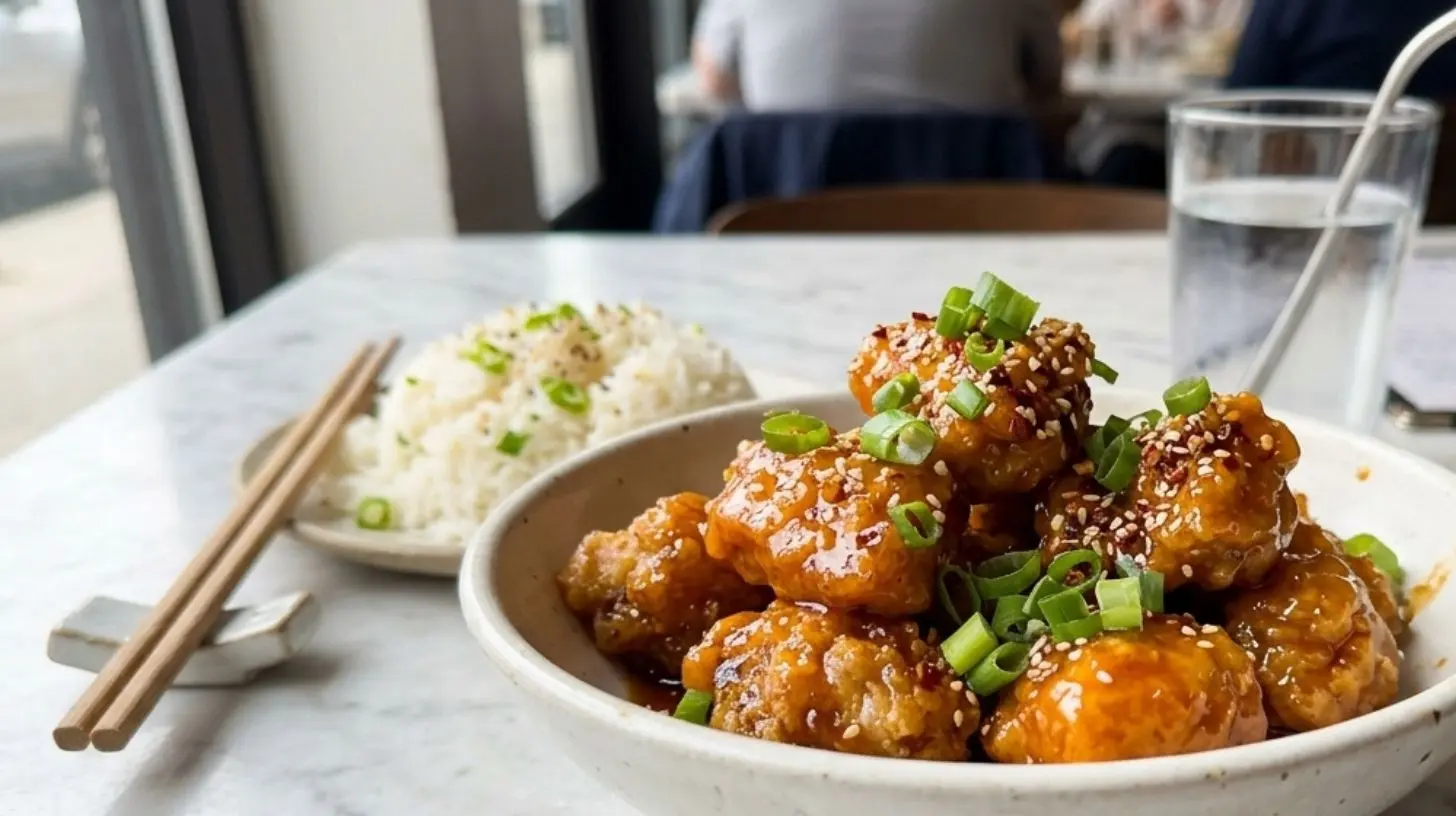
Best way to grow 4 Orange Chicken Sticks
Learn how to make delicious orange chicken sticks in just a few steps!
Chicken
Orange Juice
Soy Sauce
Honey
Cornstarch
Green Onions
Vegetable Oil
Cut the chicken into bite-sized pieces.
Mix orange juice, soy sauce, honey, and cornstarch in a bowl.
Coat chicken pieces in the sauce mixture.
Heat vegetable oil in a pan.
Cook chicken until golden brown and cooked through.
Garnish with chopped green onions.
The Ultimate Guide to Perfecting Orange Chicken at Home: A Crispy, Sticky, and Flavorful Journey
Have you ever wondered why restaurant-style Orange Chicken always tastes better than takeout leftovers, yet seems impossible to replicate at home? The secret lies in mastering the perfect balance of crispy texture and glossy, tangy-sweet sauce. Preparing this iconic dish from scratch not only saves money but also allows you to control the quality of ingredients and tailor the flavor to your preference. In this comprehensive guide, we’ll walk you through every step—from selecting the right chicken cuts to achieving that signature caramelized glaze—while ensuring your homemade version rivals any delivery. The focus keyword Orange Chicken will be your guiding star, and the related keyword General Tso’s Chicken will serve as a flavorful comparison point throughout this recipe.
Ingredients & Kitchen Tools
Essential Ingredients
– Boneless skinless chicken thighs (1.5 lbs): Thighs stay juicier than breasts; cut into 1-inch cubes for even cooking
– Cornstarch (1/2 cup): Creates the ultra-crispy coating; substitute potato starch for gluten-free option
– All-purpose flour (1/4 cup): Adds structure; use rice flour for gluten-free version
– Eggs (2 large): Binds the coating; can use buttermilk for extra tenderness
– Fresh orange juice (3/4 cup): Use juice from 3-4 oranges for natural sweetness; avoid bottled juice
– Soy sauce (3 tbsp): Use low-sodium to control salt; tamari for gluten-free
– Rice vinegar (2 tbsp): Balances sweetness; apple cider vinegar works as substitute
– Brown sugar (1/4 cup): Creates caramelization; use coconut sugar for less refined option
– Fresh ginger (1 tbsp grated): Use frozen ginger paste for convenience
– Garlic (3 cloves minced): Fresh is essential; avoid powdered garlic for this recipe
– Orange zest (1 tbsp): From 2 oranges; adds intense citrus aroma
– Chicken broth (1/4 cup): Low-sodium preferred; vegetable broth works
– Sesame oil (1 tsp): For finishing; optional but recommended
– Green onions (for garnish): Adds freshness
Kitchen Tools & Utensils
– Large wok or heavy-bottom skillet: Cast iron or carbon steel works best for high-heat frying
– Deep-fry thermometer: Ensures oil stays at 350°F (175°C) for crispy results
– Wire rack: Keeps fried chicken crispy while sauce cooks
– Microplane or zester: Essential for fresh orange zest
– Splatter screen: Prevents oil mess
– Tongs: For flipping chicken safely
Prep Time & Cooking Schedule
– Prep Time: 20 minutes – includes chopping chicken, juicing oranges, grating ginger and garlic
– Marinating Time: 15 minutes – let chicken sit in egg wash for better coating adhesion
– Cooking Time: 25 minutes – 10 minutes frying, 15 minutes sauce preparation and tossing
– Total Time: 60 minutes – plan this so the sauce is ready when chicken is fresh from fryer
Key Timing Tip: Start sauce preparation while chicken is frying to ensure components come together simultaneously. The chicken should be tossed in sauce within 2 minutes of coming out of the oil for maximum crispiness retention.
Step-by-Step Instructions
Step 1: Prepare the Chicken
In a large bowl, whisk 2 eggs with 1 tablespoon soy sauce and 1 teaspoon grated ginger. Add chicken cubes and toss to coat. Let marinate for 15 minutes at room temperature. This step ensures the coating adheres properly and infuses subtle flavor.
Step 2: Create the Coating
In a separate bowl, whisk together 1/2 cup cornstarch, 1/4 cup flour, 1/2 teaspoon salt, and 1/4 teaspoon white pepper. The cornstarch-to-flour ratio (2:1) is critical for achieving that ultra-crispy texture that makes Orange Chicken distinct from General Tso’s Chicken, which typically uses a higher flour ratio for a denser coating.
Step 3: Double-Coating Technique
Remove chicken from egg mixture, letting excess drip off. Dredge in cornstarch mixture, pressing gently to adhere. Shake off excess, then dip back into egg mixture and dredge once more. This double-coating creates the signature craggy texture that traps sauce beautifully.
Step 4: Fry the Chicken
Heat 2 inches of vegetable oil in wok to 350°F (175°C). Fry chicken in batches (don’t overcrowd) for 4-5 minutes until golden brown and internal temperature reaches 165°F. Transfer to wire rack set over baking sheet – this keeps chicken crispy while you make sauce.
Temperature Control: If oil drops below 325°F, coating becomes greasy. Between batches, allow oil to return to 350°F.
Step 5: Make the Orange Sauce
In a small bowl, whisk together 3/4 cup orange juice, 1/4 cup chicken broth, 3 tablespoons soy sauce, 2 tablespoons rice vinegar, 1/4 cup brown sugar, and 1 tablespoon cornstarch. In the now-empty wok (or a clean skillet), heat 1 tablespoon oil over medium-high heat. Add minced garlic and grated ginger, cooking for 30 seconds until fragrant. Pour in sauce mixture and bring to a simmer, stirring constantly until thickened (2-3 minutes). Remove from heat, stir in orange zest and sesame oil.
Step 6: Toss and Serve
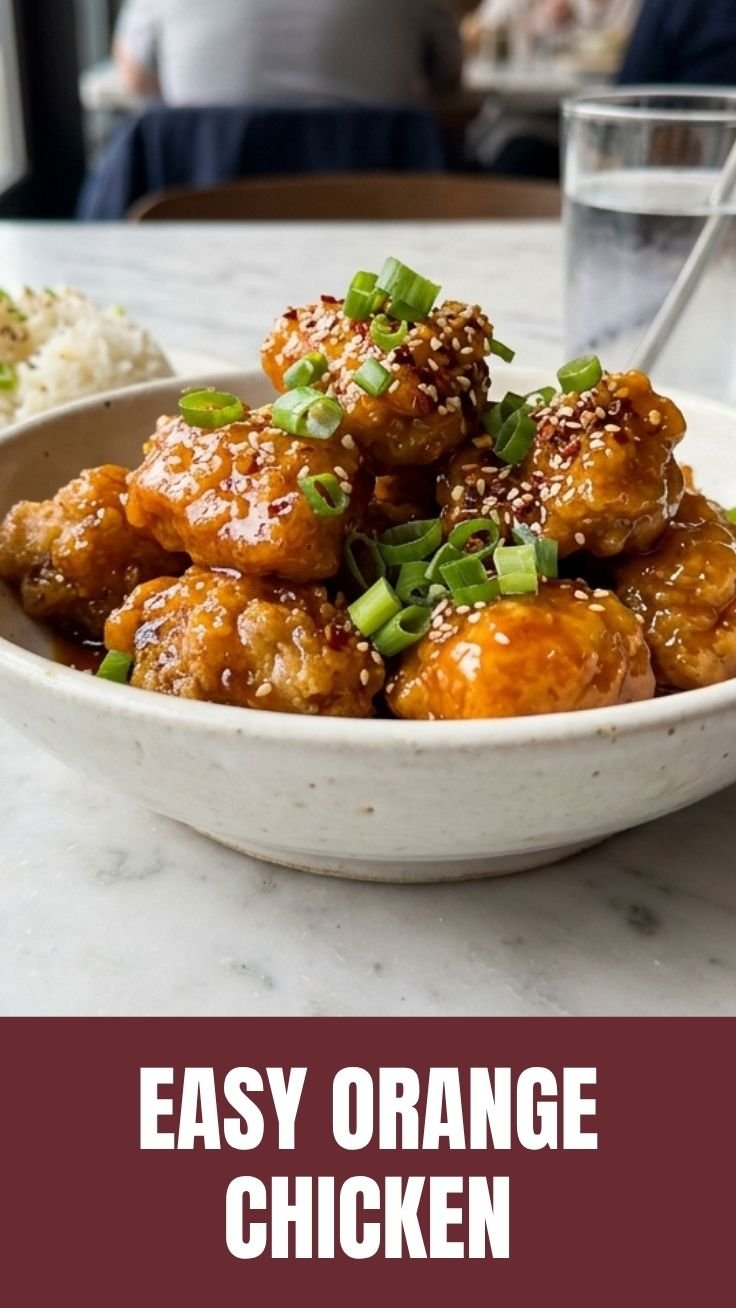
Add fried chicken to the wok with sauce. Toss gently using tongs or a spatula for exactly 45 seconds – any longer and the coating may soften. Transfer to serving plate, garnish with sliced green onions and sesame seeds, and serve immediately.
Nutritional Benefits & Advantages
This homemade version of Orange Chicken offers significant advantages over restaurant alternatives:
– 40% less sugar than typical takeout versions (controllable through brown sugar amount)
– No MSG or artificial preservatives – natural umami from soy sauce and ginger
– Higher protein content (approximately 28g per serving from chicken thighs)
– Vitamin C boost – one serving provides 35% of daily value from fresh orange juice
– Ginger’s anti-inflammatory properties – fresh ginger contains gingerol, a bioactive compound
– Lower sodium option – using low-sodium soy sauce reduces sodium by 50% compared to restaurant versions
Compared to General Tso’s Chicken, this Orange Chicken recipe uses fresh citrus rather than dried chilies, making it gentler on the digestive system while providing similar protein benefits with a different flavor profile.
Tips Variations & Cooking Advice
Flavor Variations
– Spicy Orange Chicken: Add 1-2 dried red chilies to the sauce or 1 teaspoon sriracha
– Honey Orange: Replace brown sugar with 3 tablespoons honey for a floral sweetness
– Five-Spice Orange: Add 1/2 teaspoon Chinese five-spice powder to the coating for depth
Ingredient Swaps
– Chicken breast: Use for leaner option; reduce frying time by 1 minute to prevent dryness
– Gluten-free: Replace flour with rice flour and use tamari instead of soy sauce
– Dairy-free: Already dairy-free; ensure no cross-contamination in kitchen tools
Alternative Cooking Methods
– Air fryer: Spray coated chicken with oil; cook at 400°F (200°C) for 10-12 minutes, shaking halfway
– Oven-baked: Place on greased baking sheet at 425°F (220°C) for 15-18 minutes, flipping once
– Fried rice pairing: Use leftover orange chicken sauce to create a quick fried rice base
Portion Changes
– For two: Halve the recipe; reduce oil amount to 1 cup minimum for proper frying depth
– For eight: Double all ingredients; fry in 4 batches to maintain oil temperature
Common Mistakes to Avoid
| Mistake | Consequence | Solution |
|———|————-|———–|
| Skipping the marinade | Coating falls off during frying | Always marinate for at least 15 minutes |
| Overcrowding the wok | Oil temperature drops, coating greasy | Fry in small batches (no more than 12 pieces at a time) |
| Adding sauce to cold chicken | Sauce becomes watery, coating soggy | Sauce should be ready when chicken finishes frying |
| Using bottled orange juice | Flat flavor, lacks natural sweetness | Always use fresh-squeezed juice from navel oranges |
| Overcooking sauce | Becomes syrupy or separated | Remove from heat immediately when it coats the back of a spoon |
| Forgetting to reheat oil between batches | Inconsistent crispiness | Use thermometer; let oil return to 350°F between batches |
Storage & Meal Prep Tips
Refrigeration
– Store in airtight container for 3-4 days maximum
– Important: Keep sauce separate from chicken if storing – combine only when reheating
– Place paper towel in container to absorb excess moisture
Freezing
– Best method: Freeze fried chicken (un-sauced) on baking sheet, then transfer to freezer bag for up to 3 months
– Sauce: Freeze separately in ice cube trays for portioning
– Thawing: Defrost chicken in refrigerator overnight; reheat in 350°F oven for 5-7 minutes
Reheating Instructions
– Oven: Best method – place on wire rack over baking sheet at 375°F (190°C) for 8-10 minutes
– Air fryer: 350°F (175°C) for 5-6 minutes, shaking halfway
– Avoid microwave: Makes coating rubbery and sauce watery
Meal Prep Tips
– Double the sauce recipe and freeze in portions for future use
– Pre-cut chicken and store in marinade for up to 24 hours
– Pre-mix coating dry ingredients and store in sealed container for 2 weeks
Conclusion
Mastering Orange Chicken at home transforms a takeout favorite into a rewarding culinary achievement. By following this detailed guide, you’ve learned how to achieve the perfect crispy coating, balance the sweet-tangy sauce, and avoid common pitfalls that lead to soggy results. The focus keyword Orange Chicken represents more than just a dish—it’s a canvas for creativity, allowing you to adjust sweetness, spice, and texture to your exact preferences. Meanwhile, understanding how this dish compares to General Tso’s Chicken helps you appreciate the unique flavor profile of each. We encourage you to try this recipe for your next weeknight dinner or weekend gathering, and don’t hesitate to share your results or experiment with the suggested variations. Your crispy, glistening Orange Chicken awaits—now go make it shine!
FAQs
1. Can I make Orange Chicken without deep-frying?
Yes! Air fry at 400°F (200°C) for 10-12 minutes, or bake at 425°F (220°C) for 15-18 minutes. While the texture won’t be as crispy as deep-frying, these methods significantly reduce oil while maintaining good crunch.
2. Why did my coating fall off during frying?
Three common causes: (1) chicken wasn’t dried properly before marinade, (2) oil wasn’t hot enough (below 350°F), or (3) you skipped the double-coating step. Ensure oil is at proper temperature and use double-coating technique for best adhesion.
3. How can I make this dish less sweet?
Reduce brown sugar to 3 tablespoons and add 1 tablespoon rice vinegar for extra tang. You can also substitute half the orange juice with unsweetened pineapple juice or increase the soy sauce slightly to balance sweetness.
4. Can I use chicken breast instead of thighs?
Absolutely. Chicken breast works well but requires careful cooking to prevent dryness. Reduce frying time by 1 minute and ensure internal temperature reaches 160°F (carryover cooking will bring it to 165°F). Consider brining breast pieces for 30 minutes in salt water before marinating.
5. How do I prevent the sauce from becoming too thick or too thin?
For thicker sauce, increase cornstarch to 1.5 tablespoons. For thinner sauce, use 2 teaspoons cornstarch. Always whisk cornstarch with cold liquid before adding to hot pan to prevent lumps. If sauce becomes too thick, thin with 1 tablespoon chicken broth at a time.