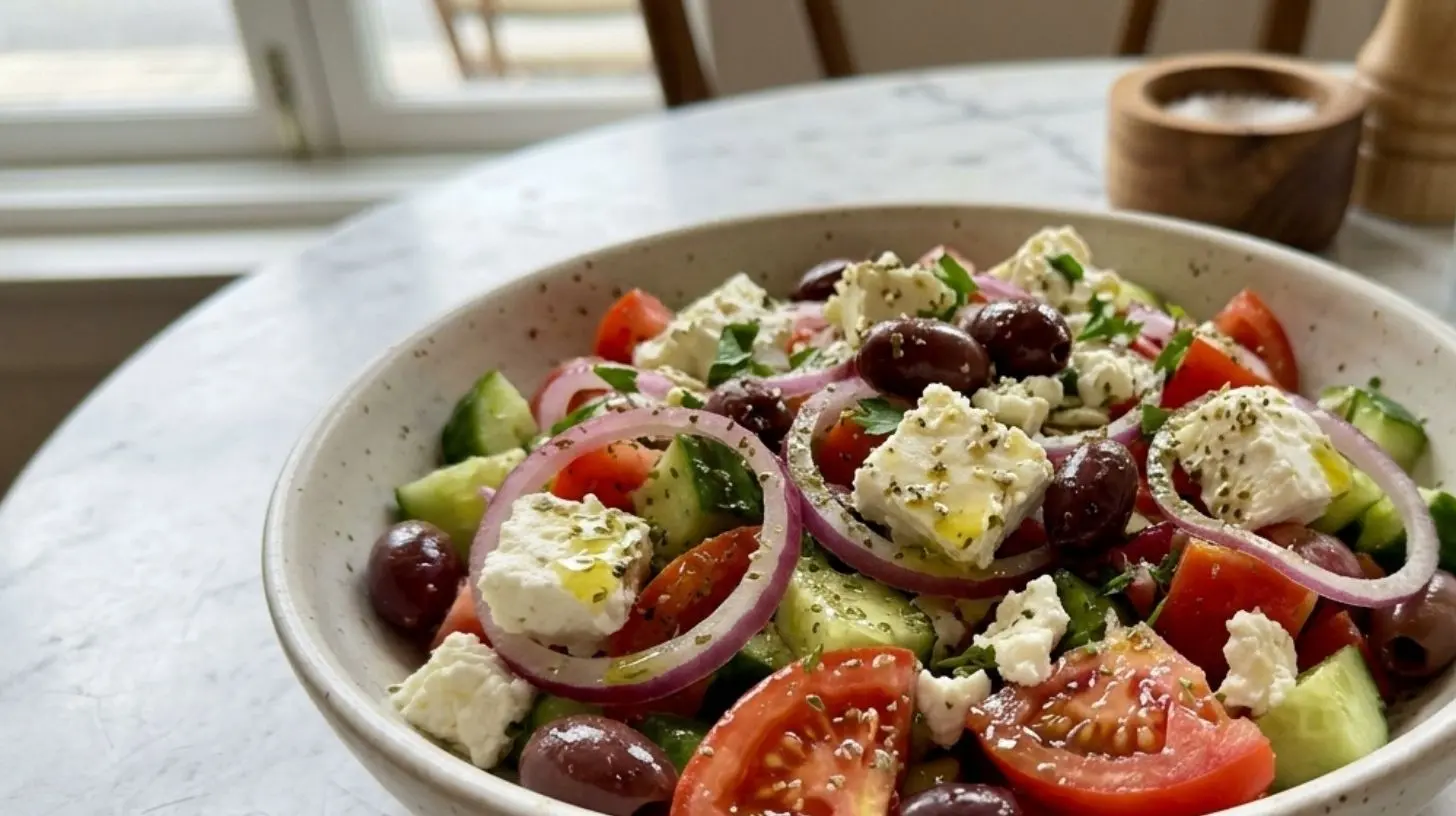
Proven way to grow the perfect Greek Salad
Learn how to make a delicious and healthy Greek Salad.
Cucumber
Tomato
Red Onion
Feta Cheese
Olives
Chop the cucumber into small cubes.
Dice the tomato into bite-sized pieces.
Slice the red onion thinly.
Combine all the chopped vegetables in a bowl.
Crumble the feta cheese over the vegetables.
Add the olives to the salad.
Drizzle with olive oil and sprinkle with oregano.
The Ultimate Guide to Making a Fresh and Flavorful Greek Salad at Home
Have you ever wondered why the Greek Salad you order at a taverna tastes so much better than the one you throw together at home? The secret isn’t complicated—it’s all about using peak-season produce, high-quality olive oil, and a few simple techniques that unlock the bold, sun-drenched flavors of the Mediterranean. Learning to make this Greek Salad from scratch not only saves you money but also lets you control every ingredient, ensuring a dish that’s crisp, tangy, and bursting with authenticity. In this step-by-step guide, you’ll discover how to build a Greek Salad that rivals any restaurant version—and why the Mediterranean diet makes this salad a powerhouse of nutrition and flavor.
Ingredients & Kitchen Tools
For the Salad
– 4 large ripe tomatoes – Use Roma or vine-ripened; they should be firm but juicy. Chop into bite-sized wedges.
– 1 English cucumber – Peeled and sliced into half-moons. English cucumbers have fewer seeds and less bitterness.
– 1 red onion – Thinly sliced (soak in cold water for 10 minutes to mellow the bite).
– 1 green bell pepper – Deseeded and cut into rings or chunks.
– 200g block of feta cheese – Choose a high-quality brine-packed feta (not crumbled). Slice into thick slabs or cubes.
– ½ cup Kalamata olives – Pitted or whole, they add a briny, fruity punch.
– 2 tablespoons capers (optional) – For an extra salty kick.
– Fresh oregano leaves – Or use dried oregano (1 teaspoon).
For the Dressing
– ¼ cup extra-virgin olive oil – The star of the Mediterranean kitchen. Use a robust, grassy variety.
– 2 tablespoons red wine vinegar – Or lemon juice for a brighter note.
– 1 teaspoon dried oregano – Crush it between your fingers to release oils.
– Salt and black pepper – To taste.
Kitchen Tools
– Large mixing bowl
– Sharp chef’s knife and cutting board
– Serving platter or shallow bowl
– Measuring spoons and cups
– Small jar for shaking dressing (or a whisk)
Optional Substitutions
– Dairy-free: Replace feta with marinated tofu or vegan feta.
– Gluten-free: This salad is naturally gluten-free; just ensure any added bread is GF.
– Low-sodium: Rinse olives and capers, and use less salt.
Prep Time & Cooking Schedule

– Prep time: 15 minutes
– Resting time: 10 minutes (optional, for flavors to meld)
– Total time: 25 minutes
This salad is best served immediately after dressing, but if you plan to make it ahead, keep the dressing separate and add it just before serving. The beauty of this Greek Salad is that it requires no cooking—just chopping, mixing, and tasting. Perfect for a quick weeknight dinner or a show-stopping side for a Mediterranean feast.
Step-by-Step Instructions
1. Wash and chop the vegetables. Start by quartering the tomatoes, slicing the cucumber, and thinly slicing the red onion. Place everything in a large bowl. Add the bell pepper rings, olives, and capers (if using).
2. Prepare the dressing. In a small jar, combine olive oil, red wine vinegar, dried oregano, salt, and pepper. Shake vigorously until emulsified. Taste and adjust—add more vinegar for tang, more oil for richness.
3. Assemble the salad. Pour the dressing over the vegetables and toss gently with your hands or a large spoon. The goal is to coat every piece without bruising the tomatoes.
4. Top with feta. Place thick slices of feta directly on top of the salad. Do not crumble it—this keeps the texture intact and allows each bite to have a creamy, salty contrast.
5. Let it rest. Allow the salad to sit for 5–10 minutes at room temperature. This lets the Greek Salad juices mingle with the dressing, creating a light, flavorful broth. Meanwhile, the Mediterranean tradition of uniting fresh produce with brine and olive oil shines through.
6. Garnish and serve. Sprinkle fresh oregano leaves (or a pinch of dried) over the feta. Drizzle a little extra olive oil on top if desired. Serve immediately with crusty bread or pita.
Pro tip: For the best texture, use a serrated knife to cut tomatoes—it prevents crushing the flesh and losing juice.
Nutritional Benefits & Advantages
This Greek Salad is a nutritional goldmine, perfectly aligned with the Mediterranean diet. Here’s what each ingredient brings to the table:
– Tomatoes – Rich in lycopene, a powerful antioxidant linked to heart health and reduced cancer risk. Cooking enhances lycopene, but raw tomatoes have higher vitamin C.
– Cucumber – Hydrating and low in calories, with silica for skin and joint health.
– Olive oil – Packed with monounsaturated fats and polyphenols that reduce inflammation and support brain function.
– Feta cheese – A good source of calcium and protein, though lower in fat than many other cheeses.
– Olives and capers – Provide healthy fats and sodium, but also contain anti-inflammatory compounds.
A single serving (about 1.5 cups) delivers roughly:
– 250–300 calories
– 20g healthy fats
– 8g protein
– 10g carbohydrates
– High fiber (from vegetables)
This salad is naturally low-carb, gluten-free, and vegetarian. It’s an excellent choice for weight management, blood sugar control, and overall wellness.
Tips, Variations & Cooking Advice
– Flavor twist: Add a handful of fresh mint or basil along with the oregano for a brighter, herbaceous note.
– Ingredient swap: Try roasted red peppers instead of fresh bell pepper for a sweeter, smokier taste.
– Protein boost: Top with grilled chicken, chickpeas, or canned tuna for a complete meal.
– Dairy-free version: Use a high-quality vegan feta made from almonds or cashews. The saltiness is key.
– Portion change: Turn this into a Greek salad bowl by adding quinoa or farro at the bottom.
– Alternative method: For a more intense flavor, salt the tomatoes and cucumber 10 minutes before assembling—this draws out excess water and concentrates the taste.
Common Mistakes to Avoid
– Using watery vegetables without salting them. Cucumbers and tomatoes release water that can dilute the dressing. Lightly salt them and let them sit in a colander for 5 minutes before assembling.
– Crumbling the feta too early. Block feta should be sliced and placed on top, not mixed in, to maintain its distinct texture.
– Overdressing the salad. Start with half the dressing, toss, and add more if needed. Too much oil can make the salad soggy.
– Skipping the resting time. This step is crucial for flavor development—don’t rush it.
– Using bland olives. Kalamata olives are the gold standard; avoid canned black olives, which lack the briny complexity.
Storage & Meal Prep Tips
– Storage: Store undressed salad in an airtight container in the refrigerator for up to 2 days. Keep the dressing and feta separate.
– Refrigeration: If already dressed, the salad is best eaten within 4 hours. After that, the vegetables become limp.
– Freezing: Not recommended—the vegetables will turn mushy when thawed.
– Reheating: This salad is served cold or at room temperature. No reheating needed.
– Meal prep: Chop all vegetables (except tomatoes) and store them in a container. Slice tomatoes just before serving. Make the dressing in a jar and shake it when ready to use.
Conclusion
Making a genuine Greek Salad at home is simpler than you think, yet it delivers a taste of the Mediterranean that transports you straight to a sunlit taverna. By choosing ripe produce, quality olive oil, and briny feta, you create a dish that’s refreshing, nourishing, and endlessly adaptable. Whether you serve it as a light lunch, a side for grilled meats, or a vibrant addition to a mezze spread, this Greek Salad will quickly become a staple in your kitchen. I encourage you to try this recipe this week, tweak it to your liking, and share your results in the comments below. And if you’re craving more Mediterranean inspiration, explore our other salad recipes for a healthy, flavorful journey.
FAQs
Can I use pre-crumbled feta cheese?
Yes, but it will dissolve into the dressing more quickly. For the best texture, buy a block of feta and slice it yourself.
How do I make this salad more filling?
Add a protein like grilled chicken, chickpeas, or canned tuna, or serve it over a bed of quinoa or couscous.
What if I don’t have red wine vinegar?
Lemon juice is an excellent substitute—use 2 tablespoons for a brighter, more citrusy dressing.
How long can I store leftover Greek Salad?
If undressed, up to 2 days in the fridge. If dressed, eat within 4–6 hours for best texture.
Is this salad suitable for a low-sodium diet?
Yes, with modifications: rinse olives and capers, use less salt in the dressing, and choose a reduced-sodium feta.