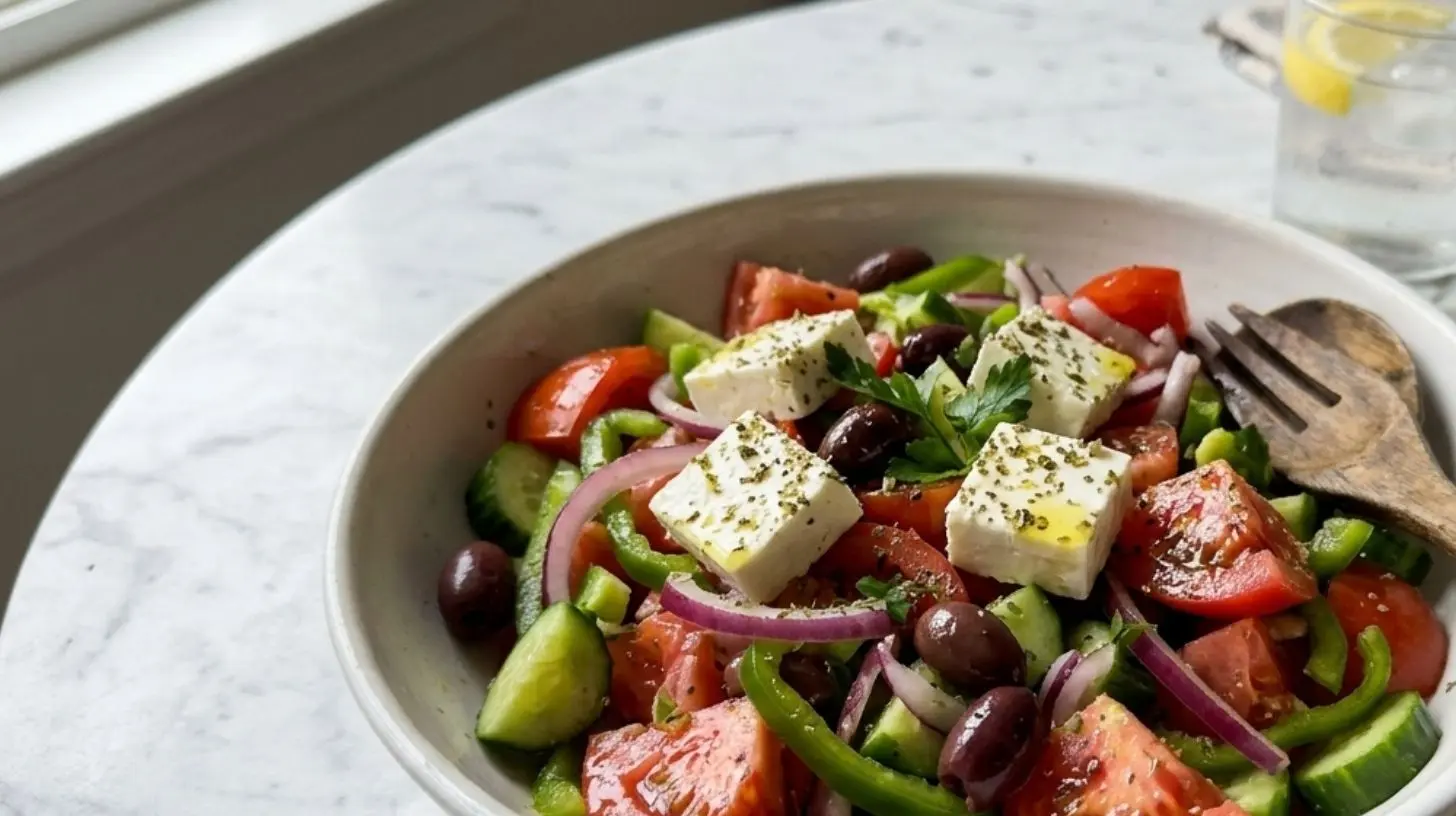
Greek Salad
Make a fresh and healthy Greek salad with key tips for extra flavor.
Cucumbers
Tomatoes
Red Onion
Feta Cheese
Olives
Slice the cucumbers into bite-sized pieces.
Chop the tomatoes into cubes.
Thinly slice the red onion.
Crumble the feta cheese on top.
Add the olives to the salad.
The Ultimate Homemade Greek Salad: Fresh, Vibrant, and Bursting with Flavor
Have you ever wondered why a restaurant’s Greek Salad tastes so much more vibrant than the sad, watery versions you sometimes make at home? The secret lies in the quality of ingredients, the balance of acidity, and the perfect marriage of textures. Preparing this iconic dish from scratch is not only quick and easy but also lets you control every element—from the ripeness of the tomatoes to the saltiness of the feta. A well-made Mediterranean Salad (which shares many of the same principles) can transform a simple side into the star of your table. In this guide, I’ll walk you through everything you need to know to create a crisp, tangy, and utterly addictive bowl that rivals any taverna’s offering.
—
Ingredients & Kitchen Tools
For the Salad
– Cucumber – 1 large English cucumber, halved and sliced. No need to peel unless waxed; the skin adds color and crunch.
– Tomatoes – 4 medium ripe Roma or vine tomatoes, cut into wedges. Use in-season for maximum sweetness.
– Red Onion – ½ medium, thinly sliced. Soak in cold water for 10 minutes to mellow the bite.
– Green Bell Pepper – 1 medium, sliced into rings or chunks. Adds crunch and a mildly bitter note.
– Kalamata Olives – ½ cup, pitted. Their briny, fruity flavor is essential.
– Feta Cheese – 6–8 oz (170–225 g) block, sliced or crumbled. Use a high-quality brine-packed feta.
– Fresh Oregano – 1 teaspoon dried oregano (or 1 tablespoon fresh leaves) for authentic aroma.
– Salt & Pepper – To taste. Sea salt flakes are ideal.
For the Dressing
– Extra Virgin Olive Oil – ¼ cup (60 ml), robust and peppery.
– Red Wine Vinegar – 2 tablespoons (30 ml). Substitute with lemon juice for a brighter finish.
– Dijon Mustard – ½ teaspoon to emulsify (optional).
– Garlic – 1 small clove, minced (optional, but adds depth).
Kitchen Tools
– Large mixing bowl
– Cutting board & sharp knife
– Small jar or bowl for dressing
– Salad servers or tongs
Optional Substitutions
– Swap feta for vegan feta or crumbled tofu for dairy-free.
– Replace Kalamata olives with green Castelvetrano for a milder flavor.
– Use cherry tomatoes instead of Roma for sweeter pops.
—
Prep Time & Cooking Schedule
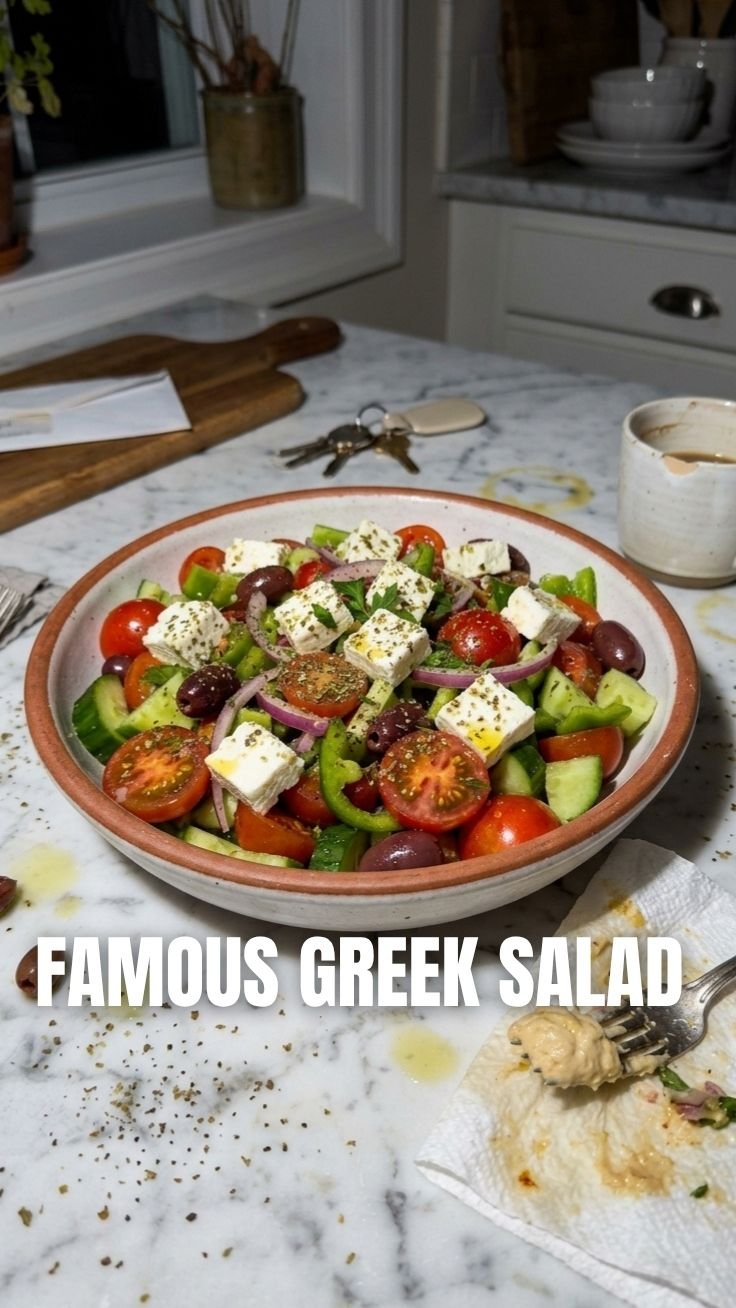
Total Time: 15 minutes
Prep Time: 15 minutes (no cooking required)
Resting Time (optional): 10–15 minutes after dressing to meld flavors
This salad is best served immediately after assembling, but if you have time, let it stand at room temperature for 10 minutes. The feta softens slightly, and the dressing gently marinates the vegetables. Plan accordingly: chop your veggies while the onion soaks, then assemble and dress right before serving.
—
Step-by-Step Instructions
1. Prepare the vegetables – Halve the cucumber lengthwise, then slice into half-moons about ½-inch thick. Cut tomatoes into wedges (remove core if tough). Slice the red onion thinly, then place in a small bowl of cold water for 10 minutes. Drain and pat dry.
2. Slice the pepper – Cut the bell pepper in half, remove seeds and ribs, then slice into thin rings or 1-inch pieces.
3. Combine the base – In a large bowl, gently toss the cucumber, tomatoes, drained onion, pepper, and olives. Sprinkle with dried oregano and a pinch of salt.
4. Make the dressing – In a small jar, combine olive oil, red wine vinegar, Dijon mustard, and minced garlic (if using). Shake vigorously until emulsified. Taste and adjust acidity with a squeeze of lemon if desired.
5. Dress and toss – Pour the dressing over the vegetables and toss gently with your hands or tongs. The goal is to coat every piece without bruising the tomatoes.
6. Add the feta – Place the feta block on top (or crumble it over) and finish with a crack of black pepper. Do not toss after adding feta to keep it intact.
7. Serve immediately – Transfer to a platter or individual bowls. For the best texture, enjoy within 30 minutes. If you’re preparing a Greek Salad for a crowd, keep the dressing separate until serving to avoid sogginess. The same principle applies to a Mediterranean Salad – the vegetables stay crunchier when dressed at the last minute.
Pro tip: For a deeper flavor, let the chopped cucumbers and tomatoes sit in a colander with a sprinkle of salt for 5 minutes. This draws out excess water and concentrates the taste.
—
Nutritional Benefits & Advantages
This dish is a powerhouse of nutrients. Cucumbers and tomatoes are rich in vitamin C, potassium, and antioxidants like lycopene (which is better absorbed when paired with olive oil). Feta provides calcium and protein, while olives contribute heart-healthy monounsaturated fats and vitamin E. The red onion adds quercetin, an anti-inflammatory flavonoid. Because there’s no cooking, all enzymes and vitamins remain intact. A single serving (about 2 cups) contains roughly 250–300 calories, making it a low-calorie, high-satiety option for weight management. The Mediterranean diet, famous for its emphasis on fresh produce and olive oil, is linked to reduced risk of heart disease and improved longevity.
—
Tips, Variations & Cooking Advice
– Make it a complete meal – Add chickpeas, grilled chicken, or canned tuna for protein. For a vegan twist, top with marinated white beans.
– Switch up the herbs – Replace oregano with fresh mint or basil for a different aromatic profile.
– Change the cheese – Try halloumi (grilled briefly) or creamy goat cheese for a tangy alternative.
– Gluten-free & dairy-free – This salad is naturally gluten-free. For dairy-free, simply omit the feta or use a plant-based alternative.
– Portion adjustment – For a side salad, serve ½ cup; for a main, 1½–2 cups. The recipe yields about 6 cups total.
– Temperature tip – Chill the bowl and vegetables beforehand for an extra-refreshing bite on hot days.
—
Common Mistakes to Avoid
– Over-dressing – The vegetables release water as they sit. Drizzle lightly and add more only if needed. Excess dressing turns the salad watery.
– Using pre-crumbled feta – It’s often dry and lacks the creamy richness of a block. Always buy a block and cut it yourself.
– Skipping the onion soak – Raw red onion can be overpowering. A quick soak in cold water tames its sharpness beautifully.
– Cutting vegetables too small – Large, rustic chunks hold up better to the dressing and provide satisfying bites. Aim for 1-inch pieces.
– Adding salt too early – Salt draws moisture out of tomatoes and cucumbers. Salt the salad only after dressing, or use a salt-free dressing base.
—
Storage & Meal Prep Tips
This salad is best eaten fresh. However, you can store undressed components separately:
– Vegetable mix (without feta or dressing) in an airtight container in the fridge for up to 2 days.
– Feta wrapped in parchment in the fridge.
– Dressing in a sealed jar at room temperature for up to a week.
To assemble later, simply toss the vegetables with dressing and top with feta. Do not freeze – the vegetables will become mushy upon thawing. If you have leftovers, drain off any excess liquid and store for up to 24 hours. The texture will soften, but the flavor remains good.
—
Conclusion
Bringing together crunchy cucumbers, juicy tomatoes, briny olives, and creamy feta, this recipe proves that simplicity is the ultimate sophistication. By following these steps, you can recreate the magic of a traditional Greek Salad at home with minimal effort and maximum payoff. Whether you serve it alongside grilled meats or enjoy it as a light lunch, the vibrant flavors will transport you straight to the Aegean coast. And if you’re craving a heartier twist, a Mediterranean Salad with chickpeas is a fantastic variation that adds protein and fiber. Give this recipe a try, then share your creation with friends – I’d love to hear how it turns out!
—
FAQs
1. Can I use lemon juice instead of red wine vinegar?
Absolutely! Lemon juice adds a brighter, slightly less acidic flavor. Use the same amount (2 tablespoons) and consider adding a pinch of sugar to balance.
2. How do I keep the feta from crumbling into the salad?
Place the feta as a whole block on top of the dressed vegetables, not crumbled. Let guests cut off pieces themselves. Alternatively, use a sharp knife to cut the block into neat slabs.
3. My tomatoes are not very ripe. Any tips?
If tomatoes are out of season, roast them at 400°F for 15 minutes to concentrate their sweetness, then let cool before adding. Cherry tomatoes also work well year-round.
4. Can I make this salad ahead for a party?
Yes, but keep the dressing and feta separate until serving. Combine the vegetables up to 4 hours in advance, refrigerate, then dress and top just before guests arrive.
5. What can I substitute for Kalamata olives?
Green olives (like Castelvetrano or Picholine) offer a milder, buttery flavor. Avoid canned black olives – they lack the briny complexity that defines this dish.
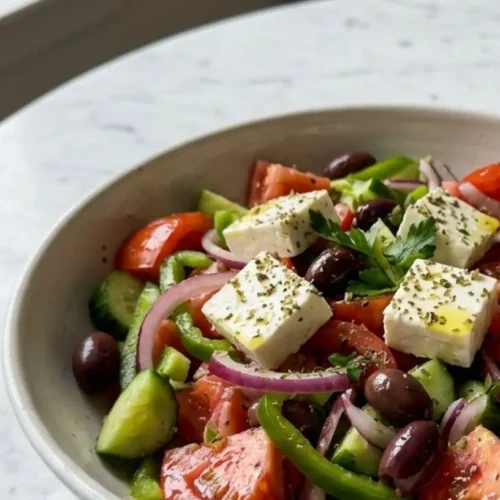
Greek Salad
Equipment
- Cutting Board
- Knife
- Large Bowl
- Whisk
Ingredients
Vegetables
- 2 lbs Tomatoes
- 1 lb Cucumbers
- 1 medium Red Onion
- 2 medium Bell Peppers
Herbs and Olives
- 0.5 cup Kalamata Olives
- 2 tbsp Fresh Oregano or 1 tbsp dried
Cheese and Dressing
- 4 oz Feta Cheese block, not crumbled
- 0.25 cup Extra Virgin Olive Oil
- 2 tbsp Red Wine Vinegar
- Salt to taste
- Black Pepper to taste
Instructions
Preparation
- Wash and chop all vegetables into bite-sized pieces.
- Slice red onion thinly and destem Kalamata olives.
- Crumble feta cheese into large chunks or serve as a block.
Dressing and Assembly
- In a large bowl, combine chopped vegetables and olives.
- Whisk together olive oil, red wine vinegar, fresh oregano, salt, and pepper.
- Pour dressing over the vegetables and gently toss to coat.
- Top with crumbled or block feta cheese just before serving and gently toss again if preferred.