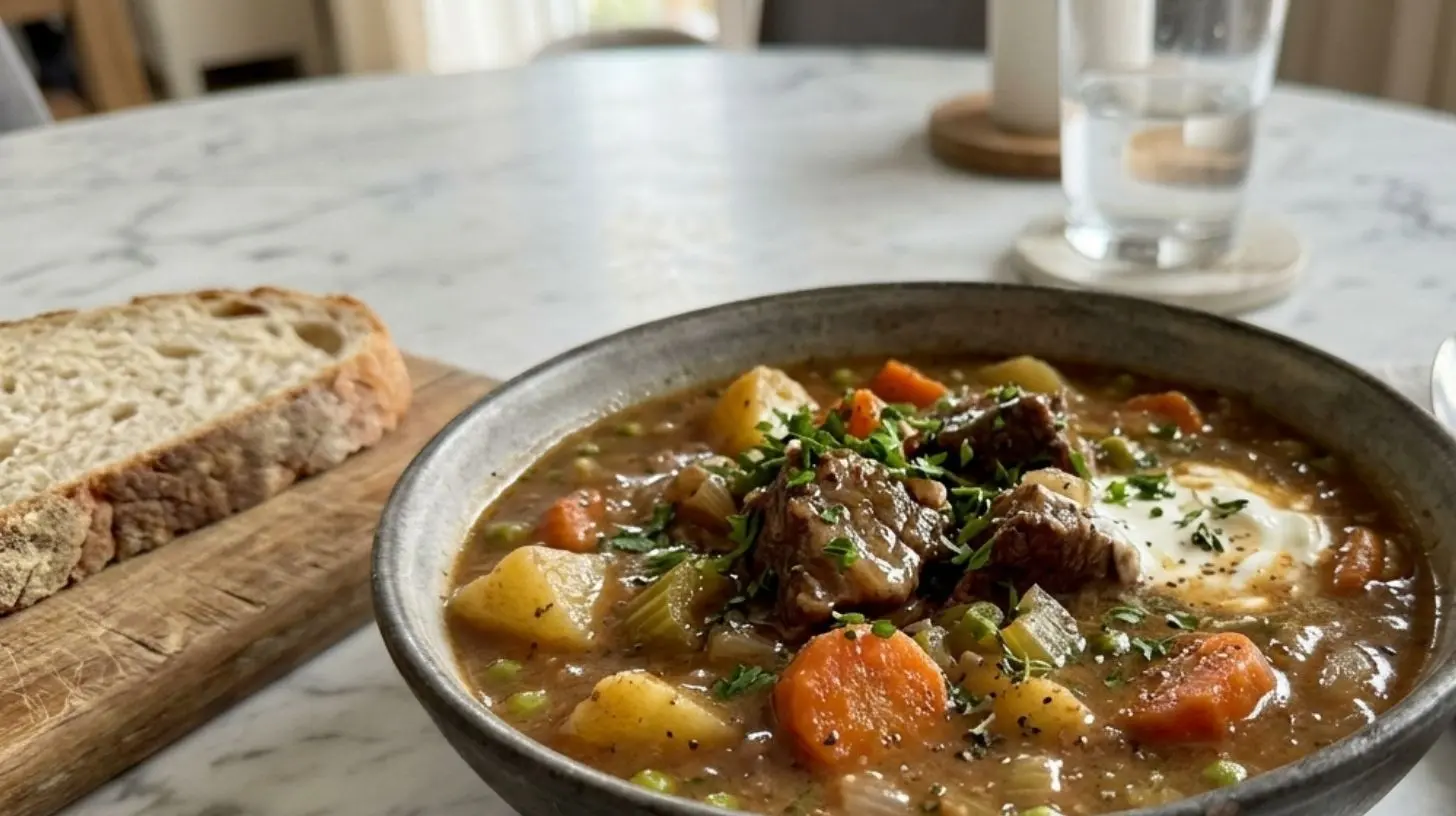
Proven Way to Grow 3 Beef Stew
Learn how to make a delicious beef stew from scratch.
Beef
Carrots
Potatoes
Beef Broth
Onion
Chop the beef into small cubes.
Slice the carrots into small pieces.
Dice the potatoes into chunks.
Combine all ingredients in a pot with beef broth.
Let the stew simmer on low heat for 2 hours.
Stir occasionally to prevent sticking.
Serve hot and enjoy!
The Ultimate Guide to Making the Perfect Beef Stew at Home
Have you ever pulled a spoon through a bowl of rich, fork-tender meat and vegetables swimming in a deeply savory broth and wondered why your own attempts never taste quite as good? The secret isn’t a fancy cut of meat or a secret ingredient—it’s understanding how heat, time, and a few simple techniques transform humble ingredients into something magical. Preparing your own Beef Stew at home rewards you with a meal that’s both economical and deeply satisfying, and it’s easier than you think. Today, we’ll walk through every step so you can create a Beef Stew that rivals any restaurant version, and we’ll also explore a crockpot beef stew method for those busy days. By the end, you’ll have a foolproof blueprint for this classic comfort food.
Ingredients & Kitchen Tools
Ingredients
– Beef chuck (2 lbs) – Best for stewing; becomes tender when cooked low and slow. Cut into 1.5-inch cubes.
– All-purpose flour (3 tbsp) – For dredging the beef to create a thicker broth.
– Olive oil (2 tbsp) – For browning the meat.
– Yellow onion (1 large) – Diced. Adds sweetness and base flavor.
– Carrots (4 medium) – Peeled and cut into 1-inch chunks. Hold up well during long cooking.
– Celery (3 stalks) – Sliced. Aromatic foundation.
– Garlic (4 cloves) – Minced.
– Tomato paste (2 tbsp) – Concentrated umami boost.
– Beef broth (4 cups) – Low-sodium preferred to control salt.
– Red wine (1 cup) – Optional, but adds depth. Use a dry wine like Cabernet.
– Bay leaves (2) – For aromatic infusion.
– Fresh thyme (3 sprigs) – Or 1 tsp dried.
– Russet potatoes (1 lb) – Peeled and cubed; they thicken the stew naturally.
– Frozen peas (1 cup) – Added at the end for color and sweetness.
– Salt and black pepper – To taste.
– Optional substitutions: Use gluten-free flour for thickening; replace wine with extra broth; swap potatoes for parsnips or turnips for a lower-carb option.
Kitchen Tools
– Dutch oven or heavy-bottomed pot – 5–6 quart capacity for even heat.
– Chef’s knife and cutting board
– Wooden spoon or spatula
– Measuring cups and spoons
– Tongs – For turning meat.
– Colander – For rinsing vegetables.
– Mixing bowl – For dredging flour.
Prep Time & Cooking Schedule

Prep time: 20 minutes
Cook time: 2 hours (stovetop) or 6–8 hours (crockpot)
Resting time: 10 minutes before serving
Plan ahead: Cooking the stew a day in advance actually improves the flavor as the ingredients meld overnight. If you’re making a crockpot beef stew, start in the morning for a ready-by-dinner meal. The stovetop version requires about 30 minutes of active browning and sautéing, then largely unattended simmering.
Step-by-Step Instructions
1. Pat the beef dry and season generously with salt and pepper. Dredge cubes in flour, shaking off excess.
2. Heat oil in your Dutch oven over medium-high heat. Brown the beef in batches (do not overcrowd) for 3–4 minutes per side. Transfer to a plate.
3. Reduce heat to medium. Add onion, carrots, and celery; cook 5 minutes until softened. Stir in garlic and tomato paste; cook 1 minute.
4. Deglaze the pot with red wine (or broth), scraping up browned bits. Let it reduce by half, about 2 minutes.
5. Return beef to the pot. Add broth, bay leaves, and thyme. Bring to a gentle simmer, then cover and cook on low heat for 1.5 hours.
6. Add potatoes and continue simmering uncovered for 30 minutes, or until potatoes are tender. Stir occasionally to prevent sticking.
7. Stir in frozen peas and cook 2 minutes. Remove bay leaves. Taste and adjust seasoning.
Pro tip: For a crockpot beef stew, follow steps 1–4 on the stovetop, then transfer everything to the slow cooker (add potatoes at the start). Cook on low for 7–8 hours or high for 4–5 hours. Add peas in the last 15 minutes. This method yields an exceptionally tender Beef Stew with minimal hands-on time.
Nutritional Benefits & Advantages
This Beef Stew is a powerhouse of nutrition. Beef chuck provides high-quality protein, iron, and zinc—essential for muscle repair and immune function. Carrots and sweet potatoes (if substituted) offer beta-carotene and fiber, while the broth delivers collagen from the slow-cooked meat. Compared to store-bought canned stews, the homemade version has no preservatives, no excess sodium, and you control the fat content (trim visible fat before cooking). A single serving (about 1.5 cups) contains roughly 350 calories, 30g protein, and 25g carbohydrates—a balanced meal in a bowl.
Tips, Variations & Cooking Advice
– Flavor variations: Add a splash of balsamic vinegar or Worcestershire sauce for deeper umami. Swap thyme for rosemary.
– Herb swaps: Use 1 tsp dried oregano or 2 tsp fresh parsley at the end for freshness.
– Ingredient swaps: Replace potatoes with sweet potatoes, butternut squash, or turnips. Use mushroom broth for a vegetarian version (skip the beef and add extra mushrooms).
– Cooking methods: You can also bake it in a covered casserole dish at 325°F for 2.5 hours.
– Dietary adaptations: For gluten-free, use cornstarch or arrowroot slurry (1 tbsp cornstarch + 2 tbsp cold water) stirred in at the end. For dairy-free, this recipe is naturally dairy-free.
Common Mistakes to Avoid
– Not browning the meat thoroughly – Skipping this step robs the stew of deep, caramelized flavor. Pat the meat dry and resist the urge to stir too soon.
– Overcrowding the pot – When browning, the meat releases moisture and steams instead of searing. Brown in batches.
– Adding all liquid at once – If you’re using a slow cooker, avoid adding too much broth; the vegetables release water too. A 4:1 ratio of liquid to solids is ideal.
– Cooking at too high a heat – A vigorous boil toughens the meat. Keep it at a gentle simmer (185°F–195°F) on the stovetop.
– Underseasoning – Season in layers: add salt when browning the meat, again when sautéing vegetables, and adjust at the end. Remember that flavors concentrate as the stew reduces.
Storage & Meal Prep Tips
Refrigeration: Cool the stew completely (within 2 hours of cooking) and store in an airtight container. It will keep for 3–4 days. The flavor improves after 24 hours.
Freezing: Transfer to freezer-safe containers or bags, leaving 1 inch of headspace. Freeze for up to 3 months. Thaw overnight in the refrigerator.
Reheating: Gently reheat on the stovetop over medium-low heat, adding a splash of broth or water if the stew has thickened too much. Avoid high heat, which can make the meat tough. For a quick reheating, microwave in 1-minute bursts, stirring in between.
Meal prep: This stew is perfect for batch cooking. Divide into individual portions and store for easy lunches or dinners.
Conclusion
Creating a memorable Beef Stew at home is about more than following a recipe—it’s about understanding the interplay of browning, simmering, and seasoning. Whether you choose the slow-simmered stovetop method or the convenience of a crockpot beef stew, the result is a deeply satisfying dish that warms both body and soul. We’ve covered the key techniques, from searing to deglazing, and the common pitfalls to avoid. Now it’s your turn: gather your ingredients, take your time, and enjoy the process. Share your results in the comments—we’d love to hear how your stew turned out! And if you’re hungry for more, explore our other comfort food recipes.
FAQs
Q: Can I use a different cut of beef?
A: Yes, look for chuck, brisket, or round. Avoid lean cuts like sirloin, as they become dry and tough. Marbling is your friend.
Q: How do I thicken the stew without flour?
A: Use a cornstarch slurry (2 tbsp cornstarch mixed with 2 tbsp cold water) stirred in at the end. Alternatively, mash some of the cooked potatoes directly into the broth.
Q: My stew is too salty. How can I fix it?
A: Add a peeled raw potato and simmer for 15 minutes; it will absorb some salt. Or dilute with unsalted broth and adjust seasoning.
Q: Can I make this in an Instant Pot?
A: Absolutely. Use the sauté function for browning, then pressure cook on high for 35 minutes with a natural release. Add potatoes after pressure cooking and simmer for 10 minutes.
Q: How long does stew last in the fridge?
A: Properly stored, up to 4 days. Reheat only the portion you plan to eat to maintain quality.
Proven way to grow 3 Beef Stew
Equipment
- Dutch oven
- Cutting board
- Knife
Ingredients
Main Ingredients
- 2 lbs Beef chuck cut into 1-inch cubes
- 2 tbsp Olive oil
- 1 Onion chopped
- 3 Carrots peeled and sliced
- 3 Potatoes peeled and cubed
- 4 cups Beef broth
- 2 tbsp Tomato paste
- 1 tbsp Worcestershire sauce
- 1 tsp Dried thyme
- 2 Bay leaves
- 1 tsp Salt
- 0.5 tsp Black pepper
Instructions
Preparation
- Pat the beef cubes dry with paper towels and season with salt and pepper.
- Heat olive oil in a large Dutch oven or heavy-bottomed pot over medium-high heat.
- Sear beef in batches until browned on all sides, then remove and set aside.
Cooking the Stew
- Add onion to the pot and sauté until softened, about 5 minutes.
- Stir in tomato paste and cook for 2 minutes, then deglaze the pot with a splash of beef broth.
- Return beef to the pot, then add remaining beef broth, carrots, potatoes, Worcestershire sauce, thyme, and bay leaves.
- Bring to a simmer, then reduce heat to low, cover, and cook for 2-3 hours or until beef is tender.
Finishing Touches
- Remove bay leaves before serving.
- Taste and adjust seasoning as needed.