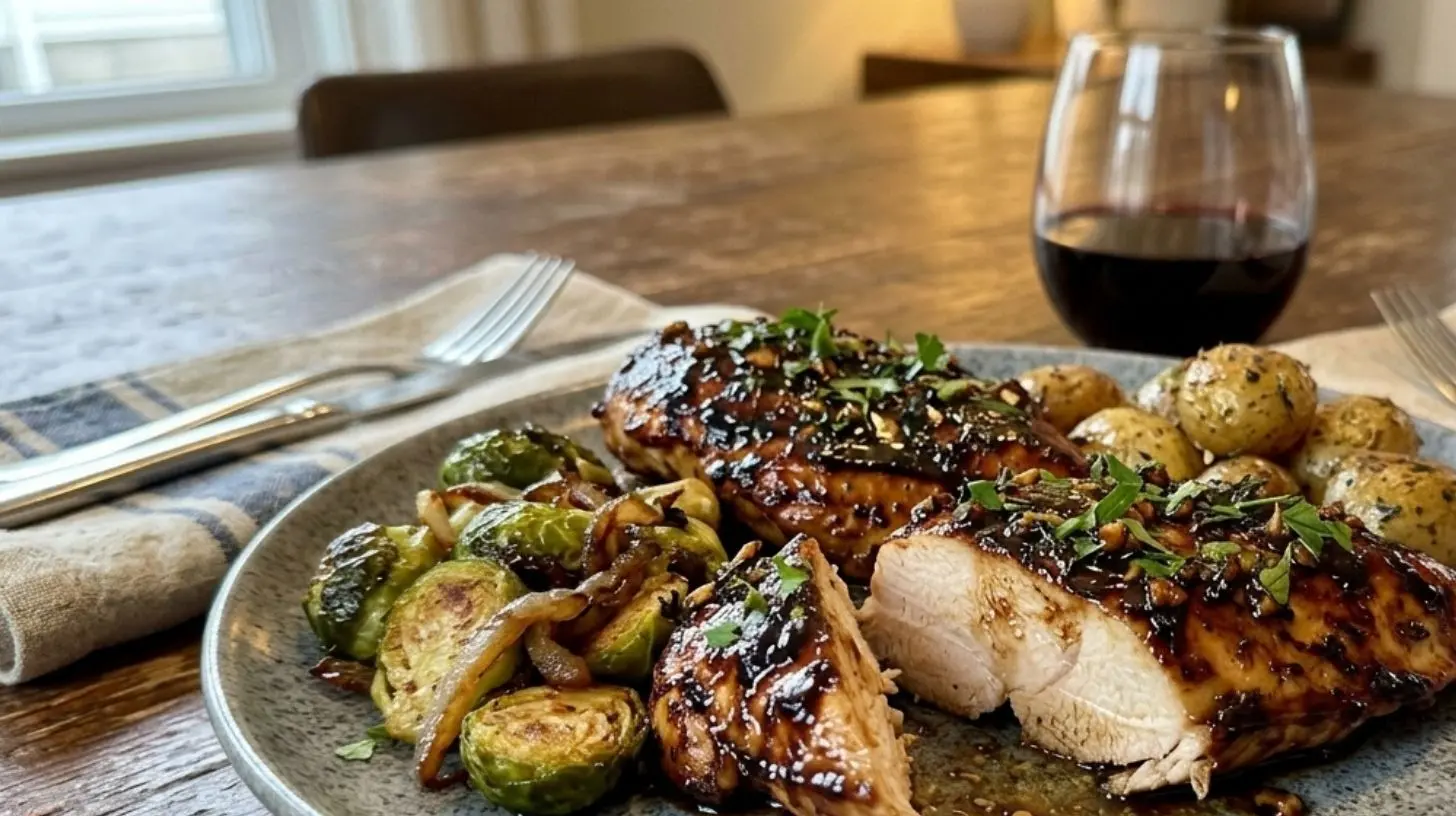
5-Star Balsamic Chicken
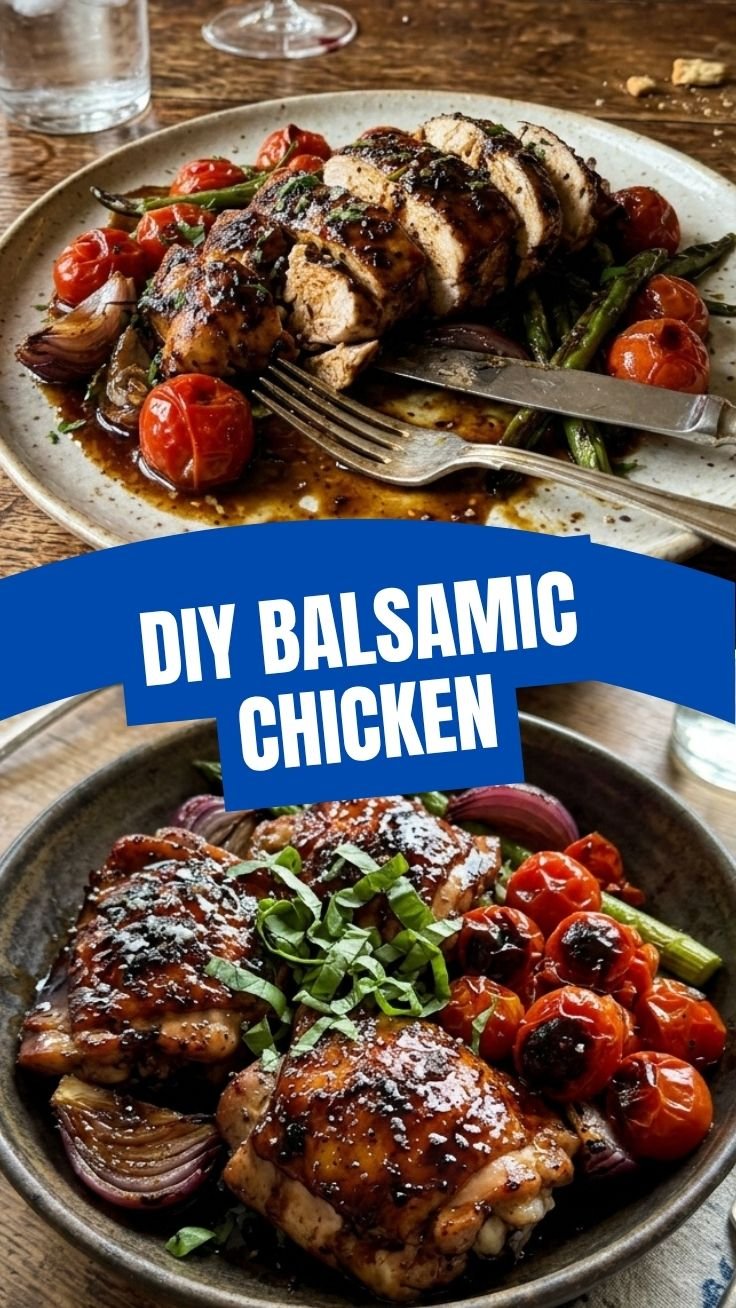
Learn how to make delicious 5-Star Balsamic Chicken in a fun and easy way!
Chicken Breast
Balsamic Vinegar
Honey
Garlic
Salt
Black Pepper
Olive Oil
Preheat the oven to 400°F.
Mince the garlic cloves.
Mix balsamic vinegar, honey, minced garlic, salt, and black pepper in a bowl.
Marinate chicken breasts in the balsamic mixture for 30 minutes.
Heat olive oil in a skillet over medium heat.
Cook marinated chicken breasts in the skillet until browned on both sides.
Transfer the chicken to a baking dish and bake in the oven for 20 minutes.
Unlock the Secret to Restaurant-Quality Balsamic Chicken at Home
Have you ever wondered why restaurant-quality Balsamic Chicken tastes so extraordinary? The secret often lies in a perfectly reduced balsamic glaze that transforms simple ingredients into a memorable meal. Preparing this dish at home not only saves money but also lets you control the quality of each component—from the cut of chicken to the freshness of herbs. In this guide, I’ll walk you through every step, from ingredient selection to storage, so you can recreate that five-star flavor in your own kitchen. Whether you’re a seasoned cook or a beginner, this recipe delivers consistent, impressive results.
Ingredients & Kitchen Tools
For the Balsamic Chicken:
– 4 boneless, skinless chicken breasts (or thighs for juicier meat) – Pound to even thickness for uniform cooking.
– 2 tablespoons olive oil – Use extra-virgin for better flavor; can substitute avocado oil.
– 1/2 cup balsamic vinegar – Choose aged balsamic for sweetness; avoid cheap imitation.
– 1/4 cup low-sodium chicken broth – Or white wine for extra depth.
– 3 cloves garlic, minced – Fresh is best; jarred works in a pinch.
– 1 teaspoon dried oregano – Substitute 1 tablespoon fresh if available.
– Salt and black pepper to taste – Prefer coarse sea salt and freshly ground pepper.
– Fresh basil or parsley for garnish – Optional but recommended.
For the Balsamic Glaze (if not using store-bought):
– 1/2 cup balsamic vinegar – Same bottle as above; reduces to a thick syrup.
– 1–2 tablespoons honey or brown sugar – Adjust for sweetness; maple syrup works too.
Kitchen Tools:
– Large skillet (preferably cast-iron or non-stick) with a lid
– Measuring cups and spoons
– Sharp knife and cutting board
– Tongs for flipping chicken
– Small saucepan (if making glaze from scratch)
– Instant-read thermometer – Essential for perfectly cooked chicken (165°F internal).
– Whisk or fork for deglazing
Optional Substitutions:
– Chicken: Turkey cutlets, pork chops, or firm tofu (pressed).
– Vinegar: Red wine vinegar + 1 teaspoon sugar to mimic balsamic.
– Sweetener: Date syrup or coconut sugar for paleo-friendly.
Prep Time & Cooking Schedule
| Task | Time |
|——|——|
| Prep (pound chicken, mince garlic, measure liquids) | 10 minutes |
| Marinating (optional but recommended) | 15–30 minutes |
| Cook time (stovetop) | 12–15 minutes |
| Resting time before slicing | 5 minutes |
| Total active time | ~30 minutes |
Marinating isn’t strictly necessary because the pan sauce provides intense flavor, but a quick 15-minute soak in balsamic and herbs deepens the taste. Plan your side dishes (like roasted vegetables or pasta) to finish around the same time as the chicken.
Step-by-Step Instructions
1. Prepare the chicken. If using chicken breasts, place them between two sheets of plastic wrap and pound to 1/2-inch thickness with a rolling pin. Season both sides generously with salt, pepper, and dried oregano.
2. Sear the chicken. Heat olive oil in a large skillet over medium-high heat. Add the chicken and cook 4–5 minutes per side until golden brown and cooked through (internal temperature 165°F). Transfer to a plate and tent with foil.
3. Build the sauce. Reduce heat to medium. Add minced garlic and sauté 30 seconds until fragrant. Pour in balsamic vinegar and chicken broth, scraping up any browned bits from the bottom of the pan. Let simmer 2–3 minutes until slightly thickened.
4. Glaze and finish. Stir in 2 tablespoons of balsamic glaze (store-bought or your own reduction) to deepen the sweet-sour balance. Return the chicken to the skillet, spoon sauce over the top, and cook 1 more minute.
5. Rest and serve. Remove from heat, let the Balsamic Chicken rest 5 minutes, then slice against the grain. Garnish with fresh basil and serve with the remaining sauce.
Tip: For a thicker glaze, simmer an extra 1/2 cup balsamic vinegar in a small saucepan over low heat until reduced by half (about 8–10 minutes). Watch closely—it burns easily.
Nutritional Benefits & Advantages
This dish is naturally high in protein (around 30g per serving) and low in carbohydrates, making it ideal for keto or low-carb lifestyles. Balsamic vinegar contains antioxidants like polyphenols, which support heart health and reduce inflammation. Using olive oil provides healthy monounsaturated fats, while garlic offers immune-boosting allicin. By making your own balsamic glaze, you avoid added preservatives and excess sugar common in store-bought versions. The dish is also gluten-free (check broth if using store-bought) and can be dairy-free as written.
Tips, Variations & Cooking Advice
– Flavor twist: Add 1/2 cup sliced mushrooms or cherry tomatoes during step 3 for an earthy-sweet accent.
– Herb swap: Replace oregano with fresh rosemary or thyme for a different aromatic profile.
– Cooking method: Grill the chicken over medium heat (6–7 minutes per side) and brush with the balsamic mixture during the last 2 minutes.
– Dietary adaptation: For a dairy-free version, simply omit any cheese garnish. To make it nut-free, avoid pine nuts or almonds as toppings.
– Portion adjustment: Double the sauce ingredients if cooking for a larger crowd, but be careful not to overcrowd the pan—cook chicken in batches.
– Sweetness control: If your balsamic vinegar is especially tangy, add an extra teaspoon of honey to the glaze.
Common Mistakes to Avoid
– Skipping the pounding step. Uneven chicken thickness leads to overcooked edges and undercooked centers. Always pound to a uniform 1/2 inch.
– Using low-quality balsamic. Cheap vinegar is overly acidic with little sweetness—the glaze will taste harsh. Invest in a moderately aged (at least 3 years) balsamic.
– Overcooking the glaze. Balsamic reduction can go from syrupy to burnt in seconds. Remove from heat as soon as it coats the back of a spoon.
– Adding the glaze too early. If you add the glaze while searing, the sugars will burn before the chicken is cooked. Always add glaze during the final sauce step.
– Not letting the chicken rest. Slicing immediately releases juices, leaving dry meat. Always rest 5 minutes under foil.
Storage & Meal Prep Tips
Refrigerator: Store leftover chicken and sauce in an airtight container for up to 4 days. Keep the glaze separate if you want to refresh it later.
Freezer: The cooked chicken freezes well for up to 3 months. Wrap each piece tightly in plastic wrap, then place in a freezer bag. Thaw overnight in the fridge.
Reheating: For best texture, reheat in a skillet over medium-low heat with a splash of broth or water to revive the sauce. Microwave in 30-second bursts at 50% power if short on time—avoid drying out the chicken.
Meal prep: Cook a double batch on Sunday. Pair with roasted veggies and quinoa for easy weekday lunches. The balsamic glaze can be made ahead and refrigerated for up to 2 weeks.
Conclusion
Mastering Balsamic Chicken at home is simpler than you think—a well-seared breast, a quick pan sauce, and a touch of homemade balsamic glaze can elevate any weeknight dinner. The key lies in quality ingredients, proper technique, and those small tweaks (like pounding and resting) that ensure moist, flavorful results every time. I encourage you to try this recipe this week, share your version on social media, and experiment with the variations. For more weeknight winners, browse our collection of quick skillet meals.
FAQs
1. Can I use bone-in chicken thighs instead of breasts?
Absolutely. Bone-in thighs need a slightly longer cook time (about 20–25 minutes). Sear skin-side down first for extra crispiness, then flip and finish in the oven at 375°F after adding the sauce.
2. What if my balsamic glaze is too thin?
Return it to the stove and simmer uncovered for 2–3 more minutes. Keep whisking to prevent scorching. If it’s already on the chicken, remove the chicken first, then reduce the sauce separately.
3. Can I make this recipe entirely in the oven?
Yes. Sear the chicken in an oven-safe skillet, then transfer to a 375°F oven for 10–12 minutes. Add the sauce during the last 5 minutes. This is great for entertaining.
4. How do I balance the tanginess if my vinegar is too sharp?
Stir in 1 tablespoon of honey, maple syrup, or even a bit of apple juice. Taste and adjust gradually. A pinch of baking soda can also neutralize acidity, but use sparingly (1/8 teaspoon).
5. Can I freeze the balsamic glaze separately?
Yes. Store it in a small jar or ice cube tray. Thaw in the refrigerator or microwave in short bursts. It may crystallize slightly, but reheating restores the smooth texture.
Best way to grow 5-Star Balsamic Chicken
Equipment
- large skillet
Ingredients
Main
- 4 large chicken breasts
- 0.5 cup balsamic vinegar
- 0.25 cup chicken broth
- 2 tablespoons honey
- 2 cloves garlic, minced
- 1 tablespoon olive oil
- salt and pepper to taste
Instructions
Preparation
- Season the chicken breasts generously with salt and pepper on both sides.
- In a small bowl, whisk together balsamic vinegar, chicken broth, honey, and minced garlic to create the sauce.
Cooking
- Heat olive oil in a large skillet over medium-high heat.
- Add the seasoned chicken breasts to the hot skillet and sear for 5-7 minutes per side, until golden brown and cooked through.
- Pour the balsamic sauce over the chicken in the skillet. Bring the sauce to a simmer and cook for 3-5 minutes, or until the sauce has thickened and coats the chicken.
- Remove the chicken from the skillet and let it rest for a few minutes before serving. Drizzle with remaining sauce.