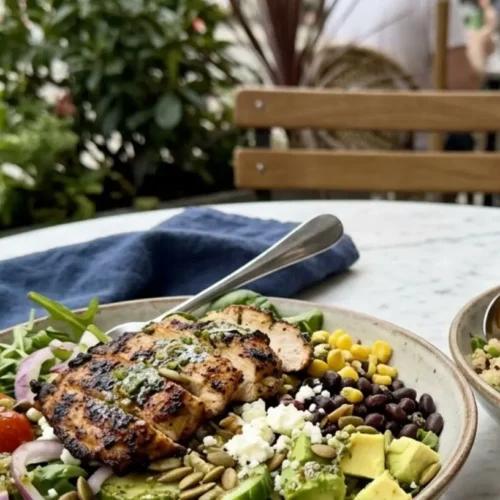
Best way to grow high protein summer salads
While this entry is not a recipe, it provides a comprehensive guide on cultivating ingredients for high-protein summer salads, focusing on legumes, leafy greens, and other protein-rich vegetables. It covers everything from selecting the right varieties to harvesting and succession planting to ensure a continuous supply.
Equipment
- Gardening Gloves
- Trowel
- Hand Pruners
- pH Testing Kit
- Drip Irrigation System or Soaker Hoses
- Row Covers (optional)
- Garden Stakes or Trellises (for climbing plants)
- Watering Can or Hose
Ingredients
Legumes
- varieties like Provider or Contender Bush Beans
- Kentucky Wonder Pole Beans
- Early Hakucho Soybeans (Edamame)
- Myles or Sanford Chickpeas
Leafy Greens
- Bloomsdale Long Standing Spinach
- Red Russian or Lacinato Kale
- standard varieties Arugula
Other Protein-Rich Vegetables
- Calabrese or Waltham Broccoli
- Mary Washington or Jersey Giant Asparagus
- Chenopodium quinoa Quinoa
- Mammoth or Titan Sunflower Seeds
Soil and Amendments
- 2-4 inches Compost
- granular, slow-release Balanced Organic Fertilizer
- 1 pH Testing Kit
Pest and Disease Control
- organic Neem Oil
- organic Insecticidal Soap
- fabric Row Covers
Watering and Irrigation
- 1 Drip Irrigation System
- 1 Soaker Hoses
Instructions
Planning, Soil Preparation and Planting
- Choose a sunny location with well-draining soil and select high-protein crops like bush and pole beans, soybeans, chickpeas, spinach, kale, arugula, broccoli, asparagus, quinoa, and sunflowers.
- Amend the soil with 2-4 inches of compost and a balanced organic fertilizer, ensuring a pH between 6.0 and 7.0 for optimal plant growth.
- Plant legumes directly after the last frost, leafy greens from early spring to late summer, and other vegetables according to their specific planting windows, providing support for climbing plants.
Watering, Fertilizing and Pest Control
- Water regularly, especially during dry spells, using drip irrigation or soaker hoses to keep foliage dry and prevent fungal diseases.
- Side-dress plants with compost or a balanced organic fertilizer every 4-6 weeks to replenish nutrients, especially for heavy feeders like leafy greens.
- Monitor for pests and diseases, using organic solutions like neem oil or insecticidal soap for pests and practicing crop rotation to prevent disease.
Harvesting and Succession Planting
- Harvest legumes when pods are plump, leafy greens continuously for fresh outer leaves, and other vegetables at their peak maturity before they bolt or become tough.
- Implement succession planting by sowing new seeds every 2-3 weeks for a continuous harvest throughout the summer, especially for fast-growing crops like bush beans and arugula.
Enjoy Your High-Protein Summer Salads
- Store freshly harvested produce properly to maintain freshness and prepare nutritious, high-protein summer salads with your garden-fresh ingredients.
Notes
For optimal growth and continuous harvest, consider companion planting. Marigolds can deter pests, and herbs like basil can enhance flavor and repel insects. Regular soil testing helps maintain ideal nutrient levels. Enjoy your homegrown, high-protein summer salads!