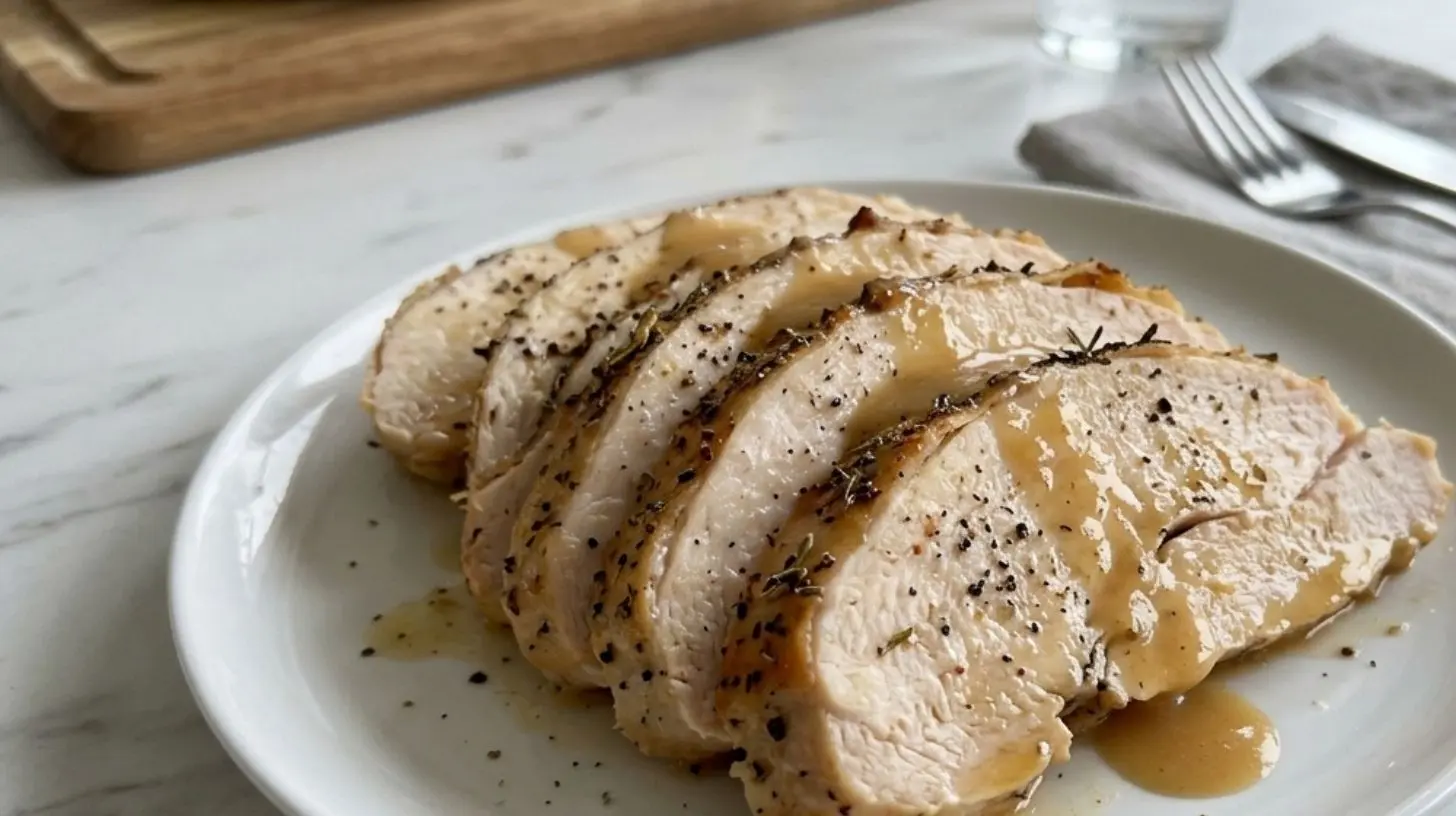
Turkey Breast Salad
A quick and easy recipe for a tasty turkey breast salad.
Turkey Breast
Lettuce
Tomatoes
Cucumbers
Cheese
Slice the turkey breast into thin strips.
Toss the lettuce, tomatoes, and cucumbers in a bowl.
Sprinkle cheese over the salad.
Add the turkey breast strips on top.
Perfect Roast Turkey Breast: A Juicy, Foolproof Recipe for Any Occasion
Have you ever wondered why restaurant-quality turkey breast always turns out moist and flavorful, while your home attempts often end up dry or bland? The secret isn’t a magic ingredient—it’s technique, timing, and a few pro tips. Preparing a beautiful Turkey Breast at home saves you money, lets you control the seasoning, and fills your kitchen with an irresistible aroma. Whether you’re cooking for a holiday feast or a Sunday dinner, this recipe delivers consistent results. And if you’re looking for inspiration beyond this method, be sure to explore more Turkey Breast Recipes that can transform your meal planning. In this guide, we’ll walk through every step, from ingredient selection to carving, so you can serve a showstopping centerpiece with confidence.
Ingredients & Kitchen Tools
Ingredients:
– Bone-in, skin-on turkey breast (5–7 lbs) – The bone retains moisture and adds flavor; skin crisps up beautifully.
– Unsalted butter (4 tbsp, softened) – Creates a golden crust and keeps the meat tender.
– Fresh herbs (rosemary, thyme, sage) – Aromatic classics that complement poultry.
– Garlic cloves (4–5, minced) – Adds depth.
– Kosher salt (2 tsp) – Essential for seasoning the skin and meat.
– Black pepper (1 tsp) – Freshly ground for best flavor.
– Olive oil (2 tbsp) – Helps the seasoning stick and aids browning.
– Low-sodium chicken broth (1 cup) – For the roasting pan, prevents sticking and creates a base for gravy.
– Lemon (1, halved) – Adds brightness and moisture.
Optional substitutions: Swap butter for ghee (dairy-free), use dried herbs (1 tsp each) if fresh unavailable, or substitute turkey stock for broth.
Kitchen Tools:
– Roasting pan with rack
– Meat thermometer (instant-read or probe)
– Basting brush or spoon
– Chef’s knife and cutting board
– Aluminum foil (for tenting)
– Kitchen twine (optional, for trussing)
Prep Time & Cooking Schedule
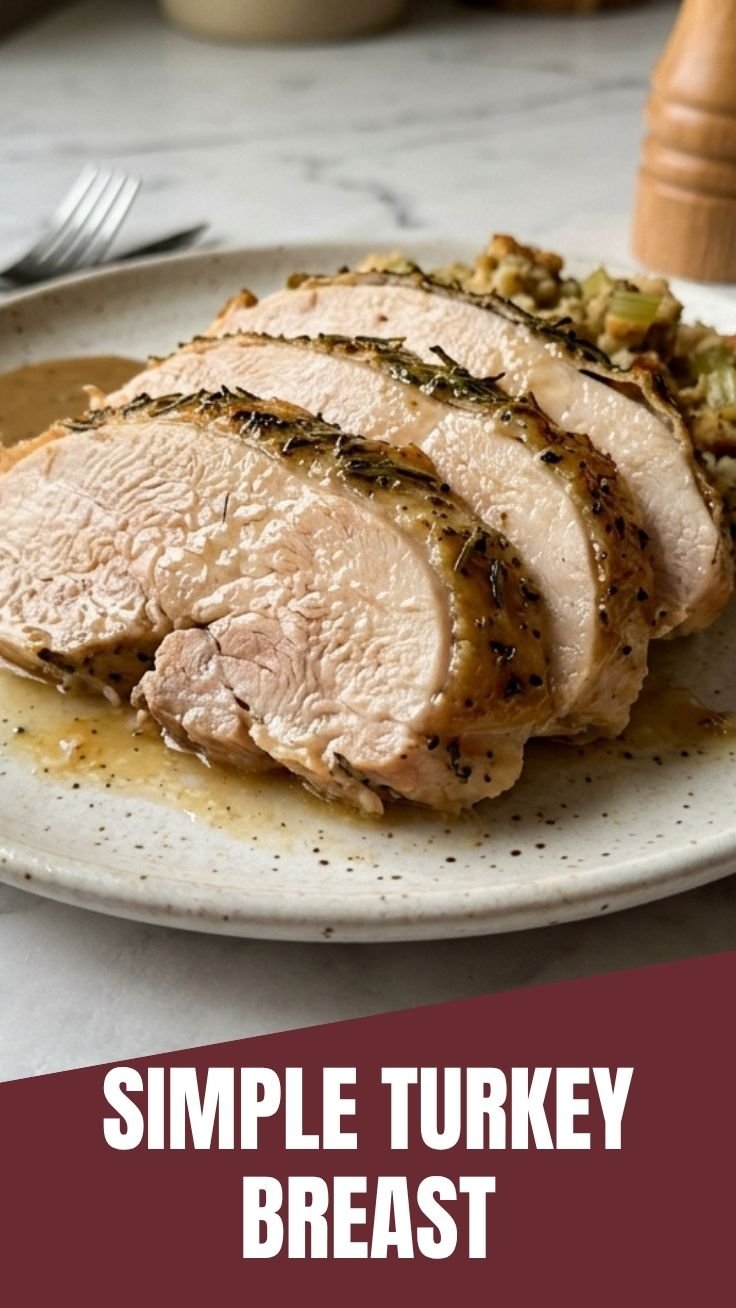
Total time: Approximately 2 hours 30 minutes (including 15–20 minutes resting).
Prep time: 15 minutes.
Cook time: 1 hour 45 minutes to 2 hours (depending on size).
Resting time: 15–20 minutes (critical for juiciness).
Plan to start about 2.5 hours before serving. If you’re short on time, you can brine the breast overnight (optional) for extra moisture, but this recipe works perfectly without brining. Remove the turkey from the refrigerator 30 minutes before roasting to take the chill off—this ensures even cooking.
Step-by-Step Instructions
1. Preheat the oven to 350°F (175°C). Position a rack in the lower third.
2. Pat the turkey breast dry with paper towels—moisture is the enemy of crispy skin. Season generously with salt and pepper, including under the skin.
3. Make the herb butter: Mix softened butter, minced garlic, and chopped fresh herbs. Gently loosen the skin over the breast meat and spread half the butter mixture directly on the meat. Rub the remaining butter over the skin.
4. Place the turkey breast on the roasting rack, skin side up. Pour chicken broth into the pan (not over the skin). Add the lemon halves around the base.
5. Roast uncovered for 45 minutes. Then baste with pan juices. Continue roasting, basting every 20–30 minutes. Total cooking time: about 15 minutes per pound at 350°F. Use a meat thermometer inserted into the thickest part of the breast (not touching bone) to check doneness—the target is 160°F, as carryover cooking will bring it to 165°F while resting.
6. Remove from oven and tent loosely with foil. Rest for 15–20 minutes before carving. The internal temperature will rise to a safe 165°F during this time.
Pro tip: If the skin is browning too quickly, tent with foil midway through. For a deeper golden color, increase oven to 400°F for the last 10 minutes. Adjust seasoning by tasting the pan juices—if too salty, add a splash of water. Always handle raw poultry with care to avoid cross-contamination.
This method works beautifully for a whole Turkey Breast and is a cornerstone among trusted Turkey Breast Recipes. The key is patience: don’t rush the rest or skip the thermometer.
Nutritional Benefits & Advantages
Turkey breast is a lean protein powerhouse, offering about 25 grams of protein per 3-ounce serving with minimal saturated fat. It’s rich in B vitamins (especially B6 and B12), selenium, and zinc, supporting immune function and metabolism. Compared to dark meat, the breast contains less fat and fewer calories, making it an excellent choice for weight-conscious eaters. The skin, while higher in fat, provides flavor and can be removed if desired. This dish is naturally gluten-free and low-carb, fitting into paleo, keto, and whole30 lifestyles. Pairing it with roasted vegetables or a fresh salad creates a balanced, nutrient-dense meal.
Tips, Variations & Cooking Advice
– Flavor variations: Swap the herb butter for a citrus-rosemary rub, or add a maple-mustard glaze (2 tbsp maple syrup + 1 tbsp Dijon) during the last 15 minutes for a sweet-savory twist.
– Cooking method alternatives: Instead of roasting, try a slow cooker (cook on low for 4–5 hours with broth) for ultra-tender meat, or an air fryer for a smaller breast (cook at 360°F for 30–35 minutes, flipping halfway).
– Dietary adaptations: Use coconut oil instead of butter for dairy-free; omit garlic for low-FODMAP; or brine the breast in a salt-sugar solution for extra moisture (skip if using a pre-brined product).
– Portion adjustments: Scale the recipe for a 2–3 lb breast (reduce cooking time to about 1 hour) or a 10–12 lb breast (increase to 2.5–3 hours). Always rely on a thermometer, not time.
Common Mistakes to Avoid
– Skipping the thermometer: Guessing doneness leads to dry meat. Always use a probe thermometer.
– Not resting the meat: Carving immediately loses juices. Resting allows reabsorption—don’t skip this step.
– Overcrowding the pan: Too many vegetables or liquid can steam the skin instead of roasting it. Keep the pan relatively empty.
– Opening the oven too often: Each opening drops temperature and extends cooking time. Baste quickly or use a probe thermometer that alerts you.
– Using a cold turkey breast: Starting from cold leads to uneven cooking. Let it sit at room temperature for 30 minutes before roasting.
Storage & Meal Prep Tips
Refrigeration: Store leftover turkey breast in an airtight container for up to 4 days. Slice only what you’ll eat to maintain moisture.
Freezing: Wrap tightly in plastic wrap, then foil, or use a vacuum sealer. Freeze for up to 3 months. Thaw overnight in the refrigerator before reheating.
Reheating: To avoid drying out, place slices in a baking dish with a splash of broth, cover with foil, and warm at 300°F for 15 minutes. Alternatively, reheat in a skillet with a little butter over medium-low heat. Avoid microwaving unless you’re fine with rubbery texture—if you must, microwave in 30-second intervals with a damp paper towel.
Meal prep: Cook a larger breast on Sunday, slice for sandwiches, salads, or wraps all week. Shredded turkey works great in soups or casseroles.
Conclusion
Perfecting a roast turkey breast is easier than you think—and the payoff is a succulent, flavorful dish that impresses every time. By focusing on proper seasoning, temperature control, and resting, you’ll achieve restaurant-quality results at home. This recipe is a fantastic foundation for experimenting with your own twists, whether you prefer a classic herb crust or a bold glaze. As you explore more Turkey Breast Recipes, remember that the same principles apply. Don’t be afraid to share your results—tag your creation or comment below. And if you’re looking for another reliable Turkey Breast method, this one will never let you down. Happy cooking!
FAQs
Q: Can I use a boneless turkey breast?
A: Yes, but reduce cooking time by about 30%. Boneless breasts cook faster and may dry out more easily, so use a thermometer and consider brining.
Q: What if my turkey breast is still pink near the bone?
A: Pinkness near the bone is not necessarily undercooked—it’s often due to myoglobin. Always rely on a thermometer reading of 165°F in the thickest part, not color.
Q: How do I make gravy from the pan drippings?
A: Remove the turkey and set the pan over medium heat. Add 2 tbsp flour to the drippings, whisk, then slowly pour in 1–2 cups broth. Cook until thickened, season with salt and pepper.
Q: Can I cook a frozen turkey breast directly?
A: It’s not recommended. Thaw in the refrigerator (24 hours per 4–5 lbs) for food safety and even cooking. If you’re in a pinch, cook from frozen but expect 50% longer time—still use a thermometer.
Q: Why is my turkey breast dry despite following the recipe?
A: Common causes: overcooking (check thermometer), not resting, or using a low-fat breast with no skin. Also, a dry brine can help—rub salt under the skin 24 hours in advance.
Quick way to grow Turkey Breast
Equipment
- Paper towels
- Small bowl
- Large oven-safe skillet
- Meat thermometer
- Aluminum foil
Ingredients
Main Ingredients
- 1.5 pounds boneless, skinless turkey breast
- 2 tbsp olive oil
- 1 tsp smoked paprika
- 1 tsp garlic powder
- 0.5 tsp dried thyme
- 0.5 tsp salt
- 0.25 tsp black pepper
Instructions
Preparation
- Pat the turkey breast dry with paper towels to ensure a crispier exterior and better browning.
- In a small bowl, combine smoked paprika, garlic powder, dried thyme, salt, and black pepper to create a flavorful rub.
Cooking
- Rub the olive oil generously over the entire turkey breast, then evenly sprinkle and massage the seasoning mixture onto all sides.
- Heat a large oven-safe skillet over medium-high heat until hot, then sear the turkey breast for 3-5 minutes per side until golden brown.
- Transfer the skillet to a preheated oven at 375°F (190°C) and roast for 20-25 minutes, or until an internal temperature of 165°F (74°C) is reached.
Resting and Serving
- Remove the turkey breast from the oven, tent it loosely with foil, and let it rest for 10 minutes to allow the juices to redistribute.
- Slice the turkey breast against the grain and serve immediately with your favorite side dishes.