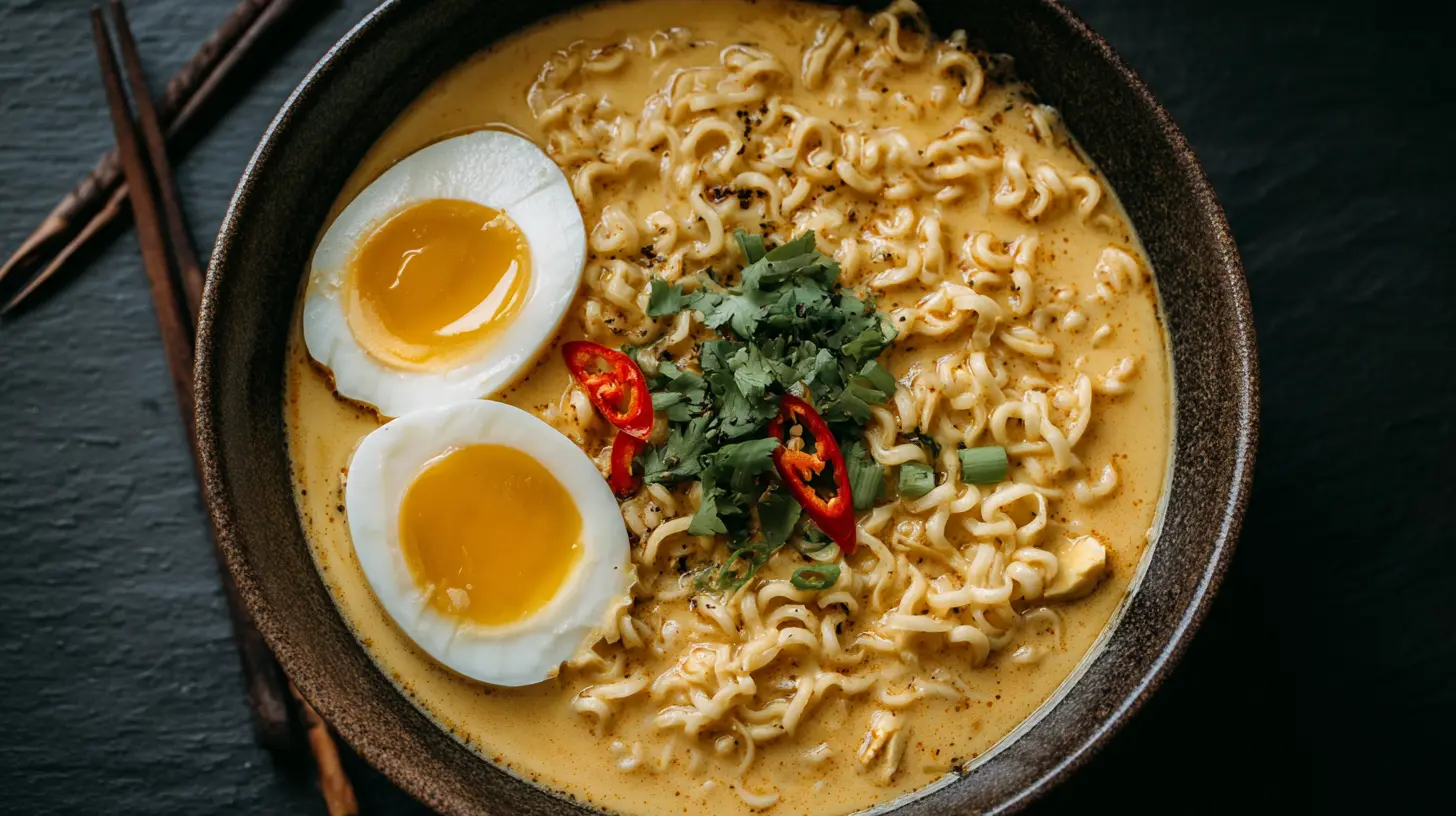
5-Ingredient Thai Coconut Curry Ramen
Get ready to make a delicious and easy Thai-inspired ramen dish!
Ramen Noodles
Coconut Milk
Red Curry Paste
Vegetables
Protein (e.g. Tofu, Chicken)
Boil the ramen noodles according to package instructions.
In a pot, simmer coconut milk and red curry paste.
Add vegetables and protein to the curry sauce.
Let it simmer until vegetables are tender and protein is cooked.
Add cooked ramen noodles to the pot and stir to combine.
The Ultimate Guide to Making THAI COCONUT CURRY RAMEN at Home
Have you ever craved a bowl of comforting, aromatic noodles that combine the best of Thai and Japanese cuisines? Learning to prepare THAI COCONUT CURRY RAMEN at home opens up a world of culinary possibilities that will transform your weeknight dinners. This fusion dish brings together the creamy richness of coconut milk, the aromatic spices of Thai curry noodles, and the satisfying slurp of ramen into one magnificent bowl. Making this comfort food at home allows you to customize the heat level, add your favorite proteins, and enjoy restaurant-quality Asian cuisine without leaving your kitchen.
Ingredients & Kitchen Tools
For the Broth:
– 2 tablespoons vegetable oil (for sautéing aromatics)
– 3 tablespoons Thai red curry paste (adjust according to your spice preference)
– 4 cups chicken or vegetable broth (homemade preferred but store-bought works well)
– 1 can (13.5 oz) full-fat coconut milk (provides the signature creaminess)
– 2 tablespoons soy sauce or tamari (for depth of flavor)
– 1 tablespoon brown sugar or palm sugar (balances the heat)
– 1 tablespoon lime juice (adds brightness at the end)
For the Noodles & Toppings:
– 4 packages ramen noodles, seasoning packets discarded (or fresh ramen if available)
– Protein of choice: sliced chicken, shrimp, or tofu (approximately 1 pound)
– 1 red bell pepper, thinly sliced (adds color and sweetness)
– 2 cups baby spinach or bok choy (for nutritional value)
– 1 cup bean sprouts (adds crunch)
– Fresh cilantro, lime wedges, and sliced green onions (for garnish)
– Optional: soft-boiled eggs, sliced mushrooms, or crushed peanuts
Tools Needed:
– Large pot for cooking noodles
– Deep skillet or Dutch oven for broth
– Sharp knife and cutting board
– Measuring cups and spoons
– Tongs for handling noodles
– Ladle for serving
Prep Time & Cooking Schedule
Total Time: 30-40 minutes
– Prep Time: 15 minutes (chopping vegetables, preparing proteins)
– Cook Time: 15-20 minutes (making broth and cooking components)
– Assembly: 5 minutes
This dish comes together relatively quickly, making it perfect for weeknight dinners. You can prepare the vegetables and proteins ahead of time to streamline the cooking process when you’re ready to eat.
Step-by-Step Instructions
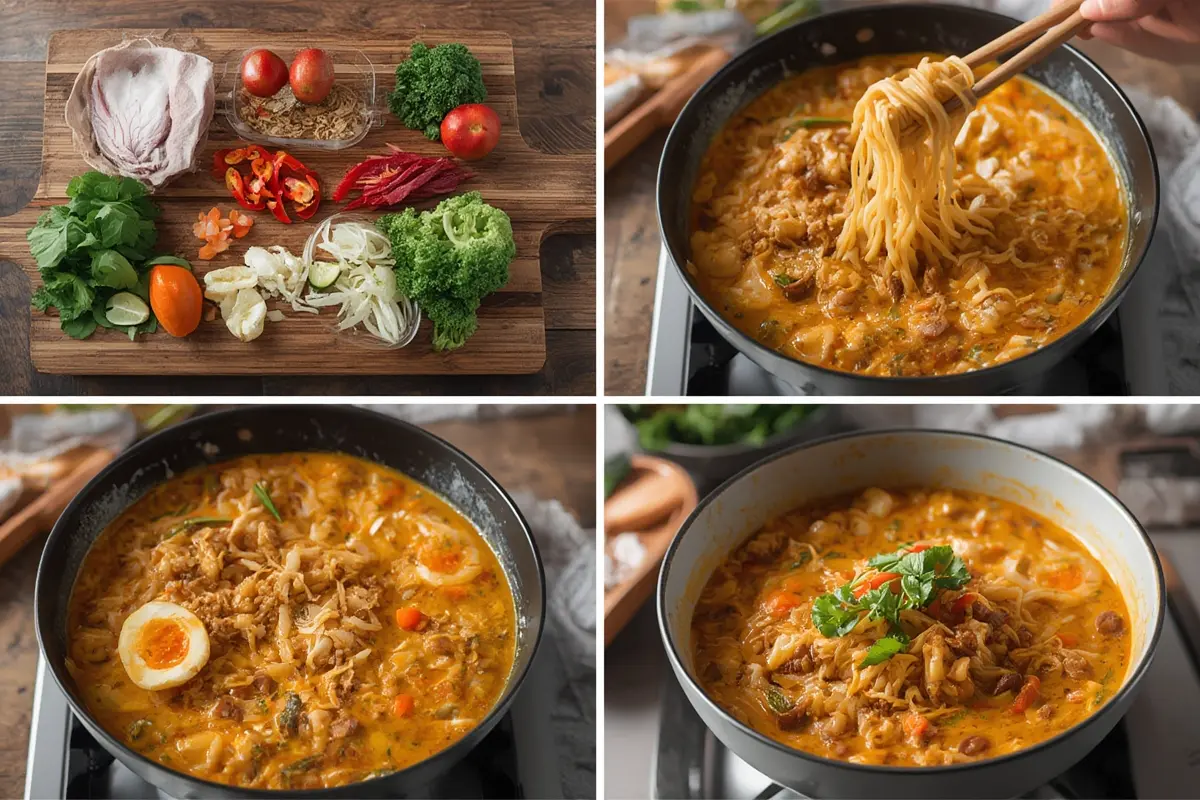
1. Prepare the aromatics: Heat vegetable oil in a large pot or Dutch oven over medium heat. Add minced garlic, ginger, and lemongrass (if using) and sauté for 1-2 minutes until fragrant.
2. Create the curry base: Add Thai red curry paste to the pot and cook for another minute, stirring constantly to prevent burning. This step is crucial for developing the complex flavors that make THAI COCONUT CURRY RAMEN so distinctive.
3. Build the broth: Pour in chicken broth, coconut milk, soy sauce, and brown sugar. Bring to a gentle simmer and let it cook for 10 minutes to allow flavors to meld.
4. Prepare the proteins: While the broth simmers, cook your protein of choice in a separate pan. For chicken or shrimp, season with salt and pepper and sauté until fully cooked. For tofu, crisp it in a pan or bake it for better texture.
5. Cook the noodles: In another pot, prepare ramen noodles according to package instructions, usually 2-3 minutes in boiling water. Slightly undercook them as they’ll continue cooking in the hot broth. Drain and set aside.
6. Combine and finish: Add sliced bell peppers and leafy greens to the simmering broth and cook for 2-3 minutes until vegetables are tender-crisp. This is where the Thai curry noodles begin to come together with all the complementary ingredients.
7. Assemble the bowls: Place cooked noodles in serving bowls, ladle the hot curry broth over them, and top with your cooked protein, bean sprouts, and garnishes.
Nutritional Benefits & Advantages
This fusion dish offers numerous health benefits. The coconut milk provides healthy fats that help with nutrient absorption. Fresh vegetables add vitamins, minerals, and fiber, while proteins contribute essential amino acids. Garlic, ginger, and chili in the curry paste contain compounds with anti-inflammatory properties. Depending on your protein choice, this dish can be adapted to fit various dietary needs while still delivering complete nutrition.
Tips, Variations & Cooking Advice
– Heat level: Adjust the amount of curry paste based on your spice preference.
– Protein swaps: Rotate between chicken, shrimp, tofu, or even thinly sliced beef for variety.
– Vegetable options: Any quick-cooking vegetable works well—try snow peas, carrots, or mushrooms.
– Noodle alternatives: Substitute rice noodles, udon, or even zucchini noodles for different dietary needs.
– Make it vegan: Use vegetable broth, tofu, and check that your curry paste is fish sauce-free.
– Boost umami: Add a tablespoon of miso paste or a dash of fish sauce for deeper flavor.
Common Mistakes to Avoid
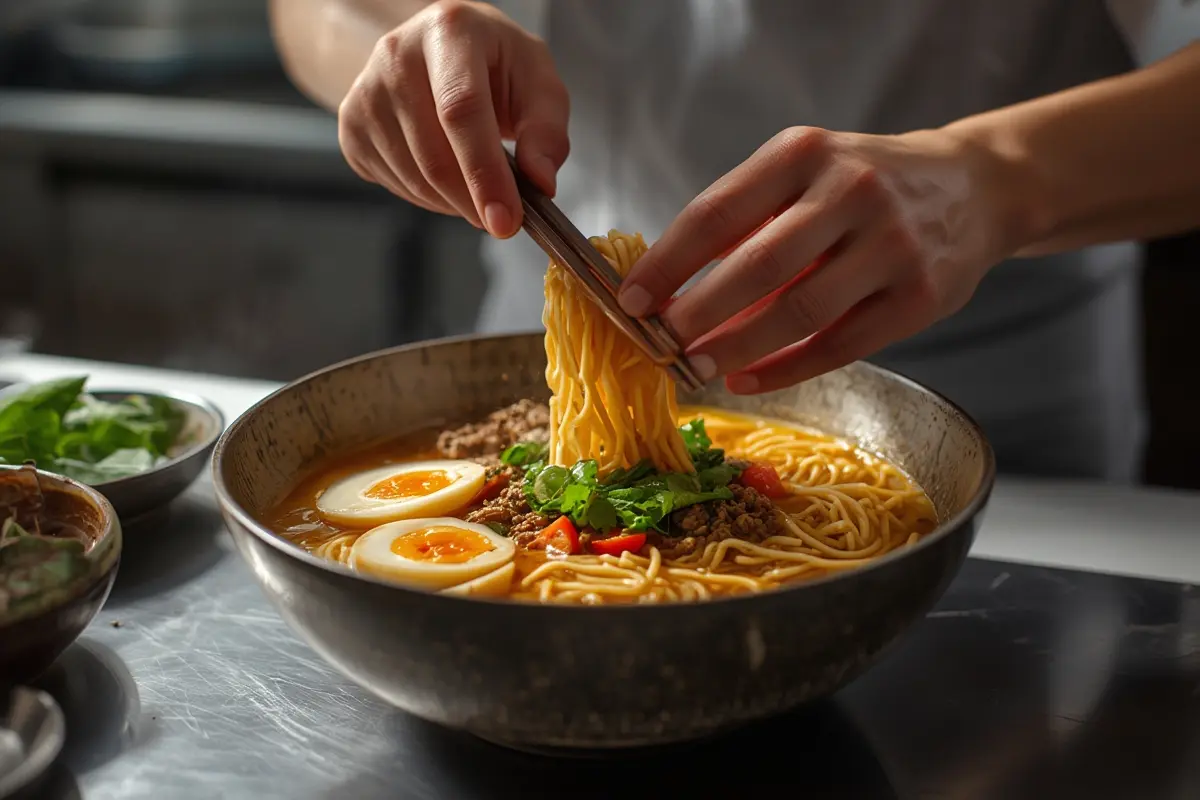
1. Overcooking noodles: Ramen noodles cook very quickly and continue to absorb liquid. Cook them slightly al dente.
2. Boiling coconut milk: Simmer gently to prevent the coconut milk from separating.
3. Skipping the curry paste blooming step: Sautéing the paste in oil releases essential flavors.
4. Adding lime juice too early: Add it at the end to preserve the bright citrus notes.
5. Rushing the broth: Allow adequate simmering time for flavor development.
Storage & Meal Prep Tips
Store broth and noodles separately in airtight containers in the refrigerator for up to 3 days. Freeze the broth (without coconut milk) for up to 3 months. When reheating, warm the broth gently on the stovetop and cook fresh noodles, as stored noodles tend to become soggy. For meal prep, prepare the broth and toppings in advance, then cook fresh noodles when ready to serve.
Conclusion
Creating THAI COCONUT CURRY RAMEN at home allows you to enjoy a restaurant-quality dish that’s customizable to your taste preferences and dietary needs. This fusion recipe bridges the gap between traditional Japanese ramen and Thai curry noodles, resulting in a bowl that’s greater than the sum of its parts. Don’t be afraid to experiment with different proteins, vegetables, and heat levels to make this recipe your own signature dish that family and friends will request time and again.
FAQs
Can I make this dish less spicy?
Yes, reduce the amount of curry paste and add a little more coconut milk. You can also serve with cooling toppings like cucumber or extra lime wedges.
What’s the best protein for this dish?
Shrimp and chicken are traditional favorites, but tofu absorbs the flavors beautifully for a vegetarian option. For best results, marinate your protein briefly before cooking.
Can I make this ahead for a dinner party?
Prepare the broth a day ahead (it actually improves with time) and cook noodles fresh just before serving. Set up a topping bar for guests to customize their bowls.
My coconut milk curdled, what happened?
This usually happens when coconut milk boils too vigorously. Keep it at a gentle simmer and consider adding it later in the cooking process.
What’s the difference between Thai curry ramen and traditional ramen?
Traditional Japanese ramen uses a pork, chicken, or dashi-based broth, while this fusion version incorporates coconut milk and Thai curry paste for a completely different flavor profile.
Best way to grow 5-Ingredient THAI COCONUT CURRY RAMEN
Equipment
- medium pot
- measuring spoons
- can opener
- citrus juicer
Ingredients
Main Ingredients
- 2 tbsp red curry paste
- 1 can (13.5 oz) coconut milk
- 2 cups vegetable broth
- 2 packages ramen noodles (discard seasoning packet)
- 1 lime for juice and wedges
Optional Toppings
- fresh cilantro chopped
- green onions sliced
- chili garlic sauce to taste
- fried egg
Protein Add-ins
- shrimp cooked
- chicken cooked and shredded
- tofu cubed and pan-fried
Instructions
Cooking steps
- In a medium pot, combine the red curry paste, coconut milk, and vegetable broth. Bring the mixture to a simmer over medium heat, stirring occasionally.
- Add the ramen noodles to the pot and cook according to package instructions, typically 3-5 minutes, until tender. Stir occasionally to prevent sticking.
- Remove the pot from the heat and stir in the juice of half a lime. Taste and adjust seasoning as needed.
- Divide the ramen into two bowls. Garnish with your favorite toppings such as fresh cilantro, sliced green onions, chili garlic sauce, or a fried egg. Serve immediately with extra lime wedges.