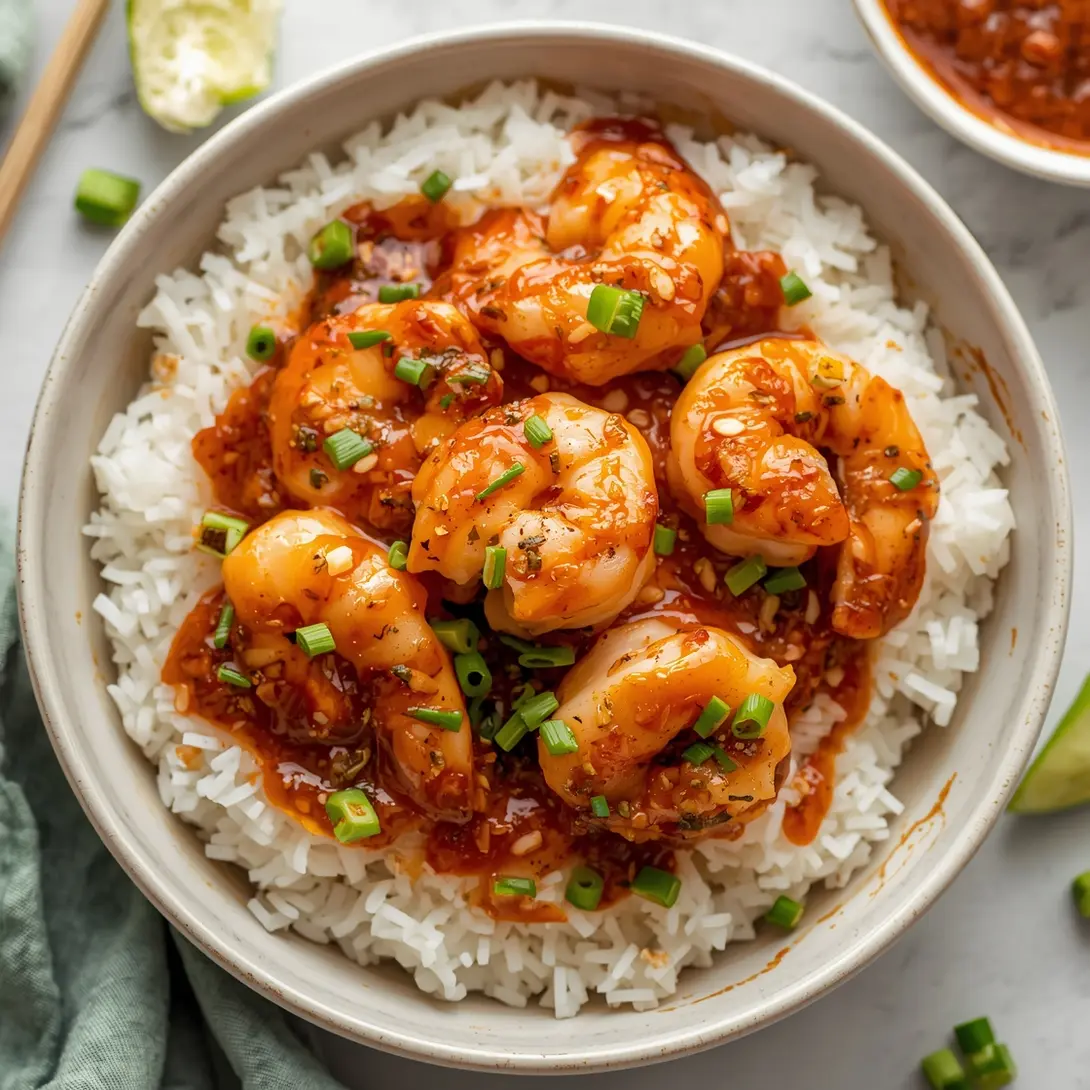
- Cook the rice – While the rice simmers, you’ll prep the sauce and vegetables.
- Marinate the shrimp – A quick 5‑minute soak in the teriyaki mixture infuses flavor.
- Stir‑fry the veggies – A hot wok or skillet gives them a crisp‑tender bite.
- Sear the shrimp – The same pan works its magic, caramelizing the glaze.
- Assemble the bowls – Layer rice, veggies, shrimp, then finish with toppings and a drizzle of extra sauce.
This linear approach means you’re never waiting on a single element; each step builds on the last, keeping the kitchen rhythm smooth and the final bowl piping hot.
—What you’ll need
For the Teriyaki Shrimp and Rice Power Bowl: 5 Reasons to Eat This Protein‑Packed Meal DailyIngredient Quantity Notes / Substitutions Jasmine or basmati rice 1 ½ cups (uncooked) Use brown rice for extra fiber (increase water by ¼ cup). Large shrimp, peeled & deveined 1 lb (≈ 450 g) Frozen peeled shrimp work fine; thaw before use. Low‑sodium soy sauce ¼ cup Tamari for gluten‑free version. Mirin (sweet rice wine) 2 Tbsp Substitute with a splash of rice vinegar + honey. Honey or agave nectar 1 Tbsp Adjust to taste for less sweetness. Fresh ginger, finely grated 1 tsp Ground ginger (½ tsp) works in a pinch. Garlic, minced 2 cloves Garlic powder (¼ tsp) if fresh unavailable. Sesame oil 1 Tbsp Can replace with light olive oil for a milder flavor. Cornstarch 1 tsp Optional – helps thicken the glaze. Mixed vegetables (e.g., bell peppers, snap peas, carrots, broccoli) 3 cups, sliced Fresh or frozen; keep bite‑size pieces. Green onions, sliced 2 Tbsp For garnish. Toasted sesame seeds 1 Tbsp Optional, adds crunch. Lime wedges ½ lime For a fresh finish. Optional toppings: avocado, sriracha, pickled radish As desired Personalize each bowl.
Equipment: medium saucepan, large skillet or wok, mixing bowl, measuring spoons, wooden spoon or spatula.
—Step‑by‑step instructions
- Rinse the rice under cold water until the water runs clear. Transfer to a saucepan, add 3 cups water (or per package instructions), bring to a boil, then cover and simmer 12‑15 minutes until fluffy. Set aside, keeping the lid on.
- Prepare the teriyaki glaze: In a small bowl, whisk together soy sauce, mirin, honey, ginger, garlic, and cornstarch. Set aside; the cornstarch will activate when heated.
- Marinate the shrimp: Toss the peeled shrimp with half of the glaze (reserve the rest for later). Let sit 5 minutes while the rice cooks.
- Heat the skillet over medium‑high heat and add sesame oil. Once shimmering, add the mixed vegetables. Stir‑fry 3‑4 minutes until bright‑colored but still crisp. Transfer veggies to a plate.
- Cook the shrimp: In the same skillet, add the marinated shrimp in a single layer. Let each side sear for 2‑3 minutes; the glaze should caramelize, giving the shrimp a glossy finish. Remove shrimp and set aside with the veggies.
- Combine and finish the sauce: Return the skillet to the heat, pour the remaining glaze, and stir continuously for 1‑2 minutes until it thickens. If the sauce looks too thick, splash in a tablespoon of water.
- Assemble the bowl: Scoop a generous portion of rice into each serving bowl. Top with sautéed vegetables, then arrange the teriyaki shrimp on top. Drizzle the thickened sauce over everything.
- Garnish: Sprinkle sliced green onions, toasted sesame seeds, and a squeeze of lime. Add any optional toppings—sliced avocado for creaminess, a drizzle of sriracha for heat, or pickled radish for tang.
Serve immediately, and enjoy the harmony of sweet, salty, and umami flavors in every bite.
—[FINAL_IMAGE]
Creative serving ideas & plating suggestions
– Bowl on a rustic wooden board: Place the assembled bowl on a reclaimed wood slab for a photo‑ready presentation. – Color‑coded layers: Alternate rice, orange carrots, green peas, and pink shrimp for a rainbow effect that’s Instagram‑worthy. – Crunch factor: Add a handful of crushed peanuts or fried shallots just before serving for an extra textural surprise. – Side companions: Pair with a light cucumber‑sesame salad, miso‑soup, or a steaming bowl of edamame. A crisp Asian slaw (cabbage, carrots, rice‑vinegar dressing) cuts through the sweet glaze nicely. – Sauce station: Serve extra teriyaki sauce in small ramekins, allowing diners to customize the intensity of flavor. – Meal‑prep stack: Layer rice, shrimp, veggies, and sauce in separate compartments of a divided container for a grab‑and‑go lunch that stays fresh throughout the week.
—How to store and freeze
Refrigeration – Let the bowl cool to room temperature (no more than 2 hours). – Transfer rice, shrimp, and vegetables into airtight containers, keeping the sauce separate if you prefer a less soggy texture. – Store in the refrigerator for up to 4 days.
Reheating – Microwave on medium‑high for 1‑2 minutes, stirring halfway through. Add a splash of water or extra sauce to restore moisture. – For a crispier finish, re‑heat the shrimp and veggies in a hot skillet for 2‑3 minutes with a drizzle of oil.
Freezing – Freeze cooked rice and uncooked shrimp separately for best results. – Place rice in freezer‑safe bags (flattened for even thawing) and shrimp in another bag with the reserved teriyaki glaze. – Freeze for up to 3 months. – To use, thaw rice overnight in the fridge, then steam briefly. Thaw shrimp in the refrigerator, then stir‑fry with the glaze as directed.
Food safety tip: Shrimp should never sit at room temperature for longer than 2 hours. When reheating, ensure the internal temperature reaches 165 °F (74 °C) to eliminate any bacterial risk.
—Helpful cooking tips
- Dry shrimp first – Pat the shrimp with paper towels before marinating; excess water prevents proper caramelization.
- Don’t overcrowd the pan – Cook shrimp in batches if necessary. Overcrowding drops the pan temperature, resulting in steamed rather than seared shrimp.
- Use a hot wok – A well‑heated wok creates that signature “sear” and keeps veggies crisp.
- Adjust sweetness – If you prefer a less sweet glaze, reduce honey by half and increase the soy sauce slightly.
- Make ahead sauce – The teriyako glaze keeps for a week in the fridge. Prepare it in bulk and use it for stir‑fries, salads, or as a dipping sauce.
—Creative twists
Twist How to incorporate Spicy Korean Add 1 tsp gochujang to the glaze; finish with a drizzle of sesame oil and a sprinkle of kimchi. Coconut‑lime Replace half the soy sauce with coconut aminos and add 1 tsp lime zest to the glaze. Top with toasted coconut flakes. Plant‑based Substitute shrimp with marinated tofu cubes or tempeh strips; keep the same glaze and cooking method. Mediterranean vibe Swap jasmine rice for quinoa, use a lemon‑ginger glaze, and garnish with feta crumbles and chopped mint. Breakfast bowl Use day‑old rice, add a fried egg on top, and drizzle with a reduced teriyaki‑sriracha sauce. Low‑carb Replace rice with cauliflower rice; increase the amount of vegetables to maintain volume.
Feel free to mix and match—each variation keeps the core idea of a balanced, protein‑rich power bowl while tailoring it to your cravings or dietary needs.
—Helpful answers
Q1: How long does the entire recipe take from start to finish? A: Prep time is about 10 minutes (rinsing rice, chopping veggies, whisking the glaze). Cooking takes roughly 12‑15 minutes, so the total is 20‑25 minutes—ideal for a weeknight dinner.
Q2: Can I use frozen vegetables instead of fresh? A: Absolutely. Frozen mixed stir‑fry vegetables work well; just add them straight to the hot pan without thawing. Expect a slightly softer texture, but the flavor remains bright.
Q3: I’m allergic to soy. What can I substitute for the soy sauce? A: Use coconut aminos or a tamari‑free soy‑free sauce like Bragg’s Liquid Aminos (if tolerated). Adjust the salt level because some alternatives are less salty than regular soy sauce.
Q4: Is this bowl suitable for a keto diet? A: Swap the rice for cauliflower rice or shirataki rice noodles, and keep the rest of the ingredients unchanged. The macro profile will shift to a lower carb, higher fat composition.
Q5: How many servings does this recipe make? A: The quantities listed yield 4 generous bowls (about 400 g each), perfect for a family of four or meal‑prep for the week.
—
Enjoy the convenience, flavor, and nutritional payoff of the Teriyaki Shrimp and Rice Power Bowl. Whether you serve it hot tonight, pack it for tomorrow’s lunch, or freeze it for a busy day ahead, this protein‑packed bowl proves that healthy eating can be fast, delicious, and endlessly adaptable. Bon appétit!
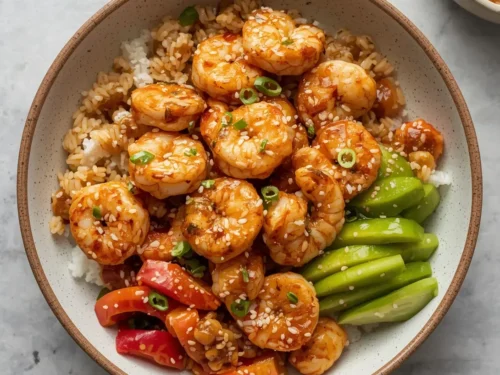
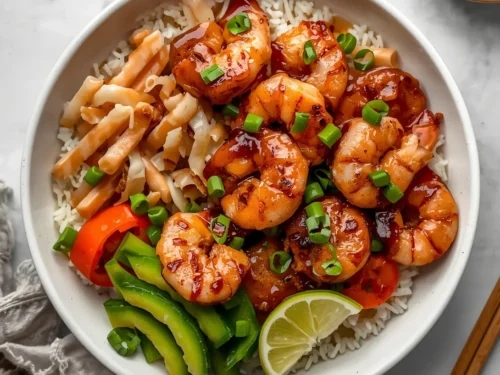
Classic Teriyaki Shrimp and Rice Power Bowl
This power bowl features succulent teriyaki shrimp, fluffy rice, and a colorful mix of vegetables, offering a balanced and flavorful meal perfect for a quick dinner or meal prep.
Equipment
- Saucepan
- Small bowl
- Whisk
- Large skillet or wok
Ingredients
Main Ingredients
- 1 ½ cups Jasmine or basmati rice uncooked
- 1 lb Large shrimp peeled & deveined
- ¼ cup Low-sodium soy sauce
- 2 Tbsp Mirin (sweet rice wine)
- 1 Tbsp Honey or agave nectar
- 1 tsp Fresh ginger finely grated
- 2 cloves Garlic minced
- 1 Tbsp Sesame oil
- 1 tsp Cornstarch optional
- 3 cups Mixed vegetables e.g., bell peppers, snap peas, carrots, broccoli, sliced
Garnish & Toppings
- 2 Tbsp Green onions sliced
- 1 Tbsp Toasted sesame seeds
- ½ lime Lime wedges
- Optional toppings avocado, sriracha, pickled radish
Instructions
Rice Preparation
- Rinse rice under cold water until clear, then transfer to a saucepan with water (3 cups or as per package).
- Bring to a boil, then cover and simmer for 12-15 minutes until fluffy; keep lid on and set aside.
Shrimp Marinade
- Whisk together soy sauce, mirin, honey, ginger, garlic, sesame oil, and optional cornstarch in a small bowl.
- Add shrimp to the marinade, toss to coat, and let marinate for 10-15 minutes while preparing vegetables.
Cooking
- Heat a large skillet or wok over medium-high heat with a drizzle of oil.
- Add marinated shrimp and cook for 2-3 minutes per side until pink and opaque.
- Remove shrimp and set aside, leaving any excess marinade in the skillet.
- Add mixed vegetables to the skillet and sauté for 5-7 minutes until tender-crisp.
- Return shrimp to the skillet with vegetables and toss to combine; heat through for 1-2 minutes.
Assembly & Serving
- Divide cooked rice among power bowls.
- Top with the shrimp and vegetable mixture.
- Garnish with sliced green onions, toasted sesame seeds, and a lime wedge.
Notes
For best flavor, do not overcook the shrimp. Adjust spice level with sriracha or red pepper flakes if desired. Feel free to customize with your favorite vegetables.