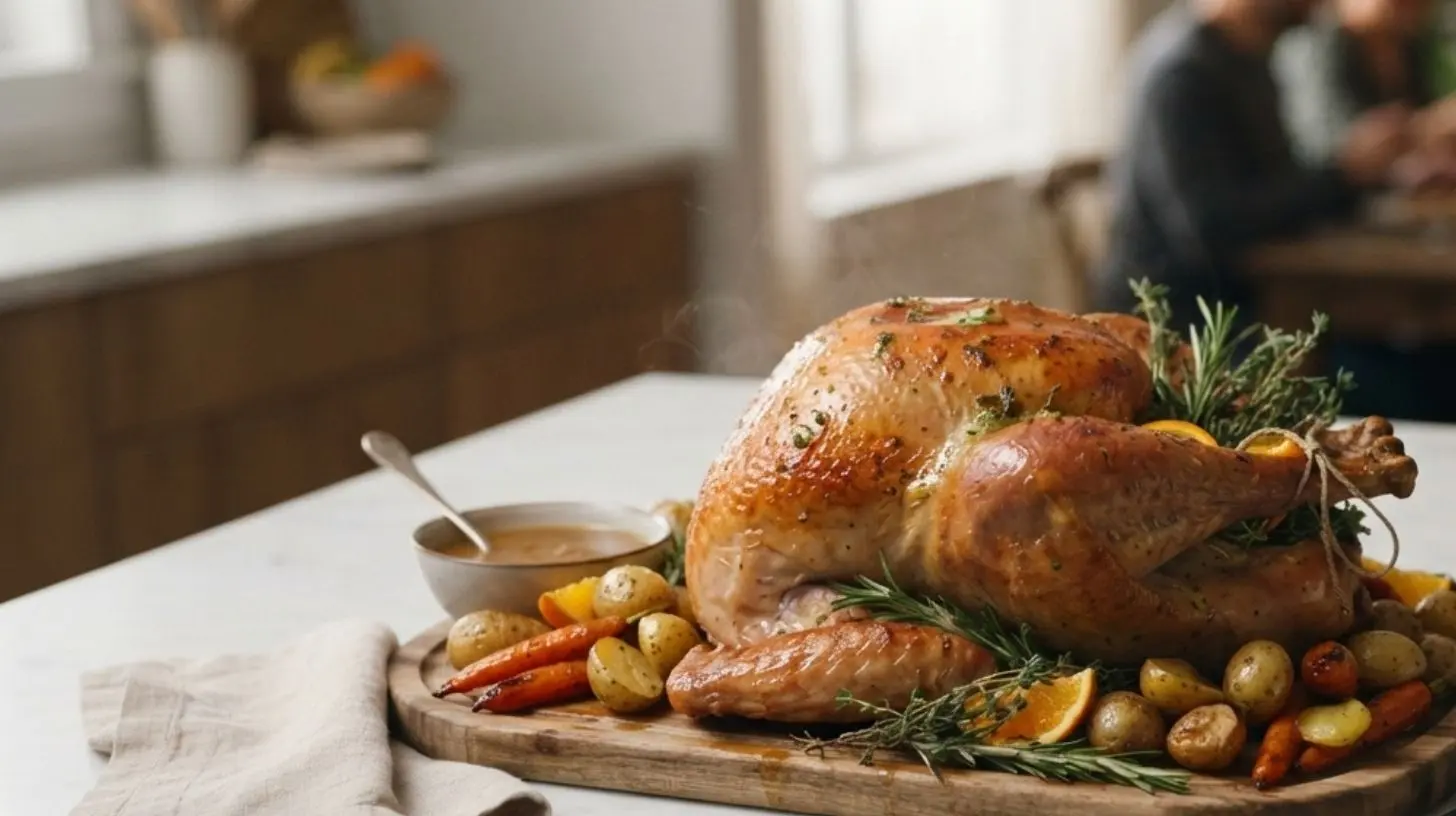
Perfect Roast Turkey
Learn how to grow a perfect roast turkey in just 4 hours.
Whole Turkey
Butter
Salt
Pepper
Fresh Herbs
Garlic
Lemon
Preheat the oven to 325°F.
Rub the turkey with butter, salt, and pepper.
Stuff the cavity with fresh herbs, garlic, and lemon.
Roast the turkey in the oven for 4 hours.
Let the turkey rest for 30 minutes before carving.
The Ultimate Guide to Perfect Roast Turkey: A Thanksgiving Classic Made Easy
Have you ever wondered why some roast turkeys turn out dry and flavorless while others are succulent, golden, and bursting with savory goodness? The secret isn’t just in the recipe—it’s in the technique. Preparing a Roast Turkey at home is more than a meal; it’s a centerpiece that transforms ordinary gatherings into memorable feasts. Whether you’re hosting a holiday dinner or a weekend family meal, mastering this dish saves money, impresses guests, and allows you to customize flavors to your liking. Let’s dive into the science and art of creating the perfect roast turkey, complete with actionable tips and expert insights.
Ingredients & Kitchen Tools
Required Ingredients
– 1 whole turkey (12-14 lbs): Thawed completely; fresh is best for moisture retention.
– 1/2 cup unsalted butter (softened): Creates a golden, crispy skin.
– 2 tbsp olive oil: Helps browning and adds richness.
– 2 tsp salt: Essential for seasoning; use kosher salt for even distribution.
– 1 tsp black pepper: Freshly ground enhances aroma.
– 2 tbsp fresh rosemary (chopped): Adds earthy, piney notes.
– 2 tbsp fresh thyme (chopped): Complements poultry flavors perfectly.
– 4 cloves garlic (minced): Infuses flavor deeply into the meat.
– 1 lemon (quartered): Adds brightness and tenderizes meat.
– 1 onion (quartered): Provides moisture and sweetness during roasting.
– 2 cups low-sodium chicken broth: Base for basting and gravy.
– Optional substitutions: Use ghee for dairy-free; dried herbs if fresh unavailable (use 1/3 amount).
Kitchen Tools
– Roasting pan with rack: Elevates turkey for even heat circulation.
– Meat thermometer: Crucial for doneness (165°F in breast, 175°F in thigh).
– Basting brush: Helps apply butter evenly.
– Aluminum foil: Prevents over-browning.
– Carving knife and fork: For clean slices.
– Kitchen twine: Ties legs for uniform cooking.
Prep Time & Cooking Schedule
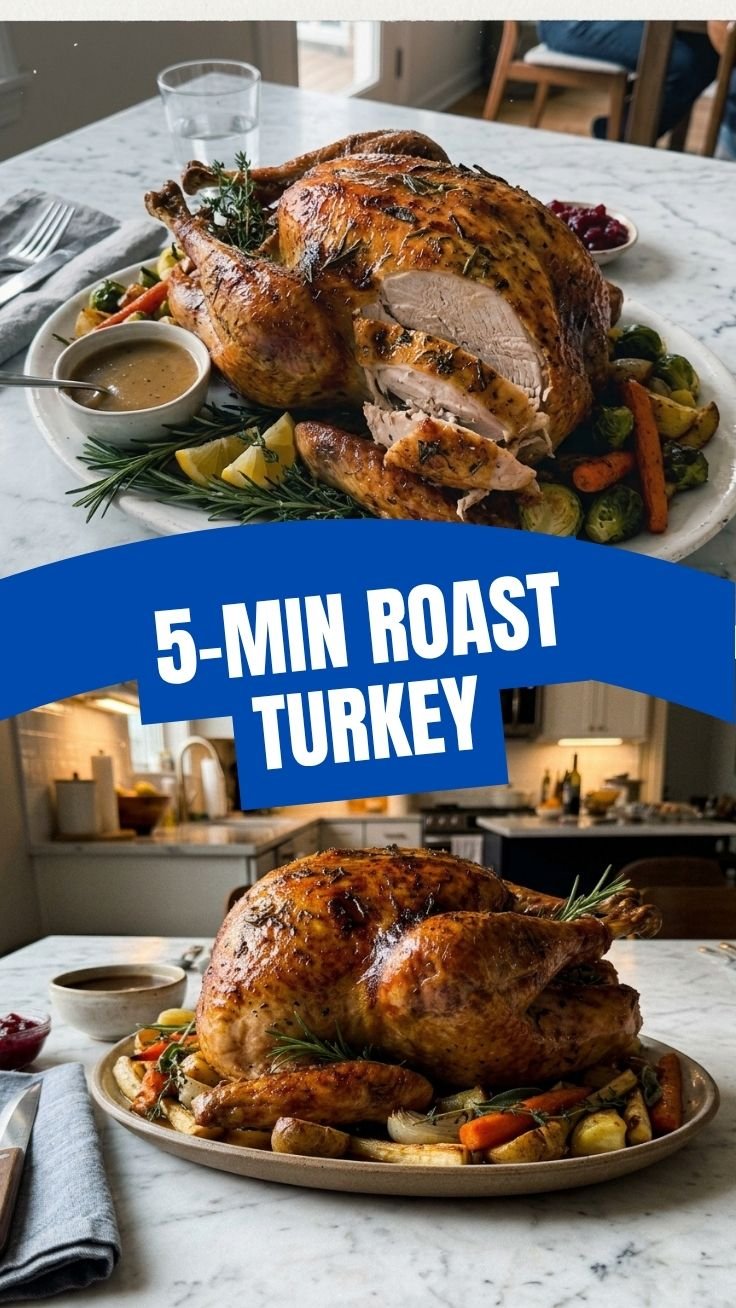
– Prep time: 30 minutes (includes patting dry, seasoning, and trussing).
– Cook time: 3 to 3.5 hours for a 12-14 lb turkey at 325°F.
– Resting time: 20-30 minutes before carving (critical for juice retention).
– Marinating time: Optional 12-24 hours dry brine in fridge for enhanced flavor.
– Planning tip: Start thawing 3-4 days ahead in refrigerator. Begin roasting 5-6 hours before serving to allow resting and gravy preparation.
Step-by-Step Instructions
1. Preheat oven to 325°F. Remove turkey from fridge 1 hour before cooking to bring to room temperature.
2. Pat turkey dry inside and out with paper towels (moisture prevents crisp skin). Season cavity with salt and pepper.
3. Mix softened butter with chopped rosemary, thyme, garlic, and olive oil. Gently lift skin over breast and spread half the butter mixture directly under the skin. Rub remaining mixture over the entire exterior.
4. Stuff cavity with lemon and onion quarters. Tie legs together with kitchen twine and tuck wing tips under body.
5. Place turkey on rack in roasting pan. Pour 1 cup chicken broth into pan bottom (not over bird). Tent loosely with foil.
6. Roast for 2.5 hours, basting every 30-45 minutes with pan juices. Remove foil during last 45 minutes for golden skin.
7. Check temperature: Insert thermometer into thickest part of breast (not touching bone) – target 165°F. Thigh should reach 175°F. The Roast Turkey should register these safely. For Thanksgiving Turkey Recipes, you can optionally glaze with honey during last 20 minutes.
8. Rest on cutting board tented with foil for 20-30 minutes before carving. Reserve pan drippings for gravy.
Nutritional Benefits & Advantages
A 3-ounce serving of skinless roast turkey provides approximately 25g of protein, 2g of fat, and 125 calories. It’s rich in B vitamins (B6 and B12), selenium, and zinc, which support immune function and metabolism. The lean protein aids muscle repair and satiety. Turkey also contains tryptophan, which promotes sleep but doesn’t cause drowsiness alone—it’s the heavy meal combo. Compared to fried versions, roasted turkey has 40% fewer calories and less saturated fat. Using herbs like rosemary and thyme adds antioxidants without extra sodium.
Tips Variations & Cooking Advice
– Flavor variations: Swap fresh herbs for sage and marjoram; add orange zest for citrus note. Use garlic-herb compound butter with smoked paprika for depth.
– Ingredient swaps: Try duck or chicken for smaller birds. Use vegetable broth for lighter flavor. Add 1/4 cup white wine to pan for acidity.
– Cooking methods: Spatchcock (butterfly) turkey reduces cook time by 30-40%. Grill at 350°F for smoky flavor. Use air fryer (10-12 lbs max) at 360°F.
– Dietary adaptations: Gluten-free if using certified broth. Dairy-free use coconut oil or ghee. Low-sodium by reducing salt and using unsalted broth.
– Portion changes: For 2-3 people, use turkey breast only (roast 90-120 mins at 325°F).
Common Mistakes to Avoid
– Not thawing completely: A partially frozen turkey cooks unevenly, risking foodborne illness. Thaw 24 hours per 4-5 lbs in fridge.
– Overbasting: Opens oven door too often, causing temperature drops and dry meat. Baste every 45 minutes max.
– Skipping resting: Cutting immediately releases juices onto cutting board instead of reabsorbing into meat. Always rest 20+ minutes.
– Ignoring temperature: Color isn’t reliable—only a thermometer ensures safety (165°F minimum). Insert into breast and thigh separately.
– Packing pan too full: Crowding prevents air circulation. Use rimmed baking sheet for extra space.
Storage & Meal Prep Tips
– Refrigeration: Store carved meat in shallow airtight containers for 3-4 days. Keep gravy separate to avoid sogginess.
– Freezing: Wrap portions tightly in plastic wrap, then foil, or use vacuum-seal bags. Freeze up to 4 months at 0°F.
– Reheating: For best texture, reheat in oven at 325°F with a splash of broth covered with foil for 15-20 minutes. Microwave for quick reheating (1-2 minutes per serving) but skin won’t crisp. Avoid high heat which dries meat.
– Meal prep: Roast turkey on Sunday for sandwiches, salads, and soups all week. Shredding before storing reduces drying risk.
Conclusion
Mastering this recipe transforms you into the host everyone loves—serving a juicy, flavorful centerpiece without stress. Remember, the perfect Roast Turkey hinges on temperature accuracy and resting time. For more holiday inspiration, explore our collection of Thanksgiving Turkey Recipes to vary preparations or try new sides. Share your results in the comments below—we’d love to see your golden masterpiece! Subscribing to our newsletter gives you weekly cooking tips and exclusive recipes delivered fresh.
FAQs
Q1: Can I stuff the turkey with traditional bread stuffing?
A1: Yes, but this extends cook time (stuffing must reach 165°F) and risks food safety. Cook stuffing separately in a casserole dish for easier temperature control and crispier texture.
Q2: What if my turkey is browning too fast?
A2: Tent loosely with aluminum foil over breast and drumsticks. If already dark, reduce oven temp by 25°F and cover loosely. Butter-based browning is normal; foil prevents burning.
Q3: How do I make gravy from pan drippings?
A3: Pour drippings into a measuring cup, skim fat (reserve 3 tbsp). Whisk with 3 tbsp flour over medium heat, then slowly add broth/water until thickened. Season with salt, pepper, and herbs.
Q4: Can I prepare turkey ahead of time?
A4: Roast 1-2 days ahead, carve, and refrigerate in broth to prevent drying. Reheat covered at 325°F until 165°F. Alternatively, brine and season 12-24 hours before roasting.
Q5: What should I do if turkey is done but white meat is dry?
A5: Slice dark meat separately—it’s more forgiving. For white meat, let rest 15 minutes longer before slicing (residual moisture redistributes). Baste with warm broth before serving.