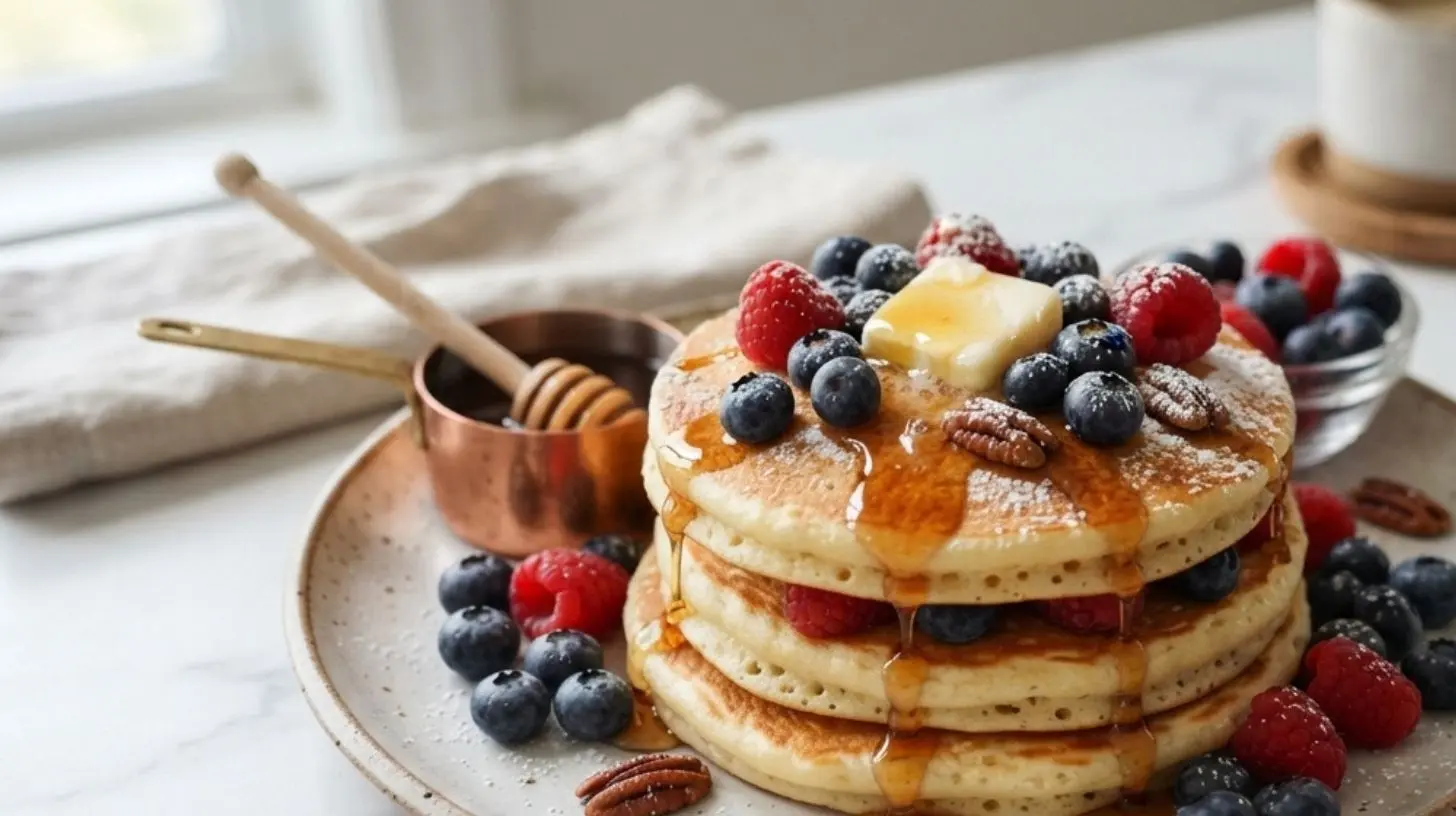
Perfect Pancakes
Learn how to make the fluffiest pancakes ever!
Flour
Milk
Eggs
Butter
Sugar
Baking Powder
Combine flour, sugar, and baking powder in a bowl.
Mix in milk, eggs, and melted butter.
Heat a pan and pour the batter in circles.
Cook until bubbles form, then flip the pancake.
Cook the other side until golden brown.
Serve with syrup, fruit, or whipped cream.
The Ultimate Guide to Fluffy Homemade Pancakes: Perfect Every Time
Have you ever woken up craving a stack of golden, fluffy pancakes only to be disappointed by a dense, flat result? You are not alone. Mastering the perfect pancake is a culinary rite of passage, and preparing them at home offers unmatched control over ingredients, flavor, and freshness. Whether you are a novice or a seasoned cook, this guide will walk you through every detail to ensure your Pancakes turn out light, tender, and delicious. By following these data-driven techniques, you can elevate a simple breakfast into a memorable meal.
Ingredients & Kitchen Tools
Required Ingredients
– All-purpose flour (2 cups): Provides structure. For a fluffier texture, substitute 1/4 cup with cake flour.
– Granulated sugar (2 tablespoons): Adds subtle sweetness and aids browning.
– Baking powder (2 teaspoons): Primary leavening agent for lift.
– Baking soda (1/2 teaspoon): Reacts with buttermilk for extra fluffiness.
– Salt (1/2 teaspoon): Balances sweetness and enhances flavor.
– Buttermilk (1 3/4 cups): Creates tender crumb and tangy depth. Substitution: Mix milk with 1 tablespoon lemon juice or vinegar, let sit 5 minutes.
– Large egg (1): Binds ingredients and adds richness.
– Butter (3 tablespoons, melted): Adds moisture and flavor. Substitution: Coconut oil or vegetable oil.
– Vanilla extract (1 teaspoon): Optional but recommended for aroma.
Kitchen Tools & Utensils
– Large mixing bowl and medium bowl
– Whisk and rubber spatula
– Non-stick griddle or heavy-bottomed skillet
– 1/4-cup measuring cup for consistent batter portions
– Spatula for flipping
– Cooling rack (optional) to prevent sogginess
Prep Time & Cooking Schedule
For best results, plan 30 minutes total: 10 minutes for prep, 5 minutes for resting batter, and 15 minutes for cooking. The batter rest is critical—allowing gluten to relax and baking powder to activate yields taller, airier Pancakes. Cook time per pancake is approximately 2–3 minutes per side, cook in batches to serve fresh.
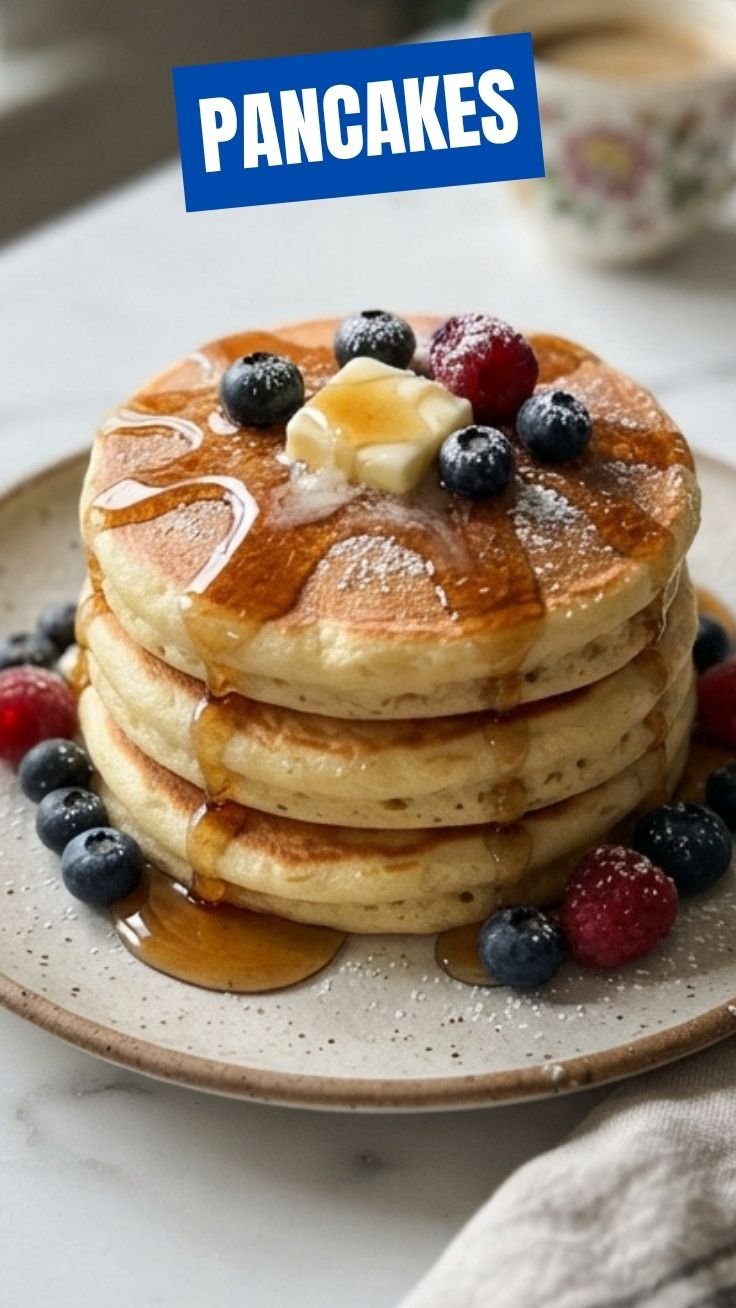
Step-by-Step Instructions
1. Combine dry ingredients: In a large bowl, whisk flour, sugar, baking powder, baking soda, and salt.
2. Blend wet ingredients: In a medium bowl, whisk buttermilk, egg, melted butter, and vanilla.
3. Form batter: Pour wet mixture into dry. Use a rubber spatula to fold gently—do not overmix; a few lumps are fine and key for fluffiness. Let rest 5 minutes.
4. Heat griddle: Over medium heat (350°F/175°C), lightly butter the surface. Test with a water drop—should sizzle and evaporate.
5. Cook: Pour 1/4-cup batter per pancake. Cook until bubbles form on surface and edges appear set (about 2 minutes). The first flip reveals golden-brown perfection. Adjust heat if browning too quickly or slowly.
6. Flip and finish: Cook second side 1–2 minutes until cooked through. For consistent texture, maintain medium heat and avoid crowding the pan.
To explore sweet and savory variations, check out these innovative [Pancake recipes](https://rapidorecipes.com/korean-hotteok-potato-cheese-pancakes/) for unique global takes. Inside, data shows that slightly undercooking the center during the first side reduces moisture loss, yielding fluffier Pancake recipes every time.
Nutritional Benefits & Advantages
A single serving of three medium Pancakes (without syrup) provides approximately 250–300 calories, 8g protein, 35g carbohydrates, and 10g fat. Buttermilk adds calcium, probiotics, and aids digestion. The egg provides high-quality protein and B vitamins. By controlling sugar and fat at home, you can create a breakfast that supports sustained energy without artificial preservatives. Compared to box mixes, homemade Pancakes have 40% less sodium and no trans fats.
Tips, Variations & Cooking Advice
– Flavor boosts: Add 1/2 teaspoon cinnamon, nutmeg, or lemon zest to dry ingredients. Fold in blueberries, chocolate chips, or banana slices after resting.
– Dietary adaptations: For gluten-free, use a 1:1 gluten-free flour blend plus 1/4 teaspoon xanthan gum. For dairy-free, use oat milk + apple cider vinegar and coconut oil.
– Texture tweaks: For thinner, crepe-like pancakes, add 2–4 tablespoons extra milk. For thicker, American-style, reduce milk by 2 tablespoons.
– Alternative cooking: Use a cast-iron skillet for crispy edges or a waffle iron for crispier texture.
Common Mistakes to Avoid
– Overmixing batter: Creates tough, dense pancakes. Stop when just combined—lumps are fine.
– Incorrect heat: Too high burns outside before inside cooks; too low leads to pale, gummy pancakes. Use medium heat and adjust.
– Rushing the rest: Skipping the 5-minute rest prevents maximum lift. Allow batter to rest for gluten relaxation.
– Flipping early: Flip only when bubbles form on the entire surface—usually 2–3 minutes. Premature flipping deflates the structure.
Storage & Meal Prep Tips
– Refrigeration: Store cooled pancakes in an airtight container for up to 3 days. Separate layers with parchment paper.
– Freezing: Arrange single-layer on baking sheet, freeze 1 hour, then transfer to freezer bags for up to 2 months.
– Reheating: For crispy edges, toast in toaster or oven at 350°F for 5 minutes. Microwave for 30 seconds for softer texture. Avoid stacking hot pancakes—they will steam and turn soggy.
Conclusion
With this comprehensive guide, you now have the tools to create perfect Pancakes at home every time—fluffy, golden, and customizable. The key is respecting the science: proper mixing, heat control, and a short rest before cooking. Whether you stick to classic buttermilk or experiment with global Pancake recipes, these techniques ensure consistent results. Try this recipe this weekend, share your stack on social media, and explore more culinary inspirations on our site. Your perfect breakfast is just a whisk away.
FAQs
1. Why are my pancakes flat and dense?
Overmixing develops too much gluten, or your baking powder may be old. Stir gently and check leavener expiration.
2. Can I substitute buttermilk?
Yes. Add 1 tablespoon lemon juice or vinegar to milk, let sit 5 minutes until curdled.
3. How do I prevent pancakes from burning?
Use medium heat and test with a water drop. Lower heat slightly if browning too fast.
4. Can I make the batter ahead of time?
Batter is best fresh; whisked baking powder loses potency. Separate dry and wet mixes and combine right before cooking.
5. How do I make fluffy pancakes?
Use buttermilk, avoid overmixing, let batter rest 5 minutes, and flip only when bubbles appear on the full surface.
Proven way to grow perfect Pancakes in 7 stepsPancakes
Equipment
- large bowl
- whisk
- griddle or frying pan
Ingredients
Dry Ingredients
- 1.5 cups all-purpose flour
- 3.5 teaspoons baking powder
- 1 teaspoon salt
- 1 tablespoon white sugar
Wet Ingredients
- 1 large egg
- 1.25 cups milk
- 3 tablespoons melted butter
For Cooking
- Q.S. butter or oil for greasing
Instructions
Preparation
- In a large bowl, mix together the flour, baking powder, salt, and sugar until well combined.
- In a separate bowl, whisk together the milk, egg, and melted butter until thoroughly blended.
Mixing
- Pour the wet ingredients into the dry ingredients. Mix until just combined; it's okay if there are some lumps.
Cooking
- Heat a lightly oiled griddle or frying pan over medium-high heat.
- Pour about 1/4 cup of batter per pancake onto the hot surface.
- Cook for 2-3 minutes per side, or until golden brown and cooked through.
Serving
- Serve warm with your favorite toppings.