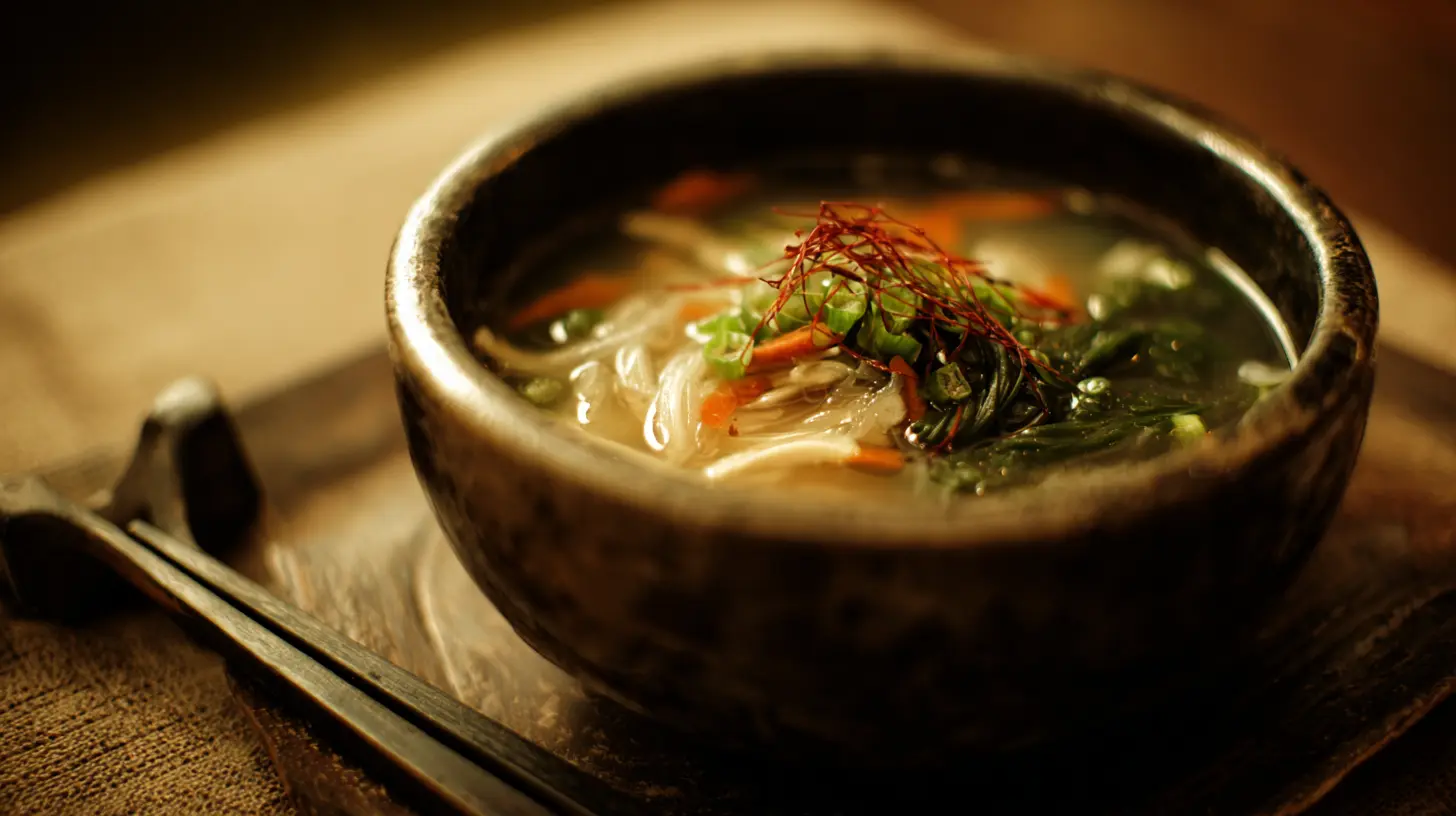
Quick Korean Winter Soup
Learn how to make a delicious Korean soup in no time!
Kimchi
Tofu
Beef broth
Soy sauce
Garlic
Chop the kimchi into small pieces.
Boil the beef broth in a pot.
Add chopped garlic and kimchi to the broth.
Simmer for 10 minutes.
Serve with a side of rice.
How to Make an Authentic Korean Winter Soup That Will Warm Your Soul
Winter calls for hearty, comforting dishes that warm you from the inside out. Have you ever wondered how to recreate those steaming bowls of goodness you’ve enjoyed at your favorite Korean restaurant? Learning to make a traditional Korean Winter Soup at home not only saves you money but connects you to centuries of culinary tradition. This soulful soup, along with festive dishes like Tteokguk, brings authentic Korean flavors right to your kitchen, creating an experience that takeout simply can’t match.
Ingredients & Kitchen Tools
For the Soup Base:
– 1 pound beef brisket or short ribs – for rich flavor foundation
– 8 cups water – use filtered for cleaner taste
– 1 medium onion, quartered – adds natural sweetness
– 6 cloves garlic, peeled – essential for authentic Korean flavor
– 2-inch piece ginger, sliced – helps balance the richness
– 2 green onions, white parts only (save greens for garnish) – adds aromatic complexity
– 2 tablespoons soy sauce – provides umami depth
– 1 tablespoon fish sauce (optional) – enhances savory notes
– Sea salt to taste – for final seasoning adjustments
For the Garnish:
– 2 eggs, beaten – creates beautiful yellow ribbons in the soup
– 2 green onions, green parts thinly sliced – adds fresh color and flavor
– 1 sheet roasted seaweed (gim), cut into thin strips – traditional topping
– 1 tablespoon toasted sesame seeds – nutty finish
– 1 teaspoon sesame oil – aromatic final touch
– Freshly ground black pepper – adds subtle heat
Kitchen Tools:
– Large stockpot (at least 5-quart capacity)
– Fine-mesh strainer
– Ladle
– Sharp knife and cutting board
– Small bowl for beaten eggs
– Measuring spoons and cups
Prep Time & Cooking Schedule
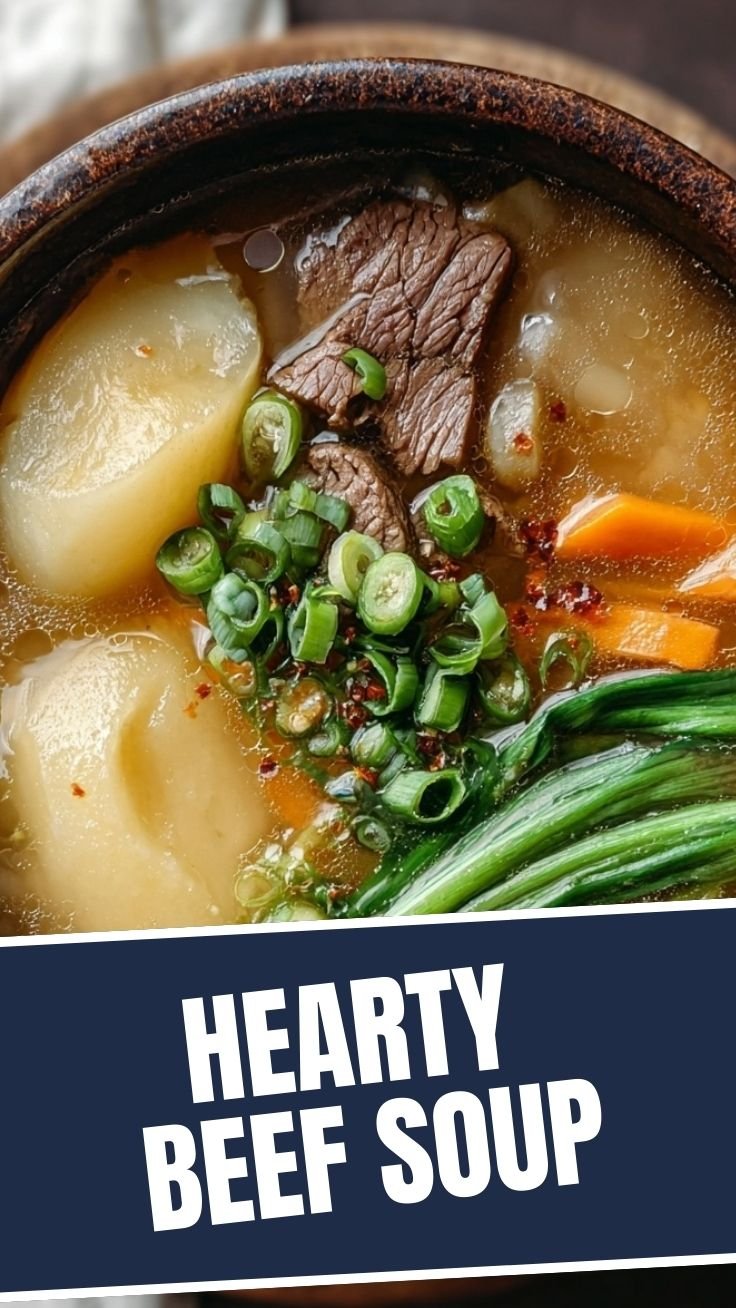
Total Prep Time: 20 minutes
Cooking Time: 2-3 hours (mostly unattended simmering)
Rest Time: 30 minutes recommended for flavors to meld
Total Time Investment: Approximately 3-4 hours
This soup develops its rich flavor through slow cooking, making it perfect for weekend meal prep. Most of the cooking time is unattended simmering, allowing you to tackle other tasks while your kitchen fills with aromatic comfort.
Step-by-Step Instructions
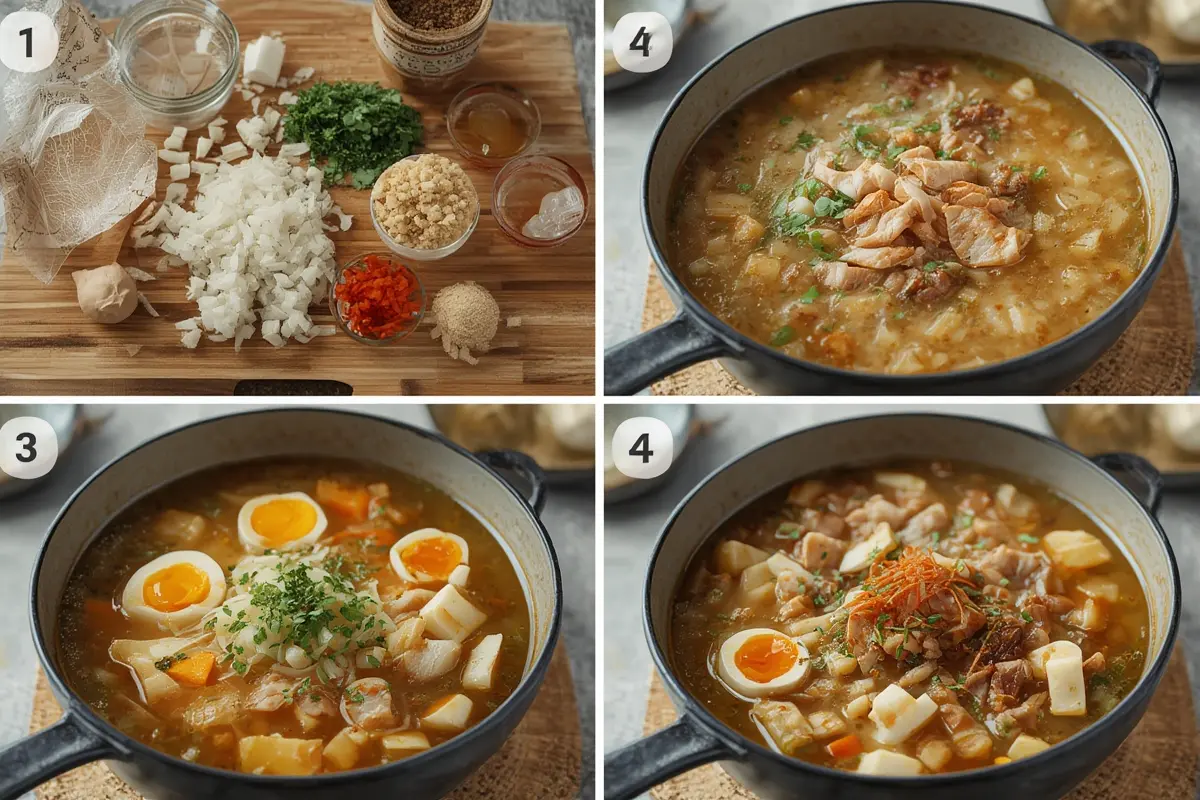
1. Prepare the meat: Rinse the beef under cold water to remove any bone fragments or impurities. For an authentic Korean Winter Soup experience, blanch the meat first by boiling it for 5 minutes, then discarding this water to remove excess fat.
2. Make the broth: In a large stockpot, combine the blanched meat with 8 cups of fresh water. Add onion, garlic, ginger, and white parts of green onions. Bring to a boil, then reduce heat to maintain a gentle simmer.
3. Develop flavor: Simmer uncovered for 2-3 hours, occasionally skimming off any foam that rises to the surface. This patient process creates the deep, complex flavor foundation that distinguishes traditional Tteokguk and other Korean soups.
4. Strain and season: Remove the meat and set aside. Strain the broth through a fine-mesh strainer into another pot, discarding the solids. Add soy sauce and fish sauce if using, then taste and adjust with salt as needed.
5. Prepare garnishes: Shred the cooked beef into bite-sized pieces. Beat eggs in a small bowl. Slice green parts of onions thinly. Cut seaweed into thin strips.
6. Finish the soup: Return the strained broth to a simmer. Slowly pour in the beaten eggs in a thin stream while gently stirring to create egg ribbons.
7. Serve with love: Ladle hot soup into bowls. Add shredded beef and garnish with green onions, seaweed strips, sesame seeds, a drizzle of sesame oil, and freshly ground black pepper.
Nutritional Benefits & Advantages
This nourishing soup offers impressive health benefits beyond its comforting warmth:
– Bone broth provides collagen for joint and digestive health
– High-quality protein from beef supports muscle maintenance
– Garlic and ginger offer immune-boosting properties
– Low in calories while being exceptionally filling
– Provides hydration during dry winter months
– Offers essential minerals including iron, zinc, and calcium
Tips, Variations & Cooking Advice
– Instant Pot Option: Reduce cooking time to 45 minutes under high pressure
– Vegetarian Adaptation: Replace beef with dried mushrooms and vegetable broth
– Spice Level Adjustment: Add gochugaru (Korean chili flakes) for a spicier version
– Richer Version: Add a few soaked dried shiitake mushrooms to the broth
– Noodle Addition: Traditional somyeon (thin wheat noodles) or sweet potato noodles make a heartier meal
Common Mistakes to Avoid
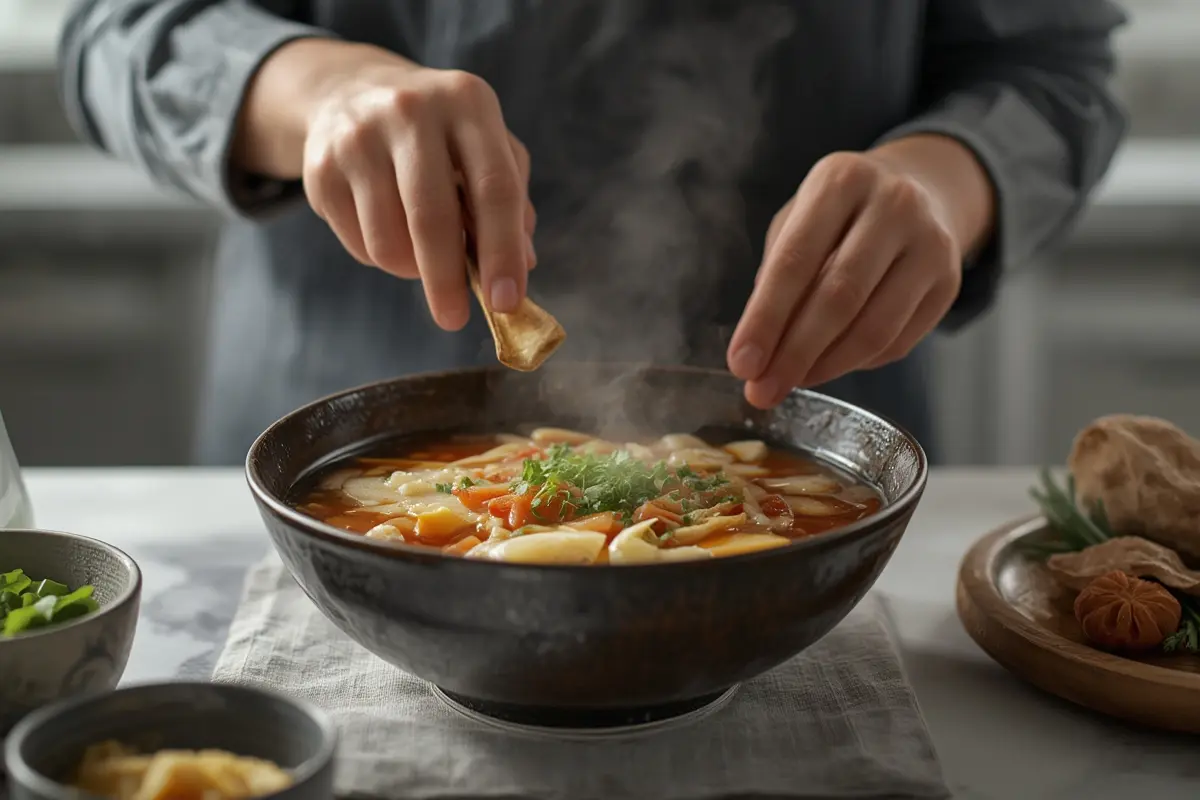
1. Skipping the blanching step: This crucial step removes impurities and excess fat that can cloud your broth.
2. Boiling instead of simmering: A gentle simmer extracts flavor without creating cloudy broth.
3. Under-seasoning: Korean soups need proper seasoning; taste and adjust multiple times.
4. Rushing the process: The slow cooking creates the distinctive flavor profile.
5. Adding all ingredients at once: Layer flavors by adding components at different stages.
Storage & Meal Prep Tips
– Refrigeration: Store cooled soup in airtight containers for up to 4 days.
– Freezing: Freeze broth separately from garnishes for up to 3 months.
– Reheating: Warm gently on stovetop rather than microwave for best texture.
– Meal prep: Make double batches of broth and freeze in portion-sized containers.
– Garnish separation: Store garnishes separately and add fresh when serving.
Conclusion
Mastering this authentic Korean Winter Soup brings a taste of Korean culinary tradition to your home kitchen. The patience required is rewarded with a deeply satisfying dish that nourishes both body and soul. Whether you’re exploring Korean cuisine for the first time or seeking to perfect your Tteokguk technique, this recipe provides the foundation for countless warming meals throughout the cold season. Take your time with each step, honor the ingredients, and enjoy the process as much as the delicious result.
FAQs
Can I use different cuts of beef for this soup?
Yes, oxtail, chuck roast, or even beef shank work well. Each cut brings different flavors and textures, with oxtail offering the richest broth.
Is there a faster version for weeknight cooking?
Using a pressure cooker reduces cooking time to about 45 minutes while maintaining good flavor. Pre-made beef broth can also speed things up, though the flavor won’t be as authentic.
How can I make this soup less fatty?
Make the broth a day ahead and refrigerate overnight. The fat will solidify on top, making it easy to remove before reheating.
Can I add rice cakes like in Tteokguk?
Absolutely! Add sliced rice cakes (tteok) during the last few minutes of cooking for a more substantial meal similar to traditional rice cake soup.
What side dishes pair well with this soup?
Traditional Korean banchan (side dishes) like kimchi, seasoned spinach (sigeumchi namul), or spicy cucumber salad make perfect accompaniments.
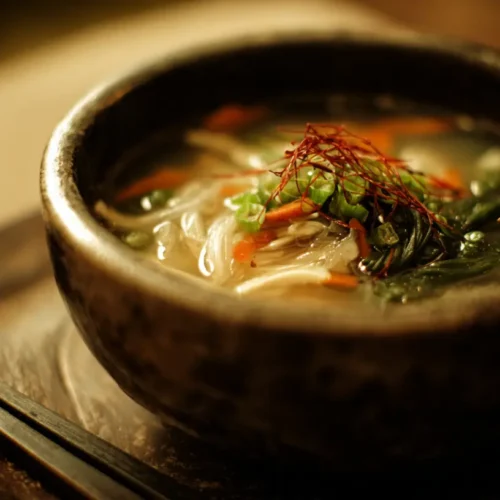
Quick way to grow amazing Korean Winter Soup
Equipment
- large pot
- cutting board
- knife
Ingredients
Main Ingredients
- 6 cups beef broth
- 2 cups kimchi chopped
- 14 ounces tofu firm, cubed
- 1 cup mushrooms sliced
- 3 green onions sliced
Seasoning
- 2 tablespoons gochujang
- 1 tablespoon soy sauce
Instructions
Preparation
- In a large pot, combine beef broth, kimchi, firm tofu, sliced mushrooms, and green onions.
- Stir in gochujang and soy sauce, mixing well to combine all ingredients.
Cooking
- Bring the soup to a boil over medium-high heat.
- Reduce heat to medium-low and simmer for 20-25 minutes, allowing flavors to meld.
Serving
- Ladle the hot soup into bowls and serve immediately.