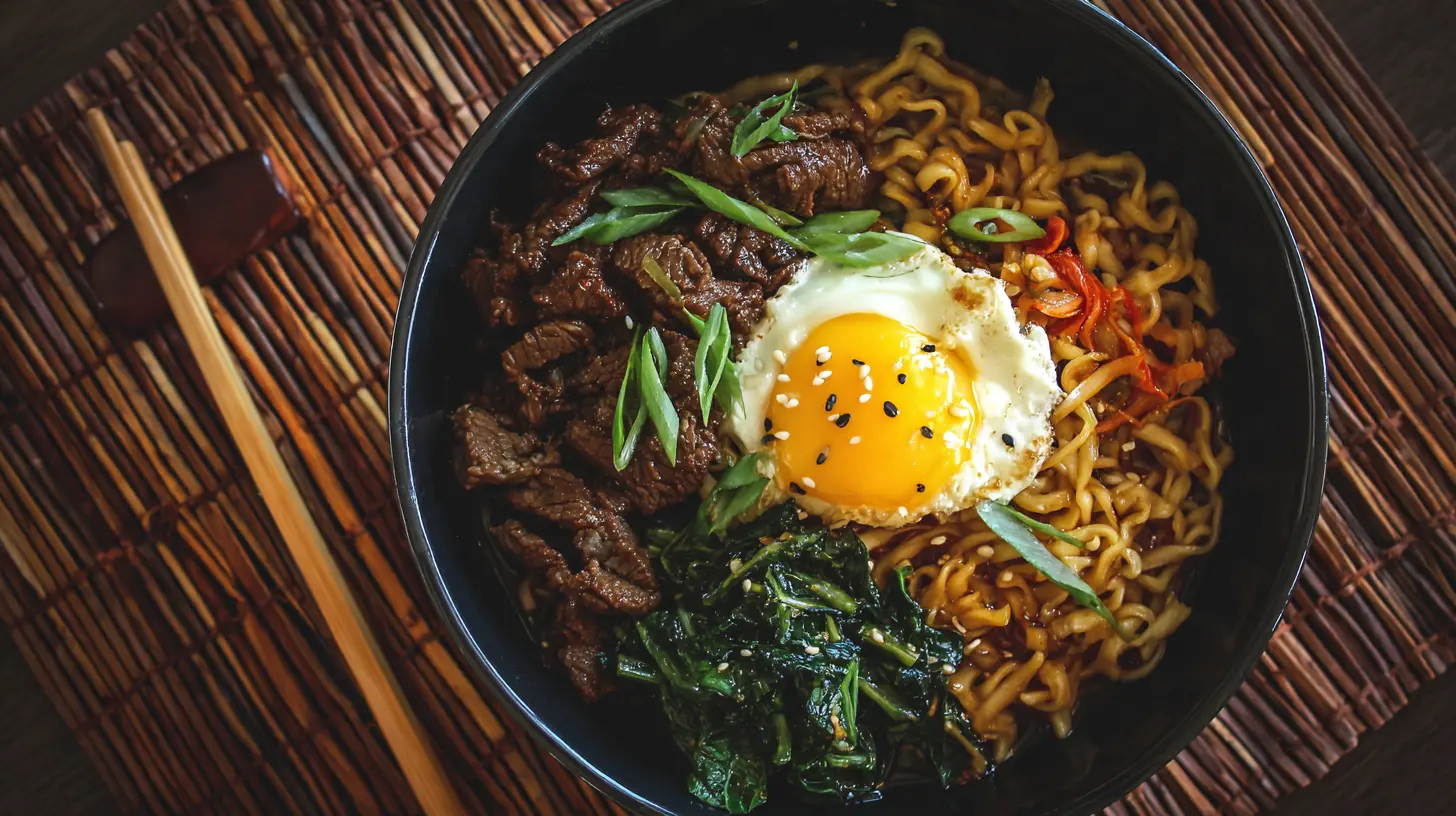
Quick Korean Beef Noodles
A speedy recipe for delicious Korean beef noodles.
Beef
Noodles
Soy sauce
Brown sugar
Green onions
Garlic
Slice the beef into thin strips.
Mix soy sauce and brown sugar in a bowl.
Cook the beef in a pan until browned.
Add chopped garlic and green onions to the pan.
Boil noodles according to package instructions.
Combine cooked noodles with beef and sauce in the pan.
Delicious Korean Beef Noodles Recipe: A Taste of Seoul at Home
Have you ever craved that perfect balance of sweet, savory, and spicy flavors that Korean cuisine is famous for? Creating authentic Korean Beef Noodles at home might seem intimidating, but with the right guidance, you’ll be enjoying this delectable dish without needing to order takeout. The tender beef, slippery noodles, and vibrant vegetables come together in a harmony of flavors that’s both comforting and exciting. Plus, making Beef bulgogi noodles from scratch allows you to control the ingredients and customize the spice level to your preference.
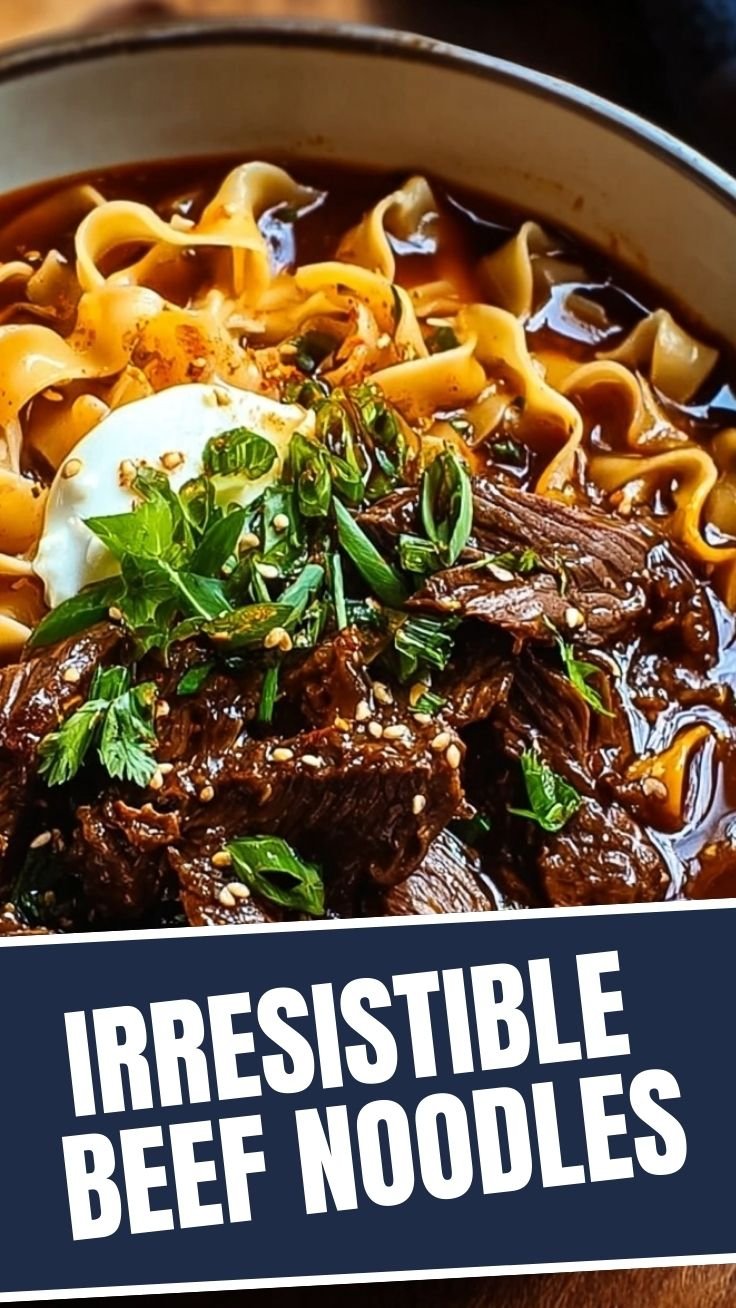
Ingredients & Kitchen Tools
For the Beef Marinade:
- 1 lb thinly sliced beef sirloin or ribeye (freeze for 30 minutes before slicing for easier cutting)
- 3 tablespoons soy sauce (low-sodium preferred)
- 1 tablespoon sesame oil
- 2 tablespoons brown sugar (helps with caramelization)
- 4 cloves garlic, minced
- 1 tablespoon grated ginger
- 2 tablespoons Korean pear juice (or apple juice as substitute)
For the Noodles and Vegetables:
- 8 oz wheat noodles or Korean-style somyeon noodles (ramen noodles work in a pinch)
- 2 carrots, julienned
- 1 medium onion, thinly sliced
- 2 cups spinach
- 3 green onions, chopped diagonally
- 1 tablespoon sesame seeds
- 2 tablespoons vegetable oil for cooking
Kitchen Tools:
- Large mixing bowl for marinating
- Wok or large skillet
- Pot for cooking noodles
- Tongs for tossing noodles
- Sharp knife for slicing meat and vegetables
- Cutting board
- Measuring spoons and cups
Prep Time & Cooking Schedule
- Prep Time: 20 minutes (plus 30 minutes to 2 hours for marinating)
- Cook Time: 15 minutes
- Total Time: 35 minutes (plus marinating time)
Plan ahead for marinating the beef – the longer it sits (up to 24 hours in the refrigerator), the more flavorful your dish will be. The actual cooking happens quite quickly, making this an ideal weeknight dinner option once your prep is complete.
Step-by-Step Instructions
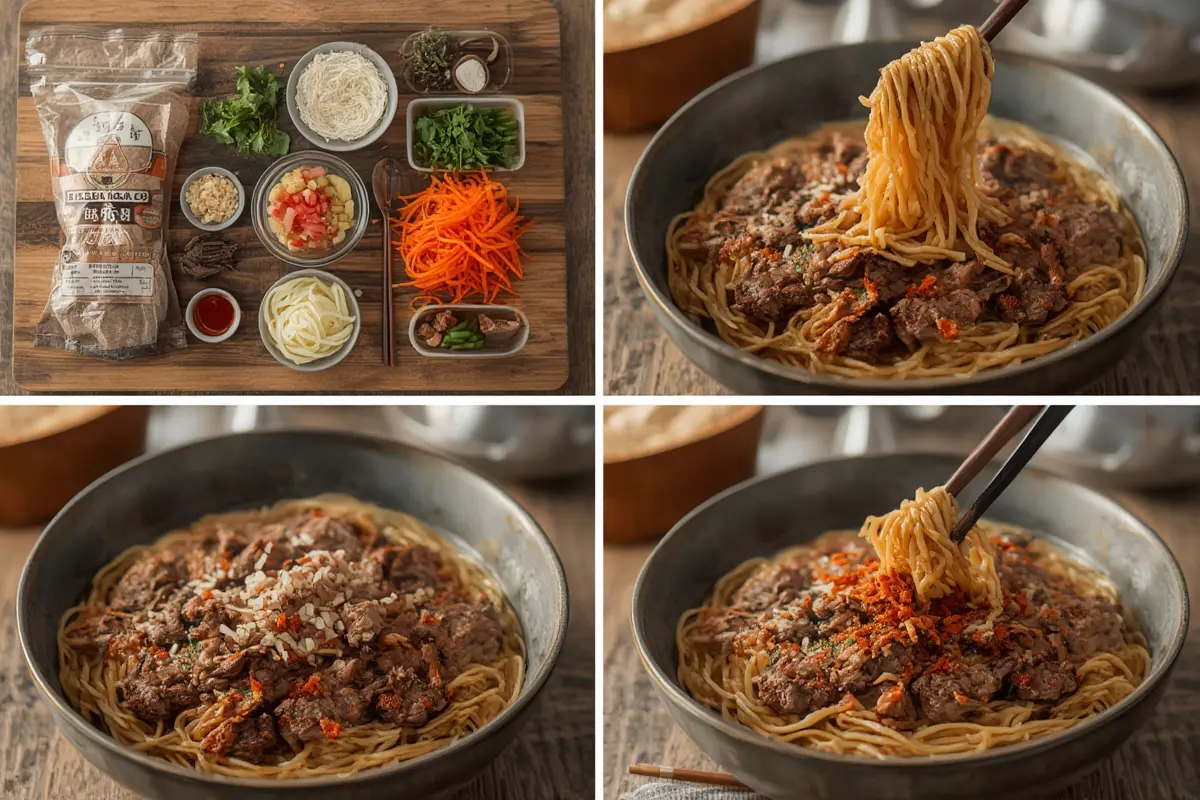
1. Prepare the marinade: In a large bowl, combine soy sauce, sesame oil, brown sugar, minced garlic, grated ginger, and pear juice. Mix thoroughly until sugar dissolves.
2. Marinate the beef: Add thinly sliced beef to the marinade, ensuring each piece is coated. Cover and refrigerate for at least 30 minutes, ideally 1-2 hours.
3. Cook the noodles: Bring a large pot of water to a boil. Cook noodles according to package instructions (usually 4-5 minutes). Drain and rinse under cold water to prevent sticking.
4. Cook the vegetables: Heat 1 tablespoon of oil in a wok or large skillet over medium-high heat. Add onions and carrots, stir-frying for 3-4 minutes until softened but still crisp. Remove and set aside.
5. Cook the beef: In the same pan, add remaining oil and increase to high heat. Add marinated beef in batches (to prevent crowding), cooking for 1-2 minutes per side until caramelized.
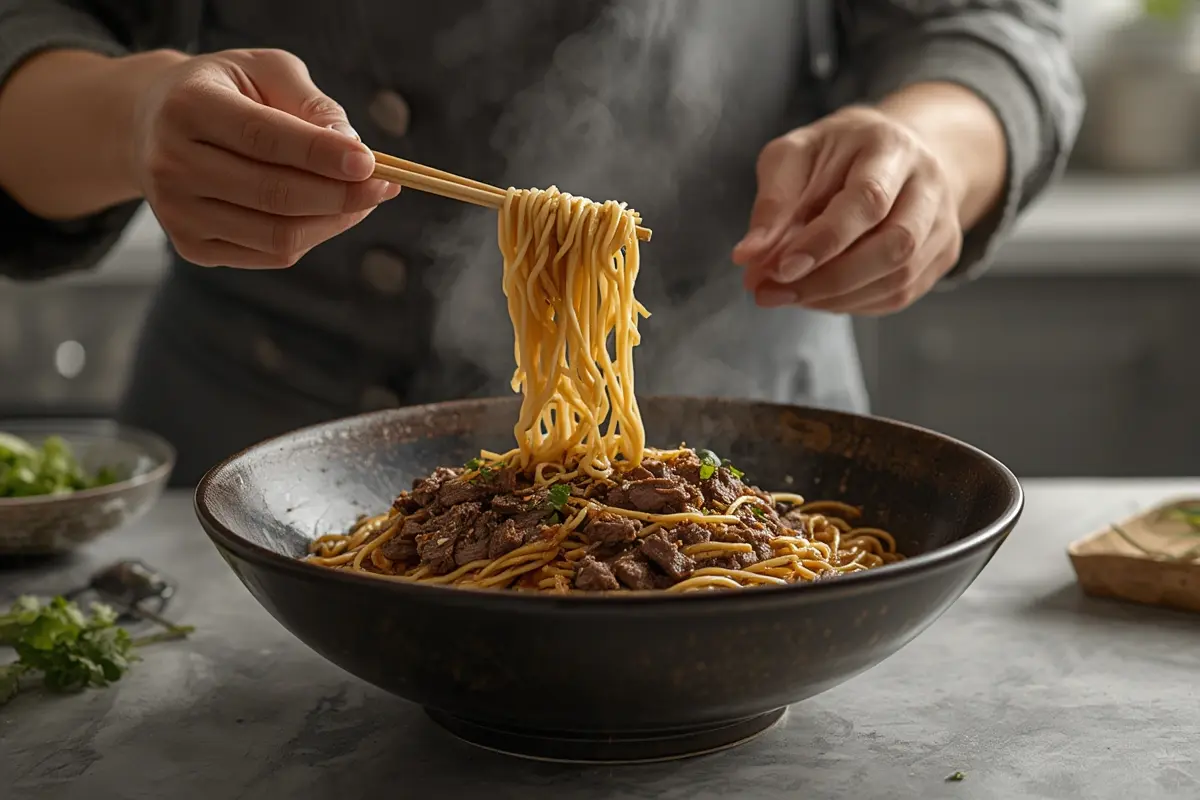
6. Combine everything: Return vegetables to the pan with the beef, add the spinach and half the green onions. Toss until spinach wilts. Add cooked noodles and toss everything together, allowing the Korean Beef Noodles to absorb the flavors of the Beef bulgogi noodles sauce.
7. Serve: Transfer to serving bowls, garnish with remaining green onions and sesame seeds.
Nutritional Benefits & Advantages
This dish offers a well-balanced nutritional profile. The beef provides high-quality protein and iron, while vegetables add essential vitamins, minerals, and fiber. Garlic and ginger contribute antioxidant and anti-inflammatory properties. When made at home, you can control sodium levels and use leaner cuts of beef for a healthier meal option compared to restaurant versions.
Tips, Variations & Cooking Advice
- Protein swaps: Try chicken, pork, or tofu for different variations.
- Vegetable options: Add mushrooms, bell peppers, or bok choy for extra nutrition and texture.
- Heat adjustment: Include 1-2 tablespoons of gochujang (Korean chili paste) in the marinade for a spicier version.
- Noodle alternatives: Try sweet potato noodles (japchae style), rice noodles (for gluten-free option), or zucchini noodles for a low-carb version.
- Make ahead: Prepare the marinade and slice vegetables the night before for a quicker dinner assembly.
Common Mistakes to Avoid
1. Overcooking the beef: Cook in small batches and briefly to maintain tenderness.
2. Overcooking the noodles: Follow package instructions carefully and rinse with cold water immediately after draining.
3. Not slicing beef thinly enough: Freeze beef partially before slicing for easier, thinner cuts.
4. Skipping the marinating time: This crucial step develops the signature flavor profile.
5. Cooking on too low heat: A hot pan creates the desired caramelization without steaming the meat.
Storage & Meal Prep Tips
Store leftover Korean Beef Noodles in an airtight container in the refrigerator for up to 3 days. For best results, store noodles and beef mixture separately. When reheating, add a splash of water or broth to refresh the sauce. While freezing is possible for up to 1 month, the texture of the noodles may change slightly upon thawing.
Conclusion
Making Korean Beef Noodles at home brings the vibrant flavors of Korean cuisine right to your dining table with minimal effort and maximum satisfaction. The combination of tender marinated beef, perfectly cooked noodles, and crisp vegetables creates a restaurant-quality meal that will impress family and friends alike. Whether you’re new to Korean cooking or an experienced home chef, these Beef bulgogi noodles offer a delightful culinary adventure that’s worth adding to your regular rotation.
FAQs
Can I use ground beef instead of sliced beef?
Yes, ground beef works well as a time-saving alternative. Brown it with the marinade ingredients for about 5-7 minutes until cooked through.
What can I substitute for Korean pear juice?
Apple juice, pineapple juice, or even kiwi puree work well as tenderizing agents with similar sweetness profiles.
Are there gluten-free options for this recipe?
Absolutely! Use tamari instead of soy sauce and rice noodles or sweet potato noodles instead of wheat noodles.
How can I make this dish less spicy for children?
Omit any chili paste or flakes and serve hot sauce on the side for adults to add to their portions.
Can I prepare this as a meal prep for the week?
Yes, prepare all components and store separately. Assemble fresh portions each day, reheating the beef mixture and adding freshly cooked noodles for best results.
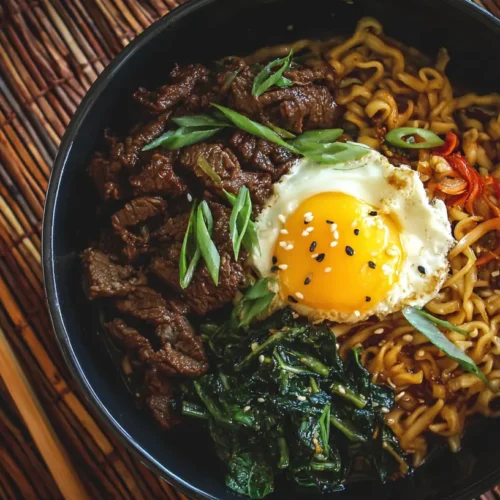
Quick way to grow Korean Beef Noodles
Equipment
- medium bowl
- large skillet or wok
- small bowl
Ingredients
Main
- 1 lb beef sirloin, thinly sliced
- 8 oz Korean noodles
- 1/4 cup soy sauce
- 2 tbsp sesame oil
- 2 cloves garlic, minced
- 1 tsp ginger, grated
- 2 green onions, chopped
Sauce
- 1 cup beef broth
- 1 tbsp brown sugar
- 1 tbsp cornstarch
Instructions
Preparation
- In a medium bowl, combine the beef, 2 tablespoons soy sauce, 1 tablespoon sesame oil, minced garlic, and grated ginger; mix well and marinate for at least 10 minutes.
- Cook the Korean noodles according to package instructions until al dente, then drain and set aside.
- In a small bowl, whisk together the beef broth, remaining soy sauce, remaining sesame oil, brown sugar, and cornstarch for the sauce.
Cooking
- Heat a large skillet or wok over medium-high heat, add the marinated beef, and stir-fry until browned and cooked through.
- Pour the prepared sauce into the skillet with the beef, bring to a simmer, and cook until the sauce thickens.
- Add the cooked noodles to the skillet with the beef and sauce, tossing to coat everything evenly.
- Stir in the chopped green onions and cook for another minute until heated through.
Serving
- Serve the Korean beef noodles immediately and garnish with additional green onions or sesame seeds if desired.