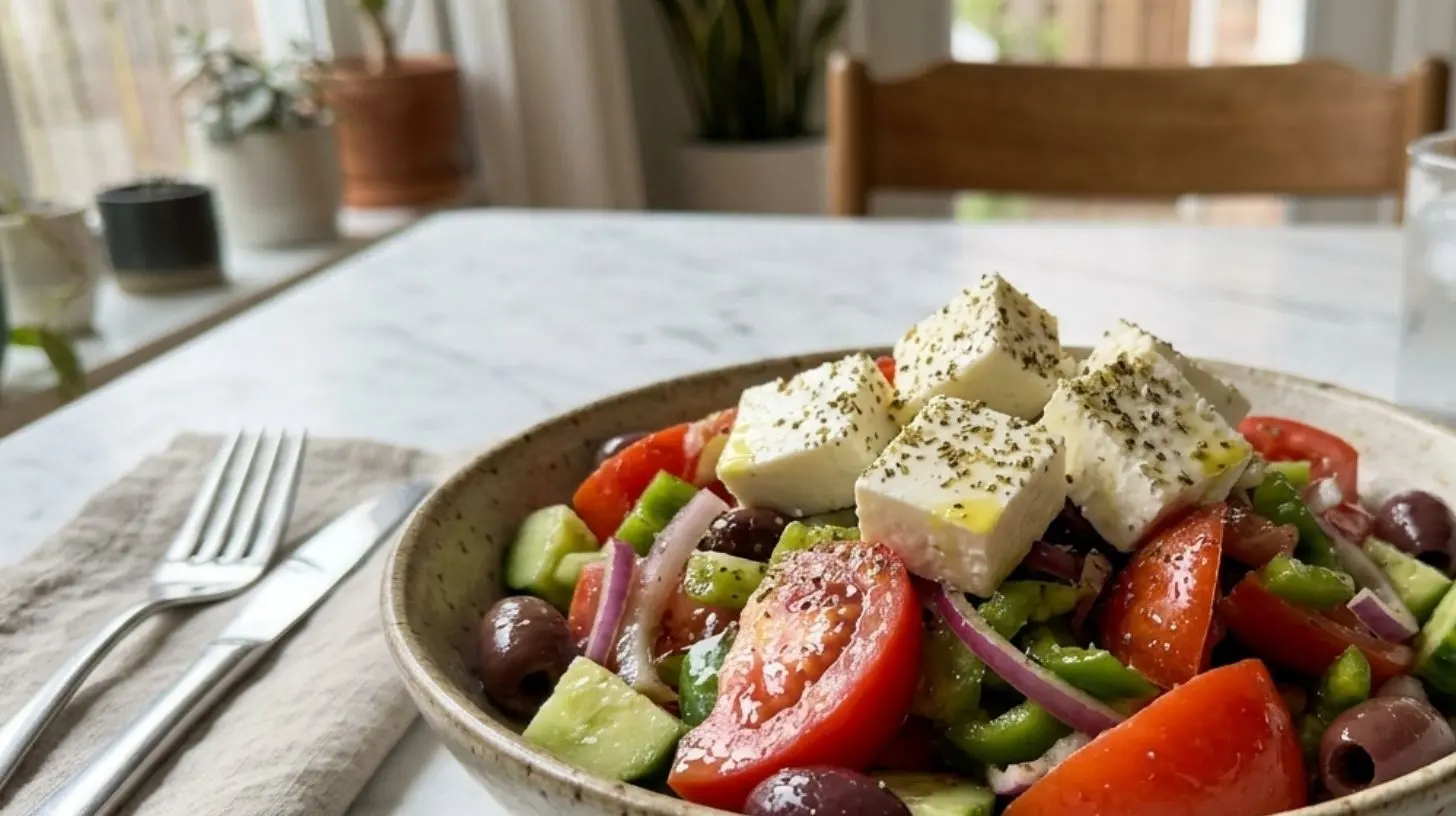
Best way to grow a 7-Ingredient Greek Salad
Learn how to make a delicious Greek salad with only 7 ingredients.
Cucumber
Tomatoes
Red Onion
Kalamata Olives
Feta Cheese
Olive Oil
Lemon Juice
Chop the cucumber into small pieces.
Dice the tomatoes and red onion.
Pit and chop the Kalamata olives.
Combine all chopped ingredients in a bowl.
Crumble the feta cheese over the salad.
Drizzle olive oil and lemon juice over the salad.
Mix everything together and enjoy your Greek salad!
The Ultimate Greek Salad Recipe: Fresh, Vibrant, and Bursting with Mediterranean Flavor
Have you ever bitten into a salad that instantly transports you to a sun-drenched taverna overlooking the Aegean Sea? That’s the magic of an authentic Greek Salad—a deceptively simple dish that celebrates the bold, clean flavors of fresh vegetables, briny olives, creamy feta, and a robust olive oil dressing. While it may seem like just a bowl of chopped produce, the real value of preparing this at home lies in controlling the quality of ingredients, customizing it to your taste, and unlocking the health benefits of the Mediterranean diet without ever leaving your kitchen.
With just 15 minutes of active preparation, you can create a restaurant-quality dish that’s perfect as a light lunch, a vibrant side, or a hearty main when paired with grilled proteins. The beauty of this recipe is its flexibility—simple enough for a weeknight but impressive enough for entertaining. Let’s dive into why this Greek Salad deserves a permanent spot in your culinary rotation.
Ingredients & Kitchen Tools
Before you start, gather these ingredients and tools. Quality matters here—since there are so few components, each one shines through.
For the Salad:
– 4 large ripe tomatoes (Roma or vine-ripened work best)—juicy and sweet, these form the base.
– 1 English cucumber (or 2 Persian cucumbers)—seedless and crisp; if using standard cucumbers, peel and deseed them.
– 1 red onion (or 1/2 sweet Vidalia)—thinly sliced; soak in cold water for 10 minutes to mellow the bite.
– 1 green bell pepper (optional but traditional)—sliced into rings or chunks for crunch.
– 1 cup Kalamata olives (or Castelvetrano for a milder taste)—pitted for easier eating.
– 6–8 ounces block feta cheese (not pre-crumbled)—a single thick slice on top is the authentic presentation; sheep’s milk feta is ideal.
– 2 tablespoons fresh oregano (or 1 teaspoon dried)—this herb is the soul of the dressing.
For the Dressing:
– 1/3 cup extra-virgin olive oil—the better the oil, the better the salad.
– 2 tablespoons red wine vinegar (or lemon juice for a brighter finish).
– 1 teaspoon Dijon mustard (optional, for emulsification).
– Sea salt and freshly cracked black pepper to taste.
Kitchen Tools:
– Large mixing bowl
– Sharp chef’s knife
– Cutting board
– Small jar or bowl for the dressing
– Measuring spoons and cups
Optional Add-Ins: Capers, chopped fresh parsley, or a pinch of dried oregano sprinkled on top.
Prep Time & Cooking Schedule
Here’s the beautiful thing about this dish: there’s no cooking involved—only assembly. Here’s your timeline:
– Prep Time: 15 minutes
– Resting Time: 10–15 minutes (optional but highly recommended)
– Total Time: 25–30 minutes
Plan ahead by slicing the onion and soaking it while you chop the other vegetables. If you have time, let the assembled salad rest at room temperature for 15 minutes before serving. This allows the juices from the tomatoes to mingle with the olive oil and vinegar, creating a light marinade that’s nothing short of sublime. For meal prep, you can chop the vegetables a day ahead—just store the tomatoes separately and dress the salad right before serving.
Step-by-Step Instructions
This is where we put it all together. Follow these steps to ensure perfect texture and flavor every time.
1. Prepare the Onion: Slice the red onion thinly (about 1/8-inch thick). Place the slices in a small bowl of ice water with a pinch of salt for 10 minutes. Drain and pat dry with a paper towel. This step removes the harsh sulfurous bite while keeping the crunch intact.
2. Chop the Vegetables: Core the tomatoes and cut them into wedges or large chunks—no need to be precise; rustic is authentic. Slice the cucumber into 1/2-inch thick half-moons or rounds. If using bell pepper, remove the seeds and slice into rings or bite-sized pieces.
3. Combine in a Bowl: Add the tomatoes, cucumber, bell pepper (if using), and drained onion to a large mixing bowl. Scatter the Kalamata olives over the top.
4. Make the Dressing: In a small jar, combine the extra-virgin olive oil, red wine vinegar, Dijon mustard (if using), a generous pinch of salt, and a few cracks of black pepper. Secure the lid and shake vigorously for 30 seconds until emulsified. Taste and adjust—it should be bold and tangy.
5. Dress and Toss: Pour the dressing over the vegetables and toss gently with your hands or a large spoon. Be careful not to bruise the tomatoes. Season with a little more salt, remembering that feta adds saltiness.
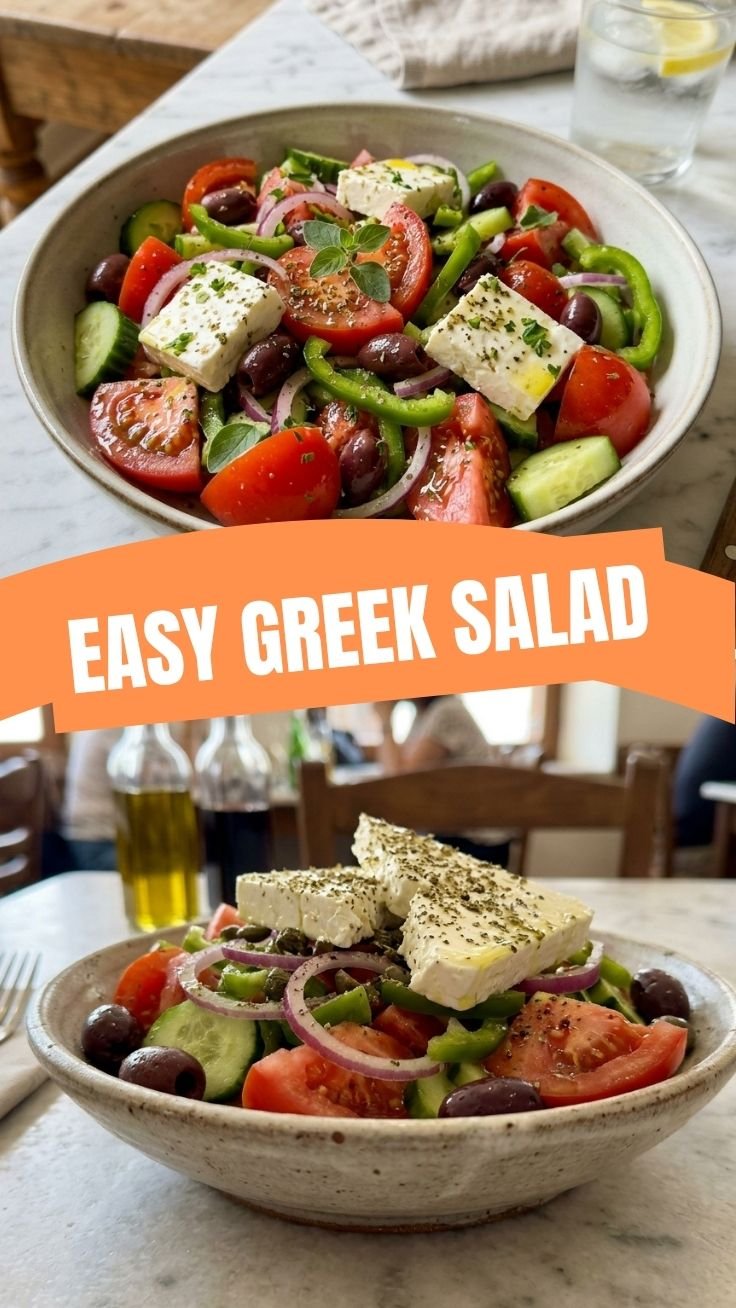
6. Add the Feta: Here’s the signature move—place the block of feta cheese directly on top of the salad (don’t crumble it). Sprinkle fresh oregano over the entire dish, letting it land on both the cheese and vegetables. Drizzle a final swirl of olive oil over the feta.
7. Rest and Serve: Let the salad sit at room temperature for 10–15 minutes to allow the flavors to marry. Serve immediately with crusty bread for dipping into the juices—this is non-negotiable in Greek households!
This process showcases the focus keyword Greek Salad beautifully because the simplicity of the technique is what makes this recipe so special. Additionally, the emphasis on fresh produce and healthy fats is a cornerstone of the Mediterranean diet, which celebrates whole foods and seasonal eating.
Nutritional Benefits & Advantages
This dish isn’t just delicious—it’s a nutritional powerhouse. Here’s why this Greek Salad should be a regular on your table:
– Heart-Healthy Fats: Extra-virgin olive oil and olives provide monounsaturated fats, which are linked to reduced inflammation and improved cholesterol levels. Studies show that people following the traditional Mediterranean diet have a 30% lower risk of cardiovascular disease.
– Antioxidant-Rich: Tomatoes are packed with lycopene, a powerful antioxidant that’s better absorbed when combined with olive oil. The vitamin C from peppers and onions further supports immune function.
– Bone Health: Feta cheese provides calcium and phosphorus, essential for maintaining bone density. Unlike many cheeses, feta is lower in fat and calories, making it a smart choice.
– Hydration and Fiber: Cucumbers and tomatoes are over 90% water, helping with hydration, while the fiber in vegetables and olives promotes gut health.
– Blood Sugar Regulation: The combination of fiber, healthy fats, and protein from feta helps stabilize blood sugar levels, making this salad suitable for those managing diabetes.
Tips Variations & Cooking Advice
While the classic version is perfection, there’s plenty of room for creativity:
– Protein Boost: Add grilled chicken, shrimp, or chickpeas to turn this side into a hearty main course mirroring the Mediterranean diet principles of balanced meals.
– Dairy-Free Option: Omit the feta and add avocado for creaminess, or use a plant-based feta alternative made from almonds or tofu.
– Gluten-Free: This salad is naturally gluten-free; just ensure your vinegar is certified if you’re highly sensitive.
– Herb Swaps: Not a fan of oregano? Try fresh mint, basil, or dill for a different flavor profile.
– Vinegar Variations: Substitute sherry vinegar or white balsamic for red wine vinegar to change the sweetness and acidity.
– Texture Twist