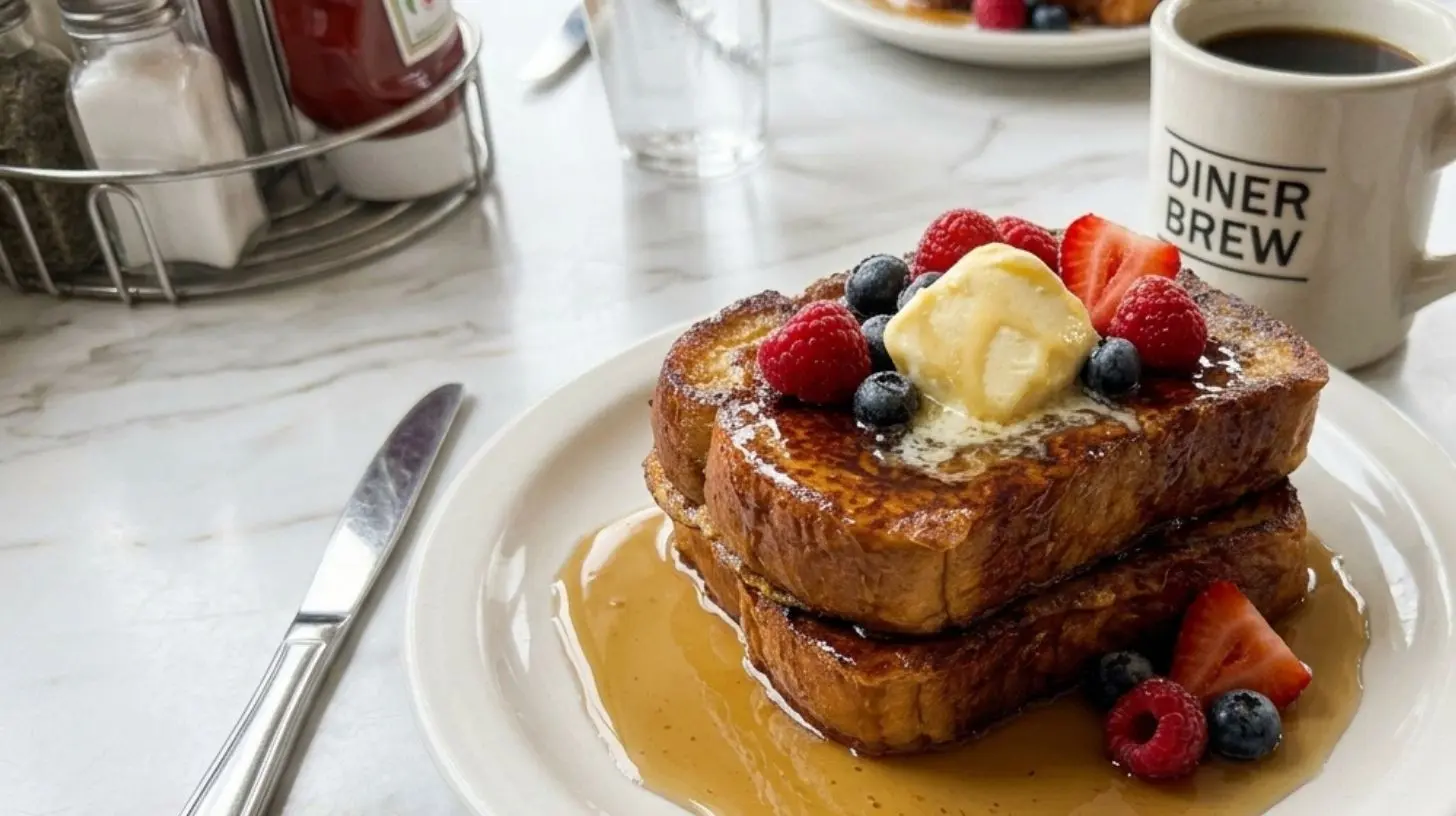
Fluffy French Toast
Learn the best way to make fluffy French Toast in just 3 steps!
Bread
Eggs
Milk
Cinnamon
Vanilla Extract
Whisk eggs, milk, and cinnamon in a bowl.
Dip bread slices into the egg mixture.
Cook bread slices on a hot griddle until golden brown.
The Ultimate French Toast Recipe: Fluffy, Golden, and Perfect Every Time
Have you ever wondered why restaurant French Toast always tastes so perfectly golden and custard-like, while yours sometimes turns out soggy or burnt? The secret isn’t a fancy chef—it’s the right technique and a few simple ingredients you already have in your kitchen. Making French Toast at home not only saves you money but also lets you control the sweetness, texture, and dietary needs. Whether you’re planning a lazy weekend brunch or a quick weekday breakfast, this easy breakfast recipe will become your go‑to. Let’s dive into the science and art behind the perfect slice.
Ingredients & Kitchen Tools
Ingredients
– Bread (thick slices) – Brioche, challah, or Texas toast work best; stale bread absorbs custard without falling apart.
– Eggs – The binding agent; use large eggs at room temperature for even mixing.
– Milk or cream – Whole milk or half‑and‑half adds richness; dairy‑free alternatives (oat, almond) work too.
– Vanilla extract – Pure vanilla enhances sweetness; imitation is fine but use 1½ times the amount.
– Cinnamon – Ground cinnamon is classic; nutmeg or cardamom make interesting swaps.
– Butter – For the pan; salted butter adds flavor, unsalted gives you control.
– Salt – A pinch balances sweetness.
– Optional toppings – Maple syrup, fresh berries, powdered sugar, or whipped cream.
Kitchen Tools
– Wide, shallow dish (for custard bath)
– Whisk or fork
– Non‑stick skillet or griddle
– Spatula (thin, flexible)
– Measuring spoons and cups
Prep Time & Cooking Schedule

– Prep time: 10 minutes (whisk custard, slice bread)
– Resting time: 5 minutes (let bread absorb custard)
– Cook time: 8–10 minutes (2–3 minutes per side)
– Total time: ~25 minutes
Tip: While the bread soaks, preheat your skillet over medium heat. This ensures an even golden crust from the moment the first slice hits the pan.
Step‑by‑Step Instructions
1. Whisk the custard – In your shallow dish, beat 2 large eggs, ¾ cup milk, 1 teaspoon vanilla, 1 teaspoon cinnamon, and a pinch of salt. Whisk vigorously until the mixture is smooth and slightly frothy.
2. Soak the bread – Dip each slice into the custard for about 15–20 seconds per side. Thicker bread may need up to 30 seconds. Don’t oversoak; you want the bread fully moist but not falling apart.
3. Heat the pan – Melt 1 tablespoon butter over medium heat. The butter should sizzle gently when you add the bread – if it smokes, the pan is too hot.
4. Cook – Place soaked bread in the skillet. Cook 2–3 minutes per side until deep golden brown. Flip carefully with a thin spatula. The French Toast should feel slightly springy when pressed.
5. Serve immediately – Transfer to a plate and add your favorite toppings. For a crispier exterior, keep the cooked slices on a wire rack in a 200°F oven while you finish the batch.
> Pro tip: This easy breakfast recipe becomes even more foolproof if you let the dipped bread rest on a wire rack for a minute before cooking – it prevents sogginess and helps the custard set.
Nutritional Benefits & Advantages
– Eggs provide high‑quality protein, vitamin D, and choline, which supports brain health.
– Whole‑grain or sourdough bread offers fiber and gut‑friendly prebiotics.
– Cinnamon is packed with antioxidants and may help regulate blood sugar.
– Dairy supplies calcium and vitamin B12. With plant‑based swaps, you still get a satisfying meal that’s lower in saturated fat.
Tips, Variations & Cooking Advice
– Flavor twists: Replace vanilla with almond or orange extract; add a pinch of cardamom or pumpkin pie spice.
– Stuffed French toast: Make a sandwich with cream cheese and jam before dipping.
– Dietary adaptations: Use gluten‑free bread (let it stale overnight for better absorption) and plant‑based milk/butter for dairy‑free.
– Cooking methods: Bake soaked slices on a greased sheet at 400°F for 15 minutes (flip halfway) for a hands‑free oven version.
– Portion changes: For a crowd, double the custard and cook on an electric griddle set at 350°F.
Common Mistakes to Avoid
– Soggy bread – Soak too long or use fresh, fluffy bread. Fix: Use day‑old bread or dry fresh slices in a 300°F oven for 5 minutes.
– Burnt butter – Pan too hot or butter burns before bread hits it. Fix: Wipe pan clean between batches and add fresh butter.
– Uneven cooking – Crowding the pan lowers temperature. Fix: Cook only 2–3 slices at a time.
– Dry toast – No fat in the pan. Fix: Always use butter or oil; a thin coating of coconut oil works too.
Storage & Meal Prep Tips
– Refrigerate: Place cooled slices in an airtight container with parchment paper between layers. Keeps 3–4 days.
– Freeze: Arrange slices on a baking sheet, freeze for 1 hour, then transfer to a freezer bag. Store up to 3 months.
– Reheat: For best texture, toast frozen slices directly from the freezer in a toaster or air fryer at 350°F for 3–4 minutes. Microwave works but may turn soggy.
Conclusion
Mastering French Toast is all about balancing custard ratio, heat control, and bread choice. With this easy breakfast recipe, you can consistently produce golden, custardy slices that beat any diner version. The beauty lies in its flexibility – adapt it to your pantry and dietary needs, and you’ll never look at leftover bread the same way again. Try it this weekend, snap a photo, and share your results. For more brunch inspiration, check out our overnight casserole or stuffed variations.
FAQs
1. Can I use any bread for French Toast?
Yes, but dense, slightly stale bread works best. Avoid super soft sandwich bread unless you dry it first.
2. How do I prevent my French toast from getting soggy?
Use thick slices, soak only 15–20 seconds per side, and cook over medium heat. Letting the dipped bread rest on a rack also helps.
3. Can I make the custard ahead of time?
Absolutely. Whisk eggs, milk, and spices the night before and refrigerate. Whisk again before using.
4. What’s the best butter substitute for cooking?
Coconut oil or ghee work beautifully; they have higher smoke points than butter and add a subtle flavor.
5. How do I reheat frozen French toast without it drying out?
Air fry or toast from frozen – the high heat crisps the exterior while keeping the inside tender. Microwave only if you’re in a rush.