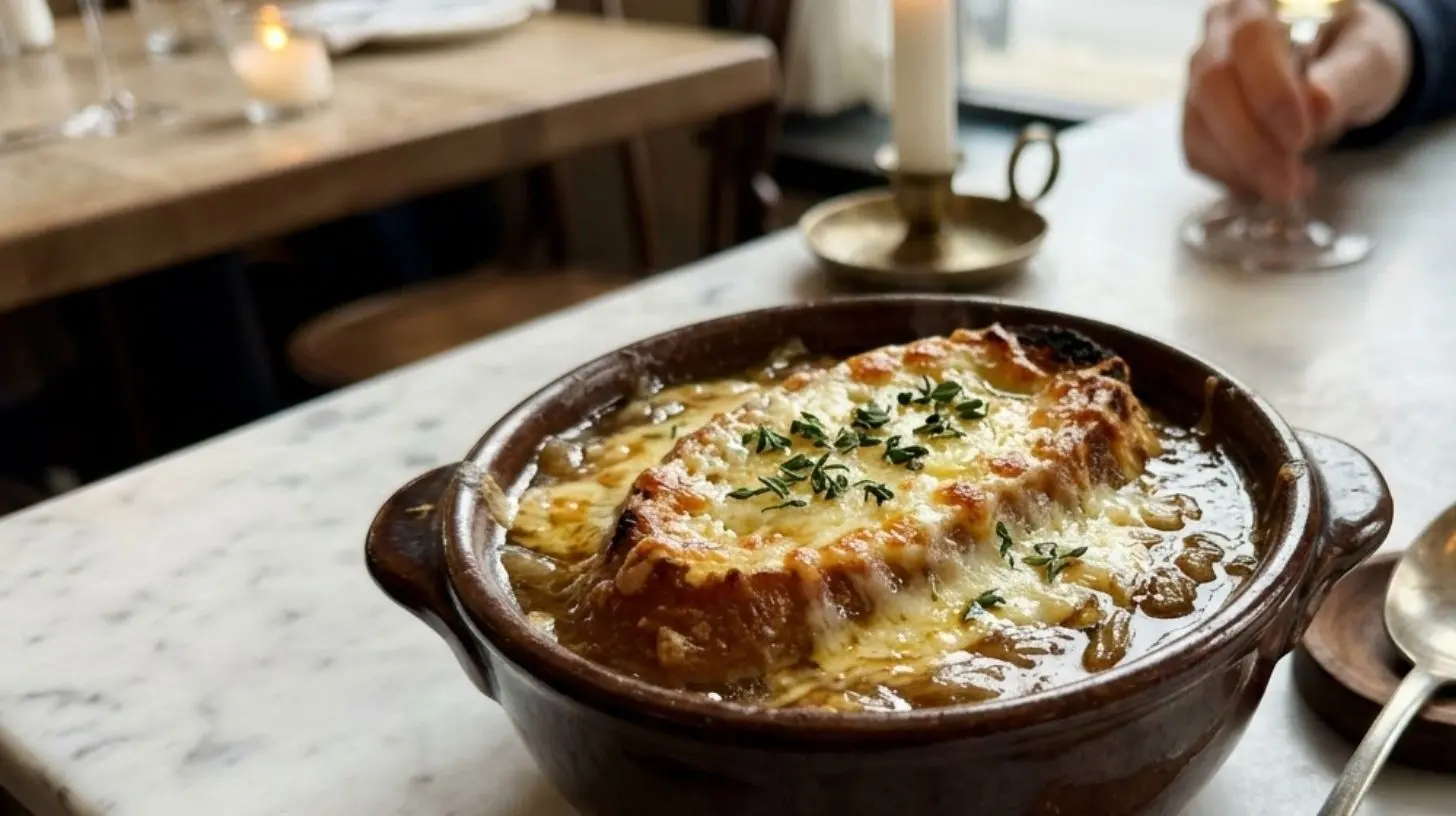
French Onion Soup Herb Garden
Learn how to grow herbs that will elevate your French Onion Soup.
Thyme
Parsley
Chives
Rosemary
Oregano
Basil
Mint
Plant the herb seeds in small pots.
Water the herbs daily to keep the soil moist.
Place the pots in a sunny spot to help them grow.
Repot the herbs into a larger container once they outgrow the small pots.
Use the fresh herbs in your French Onion Soup recipe.
The Ultimate Guide to Making Authentic French Onion Soup at Home
Have you ever wondered why restaurant-quality French Onion Soup tastes so much richer than anything you’ve attempted at home? The secret isn’t a fancy kitchen—it’s patience, technique, and the transformative power of proper caramelization. When you master this classic recipe in your own kitchen, you unlock a bowl of deep, savory comfort that rivals any bistro. Whether you’re cooking for a cozy weeknight dinner or impressing guests, this guide will walk you through every detail, ensuring your French Onion Soup turns out golden, cheesy, and unforgettable.
—
Ingredients & Kitchen Tools
Essential Ingredients
– 5 large yellow onions – Sweeter and milder than red or white; they caramelize beautifully
– 3 tablespoons unsalted butter – Adds richness; substitute olive oil for dairy-free
– 1 tablespoon olive oil – Prevents butter from burning
– 6 cups beef broth – Use low-sodium to control salt; vegetable broth works for vegan
– 1/2 cup dry white wine – Sauvignon Blanc or Pinot Grigio; skip or use broth for alcohol-free
– 2 sprigs fresh thyme – Dried thyme (1 tsp) works, but fresh adds brighter flavor
– 1 bay leaf – Removed before serving
– Salt and black pepper – To taste
– 1 French baguette – Stale bread is perfect; cut into 1-inch slices
– 1 1/2 cups grated Gruyère cheese – Melts like a dream; mozzarella or provolone for milder taste
Kitchen Tools
– Large heavy-bottomed pot or Dutch oven (5-6 quarts) – Even heat for caramelization
– Chef’s knife – Sharp for consistent onion slices
– Cutting board
– Wooden spoon – Great for scraping browned bits
– Oven-safe soup bowls or ramekins – For broiling cheese
– Baking sheet – For catching cheese drips
Substitutions
– Onion variety – Sweet onions for extra caramel; red onions for milder flavor
– Broth – Chicken broth works but changes depth; mushroom broth adds umami
– Cheese – Emmental or Swiss cheese for similar melt; Parmesan for sharpness
—
Prep Time & Cooking Schedule

Total Time: 1 hour 30 minutes
Prep Time: 15 minutes (slicing onions, grating cheese)
Cook Time: 1 hour 15 minutes (45 minutes caramelizing, 30 minutes simmering)
Resting Time: 5 minutes after broiling (letting cheese settle)
Plan ahead: Caramelizing onions takes patience—don’t rush it. For meal prep, cook the soup base (without bread and cheese) up to 3 days ahead. Reheat and broil when ready to serve.
—
Step-by-Step Instructions
1. Slice onions uniformly – Cut onions in half from root to tip, then slice into even 1/4-inch half-moons. Consistent slices ensure even cooking and prevent burning.
2. Start caramelizing – Heat butter and olive oil in your large pot over medium heat. Add onions and stir to coat. Cook for 45 minutes, stirring every 5-7 minutes. Low and slow is the key – high heat burns the sugars, creating bitterness instead of deep sweetness. You want a rich amber color, not black.
3. Deglaze the pot – Once onions are deeply golden, pour in the white wine. Scrape up all browned bits on the bottom (that’s pure flavor). Let wine reduce by half, about 2 minutes.
4. Add broth and herbs – Pour in beef broth, add thyme sprigs and bay leaf. Bring to a boil, then reduce to a simmer. Let it bubble gently for 30 minutes. Season with salt and pepper—start with 1/2 teaspoon salt, adjust later as cheese adds saltiness.
5. Toast the baguette slices – While soup simmers, preheat broiler. Arrange bread slices on a baking sheet and broil 1 minute per side until lightly golden. This prevents sogginess.
6. Assemble and broil – Ladle soup into oven-safe bowls. Float a toasted baguette slice on each, then pile high with Gruyère cheese. Broil 3-4 minutes until cheese bubbles and browns in spots. Watch carefully—it burns fast!
7. Serve immediately – Let soup cool for 2-3 minutes before digging in to avoid scalding.
Pro tip: For extra depth, stir 1 teaspoon of soy sauce or Worcestershire into the broth. And remember, a perfect French Onion Soup relies on patience during caramelization—rushing ruins the magic.
—
Nutritional Benefits & Advantages
French Onion Soup isn’t just comfort food; it has surprising nutritional perks:
– Onions – Rich in quercetin, an antioxidant that fights inflammation and supports heart health. They’re also prebiotic, feeding good gut bacteria.
– Beef broth – Provides collagen, gelatin, and amino acids like glycine, which support joint and skin health.
– Gruyère cheese – Excellent source of calcium (about 200mg per serving) and protein (8g per ounce). It’s low in lactose, making it easier to digest for some.
– Bread – Adds complex carbs for sustained energy.
Typical per serving: ~350 calories, 18g protein, 22g fat, 22g carbs. It’s filling without being heavy—perfect as a main course with a side salad.
—
Tips Variations & Cooking Advice
Flavor Variations
– Herb-infused – Add rosemary sprig or star anise during simmering (remove before serving)
– Smoky twist – Use smoked Gruyère or add 1/2 teaspoon smoked paprika
– Vegan version – Swap butter for olive oil, use vegetable broth, and top with dairy-free mozzarella
Ingredient Swaps
– Wine alternatives – Dry sherry, brandy, or even dark beer (like stout) for unique depth
– Cheese blend – Mix Gruyère with aged cheddar or fontina for more complex melt
– Sweet onions – Try Vidalia or Walla Walla for sweeter caramel faster
Cooking Methods
– Slow cooker – Caramelize onions in a skillet first, then transfer to slow cooker with broth. Cook on low 6-8 hours. Assemble and broil as usual.
– Instant Pot – Use sauté function for caramelizing, then pressure cook broth and onions for 15 minutes.
Dietary Adaptations
– Gluten-free – Use gluten-free bread or skip crouton; thicken soup with cornstarch slurry
– Dairy-free – Omit cheese and bread; finish with dollop of cashew cream for richness
—
Common Mistakes to Avoid
1. Rushing caramelization – Onions need 40-50 minutes. Crank up heat to speed things, and you’ll get burn-not sweetness. Fix: If onions stick too much, add a splash of water to release browned bits, but keep heat medium-low.
2. Soggy bread – Adding untoasted bread leads to a mushy mess. Fix: Always toast slices before broiling. Also, don’t let bread sit in soup too long before serving.
3. Sharp onion flavor – Skipping the full caramelization time leaves onions harsh. Fix: Cook until deep brown, not just translucent. Patience transforms that bite into sweetness.
4. Over-salting – Cheese and broth add salt. Fix: Season broth lightly at start; adjust only at end after cheese melts.
5. Burned cheese – Broilers vary wildly. Fix: Watch closely from the 2-minute mark. Remove as soon as cheese bubbles and starts browning—not when it’s black.
—
Storage & Meal Prep Tips
Refrigeration
– Store soup base (without bread/cheese) in airtight container for up to 5 days
– Keep bread and cheese separate – Assemble only when reheating to avoid sogginess
Freezing
– Soup base freezes perfectly – Pour into freezer-safe bags or containers for up to 3 months
– Do not freeze assembled soup – Bread and cheese texture degrades
Reheating
– Stovetop – Reheat soup base in a pot over medium-low, stirring occasionally. Once steaming, proceed with broiling.
– Microwave – Skip for full experience; microwaving makes bread rubbery and cheese tough. If needed, reheat soup alone, then add fresh bread and cheese under broiler.
– Oven – For larger batches, reheat soup at 350°F (15-20 minutes), then broil with toppings
—
Conclusion
Making an authentic French Onion Soup at home transforms humble onions into something extraordinary—all it takes is a little time and attention. By caramelizing low and slow, using quality beef broth, and finishing with bubbly Gruyère cheese, you’ll create a bowl that’s deeply savory, comforting, and restaurant-worthy. Whether you’re cooking for a crowd or just yourself, this recipe is a rewarding journey. Try it this weekend, and don’t forget to share your golden, cheesy results with friends—or save this guide for your next cozy night in. Ready to get started? Grab those onions and let the caramelizing begin.
—
FAQs
1. Can I use red onions instead of yellow for French Onion Soup?
Yes, but red onions have a milder, slightly sharper flavor and less sugar. Your caramelization may be shorter, but the soup will be thinner and less sweet. Mix half red and half yellow for a balanced taste.
2. Why is my cheese not melting properly?
Gruyère needs high heat to melt smoothly. Ensure your broiler is fully preheated, and place bowls close to the heating element (4-5 inches). Also, grate cheese fresh—pre-shredded often has anti-caking agents that prevent good melt. Gruyère cheese is ideal for its fat content; low-fat cheese may clump.
3. How can I make my French Onion Soup vegetarian?
Replace beef broth with a high-quality vegetable broth or mushroom broth. Add 1-2 teaspoons of soy sauce or miso paste for umami depth. Use olive oil instead of butter for sautéing. The soup will still be rich and flavorful.
4. My soup tastes bland—what can I add?
Common fixes: Add more salt (gradually), a splash of balsamic vinegar or Worcestershire sauce, or a pinch of sugar to balance bitterness. Also, consider a dash of red wine vinegar or lemon juice for acidity. Simmering longer also concentrates flavor.
5. How do I fix soup that’s too salty?
If over-salted, add a peeled potato chunk to the pot and simmer for 10 minutes—potatoes absorb excess salt. You can also dilute with unsalted broth or water (adjust other seasonings). For quick fixes, serve with a side of unsalted bread to balance bites.