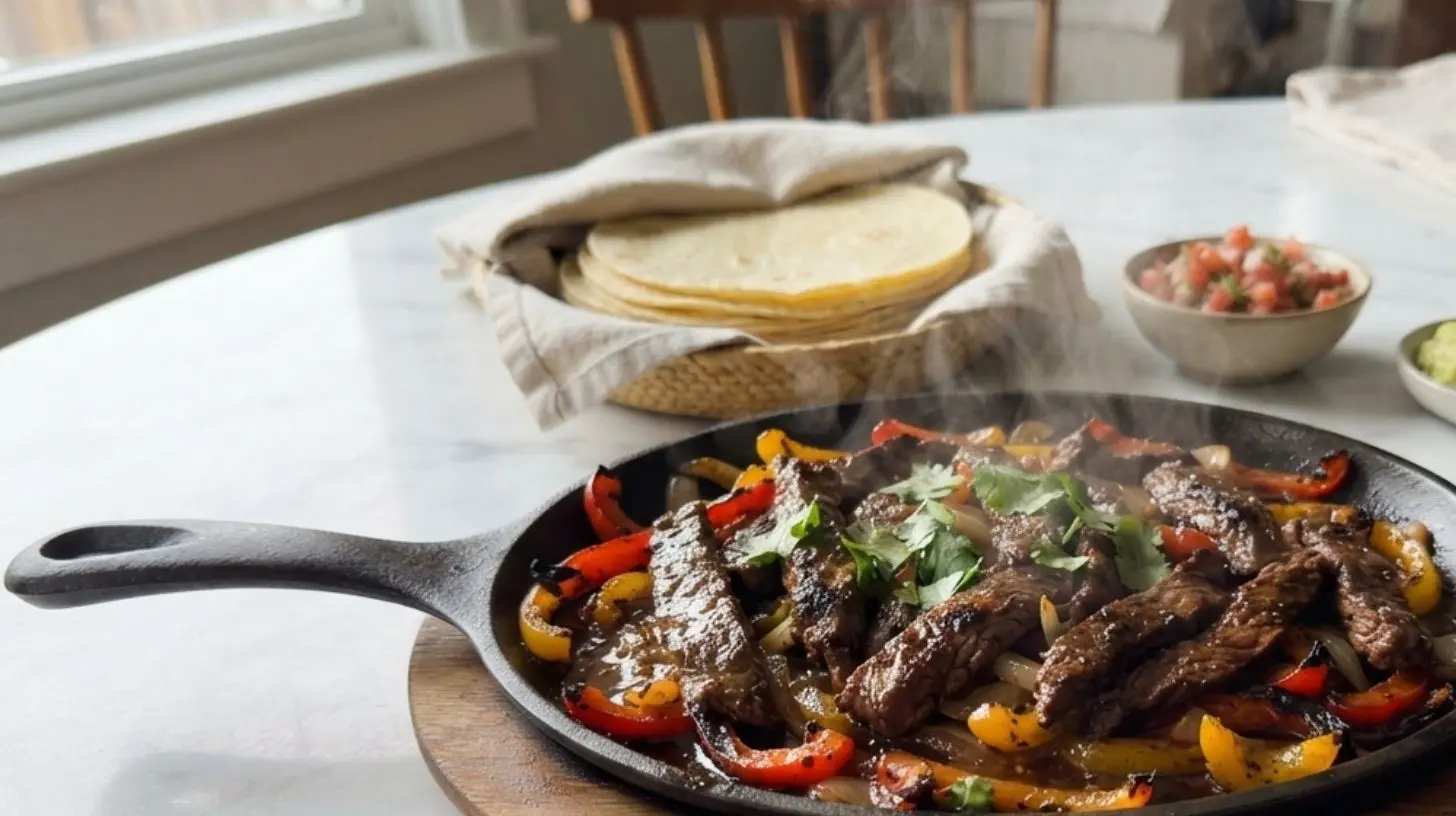
Best Beef Fajitas
Let's make delicious beef fajitas together!
Beef
Peppers
Onion
Garlic
Tortillas
Slice the beef into thin strips.
Season the beef with fajita seasoning.
Add sliced peppers and onions to the beef.
Cook everything in a hot skillet.
Warm the tortillas in the oven.
The Ultimate Guide to Sizzling Homemade Beef Fajitas
Have you ever wondered why restaurant fajitas arrive at your table with a dramatic sizzle, while your home attempts often end up dry and lackluster? The secret isn’t in a special pan—it’s in the technique. Learning to make authentic Beef Fajitas at home not only saves you money but also gives you full control over the quality and freshness of every ingredient. This dish is a cornerstone of Mexican recipes, and once you master the method, you’ll never need to order takeout again. The beauty of Beef Fajitas lies in their simplicity: high heat, quality meat, and a few transformative seasonings create a meal that feels both festive and satisfying. In this guide, I’ll walk you through every detail, from selecting the perfect cut of steak to achieving that coveted char without smoking out your kitchen. Preparing Beef Fajitas at home is valuable because it allows you to tailor the spice level, control sodium, and use the freshest produce.
Ingredients & Kitchen Tools
For the Beef Fajitas (serves 4):
– 1.5 lbs flank steak or skirt steak (thin cut, tender when cooked quickly)
– 3 bell peppers (mix colors: red, yellow, green) – sliced into ½-inch strips
– 1 large yellow onion – sliced into half-moons
– 3 cloves garlic – minced
– 3 tablespoons olive oil (avocado oil works too)
– 2 tablespoons fresh lime juice (about 1 lime)
– 1 teaspoon chili powder
– 1 teaspoon ground cumin
– 1 teaspoon smoked paprika
– ½ teaspoon dried oregano (Mexican oregano preferred)
– Salt and black pepper to taste
– Fresh cilantro – chopped, for garnish
Optional substitutions:
– Use chicken or shrimp instead of beef (adjust cooking times)
– Replace fresh lime with bottled lime juice in a pinch
– Add 1 teaspoon chipotle powder for smoky heat
Kitchen tools:
– Cast iron skillet or heavy-bottomed stainless steel pan (retains high heat)
– Sharp chef’s knife
– Cutting board
– Mixing bowls (one for marinade, one for resting)
– Tongs (for flipping meat)
– Meat mallet (optional, for tenderizing)
Prep Time & Cooking Schedule
Total time: 35 minutes active, plus 30 minutes marinating (optional but recommended)
– Marinating time: 30 minutes (can be extended to 4 hours)
– Prep time: 15 minutes (slicing vegetables, mixing marinade)
– Cook time: 12–15 minutes (8 minutes for steak, 4–7 for vegetables)
– Resting time: 5 minutes (steak must rest before slicing)
Planning tip: If you’re short on time, skip the marinade and simply season the steak generously with the spice blend right before cooking. The flavors will still be robust, though the meat will be slightly less tender. For busy weeknights, slice the vegetables and prepare the spice mix the night before.
Step-by-Step Instructions
1. Prepare the marinade: In a medium bowl, whisk together 2 tablespoons olive oil, lime juice, minced garlic, chili powder, cumin, smoked paprika, oregano, 1 teaspoon salt, and ½ teaspoon black pepper. This aromatic blend is the soul of great Beef Fajitas and mirrors the flavor profiles found in classic Mexican recipes.
2. Marinate the steak: Place the flank steak in a shallow dish, pour the marinade over it, and turn to coat evenly. Cover and refrigerate for at least 30 minutes. If you’re in a rush, let it sit at room temperature for 15 minutes—the acid from the lime will still work its magic.
3. Prep the vegetables: While the meat marinates, slice the bell peppers and onion into uniform ½-inch strips. Uniformity is key for even cooking. Set aside on a plate.
4. Heat the skillet: Place your cast iron skillet over high heat for 3–4 minutes until it’s smoking hot. Add 1 tablespoon olive oil and swirl to coat. The pan must be screaming hot—this creates the sear that locks in juices.
5. Cook the steak: Remove the steak from the marinade, letting excess drip off. Place it in the hot skillet. Cook for 4 minutes without moving it (this develops a crust). Flip and cook for another 3–4 minutes for medium-rare (internal temperature 130°F). For medium, cook 5 minutes per side. Transfer to a cutting board and tent with foil. Let rest for 5–7 minutes.
6. Sauté vegetables: Reduce heat to medium-high. Add remaining 1 tablespoon oil to the skillet. Add the sliced peppers and onions. Cook, stirring occasionally, for 4–5 minutes until they’re charred in spots but still crisp-tender. Season with a pinch of salt.
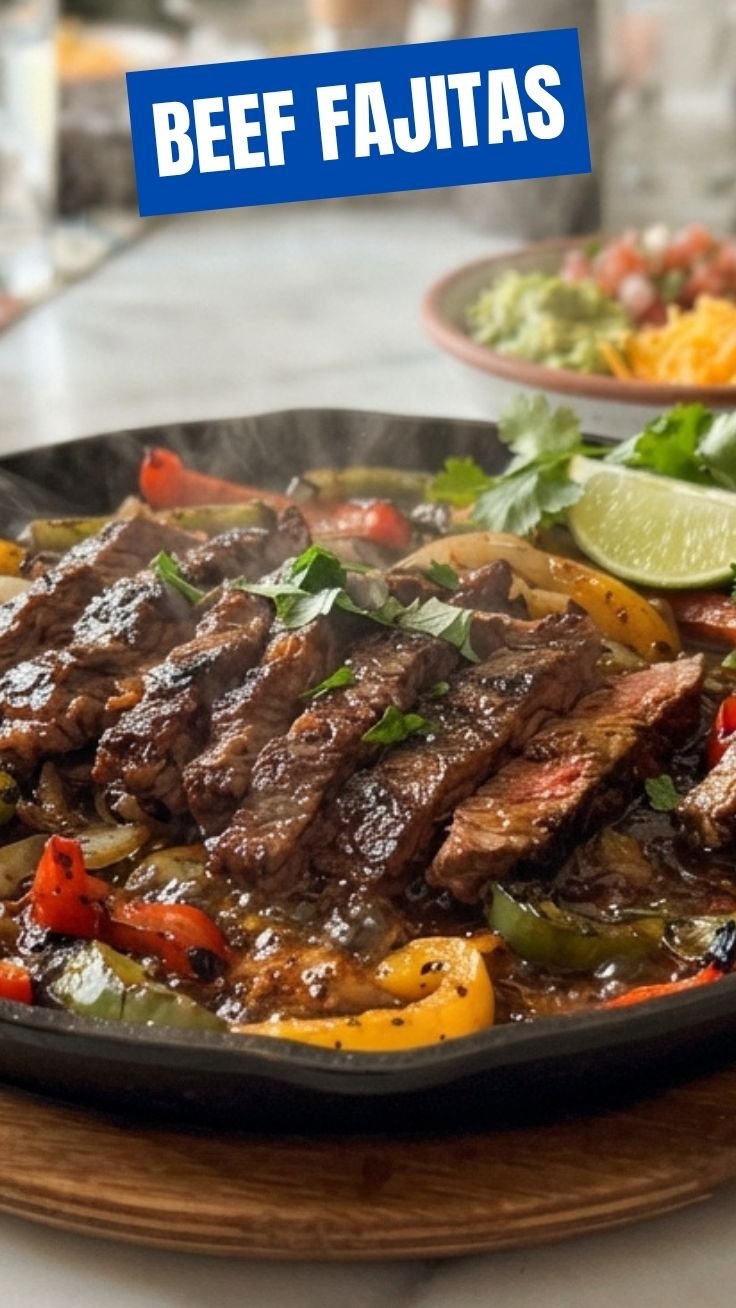
7. Slice and serve: Slice the rested steak against the grain into thin strips. The grain runs lengthwise on flank steak—cutting perpendicular to it ensures tenderness. Add the sliced beef back to the skillet with the vegetables, toss briefly, and garnish with fresh cilantro.
Pro tip: Use a meat thermometer for accuracy. Overcooked flank steak becomes tough and chewy. For extra tenderness, pound the steak to an even ½-inch thickness before marinating.
Nutritional Benefits & Advantages
Beef Fajitas offer a balanced nutritional profile that supports a healthy lifestyle. A serving (without tortillas or toppings) provides approximately:
– Calories: 350–400
– Protein: 35–40g (supports muscle repair and satiety)
– Fat: 18–22g (mostly unsaturated from olive oil)
– Carbohydrates: 12–15g (from vegetables)
– Fiber: 4–5g (from peppers and onions)
– Vitamin C: 150% of daily value (bell peppers are a powerhouse)
– Iron: 25% of daily value (red meat is a rich source)
– Zinc: 30% of daily value (boosts immune function)
The combination of lean protein and colorful vegetables makes this dish naturally low in processed ingredients. Using flank steak trimmed of excess fat keeps the saturated fat content reasonable. The lime juice and cumin also aid digestion, while the capsaicin in chili powder may boost metabolism slightly. By preparing this at home, you avoid the excess sodium and cheap oils often found in restaurant versions.
Tips, Variations & Cooking Advice
Flavor variations:
– Citrus-herb twist: Add orange zest and fresh thyme to the marinade
– Smoky chipotle: Replace chili powder with 2 minced chipotle peppers in adobo sauce
– Spicy kick: Add ½ teaspoon cayenne pepper or sliced jalapeños with the vegetables
Ingredient swaps:
– Protein: Use chicken thighs (juicier than breasts), pork tenderloin, or shrimp
– Vegetables: Add zucchini, mushrooms, or asparagus for variety
– Oil: Avocado oil has a higher smoke point than olive oil
Cooking method alternatives:
– Grill: Cook the steak over high direct heat (450°F) for 4–5 minutes per side. Grill vegetables in a basket or directly on grates
– Oven broil: Broil steak 4 inches from the heat source for 5–6 minutes per side
– Air fryer: Cook steak at 400°F for 8–10 minutes, flipping halfway (cut into smaller pieces first)
Dietary adaptations:
– Gluten-free: Use corn tortillas or serve over cauliflower rice
– Dairy-free: Skip sour cream or use a cashew-based alternative
– Keto-friendly: Serve in lettuce wraps with guacamole
Common Mistakes to Avoid
Mistake 1: Slicing the steak too soon
Cutting into the meat immediately after cooking releases all the juices. Always rest the steak for at least 5 minutes. This allows the fibers to relax and reabsorb liquid.
Mistake 2: Crowding the pan
If you add too much meat or vegetables at once, the pan temperature drops and the food steams instead of searing. Cook in batches if necessary. Leave space between each piece.
Mistake 3: Using low heat
Fajitas need high heat for caramelization. A properly preheated skillet should be smoking before you add oil. Test by flicking a drop of water—it should sizzle and evaporate instantly.
Mistake 4: Overcooking the vegetables
Soggy peppers and onions ruin the texture. Cook them just until they have char marks but still have a slight crunch. This takes 4–5 minutes maximum.
Mistake 5: Forgetting to cut against the grain
Flank steak has long muscle fibers. Cutting with the grain makes the meat chewy. Always identify the direction of the grain and slice perpendicular to it.
Storage & Meal Prep Tips
Refrigeration: Store leftover Beef Fajitas in an airtight container for up to 4 days. Keep the meat and vegetables separate from tortillas and toppings to prevent sogginess.
Freezing: The cooked beef and vegetables freeze well for up to 3 months. Place in a freezer-safe bag, removing as much air as possible. Thaw overnight in the refrigerator.
Reheating:
– Skillet: Heat a dry skillet over medium-high heat. Add the fajita mixture and cook for 2–3 minutes, stirring occasionally. This restores the charred texture.
– Microwave: Place on a microwave-safe plate, cover with a damp paper towel, and heat in 30-second bursts. This is faster but may soften the vegetables.
– Air fryer: Reheat at 350°F for 3–4 minutes for a crispy result.
Meal prep strategy: Cook the steak and vegetables on Sunday, then portion them into containers. During the week, simply warm a portion and assemble your fajitas with fresh toppings. This method keeps the dish vibrant and saves you 20 minutes per meal.
Conclusion
Mastering Beef Fajitas at home transforms a simple weeknight dinner into a celebration of bold flavors and vibrant colors. The key takeaways are simple: use high heat, don’t skip the resting step, and always slice against the grain. This recipe is a shining example of how Mexican recipes can be both accessible and impressive, delivering restaurant-quality results with minimal fuss. The combination of tender, marinated steak and charred vegetables creates a dish that’s as nutritious as it is delicious. I encourage you to try this recipe this week, share your results with friends, and explore other Beef Fajitas variations to keep your meals exciting. For more inspiration, check out our collection of Mexican recipes that celebrate bold, fresh ingredients. Now go fire up that skillet—your taste buds will thank you.
FAQs
1. Can I use a different cut of beef for fajitas?
Yes, flank steak and skirt steak are traditional, but sirloin flap meat, hanger steak, or even ribeye work well. Avoid tougher cuts like chuck or round, which require long, slow cooking.
2. How do I know when the steak is cooked perfectly?
Use an instant-read thermometer: 130°F for medium-rare, 140°F for medium, 150°F for medium-well. Remember that the temperature will rise about 5°F during resting.
3. What if my fajitas come out too salty?
Balance the saltiness by adding more lime juice or a spoonful of plain yogurt. You can also serve with fresh avocado, which neutralizes excess salt.
4. Can I make these fajitas ahead of time for a party?
Absolutely. Cook the steak and vegetables up to 2 hours in advance, then reheat in a hot skillet just before serving. Keep tortillas warm in a low oven (200°F) wrapped in foil.
5. How do I prevent my tortillas from breaking?
Warm them properly: wrap a stack in damp paper towels and microwave for 30 seconds, or heat each one directly over a gas flame for 15 seconds per side. This makes them pliable.
Best way to grow 10 Beef Fajitas
Equipment
- cutting board
- knife
- large bowl
- skillet or cast-iron pan
Ingredients
Main
- 1.5 lbs beef skirt steak
- 3 medium bell peppers any color
- 1 large onion
- 2 tbsp fajita seasoning
- 2 tbsp olive oil
- 10 count tortillas flour or corn
- cup salsa for serving
- cup sour cream for serving
- count lime wedges for serving
Instructions
Preparation
- Slice the beef skirt steak, bell peppers, and onion into thin strips.
- In a bowl, toss the sliced beef with one tablespoon of olive oil and the fajita seasoning.
Cooking
- Heat the remaining olive oil in a large skillet or cast-iron pan over medium-high heat.
- Add the seasoned beef to the hot skillet and cook for 3-5 minutes, until browned, then remove from the skillet.
- Add the sliced bell peppers and onion to the same skillet and cook for 5-7 minutes, until tender-crisp.
- Return the cooked beef to the skillet with the vegetables and stir to combine and heat through.
Serving
- Warm the tortillas according to package directions.
- Serve the beef and vegetable mixture in tortillas with salsa, sour cream, and lime wedges.