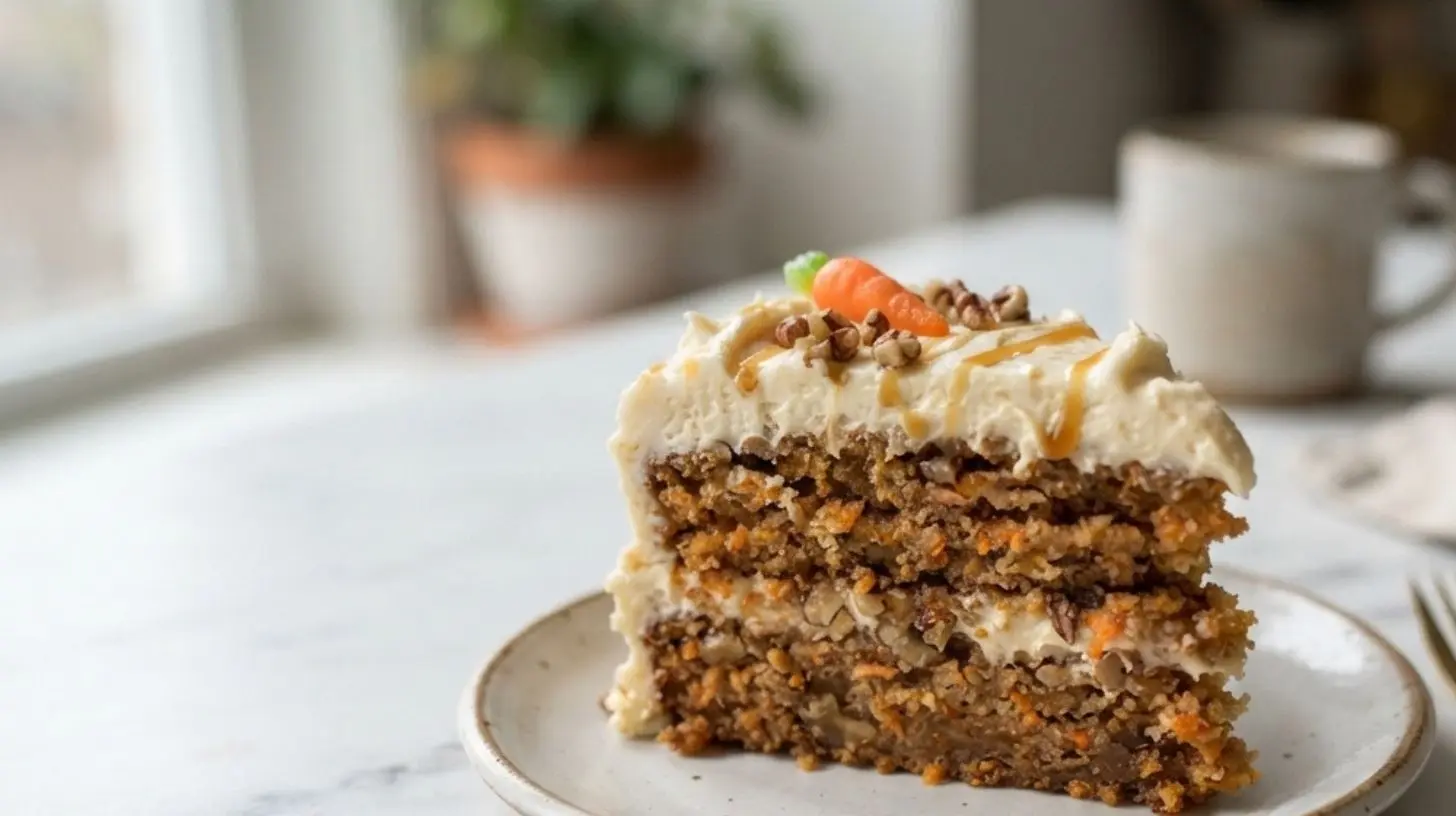
Proven Way to Grow Carrot Cake
Follow these 7 tips to make a delicious carrot cake!
Carrots
Flour
Sugar
Eggs
Cinnamon
Vanilla Extract
Cream Cheese
Grate the carrots finely.
Beat the eggs with sugar until fluffy.
Add cinnamon and vanilla extract to the egg mixture.
Fold in the flour and grated carrots.
Pour the batter into a greased cake pan and bake.
Let the cake cool before frosting with cream cheese icing.
Enjoy your delicious carrot cake!
The Ultimate Guide to Baking the Perfect Carrot Cake at Home
Have you ever wondered why bakery-style carrot cake tastes so impossibly moist and flavorful, yet your homemade attempts often turn out dry or dense? The secret isn’t just in the recipe—it’s in understanding the science behind the ingredients. Preparing a Carrot Cake from scratch at home allows you to control every element, from the quality of the spices to the sweetness of the cream cheese frosting. This comprehensive guide will walk you through a foolproof Carrot Cake Recipe that delivers bakery-quality results every time, while saving you money and impressing your guests.
Ingredients & Kitchen Tools
For the Cake:
– 2 cups all-purpose flour – Provides structure; sift for a lighter crumb
– 2 teaspoons baking soda – Ensures proper rise; check expiration date
– ½ teaspoon salt – Balances sweetness and enhances flavors
– 2 teaspoons ground cinnamon – The backbone of warm spice flavor
– ½ teaspoon ground nutmeg – Adds depth; freshly grated is best
– ½ teaspoon ground ginger – Provides subtle warmth
– 1 cup vegetable oil – Keeps cake incredibly moist; can substitute with melted coconut oil
– 1 cup granulated sugar – For sweetness and tenderness
– 1 cup packed brown sugar – Adds moisture and caramel notes
– 4 large eggs – Room temperature for better emulsion
– 2 teaspoons vanilla extract – Pure, not imitation
– 3 cups finely grated carrots – About 4-5 medium carrots; do not squeeze out moisture
– 1 cup crushed pineapple, drained – Adds moisture and natural sweetness
– ½ cup chopped walnuts or pecans – Optional; toast for deeper flavor
For the Cream Cheese Frosting:
– 8 oz cream cheese, softened – Full-fat for best consistency
– ½ cup unsalted butter, softened – Adds richness and stability
– 4 cups powdered sugar – Sifted to avoid lumps
– 1 teaspoon vanilla extract – Enhances creaminess
Kitchen Tools:
– Two 9-inch round cake pans
– Electric mixer (hand or stand)
– Mixing bowls (large and medium)
– Box grater or food processor with grating disc
– Rubber spatula
– Cooling rack
– Offset spatula for frosting
– Parchment paper rounds
Prep Time & Cooking Schedule
– Prep Time: 25 minutes (includes grating carrots and measuring ingredients)
– Bake Time: 30-35 minutes at 350°F (175°C)
– Cooling Time: 1 hour minimum (cakes must be completely cool before frosting)
– Total Time: Approximately 2 hours
Planning Tip: Start this recipe in the morning if serving for afternoon dessert. The cake actually tastes better the next day, so consider baking a day ahead and refrigerating the unfrosted layers wrapped in plastic wrap.
Step-by-Step Instructions
Step 1: Prepare Your Pans and Oven
Preheat your oven to 350°F (175°C). Grease two 9-inch round cake pans, line the bottoms with parchment paper rounds, then grease the parchment. This guarantee easy release.
Step 2: Mix Dry Ingredients
In a medium bowl, whisk together flour, baking soda, salt, cinnamon, nutmeg, and ginger. Set aside.
Step 3: Combine Wet Ingredients
In a large bowl, beat the oil, granulated sugar, and brown sugar until well combined (about 2 minutes). Add eggs one at a time, beating well after each addition. Stir in vanilla extract.
Step 4: Incorporate Carrots and Pineapple
Fold in the grated carrots and drained crushed pineapple. Do not overmix—just until evenly distributed. The moisture from these ingredients is what makes this Carrot Cake exceptionally tender.
Step 5: Combine Wet and Dry Mixtures
Gradually add the dry ingredients to the wet mixture, stirring gently with a rubber spatula until just combined. A few small lumps are fine—overmixing develops gluten, which can make the cake tough. For the perfect Carrot Cake Recipe, fold in nuts at this stage if using.
Step 6: Bake
Divide batter evenly between the prepared pans. Bake for 30-35 minutes, or until a toothpick inserted in the center comes out clean or with a few moist crumbs. The edges should pull away slightly from the pan.
Pro Tip: Rotate pans halfway through baking for even browning. If the top browns too quickly, tent loosely with aluminum foil.
Step 7: Cool Completely
Let cakes cool in pans for 10 minutes, then turn out onto a wire rack. Remove parchment paper and let cool completely—at least 1 hour. Warm cake will melt the frosting.
Step 8: Make the Frosting
Beat softened cream cheese and butter together until smooth and creamy (about 3 minutes). Gradually add powdered sugar, beating on low speed to avoid a sugar cloud. Add vanilla extract and beat until fluffy, about 2 more minutes.
Step 9: Assemble and Frost
Place one cake layer on a serving plate. Spread about 1 cup of frosting evenly on top. Place the second layer on top. Apply a thin crumb coat, refrigerate for 15 minutes, then apply the final thick layer of frosting.
Nutritional Benefits & Advantages
This Carrot Cake offers surprising nutritional benefits despite being a dessert. Carrots are rich in beta-carotene, which the body converts to vitamin A—essential for eye health and immune function. The addition of walnuts provides omega-3 fatty acids and antioxidants, while pineapple offers vitamin C and bromelain, an enzyme that aids digestion.
Compared to many store-bought cakes, this homemade version contains no preservatives, artificial flavors, or hydrogenated oils. The oil-based batter (rather than butter) creates a moist crumb with less saturated fat. Each slice provides approximately 4 grams of fiber from the carrots and nuts, helping you feel satisfied with a reasonable portion.
Tips, Variations & Cooking Advice
Flavor Variations:
– Spice it up: Add ½ teaspoon cardamom or allspice for warmth
– Tropical twist: Replace pineapple with finely chopped mango
– Citrus kick: Add 1 tablespoon orange zest to the batter
– Chocolate version: Fold in ½ cup mini chocolate chips
Dietary Adaptations:
– Gluten-free: Substitute all-purpose flour with a 1:1 gluten-free baking blend containing xanthan gum
– Dairy-free: Use vegan cream cheese and plant-based butter for frosting
– Lower sugar: Reduce granulated sugar to ¾ cup; the pineapple and carrots add natural sweetness
Alternative Methods:
– Cupcakes: Bake for 18-20 minutes; yields about 24 cupcakes
– Sheet cake: Use a 9×13 pan; bake for 35-40 minutes
– Bundt cake: Bake for 45-50 minutes; dust with powdered sugar instead of frosting
Common Mistakes to Avoid
Mistake #1: Overmixing the batter. This creates a dense, tough cake. Solution: Mix just until the flour disappears—a few lumps are fine.
Mistake #2: Using pre-shredded carrots. These are dry and coarse. Solution: Always grate whole carrots fresh for maximum moisture and flavor.
Mistake #3: Frosting warm cake. This creates a soupy mess. Solution: Wait until cakes are completely cool to the touch—at least 1 hour at room temperature.
Mistake #4: Not draining pineapple. Excess liquid makes the cake soggy. Solution: Press pineapple in a fine-mesh strainer to remove excess juice.
Mistake #5: Overbaking. The cake continues to cook from residual heat. Solution: Start checking for doneness at 28 minutes, and remove from oven when just a few moist crumbs cling to the toothpick.
Storage & Meal Prep Tips
Refrigeration: Store frosted cake in an airtight container in the refrigerator for up to 5 days. The cream cheese frosting requires refrigeration.
Freezing: Unfrosted cake layers can be wrapped tightly in plastic wrap, then aluminum foil, and frozen for up to 3 months. Thaw overnight in the refrigerator before frosting.
Frosting Storage: Cream cheese frosting can be refrigerated for up to 1 week. Let it soften at room temperature for 15 minutes before using.
Reheating: For a warm slice, microwave for 10-15 seconds. For the full experience, let refrigerated cake sit at room temperature for 20 minutes before serving.
Meal Prep Tip: Bake and freeze layers on the weekend, then thaw and frost on the day you need them. This makes the process stress-free for special occasions.
Conclusion
Mastering this Carrot Cake is about more than just following steps—it’s about understanding how moisture, spice, and texture work together to create something truly special. By using freshly grated carrots, properly draining the pineapple, and allowing the cake to cool completely before frosting, you’ll achieve a dessert that rivals any bakery. This Carrot Cake Recipe is designed to be foolproof, delivering consistent results whether you’re baking for a birthday, holiday, or simply because you deserve a treat. Try it this weekend, and don’t forget to share your creation with friends and family. Your kitchen is about to become their favorite bakery.
FAQs
Can I use pre-shredded carrots from the store?
Not recommended. Pre-shredded carrots are often dry and lack the moisture that fresh grating provides. They also tend to be cut too thickly, which affects texture. Always grate whole carrots fresh for best results.
My cake turned out dry. What went wrong?
The most common causes are overbaking, using too much flour (measure by weight if possible), or not draining the pineapple properly. Check your oven temperature with an oven thermometer—many run hotter than indicated.
Can I make this recipe without nuts?
Absolutely. Simply omit the walnuts or pecans. The cake will still be delicious. You can replace them with raisins, dried cranberries, or shredded coconut for texture.
How do I prevent my cream cheese frosting from being runny?
Ensure your cream cheese and butter are truly softened to room temperature (about 65°F). If the frosting is too soft, refrigerate it for 15-20 minutes before spreading. Avoid overbeating, which can cause the frosting to thin out.
Can I use coconut oil instead of vegetable oil?
Yes, melted coconut oil works well. Use refined coconut oil for a neutral flavor, or unrefined for a subtle coconut taste that complements the carrots. Note that coconut oil may solidify if the batter is cold, so use room temperature ingredients.