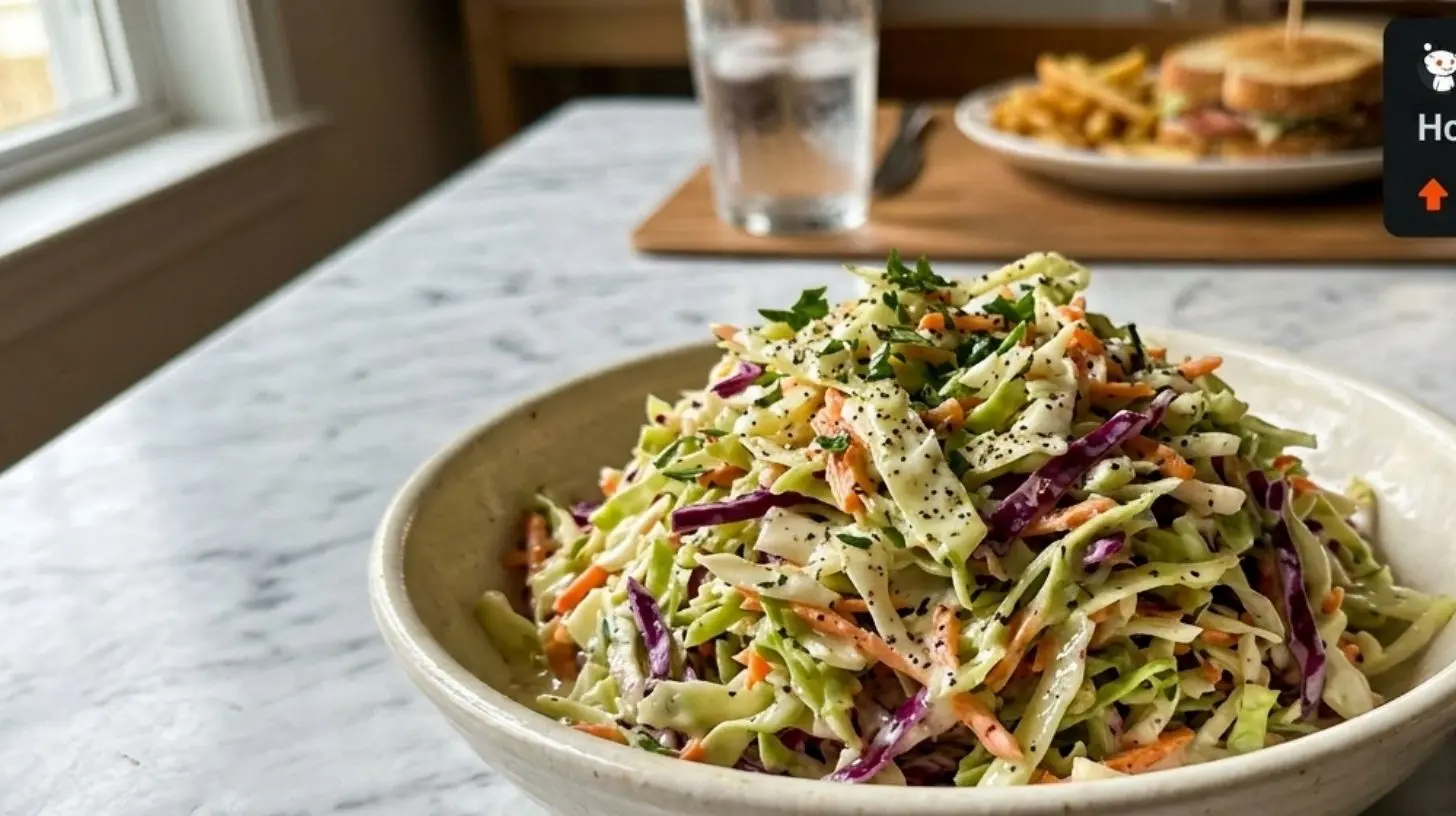
Quick Coleslaw Cabbage
Learn how to make a tasty coleslaw with fresh cabbage.
Cabbage
Carrots
Mayonnaise
Vinegar
Sugar
Salt
Shred the cabbage and carrots in a bowl.
Mix mayonnaise, vinegar, sugar, and salt in a separate bowl.
Pour the dressing over the cabbage and carrots.
Toss everything together until well coated.
The Ultimate Homemade Coleslaw Recipe: Creamy, Tangy, and Better Than Store-Bought
Have you ever wondered why restaurant coleslaw tastes so much better than the bagged version from the grocery store? The secret isn’t a mystery ingredient—it’s the careful balance of fresh vegetables and a perfectly emulsified coleslaw dressing. By making your own classic Coleslaw at home, you control every element: the crunch of the cabbage, the sweetness of the dressing, and the freshness of the herbs. Not only do you save money, but you also avoid preservatives and unnecessary sugars. This comprehensive guide will walk you through everything you need to know—from selecting the right cabbage to mastering that signature tangy-creamy coleslaw dressing that ties it all together. Let’s dive in and transform your next barbecue, picnic, or weeknight dinner.
—
Ingredients & Kitchen Tools
For the Coleslaw Base
– Green cabbage (1 medium head) – Provides the classic crunchy texture; you can also use a mix of green and red for color.
– Carrots (2 large) – Shredded fine for sweetness and color contrast.
– Red onion or shallot (½ small) – Adds a sharp, mild bite; optional if you prefer a milder slaw.
For the Coleslaw Dressing
– Mayonnaise (1 cup) – Full-fat yields the creamiest result; low-fat works but may be thinner.
– Apple cider vinegar (2 tablespoons) – The tangy backbone; white vinegar works as a neutral substitute.
– Granulated sugar (2–3 tablespoons) – Balances acidity; adjust to taste.
– Dijon mustard (1 teaspoon) – Adds depth and helps emulsify the dressing.
– Celery seed (½ teaspoon) – A classic spice that provides earthy, slightly bitter notes.
– Salt and black pepper – To taste, at least ½ teaspoon salt.
Kitchen Tools
– Large mixing bowl
– Chef’s knife or mandoline slicer (for even shredding)
– Box grater or food processor with shredding disc
– Whisk or small jar with lid (for dressing)
– Colander (optional, for rinsing cabbage)
– Salad spinner or clean kitchen towel (to dry cabbage)
Optional Substitutions
– Vegan dressing: Replace mayo with cashew cream or vegan mayo.
– Sugar-free: Use monk fruit sweetener or omit sugar entirely (dressing will be sharper).
– Extra crunch: Add shredded broccoli stems, sliced radishes, or julienned apple.
—
Prep Time & Cooking Schedule
– Prep time: 15 minutes (shredding vegetables + mixing dressing)
– Resting time: 30 minutes (refrigerate before serving for flavors to meld)
– Total time: 45 minutes active + passive
Note: Coleslaw is a make-ahead dish—preparing it 2–4 hours before serving yields the best flavor. If you’re in a hurry, you can serve it immediately, but allow at least 15 minutes for the cabbage to soften slightly.
Timetables for meal planning:
– For a barbecue at 5 PM, shred vegetables and mix dressing at 4:15 PM, combine, refrigerate until serving.
– For a packed lunch, make the night before and store in an airtight container.
—
Step-by-Step Instructions
1. Shred the cabbage and carrots – Remove any wilted outer leaves from the cabbage. Cut it in half through the core, then cut each half into 2–3 wedges. Use a sharp knife or mandoline to slice crosswise into thin strips (about ⅛ inch thick). Grate the carrots on the large holes of a box grater or use the shredding disc in a food processor. Place both in a large bowl.
2. Salt the vegetables (optional but recommended) – Toss the shredded cabbage and carrots with 1 teaspoon of salt and let rest for 15 minutes. This draws out excess moisture, preventing a watery slaw. After 15 minutes, squeeze the vegetables gently in a clean towel or use a salad spinner to remove the released liquid. Skip this step if you prefer a juicier slaw.
3. Prepare the coleslaw dressing – In a small bowl or jar, whisk together the mayonnaise, apple cider vinegar, sugar, Dijon mustard, celery seed, ¼ teaspoon salt, and several grinds of black pepper. Taste and adjust: add more sugar for sweetness, more vinegar for tanginess. The consistency should be thick but pourable. If too thick, thin with a tablespoon of milk or water.
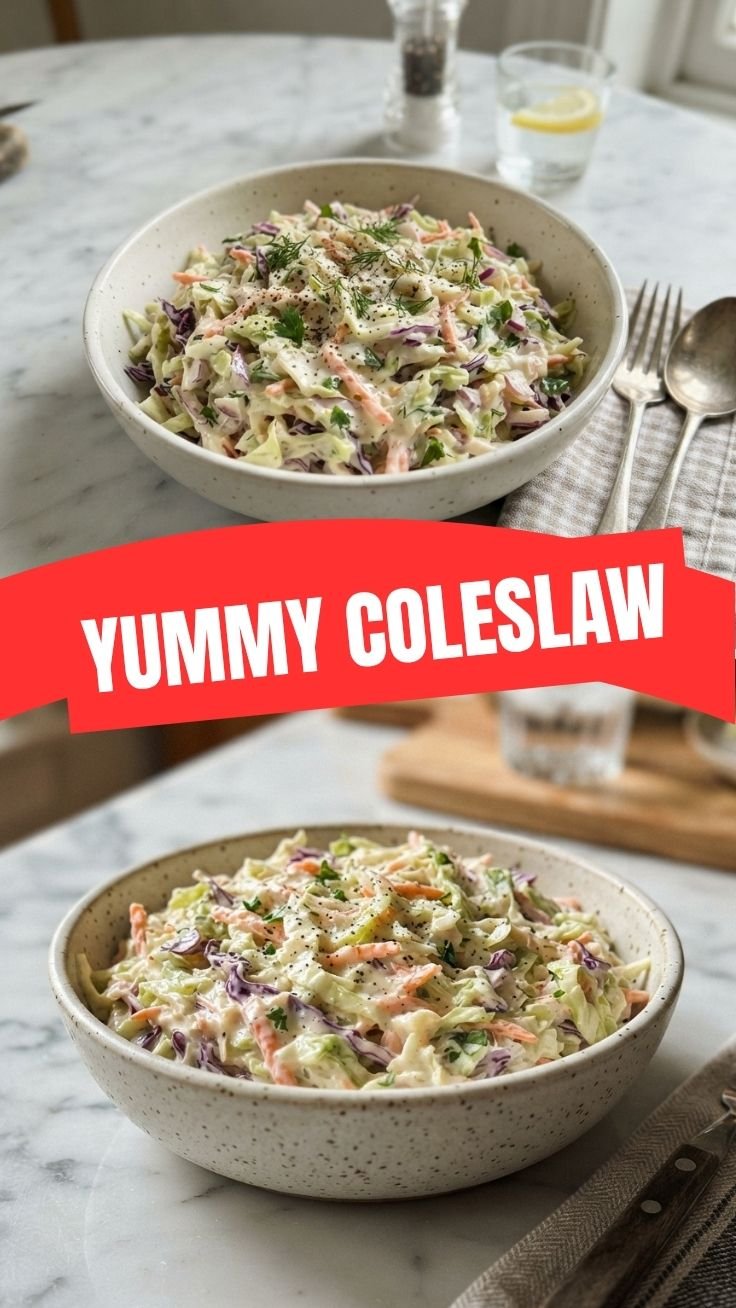
4. Combine and chill – Pour the dressing over the shredded vegetables. Use two large spoons or spatulas to toss gently until every strand is coated. Transfer to a serving bowl, cover with plastic wrap, and refrigerate for at least 30 minutes. This resting time allows the flavors to meld and the cabbage to soften slightly while retaining its crunch. For a truly restaurant-style Coleslaw, let it sit for 2–4 hours.
5. Final taste and serve – Just before serving, give the slaw a final stir. Add a splash of vinegar or a pinch of salt if needed. Garnish with fresh parsley, extra celery seed, or a few carrot curls if desired.
Pro tips:
– Use a food processor with a shredding disc for even, quick shredding—but don’t over-process, or the cabbage becomes mushy.
– If the dressing tastes too mayonnaise-heavy, add more vinegar and a pinch of salt to brighten it.
– For extra tang, add a tablespoon of pickle juice or a squeeze of lemon juice.
—
Nutritional Benefits & Advantages
Coleslaw is more than a side dish—it’s a nutrient-dense vegetable salad dressed in a creamy, flavorful coating. Here’s why it deserves a regular spot on your table:
– Cabbage: Low in calories (about 22 per cup) and rich in vitamin C, vitamin K, and fiber. It contains sulforaphane, a compound linked to reduced cancer risk.
– Carrots: Excellent source of beta-carotene (vitamin A), which supports eye health and immunity.
– Mayonnaise-based dressing: While higher in fat, the fat helps absorb fat-soluble vitamins from the vegetables. Using avocado oil mayo provides heart-healthy monounsaturated fats.
– Apple cider vinegar: May help blood sugar regulation and provides antimicrobial benefits.
Per serving (1 cup): approximately 150–200 calories, 15g fat, 10g carbs, 2g protein, 2g fiber. By using low-fat yogurt or vegan mayo, you can reduce calories and saturated fat while maintaining creaminess.
—
Tips, Variations & Cooking Advice
Flavor Twists
– Spicy coleslaw: Add 1–2 teaspoons of sriracha or a pinch of cayenne to the dressing.
– Asian-inspired: Swap vinegar for rice vinegar, add 1 tablespoon soy sauce and 1 teaspoon sesame oil, and toss in toasted sesame seeds.
– Herbaceous: Fold in ¼ cup chopped fresh dill, parsley, or cilantro just before serving.
– Creamy without mayo: Use plain Greek yogurt (or dairy-free yogurt) mixed with 1 tablespoon olive oil and 1 teaspoon mustard.
Dietary Adaptations
– Gluten-free: All ingredients are naturally gluten-free. Check mustard and vinegar labels (most are safe).
– Dairy-free: Use vegan mayo or mashed avocado as the creamy base.
– Low-carb/keto: Replace sugar with erythritol or omit it; use full-fat mayo and add a touch of mustard for flavor.
Cooking Method Alternatives
– No-knife method: Use a food processor with a slicing disc for cabbage and a shredding disc for carrots—saves 10 minutes.
– Quick marinate: If you’re short on time, toss the shredded vegetables with 2 tablespoons of dressing, then wait just 10 minutes while you prepare the rest of the meal. It won’t be as flavor-infused, but still delicious.
Portion Changes
– Double the recipe for a crowd: use 2 heads of cabbage and 4 carrots. Scale dressing ingredients proportionally (2 cups mayo, 4 tbsp vinegar, etc.).
– For a lighter slaw, reduce mayonnaise by half and replace with an equal amount of buttermilk or kefir.
—
Common Mistakes to Avoid
| Mistake | Solution |
|———|———-|
| Watery slaw | Salt and squeeze the cabbage before dressing, or use a salad spinner to remove excess liquid. Also, don’t dress the slaw too far in advance (more than 8 hours). |
| Soggy texture | Avoid over-mixing; toss gently until just combined. Serve within a few hours of dressing for maximum crunch. |
| Bland flavor | Be generous with seasoning—salt, pepper, and acid (vinegar). Add a pinch of sugar to balance. |
| Dressing separation | If the mayonnaise-based dressing curdles or separates, whisk in 1 teaspoon of warm water or Dijon mustard to re-emulsify. |
| Too sweet or too tangy | Balance by adding more vinegar for sweetness, or more sugar for tanginess. Adjust gradually, tasting as you go. |
| Too much dressing | Start with ¾ of the dressing, toss, and add more only if needed. You can always mix in extra, but you can’t remove excess. |
—
Storage & Meal Prep Tips
– Refrigeration: Store coleslaw in an airtight container in the refrigerator for up to 3 days. The cabbage will continue to soften and release liquid, so stir well before serving and drain off any excess moisture if needed.
– Freezing: Not recommended. The high water content in cabbage and the emulsion of the dressing will break upon thawing, resulting in a mushy, watery slaw.
– Make-ahead preparation: Shred the vegetables and store them separately in a resealable bag in the fridge (up to 1 day in advance). Mix the dressing and keep it in a jar. Combine up to 4 hours before serving.
– Reheating: Coleslaw is served cold. If you prefer it slightly warm (e.g., alongside grilled meats), you can microwave individual portions for 15–20 seconds—but be aware the texture will soften.
Pro tip for meal prep: Divide undressed slaw into individual containers, then add dressing to each portion just before eating. This keeps the crunch intact for up to 5 days.
—
Conclusion
There you have it—a foolproof, creamy Coleslaw that’s bursting with fresh crunch and balanced flavor. By mastering the perfect coleslaw dressing, you’ve unlocked a versatile side dish that complements everything from southern barbecue to fish tacos. The beauty of this recipe lies in its simplicity: quality ingredients, proper resting time, and the confidence to adjust seasonings to your taste. Whether you’re a novice cook or a seasoned home chef, this Coleslaw recipe will never let you down—and with that tangy, creamy coleslaw dressing, you’ll never reach for a store-bought tub again. So grab a head of cabbage, whip up a batch, and share your results with friends and family. And if you love this, explore our other fresh salad recipes for more inspiration. Happy cooking!
—
FAQs
1. Can I use pre-shredded coleslaw mix from a bag?
Absolutely—but the texture won’t be as crisp. Bagged mixes have already released some moisture. If using, skip the salting step and dress immediately. You may also want to add a little extra vinegar to brighten the flavor.
2. How do I make my coleslaw less watery for a picnic?
The key is removing excess moisture from the cabbage. After shredding, toss with 1 teaspoon salt and let sit for 15 minutes. Squeeze out the liquid using a clean kitchen towel or salad spinner. Then proceed with the dressing. Also, pack the dressing separately and add just before serving for maximum crunch.
3. Can I substitute Greek yogurt for mayonnaise?
Yes, but the dressing will be tangier and less rich. Mix 1 cup plain Greek yogurt with 2 tablespoons olive oil, 2 tablespoons vinegar, sugar, and mustard. For a dairy-free version, use coconut yogurt or cashew cream. The result is lighter and lower in calories.
4. Why does my coleslaw taste bland even though I followed the recipe?
Likely a seasoning issue. Taste the dressing before tossing—it should be noticeably tangy and salty (the cabbage will absorb some). Also, ensure you’re using enough salt (at least ½ teaspoon) and consider adding a pinch of celery seed or freshly ground black pepper. A splash of lemon juice can also wake up the flavors.
5. How long can I store leftover coleslaw?
It stays fresh in the refrigerator for 2–3 days. After that, the cabbage becomes limp and the dressing may separate. You can revive it by draining excess liquid, adding a tablespoon of fresh dressing, and stirring well. But for best quality, enjoy within 2 days.