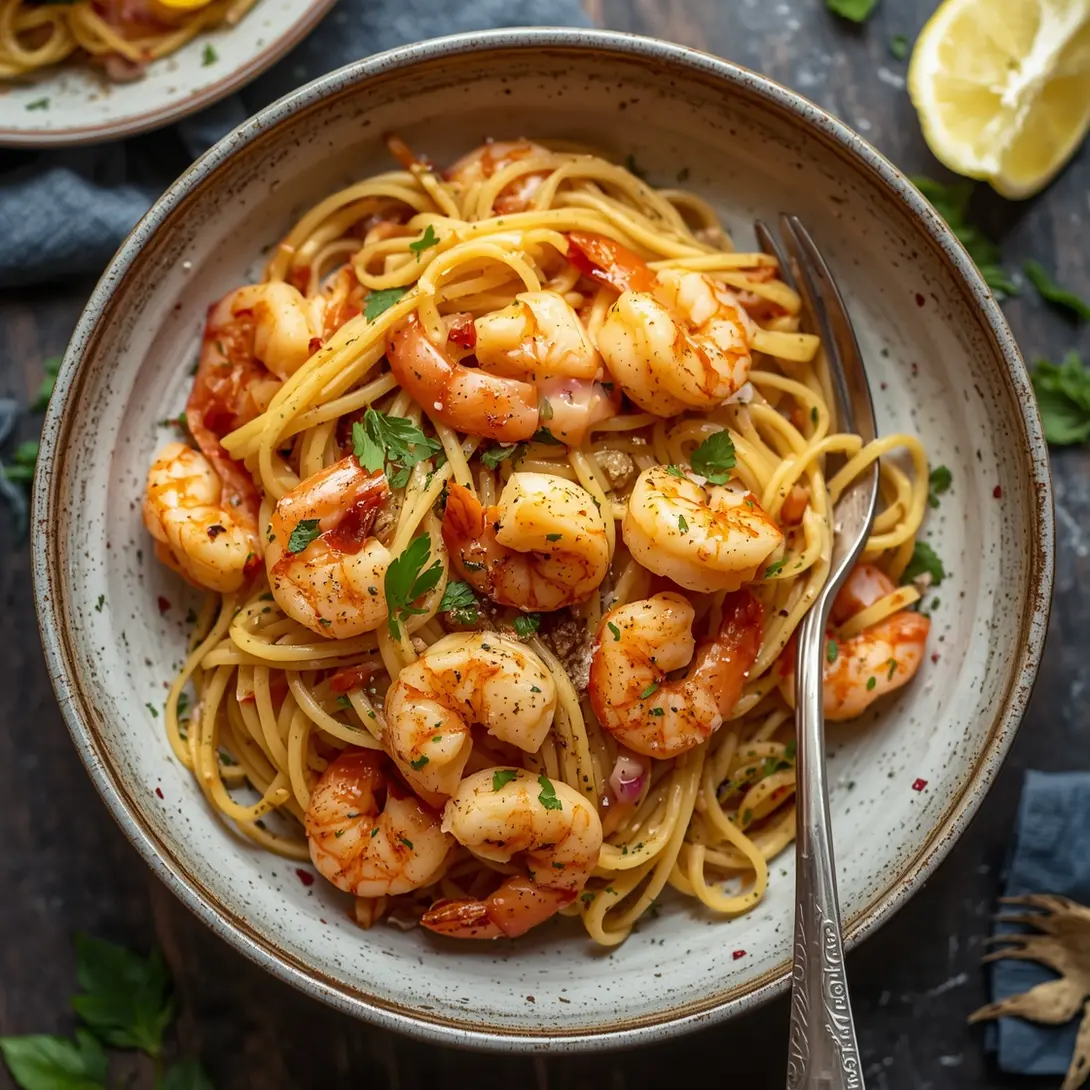
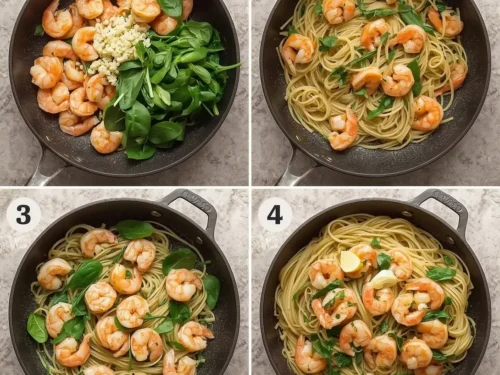
- Boil the linguine until al dente, reserving a cup of pasta water.
- Season and sear the shrimp in garlic‑infused olive oil, creating a caramelized crust.
- Deglaze the pan with white wine (or broth) and let it reduce, building a silky sauce base.
- Add spinach (and optional aromatics) to wilt, then combine the cooked linguine, creating a cohesive, glossy coating.
- Finish with butter, cheese, and a dash of pepper for richness, then plate and serve immediately.
By visualizing the five milestones, you’ll move through the recipe with confidence and avoid the classic “everything in the pot at once” pitfall.
—Ingredient list
Garlic Shrimp Linguine with Spinach: 5 Simple Steps to a Delicious Italian DinnerQuantity Ingredient Notes / Substitutions 12 oz Linguine (or spaghetti) Whole‑wheat or gluten‑free pasta work equally well 1 lb Large raw shrimp, peeled and deveined Replace with scallops or diced chicken for a different protein 4 cloves Garlic, minced Garlic powder can substitute in a pinch (½ tsp) 2 tbsp Extra‑virgin olive oil Avocado oil for a higher smoke point ½ cup Dry white wine (or low‑sodium chicken broth) Use a splash of lemon juice instead of wine for a citrusy twist 4 cups Fresh baby spinach Substitute with arugula or kale (stems removed) 2 tbsp Unsalted butter Vegan butter or olive oil for dairy‑free ¼ cup Freshly grated Parmesan cheese Nutritional yeast for a dairy‑free version ½ tsp Crushed red‑pepper flakes Adjust to taste or omit for mild flavor Salt & freshly cracked black pepper To taste Sea salt adds a subtle crunch Optional garnish Chopped fresh parsley or basil Adds color and freshness
—Cooking method
- Cook the pasta – Bring a large pot of salted water to a rolling boil. Add the linguine and cook 1‑2 minutes less than the package instructions (usually 8‑9 min total) to keep it firm for the final toss. Drain, reserving 1 cup of the starchy cooking water, then set aside.
- Prep the shrimp – Pat the shrimp dry with paper towels; moisture hinders browning. Toss them lightly with a pinch of salt and pepper.
- Sear the shrimp – Heat the olive oil in a wide, shallow skillet over medium‑high heat. When the oil shimmers, add the shrimp in a single layer. Cook 1‑2 min per side, until they turn pink and develop a golden crust. Transfer the shrimp to a plate and cover loosely with foil to stay warm.
- Build the sauce – Reduce the heat to medium. Add the minced garlic to the same skillet; stir for 30 seconds until fragrant, careful not to burn. Pour in the white wine (or broth) and scrape the browned bits from the pan’s bottom. Let the liquid simmer for 2‑3 minutes, reducing by about half.
- Add the greens – Toss in the spinach (and red‑pepper flakes if using). Stir constantly; the leaves will wilt in 1‑2 minutes.
- Combine pasta and protein – Return the shrimp to the skillet, then add the cooked linguine. Drizzle in up to ½ cup of the reserved pasta water, stirring to coat the noodles evenly. The starch‑laden water helps bind the sauce to the pasta, creating a glossy finish.
- Finish with richness – Lower the heat to low. Stir in the butter and grated Parmesan until melted and fully incorporated. Season with additional salt and a generous grind of black pepper. Taste and adjust the seasoning if needed.
- Plate and serve – Twirl a forkful of linguine onto each plate, top with extra shrimp, a sprinkle of cheese, and a pop of fresh herbs. Serve immediately while steaming hot.
—Serving suggestions
* Crisp side salad – A simple arugula salad dressed with lemon vinaigrette cuts through the richness and adds a peppery bite. * Garlic bread – Warm, butter‑toasted baguette slices rubbed with a little extra garlic bring a comforting crunch. * Lemon wedges – A quick squeeze of fresh lemon brightens the final dish and highlights the shrimp’s natural sweetness. * Wine pairing – A chilled Pinot Grigio or Vermentino echoes the citrus notes of the sauce without overwhelming the palate.
For a more upscale presentation, use a shallow, wide bowl, swirl the linguine into a nest, then cascade the shrimp over the top. Finish with a drizzle of high‑quality extra‑virgin olive oil and a dusting of smoked paprika for a subtle color pop.
—The best way to save extras
Refrigeration: Transfer any leftover pasta to an airtight container within two hours of cooking. It will keep safely for 3‑4 days. When reheating, add a splash of broth or water and gently stir in a skillet over low heat to restore the sauce’s silkiness.
Freezing: If you anticipate a larger batch, freeze the cooked linguine and shrimp separately on a parchment‑lined tray for about 30 minutes, then bundle into freezer‑safe bags. This prevents the pasta from clumping. They can be stored for up to 2 months. To use, thaw overnight in the refrigerator, then reheat in a skillet with a modest drizzle of olive oil and a bit of fresh garlic.
Food safety tip: Shrimp is highly perishable; never leave it at room temperature longer than two hours, and always reheat leftovers to an internal temperature of 165 °F (74 °C) before serving.
—Pro chef tips
- Dry the shrimp – Moisture is the enemy of a good sear. Patting them dry yields a caramelized crust that locks in flavor.
- Use high‑heat oil – A mix of olive oil and a splash of butter raises the smoke point while keeping the classic buttery finish.
- Don’t overcook the pasta – Under‑cooking by a minute lets the noodles finish cooking in the sauce, absorbing the garlic‑wine reduction without turning mushy.
- Reserve pasta water – The starch in the water is the secret glue that binds the sauce to the noodles; skip it and the dish will look watery.
- Finish off‑heat – Adding cheese and butter off the flame prevents them from curdling, preserving a creamy texture.
—Creative twists
* Spicy arrabbiata version: Add a spoonful of crushed tomatoes and an extra pinch of red‑pepper flakes for a tomato‑based, fiery sauce. * Creamy lemon‑basil twist: Stir in ¼ cup of heavy cream and the zest of one lemon right before plating; finish with torn basil leaves. * Mediterranean garden: Mix in diced sun‑dried tomatoes, Kalamata olives, and capers for a briny depth. * Vegan makeover: Swap shrimp for roasted chickpeas, use nutritional yeast instead of Parmesan, and finish with a drizzle of truffle‑infused oil. * Gluten‑free option: Use corn‑based linguine and ensure the broth is gluten‑free; the flavor profile remains unchanged.
Each variation respects the core concept—garlic, shrimp, spinach, and pasta—while letting you tailor the dish to dietary needs or flavor cravings.
—Common questions
Q1: How long does the whole recipe take from start to finish? A: About 25‑30 minutes total: 10 minutes for prep (peeling shrimp, mincing garlic, measuring ingredients) and 15‑20 minutes for cooking.
Q2: Can I replace the white wine with something non‑alcoholic? A: Absolutely. Use an equal amount of low‑sodium chicken or vegetable broth, or a splash of white grape juice balanced with a teaspoon of lemon juice for acidity.
Q3: Is this dish suitable for a low‑carb or keto diet? A: Swap the linguine for shirataki noodles, zucchini ribbons, or spaghetti squash. The sauce and shrimp remain unchanged, keeping the flavor profile intact while dramatically lowering carbs.
—
Enjoy your Garlic Shrimp Linguine with Spinach—a dish that proves elegance doesn’t have to be elaborate. With these steps, tips, and variations, you’re equipped to serve a restaurant‑style meal any night of the week. Bon appétit!
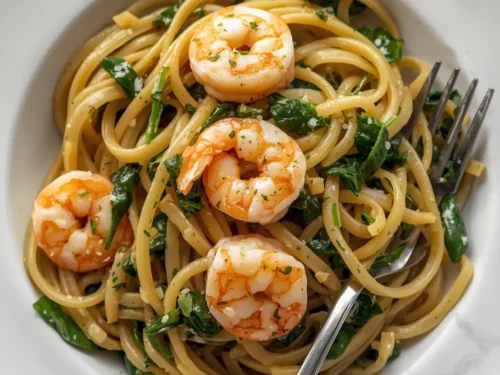
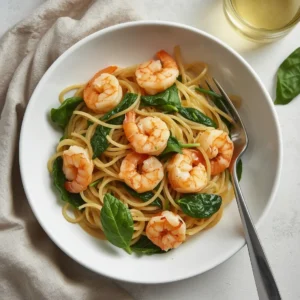
Classic Garlic Shrimp Linguine with Spinach
This classic garlic shrimp linguine with spinach is a quick and easy seafood pasta dish. It features succulent shrimp, tender linguine, and fresh spinach in a flavorful garlic white wine sauce.
Equipment
- Large pot
- Skillet
- Tongs
Ingredients
Pasta
- 12 oz Linguine or spaghetti
Shrimp
- 1 lb Large raw shrimp peeled and deveined
Aromatics
- 4 cloves Garlic minced
Fats & Liquids
- 2 tbsp Extra-virgin olive oil
- ½ cup Dry white wine or low-sodium chicken broth
- 2 tbsp Unsalted butter
Vegetables
- 4 cups Fresh baby spinach
Seasoning & Garnish
- ¼ cup Freshly grated Parmesan cheese
- ½ tsp Crushed red-pepper flakes
- Salt & freshly cracked black pepper to taste
- Chopped fresh parsley or basil Optional garnish
Instructions
Cooking Instructions
- Cook linguine in a large pot of salted boiling water until al dente, reserving 1 cup of pasta water.
- Pat shrimp dry then season lightly with salt and pepper.
Notes
For extra flavor, use a good quality dry white wine like Pinot Grigio or Sauvignon Blanc. If you don't have fresh spinach, frozen spinach can be used, but make sure to thaw and squeeze out excess water before adding. Adjust red pepper flakes to your preferred spice level.