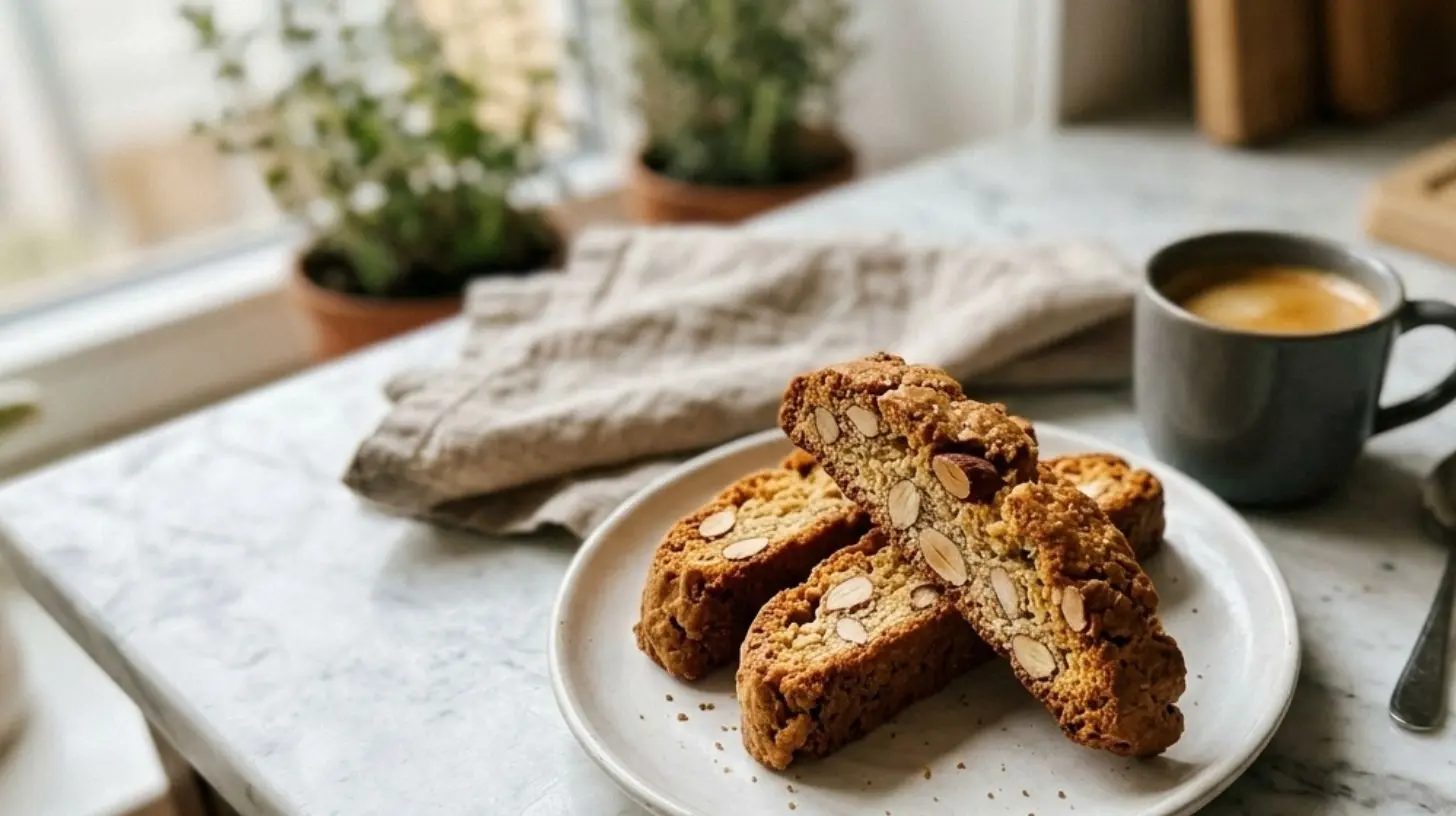
Best way to grow Biscotti (Italian Almond) in 5 steps
Learn how to make delicious Biscotti from scratch!
Almond flour
Sugar
Eggs
Almond extract
Baking powder
Preheat the oven to 350°F.
Mix almond flour, sugar, eggs, almond extract, and baking powder in a bowl.
Knead the dough until smooth and form into logs on a baking sheet.
Slice the logs into biscotti shapes.
Bake for 15 minutes, then flip and bake for another 15 minutes until golden brown.
The Ultimate Guide to Crunchy Biscotti (Italian Almond Cookies)
Have you ever bitten into a perfectly crunchy cookie and wondered how to replicate that irresistible snap at home? Few treats complement a morning coffee or afternoon espresso quite like the classic twice-baked Italian cookie. Today, we’re diving deep into the world of Biscotti (Italian Almond) and sharing a foolproof almond biscotti recipe that guarantees bakery-worthy results every time. Making these cookies at home not only fills your kitchen with an incredible toasty aroma but also gives you complete control over ingredients, texture, and flavor intensity. Whether you’re a seasoned baker or a curious beginner, mastering this timeless treat will elevate your baking repertoire and impress anyone who takes a bite.
Ingredients & Kitchen Tools
For the perfect batch, gather the following ingredients. Each component plays a crucial role in structure, flavor, and that signature crunch.
Ingredients:
– 2 cups all-purpose flour (provides structure; substitute with gluten-free 1:1 blend if needed)
– 1 cup granulated sugar (adds sweetness and helps with browning)
– 3 large eggs (binds the dough and adds richness; use flax eggs for vegan version)
– 1 cup whole almonds, toasted (toasting intensifies their nutty flavor and ensures crunch)
– 1 teaspoon baking powder (provides subtle lift without making the biscotti cakey)
– 1 teaspoon vanilla extract (enhances overall flavor profile)
– ¼ teaspoon salt (balances sweetness and amplifies almond notes)
– Zest of one orange (optional but highly recommended for brightness)
Kitchen Tools:
– Large mixing bowls and a whisk
– Stand mixer with paddle attachment or hand mixer
– Baking sheet lined with parchment paper
– Sharp serrated knife (essential for clean slices without crumbling)
– Cooling rack
– Measuring cups and spoons
– Plastic wrap for resting dough
Prep Time & Cooking Schedule

Understanding the timeline helps you plan your baking session efficiently:
– Prep Time: 20 minutes (mixing dough and toasting almonds)
– First Bake: 30–35 minutes at 350°F (175°C)
– Cooling/Resting Time: 10 minutes (critical for clean slicing)
– Second Bake: 15–20 minutes at 325°F (163°C), flipping halfway
– Total Time: Approximately 1 hour 15 minutes
This schedule fits perfectly into a weekend afternoon, allowing you to enjoy fresh biscotti with your evening coffee. The double-baking technique is what transforms a soft log into perfectly dry, crunchy cookies that store exceptionally well.
Step-by-Step Instructions
Follow these steps carefully, paying attention to temperature cues and texture indicators for consistent results.
Step 1: Preheat your oven to 350°F (175°C). Toast the almonds on a baking sheet for 8–10 minutes until fragrant, then let them cool completely.
Step 2: In a medium bowl, whisk together the flour, baking powder, and salt. This ensures even distribution of leavening agents.
Step 3: In the bowl of a stand mixer, beat the eggs and sugar on medium-high speed until thick, pale, and ribbon-like, about 4–5 minutes. This step creates the foundational structure.
Step 4: Reduce speed to low and add vanilla extract and orange zest. Gradually add the dry ingredients, mixing just until a soft dough forms. Be careful not to overmix, as this can make the biscotti tough.
Step 5: Gently fold the toasted almonds into the dough, ensuring every slice of your Biscotti (Italian Almond) is studded with nutty goodness. This almond biscotti recipe relies on proper mixing for the best texture—fold just until incorporated.
Step 6: Divide the dough in half. With lightly floured hands, shape each half into a log approximately 12 inches long and 2 inches wide. Place logs on the prepared baking sheet, spacing them about 3 inches apart.
Step 7: Bake for 30–35 minutes until logs are golden and firm to the touch. Remove from oven and let cool on the baking sheet for exactly 10 minutes. Reduce oven temperature to 325°F (163°C).
Step 8: Using a sharp serrated knife, slice each log diagonally into ½-inch pieces. A clean, sawing motion prevents crumbling.
Step 9: Arrange slices cut-side down on the baking sheet. Bake for 15–20 minutes, flipping halfway through, until they are lightly golden and dry. The cookies will continue to harden as they cool.
Pro Tip: Look for golden edges as your visual cue for doneness during the second bake.
Nutritional Benefits & Advantages
Beyond their delightful crunch, these cookies offer several nutritional advantages compared to standard butter-laden cookies:
– Heart-Healthy Fats: Almonds are rich in monounsaturated fats, vitamin E, and magnesium, supporting heart health and reducing inflammation.
– Moderate Calorie Profile: A standard serving of two cookies contains approximately 150–200 calories, making them a reasonable indulgence.
– Protein Boost: Eggs and almonds provide about 5 grams of protein per serving, helping with satiety.
– Lower Saturated Fat: Unlike shortbread or butter cookies, biscotti rely on minimal fat, primarily from eggs and nuts.
– Dietary Fiber: Almonds contribute around 2 grams of fiber per serving, supporting digestive health.
Tips Variations & Cooking Advice
Flavor Variations:
– Chocolate Almond: Dip baked biscotti halfway into melted dark chocolate and let set.
– Anise Almond: Add 1 teaspoon anise extract and 2 tablespoons anise seeds for a traditional Italian twist.
– Cranberry Pistachio: Substitute almonds with pistachios and add ½ cup dried cranberries.
– Citrus Lovers: Increase orange zest or add lemon zest along with 1 tablespoon limoncello.
Dietary Adaptations:
– Gluten-Free: Use a high-quality 1:1 gluten-free flour blend. Add 1 teaspoon xanthan gum if not included in the blend.
– Vegan: Replace each egg with a flax egg (1 tablespoon ground flaxseed + 3 tablespoons water). The texture will be slightly denser but still delicious.
– Low Sugar: Substitute up to half the sugar with erythritol or monk fruit sweetener.
Cooking Advice:
– Always toast nuts beforehand to deepen their flavor profile.
– For extra almond intensity, add ½ teaspoon almond extract alongside the vanilla.
– If the dough feels too sticky, refrigerate for 20 minutes before shaping.
Common Mistakes to Avoid
Even experienced bakers can encounter pitfalls. Here are solutions to the most frequent issues:
– Dough Too Sticky or Dry: Humidity and flour types vary. If sticky, add flour one tablespoon at a time. If dry and crumbly, add a teaspoon of milk or water until it comes together.
– Slices Crumbling: This almost always results from not letting the baked logs cool long enough. Wait the full 10 minutes before slicing, and use a serrated blade with gentle sawing motions.
– Biscotti Too Soft: Extend the second bake time by 5–10 minutes. The cookies should feel dry and firm to the touch. They will snap perfectly once completely cooled.
– Uneven Baking: Slice uniformly. Inconsistent thickness leads to some pieces over-baking while others remain soft.
– Logs Spreading Too Much: If your logs flatten during baking, the dough may be too warm. Chill the shaped logs for 15 minutes before baking.
Storage & Meal Prep Tips
One of the greatest advantages of this recipe is its exceptional shelf life when stored properly:
Room Temperature: Store completely cooled biscotti in an airtight container at room temperature for up to 3 weeks. The drier texture actually improves with proper storage.
Freezing: Biscotti freeze beautifully for 3–4 months. Place them in a freezer-safe bag or container with parchment paper between layers. Thaw at room temperature for 10 minutes before serving.
Make-Ahead Dough: You can prepare the dough logs, wrap them tightly in plastic wrap, and refrigerate for up to 3 days before baking. Alternatively, freeze unbaked logs for up to 3 months—slice and bake directly from frozen, adding 5 minutes to the first bake time.
Reheating: Enjoy biscotti as is, or warm them in a 300°F oven for 5 minutes to re-crisp and revive that freshly baked aroma.
Conclusion
Mastering this Biscotti (Italian Almond) at home is incredibly rewarding, offering a satisfying crunch that store-bought versions often lack. Whether you stick to this classic almond biscotti recipe or experiment with our suggested variations, we’d love to see your results. Share your baking journey in the comments below—what flavor combinations will you try? Dive into the world of homemade biscotti and discover why this twice-baked treasure has been cherished for generations.
FAQs
Q1: Why is my biscotti dough so sticky, and how can I fix it?
A: Sticky dough usually results from humidity, large eggs, or inaccurate flour measuring. Add flour one tablespoon at a time until the dough is soft but manageable. Alternatively, refrigerate the dough for 20 minutes before shaping.
Q2: Can I make this recipe without a stand mixer?
A: Absolutely. Use a hand mixer for beating eggs and sugar, or whisk vigorously by hand for 5 minutes until thick and pale. The rest of the mixing can be done with a wooden spoon or spatula.
Q3: How do I get perfectly straight, even slices?
A: Use a sharp serrated knife and apply gentle sawing motions without pressing down hard. For absolute precision, mark cutting lines lightly with a knife before slicing. Chilling the baked logs for 15 minutes before slicing also helps.
Q4: Can I add chocolate chips to my biscotti?
A: Yes! Fold in ½ cup mini chocolate chips along with the almonds. Mini chips distribute better and are less likely to cause crumbling than standard-sized chips.
Q5: Why is double baking necessary for biscotti?
A: The first bake sets the structure and cooks the interior of the log. The second bake evaporates remaining moisture, creating the signature dry, crunchy texture that makes biscotti perfect for dunking into coffee, tea, or wine.
Biscotti (Italian Almond)
Equipment
- Gardening pot
- Trowel
- Watering can
- Gardening gloves
Ingredients
Basic Growing Supplies
- 1 package/unit Biscotti (Italian Almond) seeds/sapling
- 2 cups Potting soil
- 1 Gardening pot at least 8-inch diameter
- to Water as needed
Optional Enhancements
- 1 Fertilizer slow-release, almond-specific
- 1 Trowel
- 1 pair Gardening gloves
Instructions
Planting
- Prepare your pot with potting soil, making sure there is enough room for your biscotti almond seeds or sapling.
- Plant the seeds or sapling according to package directions, typically at a depth of 1 inch, and cover gently with soil.
Watering and Sun Exposure
- Water thoroughly after planting, then maintain consistent moisture without overwatering, ensuring the soil is damp but not soggy.
- Place the pot in a location that receives at least 6-8 hours of direct sunlight daily for optimal growth.
Nutrient and Care
- Apply a slow-release fertilizer if desired, following product instructions for almond trees, and monitor for pests or diseases regularly.
- Prune any dead or crowded branches to promote air circulation and new growth, shaping the plant as it matures.
Harvesting Consideration
- While this recipe focuses on growing, note that actual almond harvesting would occur after the almonds mature and their hulls split.
Enjoy your Growth
- Continue to nurture your Biscotti (Italian Almond) plant, enjoying the process of cultivating your own almond source.