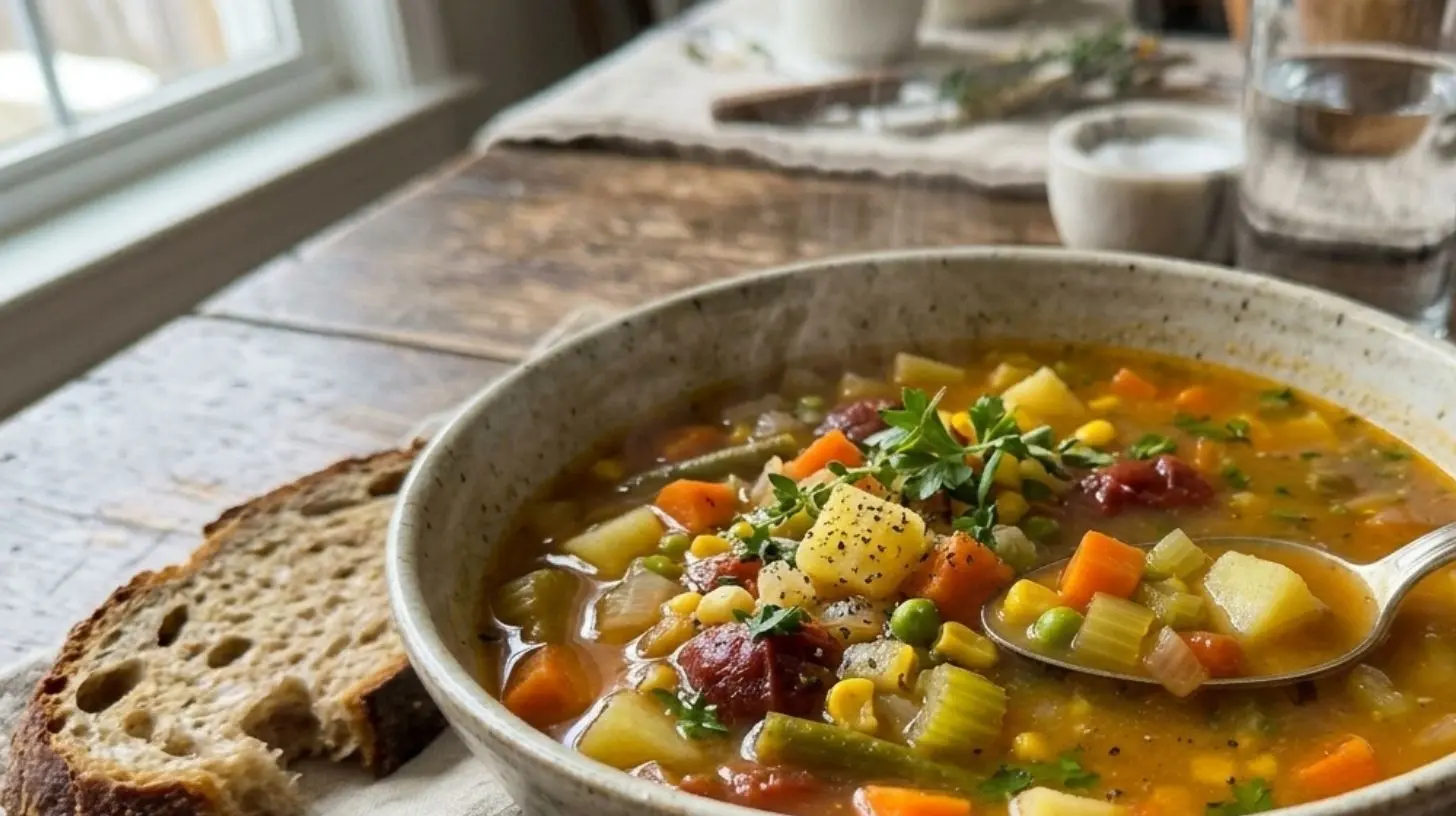
Quick way to grow your Vegetable Soup (Homemade)
Learn how to make a delicious vegetable soup from scratch.
Carrots
Potatoes
Onions
Tomatoes
Vegetable Broth
Chop all the vegetables into small pieces.
Add vegetable broth and water to a pot and bring to a boil.
Simmer the vegetables in the broth until they are soft.
Season with salt and pepper to taste.
How to Make the Best Vegetable Soup (Homemade) from Scratch
Is there anything more comforting than a steaming bowl of vegetable soup on a chilly day? Whether you’re looking to use up leftover produce, boost your nutrient intake, or simply enjoy a hearty, budget-friendly meal, homemade vegetable soup is your answer. Unlike canned versions loaded with sodium and preservatives, making it from scratch lets you control every ingredient. Not only does this Vegetable Soup (Homemade) deliver deep, layered flavors, but it also forms the foundation for countless Soup Recipes you can explore throughout the year. Ready to transform simple vegetables into a masterpiece? Let’s dive in.
—
Ingredients & Kitchen Tools
For the Soup (adjust quantities based on servings)
| Ingredient | Purpose & Substitutions |
| :— | :— |
| 2 tbsp olive oil | For sautéing; substitute avocado oil or butter. |
| 1 medium onion, diced | Flavor base; use leeks or shallots for variation. |
| 2 garlic cloves, minced | Aromatic depth; use ½ tsp garlic powder in a pinch. |
| 2 carrots, diced | Natural sweetness & color; parsnips work too. |
| 2 celery stalks, diced | Key for classic mirepoix; fennel adds a licorice note. |
| 1 medium zucchini, diced | Adds texture; swap for yellow squash or eggplant. |
| 1 large potato, cubed | Thickens soup naturally; sweet potato adds sweetness. |
| 1 can (14.5 oz) diced tomatoes | Acidity & richness; use fresh tomatoes when in season. |
| 4 cups vegetable broth | Base flavor; low-sodium preferred. Chicken broth also works. |
| 1 tsp dried thyme | Earthy herb; rosemary or oregano are good alternatives. |
| 1 bay leaf | Subtle fragrance; remove before serving. |
| Salt & black pepper | To taste; start with ½ tsp salt, adjust later. |
| Optional: 1 cup chopped spinach or kale | Extra nutrients; stir in at the end. |
Essential Kitchen Tools
– Large heavy-bottomed pot or Dutch oven (5–6 quart)
– Chef’s knife & cutting board
– Wooden spoon or spatula
– Ladle
– Measuring cups & spoons
– Vegetable peeler (optional, for carrots)
—
Prep Time & Cooking Schedule
– Prep Time: 15 minutes (washing, chopping, measuring)
– Cook Time: 30–35 minutes
– Total Time: 45–50 minutes
– Resting Time: 5 minutes before serving (flavors meld)
Why this timing matters: The soup benefits from a full 30-minute simmer to soften vegetables and marry flavors. Avoid rushing—the difference between a good and great soup is time.
—
Step-by-Step Instructions
Follow these steps for a foolproof Vegetable Soup (Homemade) that rivals any restaurant version.
1. Sauté the aromatics. Heat olive oil in your pot over medium heat. Add onion, carrots, and celery. Cook for 5–7 minutes, stirring occasionally, until softened but not browned. Stir in garlic and cook for 30 seconds.
2. Add remaining vegetables. Toss in zucchini, potato, and diced tomatoes (with their juices). Stir well to coat with the oil and aromatics.
3. Pour in broth. Add vegetable broth, thyme, bay leaf, salt, and pepper. Bring to a gentle boil, then reduce heat to low-medium. Tip: Maintain a steady simmer—not a rolling boil—to prevent vegetables from disintegrating.
4. Simmer. Cook uncovered for 25–30 minutes, or until potatoes are tender and flavors have developed. Test doneness with a fork.
5. Adjust seasoning. Remove bay leaf. Taste and adjust salt, pepper, or add a pinch of sugar if tomatoes are too acidic.
6. Finish with greens (optional). Stir in spinach or kale, and cook for 2 minutes until wilted.
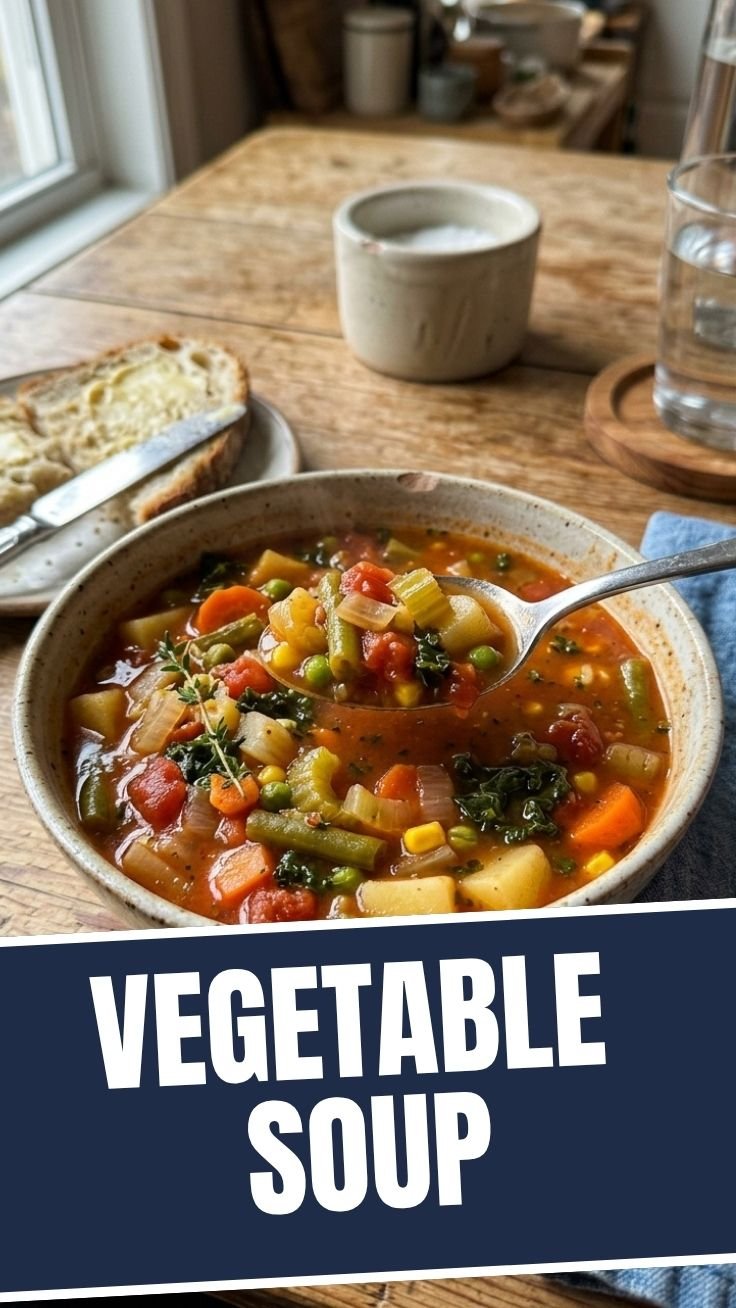
Pro tip for texture: For a thicker soup, mash a few potato pieces against the pot’s side with your spoon. This naturally thickens without cream. This Vegetable Soup (Homemade) pairs beautifully with crusty bread—perfect for dipping. Explore our collection of Soup Recipes for more inspiration.
—
Nutritional Benefits & Advantages
Homemade vegetable soup isn’t just delicious—it’s a nutritional powerhouse.
– Low-calorie & high-volume: A typical 1.5-cup serving contains only 120–150 calories, making it ideal for weight management.
– Fiber-rich: Carrots, celery, and potatoes provide 4–6g of fiber per serving, supporting digestion and satiety.
– Vitamin-packed: Carrots deliver vitamin A (eye health), while spinach/kale add iron and vitamin K.
– Sodium-controlled: Store-bought soups often exceed 800mg sodium per serving; homemade typically has 300–400mg with low-sodium broth.
– Hydrating: The broth base contributes to daily fluid needs, especially beneficial in cold weather.
—
Tips, Variations & Cooking Advice
Flavor Twists
– Herb-forward: Stir in 2 tbsp fresh basil or parsley before serving.
– Smoky depth: Add ½ tsp smoked paprika or a dash of liquid smoke.
– Spicy kick: Include ¼ tsp red pepper flakes or a diced jalapeño.
Ingredient Swaps
– Grain addition: Add ½ cup cooked quinoa or brown rice during the last 10 minutes.
– Protein boost: Toss in canned chickpeas, white beans, or shredded rotisserie chicken (not vegetarian).
– Creamy version: Stir in ¼ cup heavy cream or coconut milk after simmering.
Dietary Adaptations
– Gluten-free: The recipe is naturally gluten-free—just ensure your broth is certified.
– Dairy-free: Use olive oil or avocado oil, and skip any cream additions.
– Low-carb: Omit potato; add extra zucchini or cauliflower instead.
—
Common Mistakes to Avoid
| Mistake | Solution |
| :— | :— |
| Overcooking vegetables | Add quick-cooking veggies like zucchini in the last 10 minutes. |
| Soups tastes bland | Salt in layers: a pinch at the start, more after simmering. Don’t skip the bay leaf! |
| Watery texture | Simmer uncovered to reduce liquid, or mash some potato for natural thickening. |
| Burnt bottom | Keep heat at medium-low—scorching ruins the entire batch. |
| Greens become slimy | Add delicate greens (spinach, kale) only in the final 2 minutes. |
—
Storage & Meal Prep Tips
Refrigeration
– How: Cool soup completely, then transfer to airtight containers.
– Duration: Keeps well for 4–5 days in the fridge.
– Reheating: Warm gently on stovetop over medium-low heat, stirring occasionally. Add a splash of broth if thickened too much.
Freezing
– Best for: Soups without dairy or pasta (freeze best). Omit adding greens if freezing long-term.
– How: Portion into freezer-safe bags or containers, leaving 1-inch headspace. Freeze flat for easy stacking.
– Duration: Up to 3 months.
– Thawing: Overnight in the fridge, or reheat directly from frozen on the stovetop (add 5–10 minutes cooking time).
Meal Prep Tip
Double the recipe and freeze half for busy weeks. Label with date and contents—you’ll thank yourself later.
—
Conclusion
Making Vegetable Soup (Homemade) is one of the simplest, most rewarding culinary skills to master. It’s forgiving, endlessly customizable, and a fantastic way to reduce food waste while nourishing your body. I encourage you to experiment with seasonal produce, try new Soup Recipes, and share your creations with friends or family. Post your bowl on social media and tag us—we’d love to see your version! Remember, the best soup is the one you make with love.
—
FAQs
1. Can I make this soup in a slow cooker or Instant Pot?
Yes! For slow cooker: sauté aromatics on the stovetop first, then transfer everything to the slow cooker and cook on low for 6–8 hours. For Instant Pot: use the sauté function for aromatics, then pressure cook on high for 10 minutes with natural release.
2. How can I thicken my vegetable soup without cream?
Mash some of the cooked potato against the pot’s side, or blend 1–2 cups of the soup and stir it back in. Alternatively, add 2 tbsp cornstarch mixed with 3 tbsp cold water (slurry) and simmer for 5 minutes.
3. Why does my soup taste “flat” or boring?
You likely need more salt and acid. Add a squeeze of lemon juice or a splash of vinegar just before serving. Also, ensure you’re using enough herbs—fresh thyme or oregano at the end can brighten flavors.
4. Can I use frozen vegetables?
Absolutely. Frozen carrots, peas, green beans, and corn work well. Add them frozen and adjust the cooking time slightly (they will soften faster). Avoid adding frozen leafy greens until the final 5 minutes.
5. How do I salvage an overly salty soup?
Add a peeled, raw potato and let it simmer for 15–20 minutes; it will absorb excess salt. Remove the potato before serving. You can also dilute with unsalted broth or water.
6. Is this soup freezer-friendly with the potato?
Potatoes can become grainy after freezing and thawing. For best results, omit the potato and add cooked rice or barley when serving. Alternatively, accept the texture change—it’s still edible, just slightly different.
7. What are the best broth options for depth of flavor?
Use a good-quality low-sodium vegetable broth. For richer taste, use mushroom broth or “Better Than Bouillon” paste. Homemade broth from vegetable scraps is unbeatable.
Quick way to grow your Vegetable Soup (Homemade)
Equipment
- Large pot
Ingredients
Main Ingredients
- 2 cups diced carrots
- 1 cup diced celery
- 3 cups diced potatoes
- 1 28-ounce can canned crushed tomatoes
- 1 14.5-ounce can canned green beans
- 6 cups vegetable broth
- 1 teaspoon dried basil
- 1 teaspoon dried oregano
- 1 teaspoon salt
- 0.5 teaspoon black pepper
Instructions
Preparation
- In a large pot, combine the diced carrots, celery, and potatoes, then add the canned crushed tomatoes, undrained green beans, and vegetable broth.
- Stir in the dried basil, dried oregano, salt, and black pepper, ensuring all ingredients are well mixed.
- Bring the mixture to a boil over medium-high heat, then reduce the heat to low, cover, and simmer for 20-25 minutes, or until the vegetables are tender.
- Serve the hot vegetable soup immediately, optionally garnishing with fresh herbs like parsley or cilantro.