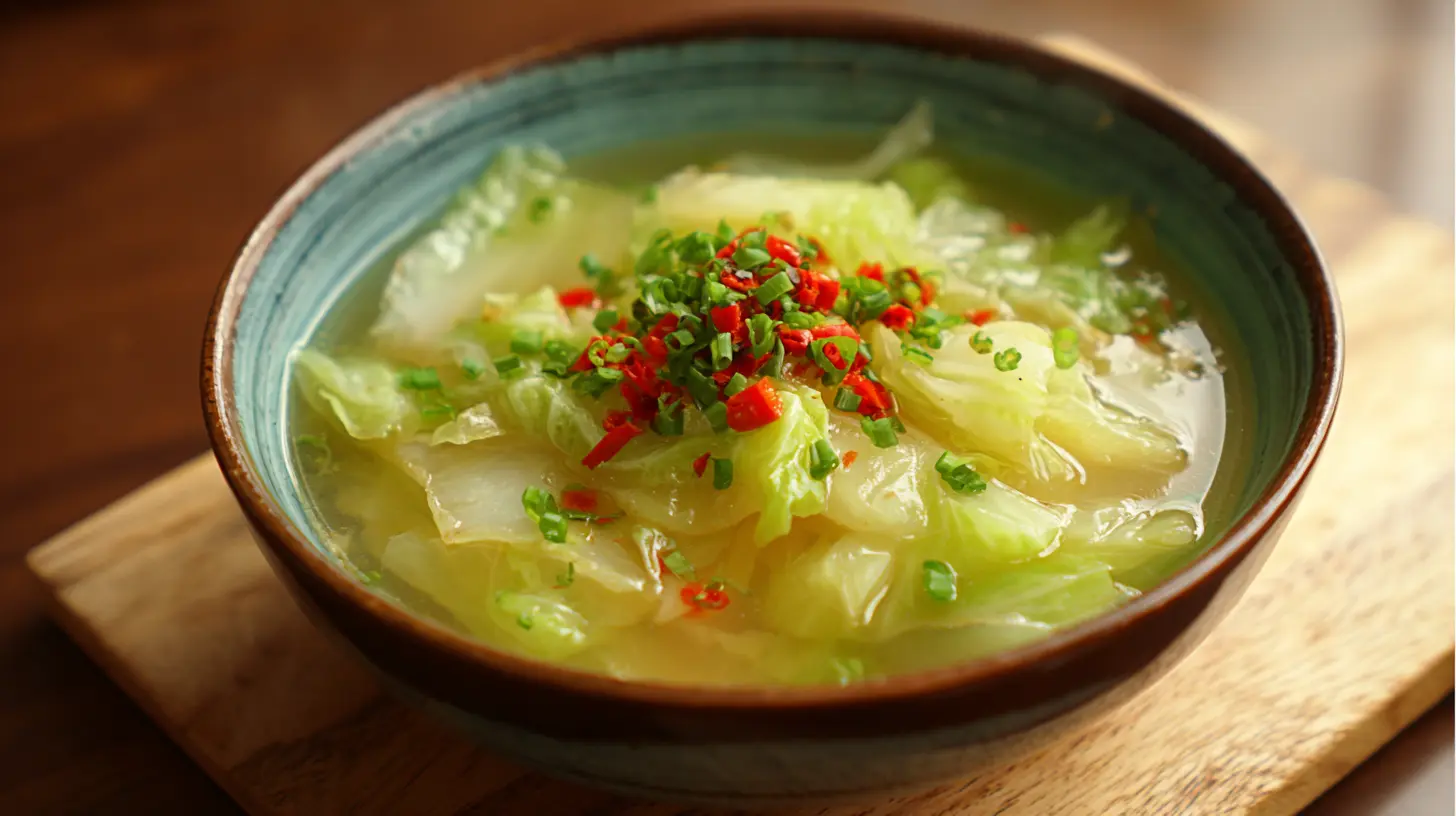
Chinese Napa Cabbage Soup
Learn the best way to grow this delicious soup with these 5 helpful tips!
Chinese Napa Cabbage
Carrots
Garlic
Chicken Broth
Salt and Pepper
Chop the cabbage and carrots into small pieces.
Sauté garlic in a pot until fragrant.
Add chicken broth to the pot and bring to a simmer.
Simmer for 10 minutes until vegetables are tender.
Season with salt and pepper to taste.
Chinese Napa Cabbage Soup: A Comforting Bowl of Asian Flavors
Have you ever craved a simple yet deeply satisfying soup that warms you from the inside out? Chinese Napa Cabbage Soup is a delightful combination of tender napa cabbage, savory broth, and aromatic Asian flavors that delivers comfort in every spoonful. This traditional recipe showcases how humble ingredients transform into something extraordinary, making it a perfect weeknight dinner option. If you’re looking to expand your repertoire of chinese napa cabbage recipes, this soup is an excellent starting point due to its simplicity and depth of flavor.
Ingredients & Kitchen Tools
For the soup:
– 1 medium napa cabbage (about 2 pounds), chopped into 2-inch pieces
– 8 cups chicken or vegetable broth (low-sodium recommended)
– 3 cloves garlic, minced
– 1-inch piece ginger, julienned
– 2 tablespoons soy sauce (or tamari for gluten-free option)
– 1 tablespoon sesame oil
– 2 green onions, thinly sliced
– 1 carrot, julienned (optional for color and sweetness)
– 8 oz firm tofu, cubed (optional protein)
– 1/2 teaspoon white pepper
– Salt to taste
Garnishes:
– Cilantro leaves
– Thinly sliced red chili
– Additional sliced green onions
– Crispy fried shallots
– Sesame seeds
Kitchen tools:
– Large soup pot or Dutch oven
– Sharp chef’s knife
– Cutting board
– Measuring spoons
– Ladle
– Wooden spoon
Prep Time & Cooking Schedule
Total time: 30 minutes
Prep time: 10 minutes
Cook time: 20 minutes
Servings: 4-6
This soup comes together quickly, making it perfect for busy weeknights. Most of the prep involves chopping vegetables, which can be done in advance. The actual cooking process is straightforward and requires minimal attention.
Step-by-Step Instructions
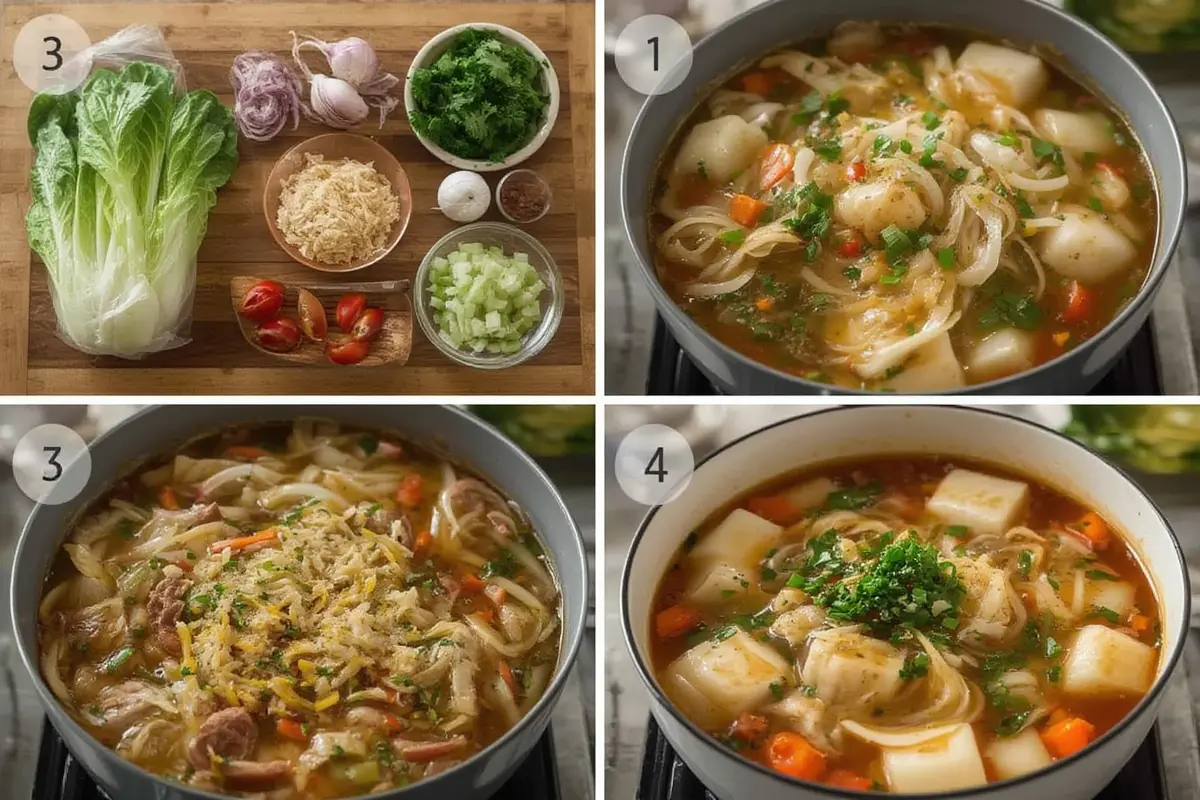
1. Prepare the vegetables: Thoroughly wash the napa cabbage and cut it into 2-inch pieces, separating the leafy parts from the crunchier white stems. Mince garlic, julienne ginger, and slice green onions.
2. Create the flavor base: Heat sesame oil in a large pot over medium heat. Add ginger and garlic, sautéing until fragrant (about 30 seconds). Be careful not to burn the garlic.
3. Add the broth: Pour in the chicken or vegetable broth and bring to a gentle boil. Reduce heat to medium-low.
4. Layer the cabbage: Add the firmer white parts of the Chinese Napa Cabbage Soup first, as they need more time to cook. Cover and simmer for 5 minutes.
5. Complete the soup: Add the leafy parts of the cabbage, carrots (if using), tofu, soy sauce, and white pepper. Simmer for another 8-10 minutes until the cabbage is tender but still has some texture.
6. Finish and serve: Stir in half the green onions and adjust seasoning with salt if needed. Many chinese napa cabbage recipes call for a final touch of sesame oil just before serving for enhanced aroma.
Nutritional Benefits & Advantages
This soup is a nutritional powerhouse, especially during cold and flu season. Napa cabbage is rich in vitamins C and K, fiber, and antioxidants. It’s also low in calories, making this soup ideal for those watching their weight.
The garlic and ginger provide immune-boosting compounds with anti-inflammatory properties. If you add tofu, you’ll get a complete protein source that’s low in saturated fat. The clear broth is hydrating and gentle on the digestive system, making this soup excellent for recovery meals.
Tips, Variations & Cooking Advice
– Protein options: Add shredded chicken, sliced pork, or beaten eggs (drizzled into the hot broth to create egg ribbons).
– Spice it up: Include a tablespoon of chili oil or a dash of Sichuan peppercorns for heat.
– Make it hearty: Add cooked rice noodles, shiitake mushrooms, or baby bok choy.
– Vegetarian/vegan: Use vegetable broth and increase the tofu quantity or add seitan.
– Low-carb version: Skip any starchy additions and focus on the cabbage and proteins.
Common Mistakes to Avoid
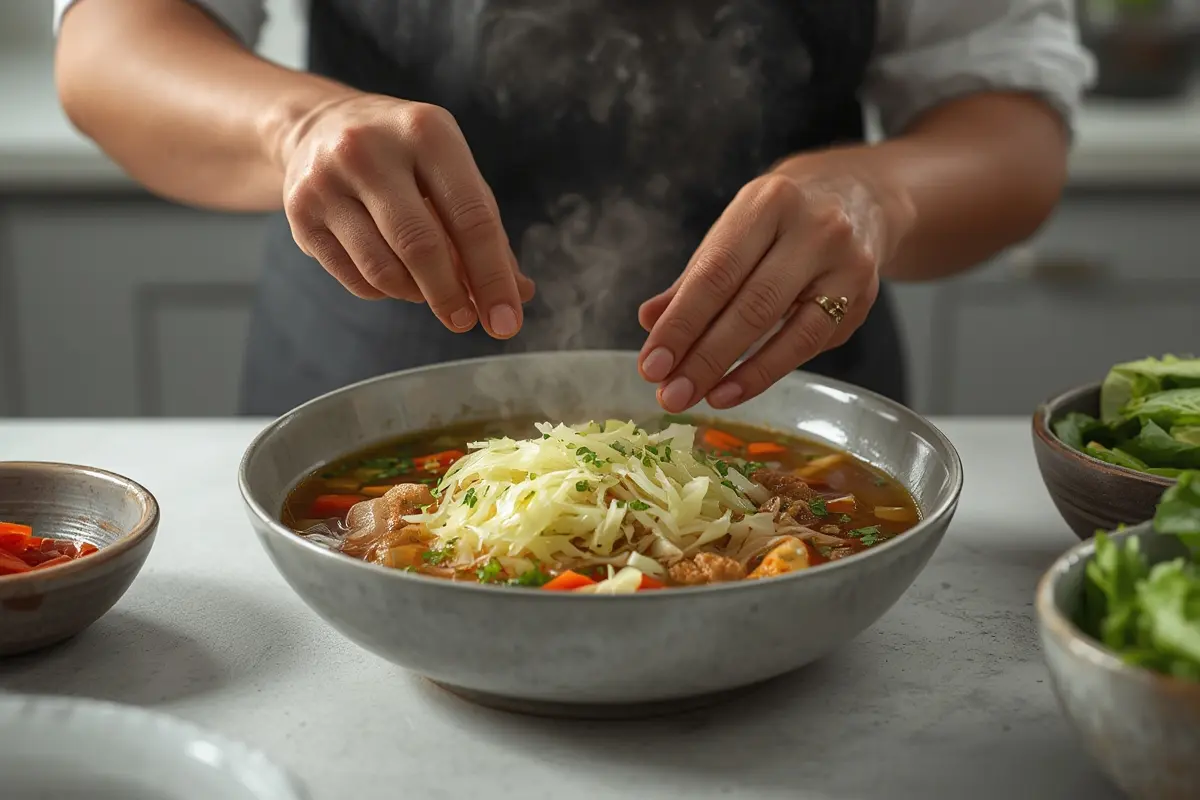
1. Overcooking the cabbage: Napa cabbage cooks quickly. Overcooking results in a mushy texture and loss of nutrients. Cook just until tender.
2. Under-seasoning: The broth should be flavorful. Taste and adjust with soy sauce or salt before serving.
3. Skipping the aromatics: Garlic and ginger are essential flavor foundations. Don’t rush or skip this step.
4. Boiling vigorously: A gentle simmer preserves the delicate cabbage texture and clear broth. Aggressive boiling makes the soup cloudy.
Storage & Meal Prep Tips
This soup keeps well in the refrigerator for up to 3 days in an airtight container. The flavors often improve overnight as they meld together.
For freezing, store without the garnishes for up to 2 months. When reheating, do so gently on the stovetop rather than microwaving to maintain the cabbage’s texture.
For meal prep, chop all vegetables in advance and store separately. The soup base can be prepared ahead and the cabbage added just before serving.
Conclusion
Chinese Napa Cabbage Soup embodies the essence of Asian comfort food—simple ingredients transformed through thoughtful preparation into a nourishing, satisfying meal. Whether you’re nursing a cold, seeking a light dinner option, or simply expanding your collection of chinese napa cabbage recipes, this soup delivers on all fronts. The balance of tender vegetables, aromatic broth, and customizable additions makes it a versatile recipe worth adding to your regular rotation.
FAQs
Can I use regular green cabbage instead of napa cabbage?
Yes, though the cooking time will increase slightly as green cabbage is tougher. The flavor will be stronger and slightly less sweet than with napa cabbage.
How can I make this soup more filling?
Add cooked noodles, dumplings, or more protein sources like tofu, chicken, or sliced beef. You can also serve it with a side of steamed rice.
Is this soup gluten-free?
Replace regular soy sauce with tamari or coconut aminos to make it gluten-free. Otherwise, the ingredients are naturally gluten-free.
Can I make this in a slow cooker?
Yes! Add all ingredients except the leafy parts of the cabbage and simmer on low for 4-6 hours. Add the leafy parts during the last 30 minutes of cooking.
What can I use if I don’t have sesame oil?
While sesame oil provides a distinctive nutty flavor, you can substitute with olive oil for cooking and add a sprinkle of toasted sesame seeds at the end for a similar aromatic quality.
Best way to grow Chinese Napa Cabbage Soup 5 Tips
Equipment
- Garden trowel
- Small pots or seed trays
- Garden hose or watering can
Ingredients
Napa Cabbage Growing Essentials
- 1 packet Napa Cabbage seeds
- to sufficiency Well-draining soil fill pots
- 1 cup Compost or aged manure
- as sufficiency Water needed
- as sufficiency Fertilizer (optional) directed
Instructions
Growing Instructions
- Choose a sunny location with well-draining soil and amend it with compost or aged manure to enrich nutrient content.
- Sow Napa Cabbage seeds directly into the garden or start them indoors in small pots, ensuring proper spacing and depth.
- Maintain consistent moisture by watering regularly, especially during dry spells, to encourage healthy growth.
- Protect young plants from pests by inspecting them frequently and using organic pest control methods if necessary.
- Harvest Napa Cabbage when heads are firm and compact, typically 60-90 days after planting, by cutting at the base.