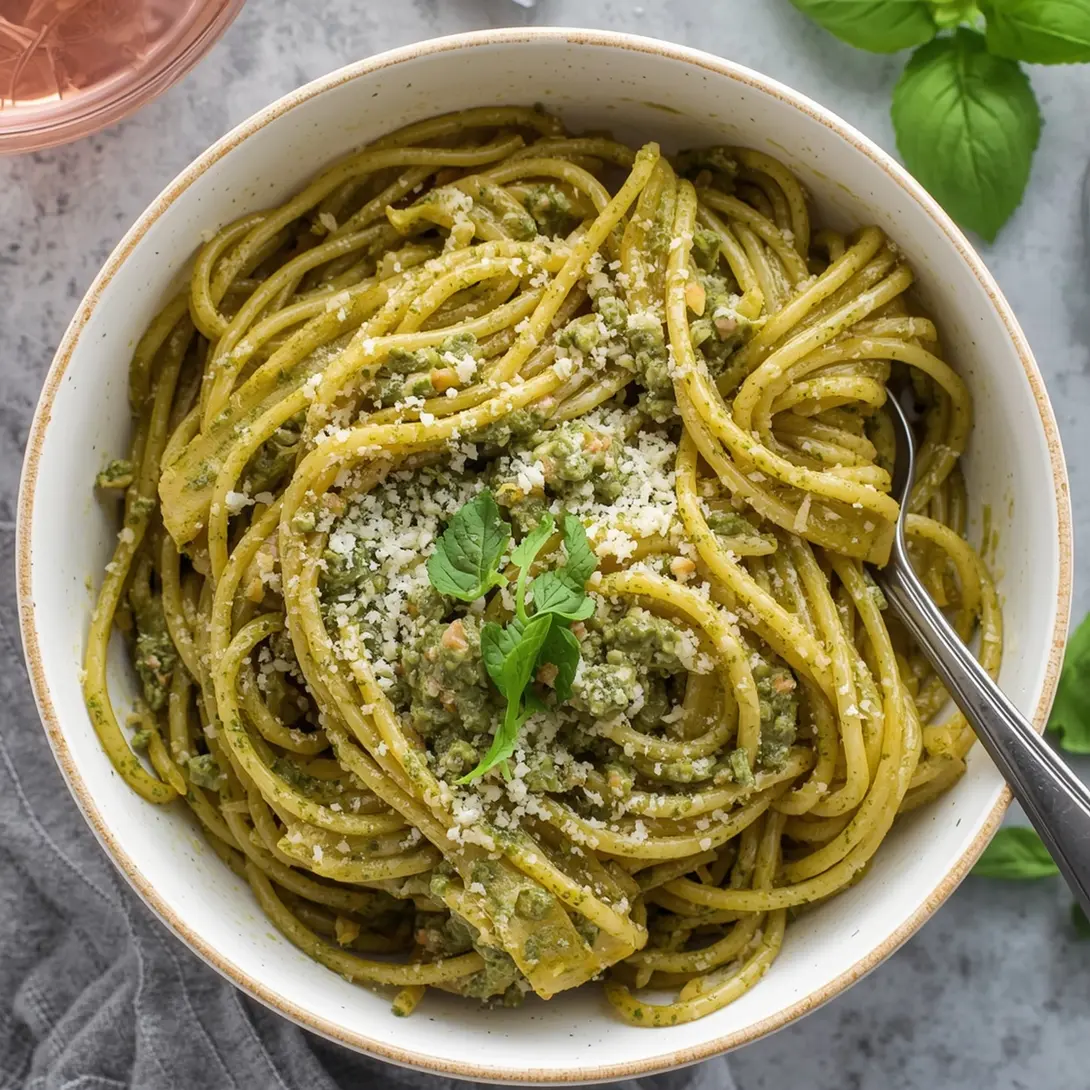
- Boil the pasta. Fill a large pot with salted water, bring to a rolling boil, and add the spaghetti. Cook 1‑2 minutes less than the package instructions (it will finish in the pan). Drain, reserving ½ cup of the pasta water, and set aside.
- Toast the hazelnut crumbs. While the pasta cooks, spread hazelnut crumbs on a dry skillet over medium heat. Stir constantly for 2‑3 minutes until golden and fragrant. Transfer to a small bowl.
- Sear the shrimp. In the same skillet, heat olive oil over medium‑high heat. Add minced garlic and sauté 30 seconds until fragrant. Drop the shrimp in a single layer, sprinkle smoked sea salt, and cook 1‑2 minutes per side, turning once, until they turn pink and opaque. Remove shrimp to a plate; keep the pan on low heat.
- Build the sauce. Add the pesto to the skillet, stirring to warm it gently—do not let it burn. Mix in the Meyer lemon zest, lemon juice (about 1 Tbsp), and a splash of the reserved pasta water to achieve a silky consistency.
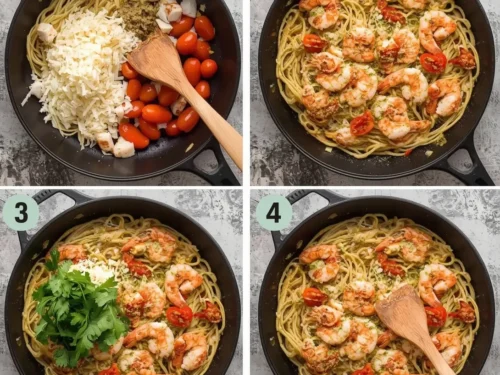
- Combine everything. Return the shrimp to the pan, then add the drained spaghetti. Toss vigorously, allowing the pasta to coat evenly with the pesto‑lemon sauce. If the mixture looks dry, add a little more pasta water, one tablespoon at a time.
- Finish with the secrets. Sprinkle the toasted hazelnut crumbs, grated Pecorino Romano, and crushed red pepper flakes over the top. Toss lightly one more time so the cheese melts into the sauce.
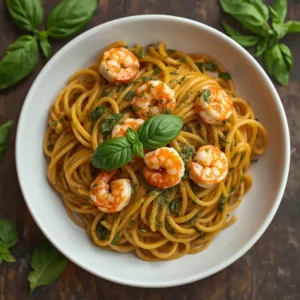
- Plate and garnish. Use tongs to twirl a nest of pasta onto each plate. Scatter fresh basil leaves over the top and drizzle a final drizzle of high‑quality olive oil if desired. Serve immediately while the edges of the shrimp are still slightly sizzling.
—What to Serve It With
– Fresh arugula salad. Toss baby arugula with lemon vinaigrette, shaved Parmesan, and toasted pine nuts for a peppery side that mirrors the pasta’s citrus notes. – Garlic‑infused focaccia. Warm slices of focaccia brushed with rosemary‑olive oil help mop up any remaining sauce. – Roasted vegetables. A tray of roasted cherry tomatoes, asparagus, or zucchini adds color and a touch of sweetness. – Light white wine. A crisp Pinot Grigio or Vermentino cuts through the richness of the pesto and highlights the shrimp’s briny character. – Dessert suggestion. Finish with a lemon ricotta cheesecake or fresh berries with a drizzle of balsamic reduction for a balanced meal.
—Storage and Reheating Tips
– Refrigerate promptly. Transfer leftovers to an airtight container within two hours of cooking. They keep well for up to 3 days. – Reheat gently. Place the pasta in a skillet with a splash of chicken broth or water, cover, and warm over low‑medium heat, stirring occasionally. Avoid the microwave if possible; it can make the shrimp rubbery. – Freeze with caution. Pesto can freeze nicely, but the shrimp texture may suffer after thawing. If you must freeze, separate the shrimp from the pasta, store each in its own freezer‑safe bag, and use within one month. Thaw in the refrigerator, then reheat the shrimp quickly in a hot pan before folding them back into the reheated pasta. – Food safety. Never leave cooked shrimp at room temperature for more than 2 hours. Reheat to an internal temperature of 165 °F (74 °C) before serving.
—Pro Chef Tips
- Use frozen‑then‑thawed shrimp. Rapidly thawing shrimp in cold water preserves their texture better than a slow fridge thaw. Pat dry before searing to avoid steam.
- Prep the pesto ahead. Homemade pesto (basil, pine nuts, garlic, Parmesan, olive oil, a pinch of salt) can be made in a food processor and stored in the fridge for up to a week. Adding a teaspoon of lemon zest to the pesto itself amplifies the citrus thread throughout the dish.
- Don’t over‑cook the pasta. Al dente pasta continues to cook when tossed with the sauce, ensuring the final bite is firm and the sauce clings.
- Finish with cold butter. For an ultra‑silky finish, whisk in a tablespoon of cold butter right after adding the cheese; it emulsifies the sauce and adds a subtle gloss.
- Season in layers. Lightly salt the pasta water, then add smoked sea salt to the shrimp, and finish with Pecorino Romano. Layered seasoning prevents a bland result.
—Creative Twists
Variation How to Adapt Spicy Cajun Swap smoked sea salt for Cajun seasoning, add ½ tsp chipotle powder, and increase red pepper flakes to ½ tsp. Creamy Twist Stir in ¼ cup heavy cream after the pesto has warmed, creating a richer, velvety sauce. Vegan Replace shrimp with sautéed king oyster mushrooms (sliced to mimic scallops) and use dairy‑free pesto (nutritional yeast instead of cheese). Mediterranean Add sun‑dried tomatoes, black olives, and a sprinkle of feta cheese for a briny, tangy profile. Herb‑Boosted Include a handful of fresh spinach and chopped parsley when tossing the pasta for extra green goodness. Lemon‑Garlic Shrimp Double the lemon zest and add a splash of white wine to the shrimp pan for a brighter, more aromatic base. Pasta Swap Use whole‑wheat linguine, brown rice spaghetti, or legume‑based pasta for added fiber and protein.
Feel free to combine any of these ideas—your palate is the only limit!
—Your Questions Answered
Q: How long does the whole recipe take from start to finish? A: About 20 minutes total—10 minutes to boil the pasta, 5 minutes to sear the shrimp, and 5 minutes for the sauce and final toss.
Q: Can I use frozen pesto, or does it need to be fresh? A: Frozen or store‑bought pesto works fine, but for the best flavor choose a version that contains real basil, pine nuts, and Parmesan. If using a jarred pesto, give it a quick stir with a splash of olive oil to restore its texture before adding it to the pan.
Q: I’m allergic to nuts. What can I substitute for the toasted hazelnut crumbs? A: Skip the nuts entirely and replace them with toasted pumpkin seeds, sunflower seeds, or even a sprinkle of panko breadcrumbs for crunch. The dish will still retain its secret‑ingredient excitement without the allergens.
Q: Is there a gluten‑free pasta that pairs well with this sauce? A: Absolutely—brown rice spaghetti, quinoa‑based pasta, or legume pasta (lentil or chickpea) hold up well to the pesto and lend a slightly nutty flavor that complements the shrimp.
Q: How can I make this dish lower in sodium? A: Use unsalted pesto, reduce the smoked sea salt to a pinch, and finish with a low‑sodium cheese such as fresh mozzarella (though you’ll lose some sharpness). Adding a splash of lemon juice also brightens the flavor, allowing you to use less salt overall.
—Bottom Line
Pesto Shrimp Spaghetti is the perfect marriage of Italian herbaceousness and coastal seafood, amplified by five hidden boosters that turn a simple weeknight plate into a restaurant‑worthy experience. With a short prep time, flexible ingredient list, and plenty of room for creative twists, this recipe earns a permanent spot in any home cook’s repertoire. Grab your skillet, fire up the pasta water, and let those secret ingredients work their magic—you’ll wonder how you ever dined without them. Bon appétit!
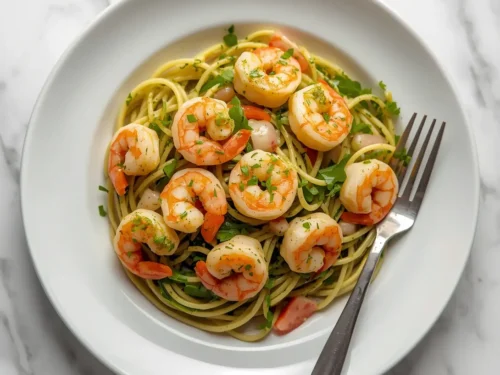
Classic Pesto Shrimp Spaghetti
This classic pesto shrimp spaghetti recipe combines succulent shrimp, al dente spaghetti, and a vibrant basil pesto, finished with the bright zest of Meyer lemon and a hint of smoked sea salt.
Equipment
- Large Pot
- Large Skillet
- Tongs
Ingredients
Pasta
- 12 oz (340 g) Spaghetti (or gluten-free pasta)
Shrimp
- 1 lb (450 g) Large raw shrimp, peeled & deveined
Pesto Sauce
- ½ cup (120 ml) Fresh basil pesto (store-bought or homemade)
Other Ingredients
- 2 Tbsp Toasted hazelnut crumbs (or toasted pine nuts/almonds)
- 1 tsp Zest of one Meyer lemon (or regular lemon zest)
- ¼ tsp Smoked sea salt (or sea salt + pinch of smoked paprika)
- ¼ cup (20 g) Grated Pecorino Romano (or Parmesan/Asiago)
- ¼ tsp Crushed red pepper flakes (optional)
- 2 Tbsp Olive oil (extra-virgin)
- 2 cloves Fresh garlic, minced
- Freshly ground black pepper to taste
- Fresh basil leaves for garnish
Instructions
Cooking Pasta
- Cook spaghetti according to package directions until al dente. Reserve 1/2 cup of pasta water before draining.
Preparing Shrimp
- While pasta cooks, heat olive oil in a large skillet over medium heat. Add minced garlic and sauté for 30 seconds until fragrant.
Combining Ingredients
- Add shrimp to the skillet and cook for 2-3 minutes per side, until pink and opaque. Stir in the basil pesto, lemon zest, smoked sea salt, and crushed red pepper flakes (if using).
Finishing the Dish
- Add the drained spaghetti to the skillet with the shrimp and pesto. Toss well, adding reserved pasta water as needed to create a light sauce. Stir in grated Pecorino Romano and black pepper to taste.
Serving
- Garnish with fresh basil leaves and toasted hazelnut crumbs. Serve immediately.
Notes
For extra flavor, lightly toast the hazelnut crumbs in a dry pan before adding to the dish. Adjust crushed red pepper flakes to your preferred spice level.