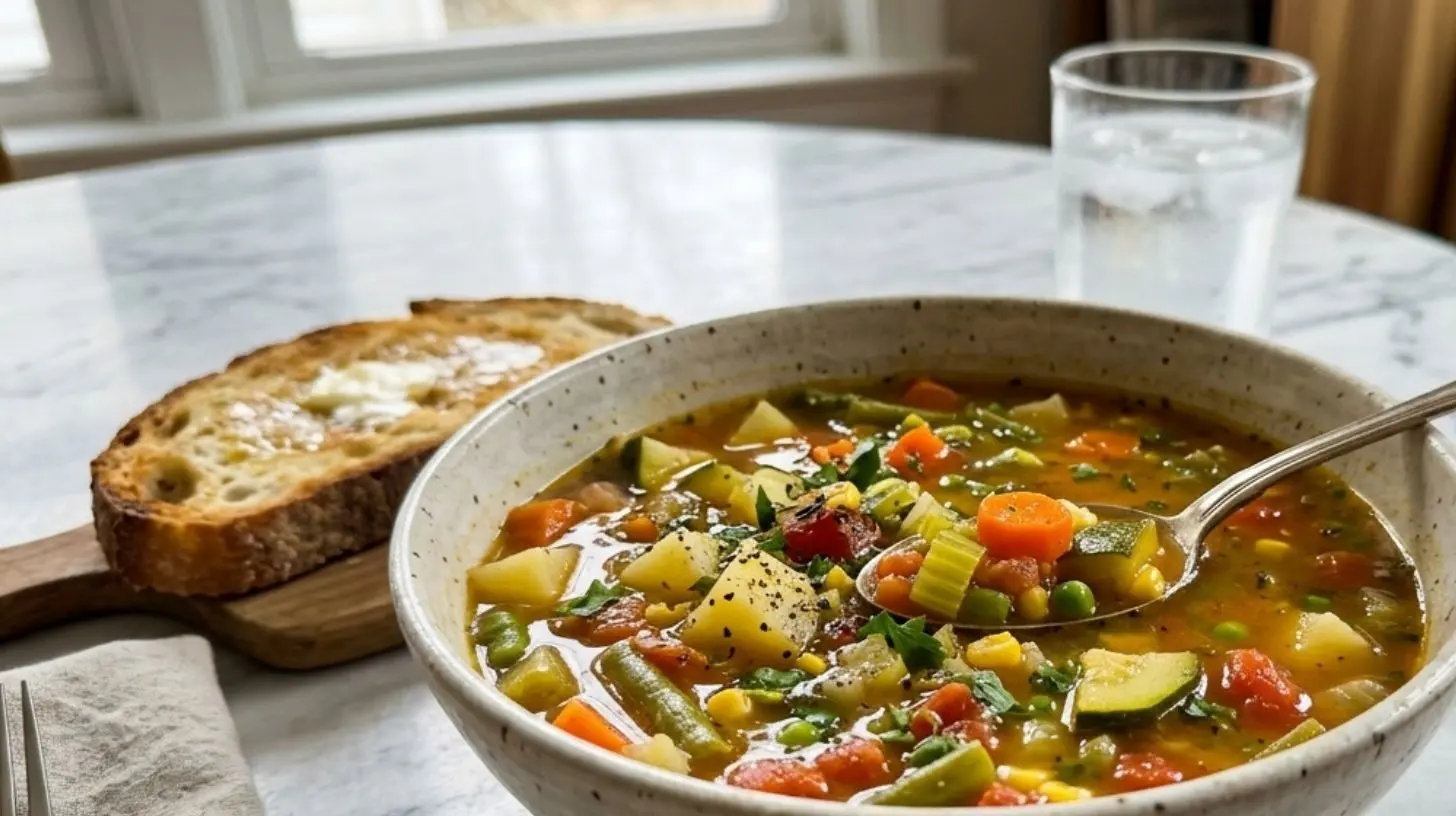
Proven way to grow delicious Vegetable Soup recipes
Learn how to make a tasty vegetable soup from scratch.
Carrots
Potatoes
Onions
Celery
Vegetable broth
Chop all the vegetables into small pieces.
Add the vegetables to a large pot with vegetable broth.
Simmer the soup on low heat for 30 minutes.
Season with salt and pepper to taste.
The Ultimate Guide to Creating the Perfect Vegetable Soup at Home
Have you ever wondered why the soup from your favorite restaurant tastes so much better than anything from a can? The secret isn’t a magical ingredient—it’s the freshness, the layering of flavors, and the love poured into every simmering pot. Crafting a robust Vegetable Soup at home transforms humble ingredients into a nourishing, soul-warming meal that costs pennies per serving. Whether you’re meal-prepping for a busy week or seeking comfort on a chilly evening, mastering this versatile dish is a culinary skill that pays dividends in flavor, health, and satisfaction. Let’s dive into how you can create a spectacular Homemade Vegetable Soup that will become a staple in your kitchen.
Ingredients & Kitchen Tools
For the Soup Base:
– 2 tablespoons olive oil – For sautéing; use avocado oil for a higher smoke point
– 1 large yellow onion, diced – Sweetens as it cooks; shallots work as a substitute
– 3 cloves garlic, minced – Fresh is best; jarred minced garlic saves time
– 2 carrots, peeled and sliced – Adds natural sweetness and color
– 2 celery stalks, chopped – Provides aromatic depth and texture
– 1 medium zucchini, quartered – Absorbs flavors beautifully
– 1 cup green beans, trimmed – Adds satisfying crunch
– 1 can (14.5 oz) diced tomatoes – Fire-roasted adds smoky flavor
– 6 cups vegetable broth – Low-sodium allows better salt control
– 1 cup water – For adjusting consistency
– 1 teaspoon dried thyme – Earthy, aromatic note
– 1 bay leaf – Adds subtle complexity
– Salt and black pepper – To taste, starting with 1 teaspoon salt
Optional Add-Ins:
– 1 cup cooked beans (cannellini or chickpeas) for protein
– 2 cups chopped kale or spinach, added at the end
– 1 cup frozen peas for sweetness
– 1 tablespoon balsamic vinegar for acidity
Kitchen Tools:
– Large heavy-bottomed pot (5-6 quart Dutch oven ideal)
– Wooden spoon or silicone spatula
– Chef’s knife and cutting board
– Measuring cups and spoons
– Ladle for serving
Prep Time & Cooking Schedule
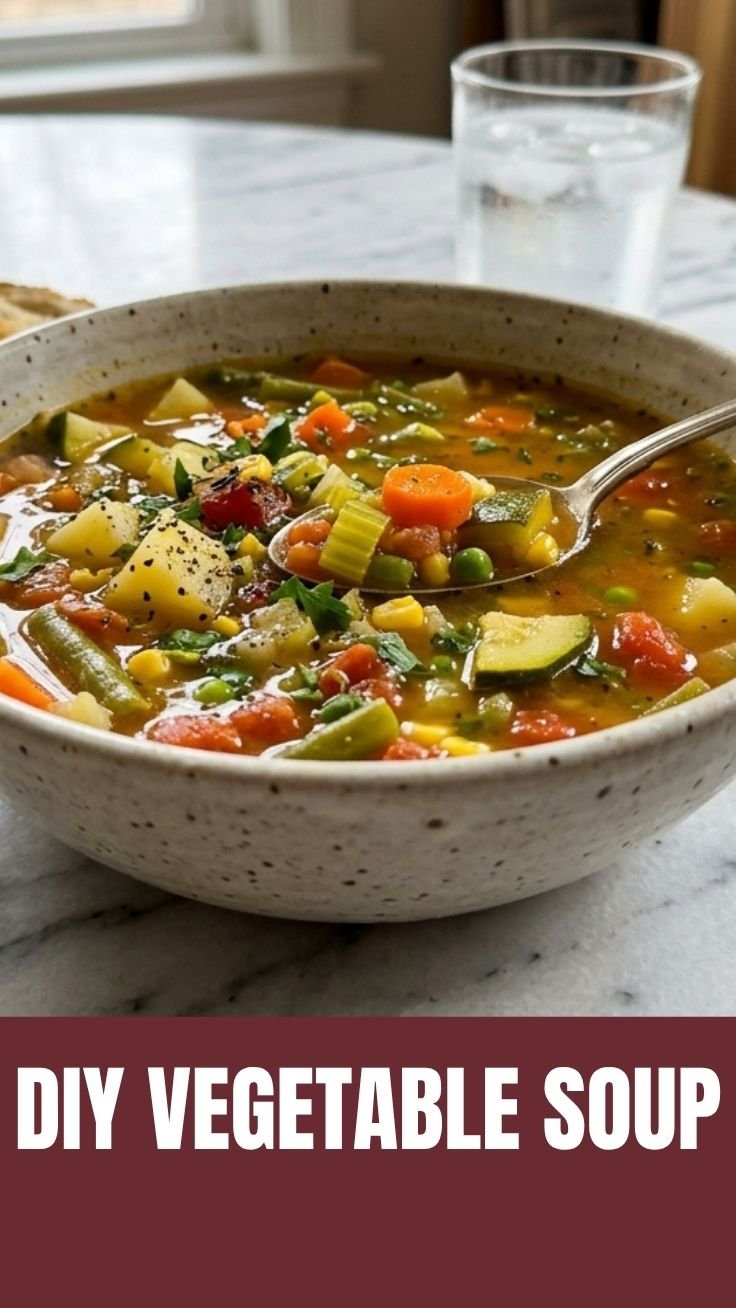
Total Time: 45 minutes
– Prep Time: 15 minutes (chopping vegetables, mincing garlic)
– Cook Time: 30 minutes (sautéing and simmering)
– Rest Time: 5 minutes (allows flavors to meld before serving)
This efficient schedule makes Vegetable Soup perfect for a weeknight dinner. The active cooking time is brief, and most of the process involves hands-off simmering. Pro tip: Prep all vegetables before you begin cooking—this “mise en place” approach ensures smooth sailing and prevents burning while you scramble to chop.
Step-by-Step Instructions
Step 1: Heat the Oil and Sauté Aromatics
Warm the olive oil in your large pot over medium heat. Add the diced onion with a pinch of salt and cook for 3-4 minutes until translucent and fragrant. The salt helps draw out moisture and accelerates softening. Add the minced garlic and cook for 30 seconds until aromatic—be careful not to burn it.
Step 2: Build the Flavor Base
Add the carrots and celery, stirring to coat them in the oil. Sauté for 3-4 minutes until they begin to soften and the onions turn golden. This step is crucial for developing the deep, savory foundation of your Homemade Vegetable Soup.
Step 3: Add Remaining Vegetables
Incorporate the zucchini and green beans, stirring for 2 minutes. This staggered cooking ensures firmer vegetables remain slightly crisp while softer ones become tender.
Step 4: Add Tomatoes and Seasonings
Pour in the diced tomatoes with their juices, sprinkle in the dried thyme, and add the bay leaf. Stir well, scraping any browned bits from the bottom of the pot—these caramelized pieces add incredible depth.
Step 5: Add Broth and Simmer
Pour in the vegetable broth and water. Increase heat to high until the soup reaches a gentle boil, then reduce to low and maintain a steady simmer. Cover and let cook for 20 minutes, or until all vegetables are fork-tender.
Step 6: Season and Finish
Remove the bay leaf, taste the Vegetable Soup, and adjust seasonings. Add salt and pepper gradually—you can always add more, but you can’t take it away. If using spinach or kale, stir it in now and let it wilt for 2 minutes. For a richer flavor, add a splash of balsamic vinegar or a squeeze of lemon juice.
Nutritional Benefits & Advantages
A bowl of Homemade Vegetable Soup is a nutritional powerhouse. The variety of colorful vegetables provides a spectrum of vitamins, minerals, and antioxidants:
– Carrots deliver beta-carotene (Vitamin A) for eye health and immune function
– Celery offers Vitamin K and potassium while being incredibly low in calories
– Zucchini provides Vitamin C, manganese, and dietary fiber
– Green beans contribute folate, iron, and Vitamin B6
– Garlic and onions contain allicin, a compound with antimicrobial properties
This soup is naturally:
– Low in calories (approximately 120-150 per serving)
– High in fiber (6-8 grams per serving)
– Heart-healthy with zero cholesterol and minimal saturated fat
– Hydrating while being nutrient-dense
Unlike store-bought versions that often contain excessive sodium and preservatives, this fresh approach lets you control every ingredient. The variety of plant foods supports gut health by feeding beneficial bacteria.
Tips Variations & Cooking Advice
Flavor Variations:
– Mediterranean Twist: Add 1 teaspoon dried oregano, ½ teaspoon smoked paprika, and top with fresh basil and Parmesan
– Asian-Inspired: Swap thyme for ginger and add 2 tablespoons soy sauce plus a teaspoon of sesame oil
– Spicy Version: Add ½ teaspoon red pepper flakes or a diced jalapeño with the garlic
Ingredient Swaps:
– Replace zucchini with yellow squash or bell peppers
– Use cauliflower florets for a more filling texture
– Swap green beans for asparagus or broccoli
– Add potatoes or sweet potatoes for heartiness
Dietary Adaptations:
– Gluten-Free: This recipe is naturally gluten-free
– Dairy-Free: No dairy used; finish with coconut cream for richness
– Low-Carb: Skip the tomatoes and use fewer carrots; add more leafy greens
– High-Protein: Add 1 cup of cooked quinoa, lentils, or white beans
Cooking Methods:
– Slow Cooker: Sauté aromatics first, then transfer everything to a slow cooker on low for 6-8 hours
– Instant Pot: Sauté using the sauté function, then pressure cook on high for 5 minutes with natural release
– Immersion Blender: Blend half the soup for a creamy texture while keeping some chunks
Common Mistakes to Avoid
Mistake #1: Overcooking Vegetables
Adding all vegetables simultaneously grapes result in mushy soup. Solution: Follow the staggered addition order in the recipe.
Mistake #2: Underseasoning
Vegetable soup needs more salt than you expect because vegetables absorb seasoning. Solution: Taste and adjust multiple times during cooking.
Mistake #3: Using Low-Quality Broth
The broth is the foundation of your Vegetable Soup. Solution: Use good-quality vegetable broth or make your own from scraps.
Mistake #4: Cooking on High Heat
Boiling vegetables aggressively breaks down their structure and creates a cloudy, unappealing soup. Solution: Maintain a gentle simmer, not a rolling boil.
Mistake #5: Adding Delicate Greens Too Early
Spinach and kale become bitter and mushy if cooked too long. Solution: Add them in the final 2-3 minutes only.
Storage & Meal Prep Tips
Refrigeration:
– Store cooled soup in airtight containers for up to 5 days
– Glass containers work best and don’t absorb odors
– Leave 1 inch of headspace for expansion
Freezing:
– Freeze for up to 3 months in freezer-safe containers or resealable bags
– Portion into single servings for easy lunches
– Label with date and contents
– Thaw overnight in the refrigerator before reheating
Reheating:
– Stovetop: Heat gently over medium-low, stirring occasionally for 5-7 minutes
– Microwave: Heat in 1-minute intervals, stirring between, for 2-3 minutes total
– Add a splash of broth or water if the soup has thickened during storage
Meal Prep Strategy:
– Make a double batch on Sunday for the week ahead
– Store vegetables and broth separately if you want crisper vegetables
– Portion into individual containers for grab-and-go lunches
Conclusion
Mastering Vegetable Soup is about more than following a recipe—it’s about understanding how fresh ingredients, proper technique, and patience combine to create something truly nourishing. This Homemade Vegetable Soup is endlessly adaptable, budget-friendly, and forgiving for cooks of all skill levels. The beauty lies in its simplicity: quality ingredients, proper seasoning, and a gentle hand on the heat produce a bowl of comfort that’s both healthy and deeply satisfying. We encourage you to make this recipe your own—experiment with seasonal vegetables, adjust the spices to your preference, and don’t be afraid to double the batch. Share your creation with family and friends, or save it for your weekly meal prep. However you choose to enjoy it, know that you’re feeding yourself and your loved ones something genuinely Good for both body and soul.
FAQs
Q: Can I make this soup without canned tomatoes?
A: Absolutely! Use 2 cups of fresh diced tomatoes, or substitute with 1 cup of tomato puree diluted in 1 cup of water. You can also skip tomatoes entirely for a lighter, clearer broth.
Q: How can I thicken my vegetable soup?
A: Mash some of the cooked vegetables with a potato masher, blend a portion of the soup and stir it back in, or add a slurry of 1 tablespoon cornstarch mixed with 2 tablespoons cold water. For a naturally creamy texture, add a can of blended white beans.
Q: Why does my soup taste bland?
A: This usually means it needs more salt, acid, or umami. Add salt in small increments, then try a splash of lemon juice or vinegar for brightness. A teaspoon of soy sauce or nutritional yeast can boost savory depth without adding salt.
Q: Can I use frozen vegetables instead of fresh?
A: Yes, though cook times will be shorter. Frozen vegetables are already blanched, so add them in the last 10 minutes of cooking. Avoid frozen leaf spinach, which can become slimy.
Q: How do I prevent my soup from becoming too watery?
A: Use less water and rely more on broth. Additionally, cook uncovered for the last 5 minutes to allow some evaporation. If it’s still too thin, simmer uncovered until it reaches your desired consistency.