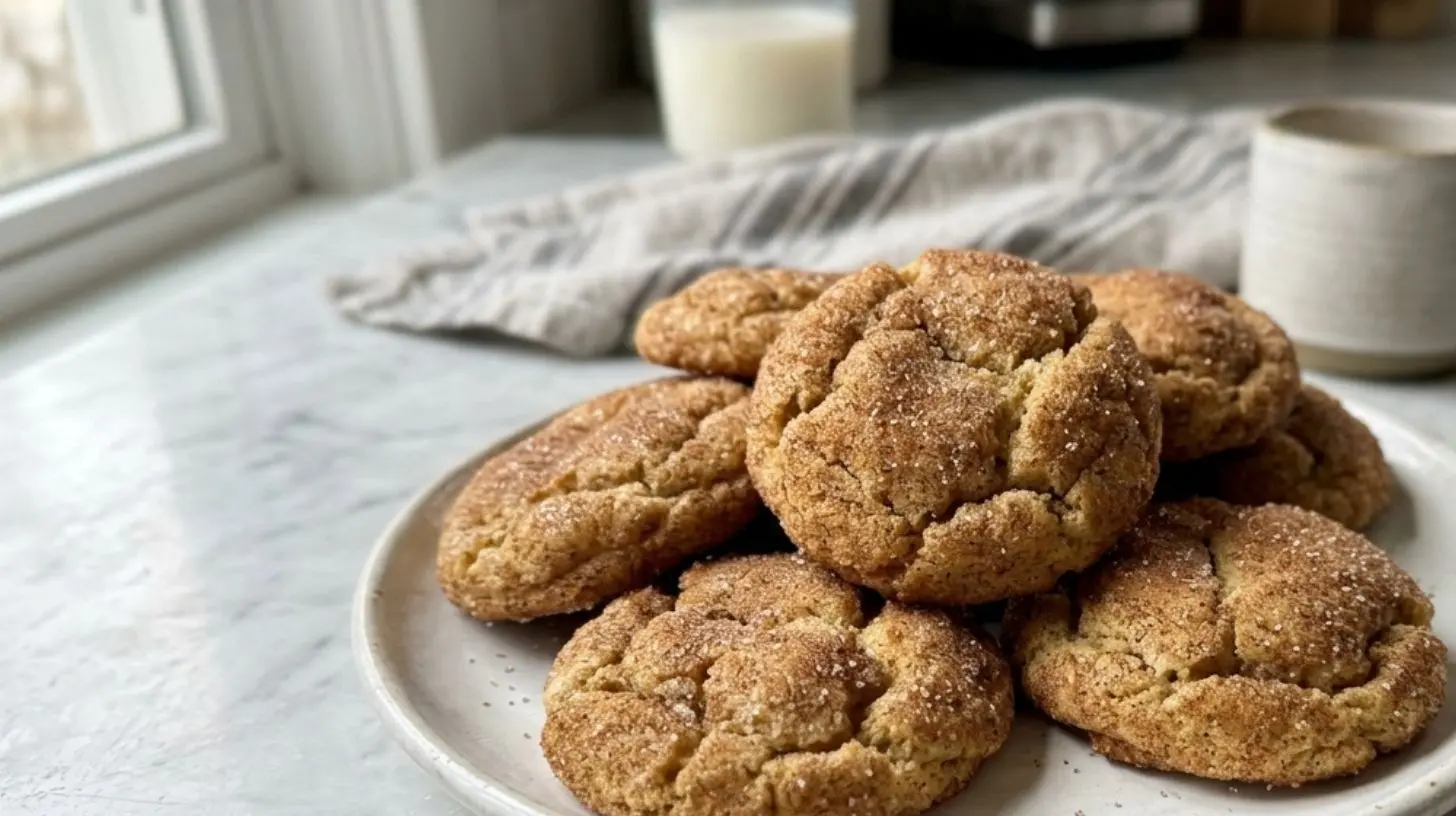
Proven Way to Grow 3 Types of Snickerdoodles
Learn how to make three delicious variations of Snickerdoodles cookies.
Flour
Sugar
Cinnamon
Butter
Eggs
Vanilla Extract
Cream of Tartar
Preheat the oven to 350°F.
Mix flour, sugar, cinnamon, and cream of tartar in a bowl.
Cream butter and sugar until fluffy.
Add eggs and vanilla extract to the mixture.
Gradually add the dry ingredients to the wet mixture.
Roll the dough into balls and coat with cinnamon sugar mix.
Bake in the oven for 10-12 minutes until golden brown.
The Ultimate Snickerdoodle Recipe: Soft, Chewy, and Perfectly Cinnamon-Sugared
Introduction
Have you ever bitten into a cookie that instantly transports you back to your grandmother’s kitchen—where the aroma of cinnamon and sugar fills the air and every bite melts in your mouth? That’s the magic of a perfectly baked snickerdoodle. These classic treats are more than just cookies; they’re a nostalgic experience that combines a tender, buttery interior with a crackly cinnamon-sugar crust. While store-bought versions can be hit-or-miss, preparing them at home allows you to control every variable—from the freshness of the ingredients to the exact level of chewiness. Whether you’re a seasoned baker or a complete beginner, this guide will walk you through everything you need to know about making authentic, bakery-quality snickerdoodles right in your own kitchen. And if you’re looking for even more creative inspiration, be sure to explore our collection of Snickerdoodle recipes that reinvent this classic in exciting ways. For now, let’s dive into the ultimate recipe using a tried-and-true method that guarantees success every time.
Ingredients & Kitchen Tools
Ingredients
– All-purpose flour (2¾ cups) – Provides structure; spoon and level to avoid dense cookies.
– Cream of tartar (2 teaspoons) – The secret to the signature tang and soft texture. No substitutes without altering the flavor.
– Baking soda (1 teaspoon) – Works with cream of tartar for lift.
– Salt (½ teaspoon) – Balances sweetness.
– Unsalted butter (1 cup, softened) – Room temperature is key for proper creaming.
– Granulated sugar (1¾ cups) – 1½ cups for dough, ¼ cup for rolling.
– Large eggs (2) – Bind the dough; use at room temperature.
– Vanilla extract (1 teaspoon) – Pure extract enhances depth.
– Ground cinnamon (2 tablespoons) – For the coating; can add extra nutmeg or cardamom.
Kitchen Tools
– Large mixing bowls (2)
– Electric hand mixer or stand mixer
– Whisk or spatula
– Baking sheets (preferably light-colored)
– Parchment paper or silicone baking mat
– Small bowl for cinnamon-sugar rolling
– Cookie scoop (1½ tablespoons) for uniform size
– Cooling rack
Optional Substitutions
– Swap part of the butter with shortening (up to ½ cup) for a taller, chewier cookie.
– Use gluten-free all-purpose flour blend (with xanthan gum) for a gluten-free version.
– Replace white sugar with coconut sugar for a deeper caramel note, though texture will change slightly.
Prep Time & Cooking Schedule

– Prep time: 20 minutes (including mixing dough)
– Chill time: 30 minutes (optional but highly recommended for thicker cookies)
– Bake time: 10–12 minutes per batch
– Cooling time: 5 minutes on sheet, then transfer to rack
– Total active time: Approximately 1 hour
Planning tip: The dough can be refrigerated for up to 3 days or frozen for 3 months, making this perfect for holiday prep. If you’re short on time, skip the chill and bake immediately—cookies will spread more but still taste amazing.
Step-by-Step Instructions
1. Preheat and prepare. Set your oven to 375°F (190°C). Line two baking sheets with parchment paper or silicone mats.
2. Cream butter and sugar. In a large bowl, beat softened butter and 1½ cups granulated sugar with an electric mixer on medium speed until light and fluffy (about 2–3 minutes). Scrape down the sides.
3. Add eggs and vanilla. Beat in eggs one at a time, then add vanilla extract. Mix until just combined.
4. Whisk dry ingredients. In a separate bowl, whisk together flour, cream of tartar, baking soda, and salt. Gradually add to the butter mixture, mixing on low speed until no streaks of flour remain. Do not overmix—overworking develops gluten and makes tough cookies. These classic snickerdoodles rely on a gentle hand for their tender crumb. Most traditional snickerdoodle recipes include a chilling step at this point, which helps the dough firm up and reduces spreading.
5. Chill (optional but recommended). Cover the dough with plastic wrap and refrigerate for 30 minutes. Meanwhile, mix the remaining ¼ cup sugar with cinnamon in a small bowl.
6. Shape and coat. Using a cookie scoop (about 1½ tablespoons), portion the dough into balls. Roll each ball generously in the cinnamon-sugar mixture and place on prepared baking sheets about 2 inches apart.
7. Bake. Bake for 10–12 minutes, until edges are golden and centers look slightly puffed and set. The tops will appear crackled. Do not overbake—cookies will continue to firm up as they cool.
8. Cool. Let the cookies rest on the baking sheet for 5 minutes, then transfer to a wire rack to cool completely. Enjoy warm or at room temperature.
Nutritional Benefits & Advantages
Though snickerdoodles are an indulgent treat, they offer a few surprising nutritional perks when made at home. The cream of tartar provides potassium (about 5% DV per cookie) and acts as a natural leavening agent. Using real butter supplies fat-soluble vitamins A, D, and E. By controlling sugar content, you can reduce sweetness by up to 25% without ruining the texture (just reduce sugar to 1¼ cups). Whole wheat pastry flour can replace half the all-purpose flour for added fiber. Additionally, homemade versions avoid the preservatives and artificial flavors often found in packaged cookies. Enjoy in moderation—one cookie typically contains 120–150 calories, 6g fat, and 15g carbs.
Tips, Variations & Cooking Advice
– Flavor variations: Add ½ teaspoon nutmeg or allspice to the cinnamon coating for a warm winter twist. For a citrusy kick, mix 1 teaspoon orange zest into the dough.
– Ingredient swaps: Use light brown sugar instead of half the granulated sugar for a moister, more molasses-like flavor. Almond extract can replace vanilla for a subtle marzipan note.
– Alternative cooking methods: Try baking on a preheated pizza stone for extra-crispy bottoms. For softer centers, underbake by 1 minute and flash-cool in the freezer for 5 minutes.
– Dietary adaptations: To make dairy-free, use vegan butter sticks (like Earth Balance) and ensure the cream of tartar is labeled vegan. For egg-free, substitute with ¼ cup unsweetened applesauce per egg—cookies will be slightly cakier.
– Portion changes: Mini snickerdoodles (1 teaspoon dough) bake in 6–8 minutes; jumbo cookies (3 tablespoons) need 14–16 minutes. Adjust baking time accordingly.
Common Mistakes to Avoid
1. Skipping the cream of tartar – This ingredient is not optional; it gives snickerdoodles their signature tang and softness. Without it, cookies turn flat and sweet like sugar cookies.
2. Overmixing the dough – Mixing too long after adding flour develops gluten, resulting in tough, dense cookies. Stop as soon as the flour disappears.
3. Not chilling the dough – Warm dough spreads excessively and loses the characteristic puffiness. Even 15 minutes in the fridge makes a noticeable difference.
4. Using melted butter – Melted butter leads to greasy, flat cookies. Always use softened (not melted) butter for proper creaming.
5. Baking on dark pans – Dark sheets absorb more heat and cause the bottoms to burn before the centers are set. Stick to light-colored aluminum or insulated pans.
Storage & Meal Prep Tips
– Room temperature: Store baked cookies in an airtight container with a slice of bread (to maintain softness) for up to 5 days. Separate layers with parchment paper.
– Refrigeration: The dough can be refrigerated for up to 3 days. Shape into balls and roll in cinnamon-sugar just before baking.
– Freezing (baked): Cool completely, then freeze in a single layer on a baking sheet. Transfer to a zip-top bag for up to 3 months. Thaw at room temperature for 15 minutes.
– Freezing (unbaked): Roll dough balls without cinnamon coating, freeze solid on a tray, then store in a bag. When ready, toss frozen balls in cinnamon-sugar and bake directly from frozen, adding 2–3 minutes to the bake time.
– Reheating: To refresh day-old cookies, microwave for 8–10 seconds or place in a 300°F oven for 3–5 minutes. For frozen baked cookies, reheat at 350°F for 5 minutes.
Conclusion
Mastering this recipe unlocks the door to consistently soft, tangy, and perfectly spiced snickerdoodles that rival any bakery. By following the steps above—paiting special attention to the cream of tartar and proper chilling—you’ll create cookies with that irresistible crackle-top and melt-in-your-mouth texture. Whether you stick to the original or experiment with our suggested variations, the joy of baking from scratch is unmatched. Don’t forget to check out more Snickerdoodle recipes for creative twists that will keep your cookie jar exciting all year long. We’d love to hear how yours turn out—share your results in the comments below or tag us on social media. Happy baking!
FAQs
1. Can I substitute cream of tartar?
The best substitute is 1 teaspoon of lemon juice or white vinegar per ½ teaspoon of cream of tartar, combined with the milk or buttermilk in the recipe. However, this changes the flavor slightly. For snickerdoodles, cream of tartar is essential for the traditional tang and texture—substitutions work best in a pinch but won’t replicate the exact result.
2. Why are my snickerdoodles flat and thin?
Flat cookies usually result from dough that is too warm, butter that is too soft or melted, or too little flour. Ensure your butter is softened (not melted), chill the dough for at least 30 minutes, and measure flour by spooning and leveling rather than scooping.
3. Can I make the dough in advance and bake later?
Absolutely! The dough can be refrigerated for up to 3 days or frozen for 3 months. If refrigerated, let it sit at room temperature for 10 minutes before shaping. If frozen, bake directly with an extra 2–3 minutes.
4. How do I make snickerdoodles chewier?
Replace ½ cup of the granulated sugar with light brown sugar, and substitute ¼ cup of the butter with shortening. Also, underbake by 1 minute and allow the cookies to cool completely on the pan.
5. What can I use instead of cinnamon for coating?
Try a blend of cinnamon and cardamom, or pumpkin pie spice for a fall flavor. For a savory-sweet twist, add a pinch of sea salt to the sugar coating. You can also use cocoa powder mixed with sugar for a chocolate snickerdoodle variation.