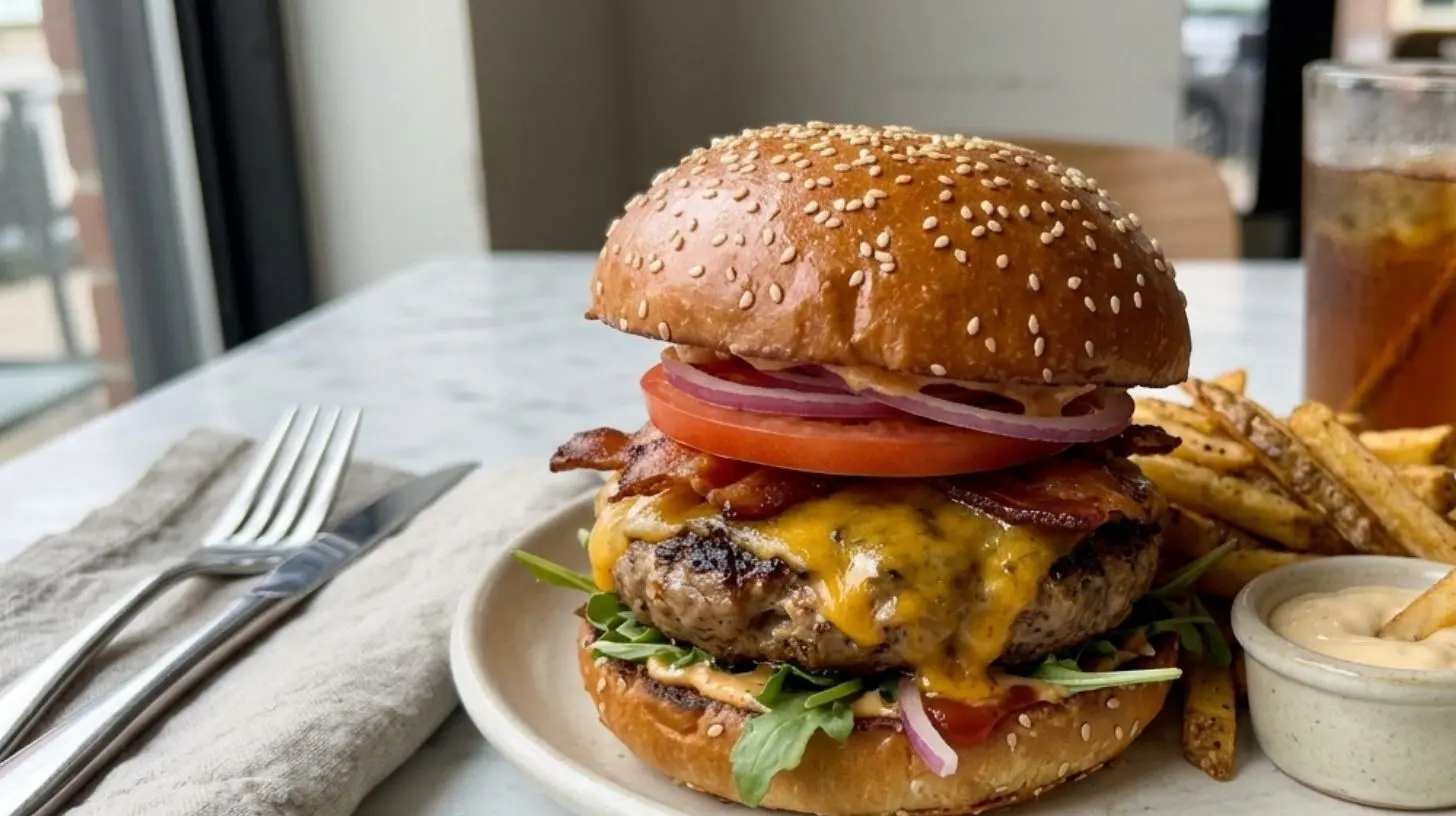
Turkey Burger Garden
Learn how to grow and enjoy your very own Turkey Burger plants.
Turkey Meat
Buns
Lettuce
Tomato
Cheese
Onion
Plant turkey meat in soil and water regularly.
Harvest buns from bun tree when ripe.
Pick lettuce leaves fresh from the lettuce bush.
Gather tomatoes from the tomato vine.
Pluck cheese from the cheese plant.
Pull onions from the onion patch.
The Ultimate Guide to the Perfect Turkey Burger: Juicy, Flavorful, and Surprisingly Healthy
What if you could enjoy a burger that’s actually good for you? Imagine sinking your teeth into a patty so juicy and flavorful that you’d never guess it’s packed with lean protein and significantly less fat than its beef counterpart. Preparing a high-quality Turkey Burger at home not only gives you complete control over the ingredients but also unlocks a world of flavor that store-bought versions simply can’t match. Whether you’re looking to boost your protein intake, reduce red meat consumption, or simply explore new culinary horizons, mastering this versatile dish is a game-changer. This turkey burger recipe will transform your perception of healthy eating, proving that you don’t have to sacrifice taste for nutrition. And if you’re on a journey to discover more nutritious options, you’ll find that incorporating healthy recipes into your weekly rotation has never been this delicious or satisfying.
—
Ingredients & Kitchen Tools
Essential Ingredients
– 1 pound ground turkey (93% lean, 7% fat): This ratio provides the perfect balance between moisture and leanness. Avoid 99% fat-free turkey as it tends to dry out quickly.
– 1/4 cup finely diced onion: Adds moisture and subtle sweetness. Yellow or sweet onions work best.
– 2 cloves garlic, minced: Provides aromatic depth and enhances savory notes.
– 1 large egg, lightly beaten: Acts as a binder to prevent crumbling.
– 1/4 cup whole wheat breadcrumbs: Helps retain moisture and provides structure. Substitute with gluten-free panko if needed.
– 1 tablespoon Worcestershire sauce: Adds umami complexity and depth.
– 1 teaspoon Dijon mustard: Brightens flavor and adds tanginess.
– 1/2 teaspoon smoked paprika: Imparts subtle smokiness without overpowering.
– 1/2 teaspoon salt: Enhances all flavors; use kosher salt for best results.
– 1/4 teaspoon black pepper: Adds gentle heat.
– 2 tablespoons olive oil: For cooking; helps achieve golden-brown crust.
– 4 whole wheat burger buns: Toasted lightly for texture.
– Toppings of choice: Lettuce, tomato slices, red onion, avocado, or pickles.
Optional Substitutions
– Panko breadcrumbs instead of whole wheat for lighter texture.
– 1 tablespoon flaxseed meal + 3 tablespoons water as an egg replacement for vegan version.
– Liquid aminos instead of Worcestershire for gluten-free option.
Kitchen Tools Required
– Large mixing bowl
– Measuring spoons and cups
– Chef’s knife and cutting board
– Non-stick skillet or cast-iron pan
– Spatula (preferably metal for better crust formation)
– Meat thermometer (highly recommended for perfectly cooked patties)
– Paper towels for patting meat dry
—
Prep Time & Cooking Schedule
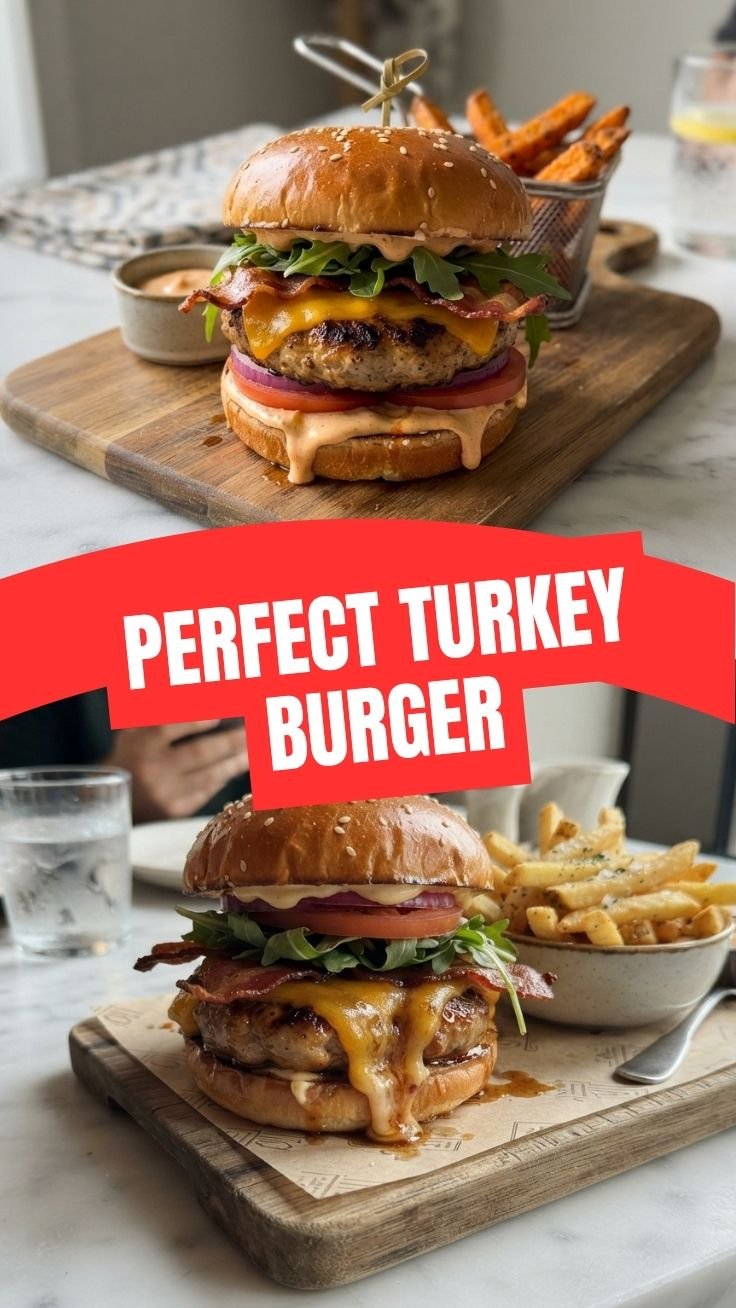
Planning your cooking timeline ensures stress-free preparation and perfectly timed meals:
– Preparation time: 15 minutes
– Chilling time: 20 minutes (essential for preventing patties from falling apart)
– Cooking time: 10-12 minutes total
– Resting time: 3-5 minutes before serving (allows juices to redistribute)
– Total time: Approximately 45 minutes
The chilling step is crucial—don’t skip it. Cold patties hold their shape better during cooking and develop a superior crust. If you’re short on time, aim for at least 10 minutes in the freezer.
—
Step-by-Step Instructions
Step 1: Prepare the Mixture
Place the ground turkey in a large bowl. Add the diced onion, minced garlic, beaten egg, breadcrumbs, Worcestershire sauce, Dijon mustard, smoked paprika, salt, and pepper. Using your hands, gently combine the ingredients until just incorporated. Overmixing is the enemy of a tender turkey burger—stop as soon as everything is evenly distributed.
Step 2: Form and Chill
Divide the mixture into 4 equal portions (about 4-5 ounces each). Shape each portion into a patty approximately 3/4-inch thick. Make a small indent in the center of each patty with your thumb—this prevents the patties from puffing up into balls during cooking. Place the patties on a parchment-lined plate, cover with plastic wrap, and refrigerate for at least 20 minutes.
Step 3: Cook to Perfection
Heat a large non-stick skillet or cast-iron pan over medium-high heat. Add the olive oil and swirl to coat. Once the oil shimmers, carefully place the chilled patties in the pan, leaving at least 1 inch of space between them. Cook for 5-6 minutes on the first side without moving them—this allows a beautiful golden crust to develop. Flip carefully using a spatula and cook for another 4-5 minutes. The internal temperature should reach 165°F (74°C) when measured with a meat thermometer inserted into the thickest part. This turkey burger technique ensures juicy results every time, making it a standout among healthy recipes that don’t compromise on flavor.
Step 4: Rest and Assemble
Transfer the cooked patties to a clean plate and let them rest for 3-5 minutes. Meanwhile, toast the buns lightly in the same pan or under the broiler. Assemble your burgers with desired toppings and serve immediately.
—
Nutritional Benefits & Advantages
This turkey burger offers remarkable nutritional advantages without sacrificing the comfort food experience:
– Protein powerhouse: Each patty provides approximately 25-30 grams of high-quality protein, supporting muscle repair and satiety.
– Lower fat content: Compared to an 80/20 beef burger, this version contains about 60% less saturated fat while still delivering satisfying flavor.
– Rich in B vitamins: Turkey is an excellent source of niacin (B3), vitamin B6, and B12, which support energy metabolism and nervous system function.
– Selenium boost: This mineral acts as a powerful antioxidant, supporting thyroid health and immune function.
– Customizable nutrition: By controlling ingredients and toppings, you can easily adapt this recipe to fit low-carb, gluten-free, or dairy-free dietary patterns.
When you choose healthy recipes like this one, you’re investing in long-term wellness without feeling deprived of the foods you love.
—
Tips, Variations & Cooking Advice
Flavor Variations
– Mediterranean twist: Add 1 tablespoon chopped sun-dried tomatoes, 1 teaspoon dried oregano, and 2 tablespoons crumbled feta cheese to the mixture.
– Southwest style: Mix in 1/4 cup finely chopped cilantro, 1 teaspoon cumin, and 1/2 teaspoon chipotle powder.
– Italian-inspired: Incorporate 1 tablespoon grated Parmesan, 1 teaspoon dried basil, and 1/2 teaspoon red pepper flakes.
Cooking Methods
– Grilling: Preheat grill to medium-high heat (375-400°F). Oil grates well. Cook patties 5-6 minutes per side. Use a grill basket for easier handling.
– Air fryer: Cook at 375°F for 10-12 minutes, flipping halfway through. No added oil needed.
– Oven baking: Place patties on a parchment-lined baking sheet and bake at 400°F for 15-18 minutes, flipping once.
Dietary Adaptations
– Gluten-free: Use gluten-free breadcrumbs or crushed pork rinds as a binder. Serve with lettuce wraps instead of buns.
– Dairy-free: This recipe is naturally dairy-free. Check your Worcestershire sauce label.
– Lower sodium: Reduce salt to 1/4 teaspoon and use low-sodium Worcestershire sauce.
—
Common Mistakes to Avoid
1. Using extra-lean turkey (99% fat-free): This results in dry, crumbly patties. Stick with 93/7 or 85/15 blends.
2. Overmixing the ingredients: This develops the protein too much, leading to tough, dense burgers. Mix only until combined.
3. Skipping the chilling step: Warm patties fall apart on the grill or pan. Always refrigerate for at least 20 minutes.
4. Flattening patties with a spatula while cooking: This squeezes out precious juices. Resist the urge—trust the process.
5. Cooking on too high heat: The outside will burn before the inside reaches 165°F. Medium-high heat is ideal.
6. Not using a meat thermometer: Visual cues are unreliable with poultry. Always verify internal temperature for food safety and optimal doneness.
—
Storage & Meal Prep Tips
Refrigeration
– Store cooked patties in an airtight container for up to 4 days.
– Keep uncooked patties separated by parchment paper in the refrigerator for up to 2 days.
– Reheat gently in a skillet over medium heat for 2-3 minutes per side, or microwave at 50% power for 60-90 seconds.
Freezing
– Uncooked patties: Place parchment-lined patties on a baking sheet and freeze until solid (about 2 hours). Transfer to a freezer-safe bag or container. They’ll keep for up to 3 months. Thaw overnight in the refrigerator before cooking.
– Cooked patties: Cool completely, wrap individually in plastic wrap, then place in a freezer bag. They’ll stay fresh for up to 2 months. Reheat directly from frozen in a skillet over medium-low heat, covered, for 6-8 minutes.
Meal Prep Strategy
Prepare the turkey mixture, form patties, and freeze uncooked portions. On busy weeknights, simply cook from frozen (add 2-3 minutes per side) for a quick, nutritious dinner.
—
Conclusion
Mastering the art of the turkey burger opens up a world of culinary possibilities that align perfectly with a health-conscious lifestyle. This recipe proves that you can enjoy the comfort and satisfaction of a classic burger while nourishing your body with lean protein, essential nutrients, and wholesome ingredients. By preparing it at home, you avoid the preservatives, fillers, and excessive sodium found in many pre-made options. The key takeaways are simple: choose the right fat ratio, handle the mixture gently, chill thoroughly before cooking, and always use a meat thermometer for perfect results. Whether you’re a seasoned cook or a kitchen novice, this approachable recipe delivers consistent, delicious outcomes that will impress family and friends alike. We’d love to hear how your healthy recipes journey unfolds—try this recipe, experiment with the variations, and share your creations in the comments below. Your perfect burger is just a few steps away!
—
Frequently Asked Questions
Can I use ground chicken instead of turkey?
Absolutely. Ground chicken has a similar fat content and texture, making it an excellent substitute. Follow the same recipe instructions, and you’ll achieve comparable results. Just ensure the internal temperature reaches 165°F.
How do I prevent my turkey burgers from falling apart?
The combination of egg, breadcrumbs, and adequate chilling time is the key. Don’t skip the egg binder, and make sure to refrigerate the formed patties for at least 20 minutes. Also, avoid overhandling the mixture and flipping the patties too early during cooking.
Can I make these burgers ahead of time for a party?
Yes! You can form the patties up to 24 hours in advance and keep them refrigerated, covered. Alternatively, freeze them for up to 3 months. If cooking for a crowd, keep finished patties warm in a 200°F oven while you finish cooking the rest.
What’s the best way to add moisture to turkey burgers?
Incorporate finely grated onion, zucchini, or even a tablespoon of olive oil into the mixture. Using 93/7 ground turkey (rather than 99% fat-free) also makes a significant difference. Avoid pressing down on the patties during cooking, as this squeezes out moisture.
Can I cook these on a George Foreman grill or indoor electric grill?
Yes, these work well. Preheat the grill according to manufacturer instructions, cook for 5-6 minutes, then check internal temperature. The slightly shorter cooking time compared to a pan is due to the dual-sided heating.