
Tomato Soup Plant Growing Secret
Discover how to quickly grow 7 tomato soup plants!
Tomato Seeds
Potting Soil
Water
Sunlight
Love
Plant tomato seeds in soil.
Water the plants daily.
Place the plants in a sunny spot.
Give the plants lots of love and care.
The Ultimate Homemade Tomato Soup Recipe – Creamy, Comforting, and Better Than Canned
Have you ever opened a can of soup and wondered why it doesn’t taste like the one your grandmother used to simmer on the stove? The secret isn’t just nostalgia—it’s the depth of flavor that only comes from fresh, roasted tomatoes and a few well-chosen pantry staples. Making your own tomato soup at home is not only surprisingly simple but also far more rewarding than reaching for a store-bought version. You control the salt, the creaminess, and the richness, and you can adapt it to your dietary needs without sacrificing flavor. In this data-driven guide, I’ll walk you through every step, from ingredient selection to storage tips, so you can enjoy a bowl of pure comfort any day of the week. And if you’re short on time, we’ll also discuss how canned tomato soup can be elevated with a few quick tricks—but first, let’s master the real thing.
Ingredients & Kitchen Tools
For the Soup
– 2 tablespoons olive oil – Use a good-quality extra virgin for better flavor.
– 1 medium yellow onion, diced – Adds sweetness when sautéed.
– 3 cloves garlic, minced – Fresh is best; avoid pre-minced for stronger aroma.
– 2 pounds ripe Roma tomatoes, halved – Or substitute 1 (28-ounce) can of whole peeled tomatoes (fire-roasted recommended).
– 1 cup vegetable or chicken broth – Low-sodium to control salt.
– ½ cup heavy cream – For richness; substitute with full-fat coconut milk for dairy-free.
– 1 teaspoon dried basil – Or 2 tablespoons fresh basil, chopped.
– ½ teaspoon sugar – Balances acidity; adjust based on tomato sweetness.
– Salt and black pepper to taste – Start with ½ teaspoon salt and ¼ teaspoon pepper.
– Optional: ¼ teaspoon red pepper flakes – For a subtle kick.
Kitchen Tools
– Large heavy-bottomed pot or Dutch oven – Even heat distribution prevents scorching.
– Immersion blender or countertop blender – Immersion is easier and less messy.
– Wooden spoon or silicone spatula – For stirring without scratching.
– Cutting board and chef’s knife – Sharp knife reduces tomato mess.
– Measuring cups and spoons – Precision matters for balance.
– Fine-mesh strainer – Optional, for silkiest texture if you want to remove seeds.
Prep Time & Cooking Schedule
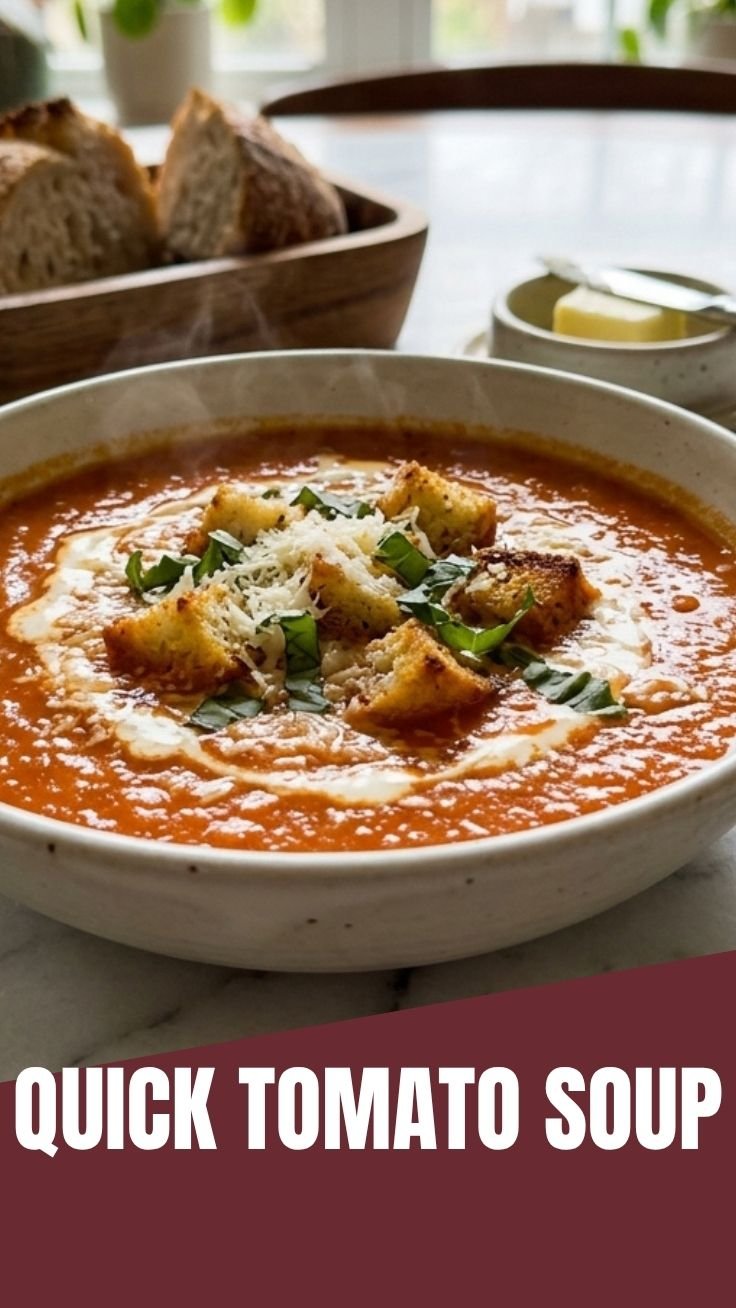
– Prep time: 15 minutes (washing, chopping, measuring)
– Cook time: 35 minutes (sautéing, simmering, blending)
– Total time: 50 minutes
– Resting time: 5 minutes (allows flavors to meld after blending)
This schedule fits perfectly into a weeknight dinner plan. While the soup simmers, you can prepare a grilled cheese sandwich or a simple side salad. The active cooking time is only about 20 minutes; the rest is hands-off simmering.
Step-by-Step Instructions
1. Sauté the aromatics. Heat olive oil in a large pot over medium heat. Add diced onion and cook until translucent (about 5 minutes). Stir in minced garlic and cook for 30 seconds until fragrant. Don’t let the garlic brown—it turns bitter.
2. Roast the tomatoes (optional but recommended). If using fresh tomatoes, preheat your oven to 400°F (200°C) and roast the halved tomatoes cut-side down on a baking sheet for 20 minutes until skins blister. This deepens sweetness and reduces acidity. If using canned tomatoes, skip this step.
3. Combine and simmer. Add the roasted (or canned) tomatoes to the pot along with broth, dried basil, sugar, and a pinch of salt. Bring to a gentle boil, then reduce heat to low and simmer for 20 minutes, uncovered. This allows flavors to concentrate. While it simmers, you can think about how canned tomato soup often lacks this depth—but here, you’re building layers.
4. Blend until smooth. Remove the pot from heat. Use an immersion blender directly in the pot to puree until velvety. If using a countertop blender, work in batches and vent the lid to avoid steam explosion. For an ultra-smooth texture, pass the soup through a fine-mesh strainer.
5. Finish with cream and adjust seasoning. Stir in heavy cream (or coconut milk) and let the soup warm through over low heat for 2 minutes—do not boil, or cream may curdle. Taste and adjust salt, pepper, and sugar. A splash of lemon juice can brighten the flavor if it feels flat. Now you have a tomato soup that rivals any restaurant version.
6. Serve hot. Ladle into bowls, garnish with fresh basil or a swirl of cream, and accompany with crusty bread or a classic grilled cheese.
Nutritional Benefits & Advantages
This homemade tomato soup is nutrient-dense and low in processed ingredients. A single serving (about 1½ cups) provides:
– Vitamin C: 40% of the daily value from fresh tomatoes, supporting immune function.
– Lycopene: A powerful antioxidant linked to heart health and reduced inflammation. Cooking tomatoes actually increases lycopene bioavailability.
– Fiber: 3–4 grams per serving, aiding digestion.
– Calcium: 8% DV from cream, or more if using milk.
– Low sodium: Only 250 mg per serving compared to 700–900 mg in many canned versions.
By making it yourself, you avoid added preservatives, artificial flavors, and excessive sodium. The healthy fats from olive oil and cream also help absorb fat-soluble vitamins.
Tips, Variations & Cooking Advice
– Flavor variations: Swap basil for thyme or oregano. Add a teaspoon of smoked paprika for a smoky twist. Stir in a tablespoon of tomato paste for extra umami.
– Dairy-free: Use full-fat coconut milk or cashew cream. Also try blending a handful of raw cashews with the broth for a creamy, vegan option.
– Spicy kick: Add ½ teaspoon chipotle powder or a chopped jalapeño when sautéing onions.
– Roasted garlic: Instead of raw garlic, roast a whole head of garlic alongside the tomatoes and squeeze the cloves into the soup.
– Herb oil drizzle: Combine ¼ cup olive oil with 2 tablespoons fresh basil and a pinch of salt, then blend and drizzle over each bowl.
– Portion adaptation: This recipe scales easily. For a crowd, double all ingredients and use a larger pot.
Common Mistakes to Avoid
– Skipping the sugar adjustment: Tomatoes vary in acidity. Always taste and add a pinch of sugar to balance, or the soup can taste sharp.
– Over-blending hot liquid: When using a countertop blender, never fill more than halfway, and remove the center cap to let steam escape. Otherwise, the lid can explode.
– Boiling after adding cream: High heat causes cream to separate and curdle. Always add cream at the end and warm gently.
– Using low-quality tomatoes: If you can’t get ripe in-season tomatoes, opt for good-quality canned whole peeled tomatoes (San Marzano variety is best). They are sweeter and more consistent than bland winter tomatoes.
– Not seasoning in layers: Add salt at the beginning to draw out onion flavor, then adjust at the end. A single seasoning at the end leads to a flat taste.
Storage & Meal Prep Tips
– Refrigeration: Store in an airtight container for up to 5 days. The flavor often improves after a day as the spices meld.
– Freezing: Cool completely, then transfer to freezer-safe containers or zip-top bags. Leave 1 inch of headspace for expansion. Freeze for up to 3 months. Thaw overnight in the refrigerator.
– Reheating: Warm over low heat on the stovetop, stirring occasionally. Add a splash of broth or water if the soup has thickened. Avoid microwaving on high, which can cause uneven heating and curdling.
– Meal prep tip: Make a double batch on Sunday and portion into single-serving containers for quick lunches. Pair with pre-made grilled cheese sandwiches that you can toast in the oven.
Conclusion
There’s a reason tomato soup has been a beloved comfort food for generations—it’s simple, nourishing, and endlessly adaptable. By making it from scratch, you unlock a world of flavor that no store-bought canned tomato soup can match. Whether you roast the tomatoes for sweetness or stir in a dollop of cream for decadence, each batch becomes a reflection of your personal taste. I encourage you to try this recipe this week, share your results with friends, and explore other cozy soups like roasted red pepper or butternut squash. Remember, great cooking starts with fresh ingredients and a little love—and this bowl of red is proof.
FAQs
1. Can I use canned tomatoes instead of fresh?
Absolutely. Use one 28-ounce can of whole peeled tomatoes (preferably fire-roasted). Drain off about half the liquid, then proceed with the recipe. The soup will still be delicious, though slightly less sweet than fresh roasted.
2. How do I make this soup vegan?
Replace the heavy cream with full-fat coconut milk or a cashew cream (soak ½ cup raw cashews in water for 2 hours, then blend with ½ cup of the soup broth). Use vegetable broth and skip the cream.
3. My soup is too acidic. What can I do?
Add ½ teaspoon of sugar or honey, or stir in ¼ teaspoon of baking soda (this will fizz and neutralize acidity). A splash of heavy cream also helps mellow tartness.
4. Can I freeze this soup?
Yes, but note that dairy-based soups may separate slightly upon thawing. To avoid this, freeze the soup before adding the cream, then stir in fresh cream when reheating. Or freeze as-is and whisk vigorously after thawing.
5. How can I thicken the soup without cream?
Blend in a handful of cooked white beans or a peeled potato before the final simmer. Alternatively, mix 1 tablespoon cornstarch with 2 tablespoons cold water and stir into the simmering soup.

Proven Way to Grow 7 Tomato Soup Plants Fast
Equipment
- Seedling Trays
- Small Pots
- Grow Light
- Heat Mat
- Larger Pots (1-gallon minimum)
- Stakes or Cages
- Pruning Shears
Ingredients
Seed Starting
- 20 seeds Tomato seeds (specifically for soup varieties)
- 1.5 cups Seed starting mix
- 7 units Seedling trays or small pots
- 1 unit Grow light or sunny window
- 1 unit Heat mat (optional but recommended)
Transplanting
- 7 units Larger pots (1-gallon minimum)
- 7 gallons High-quality potting soil
- As needed Tomato fertilizer (balanced)
- 7 units Stakes or cages
Ongoing Care
- As needed Water
- 1 unit Pruning shears
- As needed Pest control (organic options)
Instructions
Seed Starting
- Fill seedling trays with seed starting mix and plant 2-3 tomato seeds per cell, about 1/4 inch deep.
- Water gently and place trays under a grow light or in a sunny window, maintaining a temperature of 75-85°F (a heat mat helps).
Transplanting
- Once seedlings have true leaves and are 4-6 inches tall, thin to the strongest seedling per cell.
- Carefully transplant each healthy seedling into larger 1-gallon pots filled with potting soil, burying part of the stem to encourage more root growth.
Ongoing Care and Support
- Water regularly, ensuring the soil remains moist but not waterlogged. Begin fertilizing with a balanced tomato fertilizer as directed.
- As plants grow, provide support with stakes or cages to prevent breakage and promote air circulation. Prune suckers to encourage fruit production.
- Monitor plants for pests and diseases, addressing any issues promptly with organic solutions if possible.