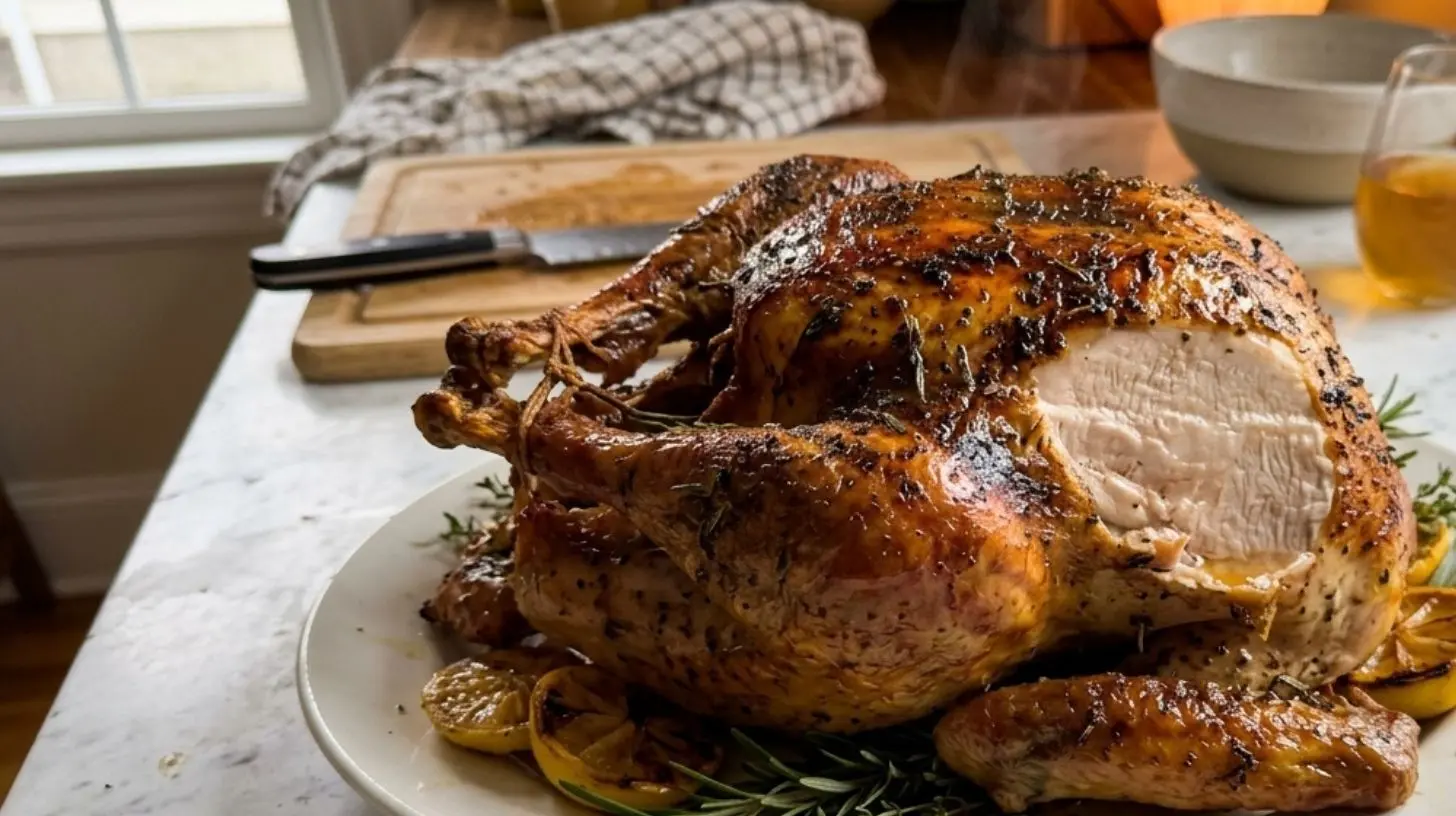
Best way to grow a 12 lb Brined Turkey
Learn how to properly brine and cook a 12 lb turkey for a tasty meal.
12 lb turkey
Salt
Pepper
Garlic powder
Onion powder
Olive oil
Herbs
Vegetables
Prepare the brine by mixing salt, sugar, and water in a large container.
Let the turkey sit in the brine overnight in the refrigerator.
Preheat the oven to the desired temperature.
Place the turkey in a roasting pan and season with salt, pepper, and herbs.
Add vegetables around the turkey in the roasting pan.
Roast the turkey in the oven until it reaches the desired internal temperature.
Let the turkey rest before carving and serving.
The Ultimate Guide to Perfectly Juicy Brined Turkey: A Step-by-Step Masterclass
Have you ever carved into a turkey only to be met with dry, flavorless meat? The secret to a show-stopping holiday centerpiece isn’t in the oven—it’s in the brine. A Brined Turkey is not just a recipe; it’s a game-changer that guarantees moisture, tenderness, and deep flavor in every bite. Preparing this dish at home not only saves you money compared to restaurant catering but also fills your kitchen with irresistible aromas that signal the start of a celebration. By mastering the science of brining, you’ll elevate your holiday meals and earn rave reviews from every guest at the table.
Ingredients & Kitchen Tools
For the Brine:
– 1 cup kosher salt (not table salt—it dissolves cleanly without making the turkey too salty)
– 1/2 cup brown sugar (adds subtle sweetness and aids browning)
– 1 gallon cold water (use filtered water for the cleanest taste)
– 1 tablespoon black peppercorns (whole, for aromatic infusion)
– 4 cloves garlic, smashed (releases allicin for savory depth)
– 4 sprigs fresh rosemary (or 2 teaspoons dried; woody herbs hold up well)
– 4 sprigs fresh thyme (or 1 teaspoon dried; don’t skip—it’s essential)
– 2 bay leaves (adds a subtle floral bitterness)
– 1 lemon, halved (citric acid tenderizes meat gently)
For the Turkey:
– 1 whole turkey (12–14 lbs) (thawed completely if frozen; check for giblets)
– 2 tablespoons olive oil or melted butter (helps crisping the skin)
– Optional: 1 onion, quartered and fresh herbs (for stuffing the cavity)
Kitchen Tools:
– Large stockpot or brining bag (at least 2–3 gallons; food-grade plastic bags work perfectly)
– Roasting pan with rack (rack prevents soggy bottom skin)
– Meat thermometer (instant-read or probe-style—this is non-negotiable)
– Sharp chef’s knife (for carving)
– Kitchen twine (optional, for trussing legs)
– Colander (for rinsing the turkey post-brine)
Prep Time & Cooking Schedule
Total Time: 13–15 hours (including brining)
– Brining Time: 12–24 hours (minimum 8 hours; 24 is ideal for deep penetration)
– Prep & Rest Time: 1 hour (for drying the skin before roasting)
– Roasting Time: 2.5–3 hours (at 350°F for a 12–14 lb bird)
– Resting Time: 20–30 minutes (crucial for juice redistribution)
Pro Planning Tip: Start brining the morning before your meal. For a Thanksgiving dinner at 4 PM, begin brining at 4 PM the day prior. This allows you to roast at 12:30 PM and serve by 4 PM sharp.
Step-by-Step Instructions
Step 1: Prepare the Brine
In your large stockpot, combine the kosher salt, brown sugar, peppercorns, garlic, rosemary, thyme, bay leaves, and lemon halves with 2 cups of water. Bring to a boil, stirring until the salt and sugar dissolve completely (about 3–4 minutes). Remove from heat and add the remaining 14 cups of cold water. Crucial tip: The brine must be completely cold before adding the turkey—warm brine can promote bacterial growth. Refrigerate uncovered for 30 minutes.
Step 2: Brine the Turkey
Remove the turkey from its packaging and take out the neck and giblets (reserve for gravy). Place the turkey in a clean brining bag or your stockpot. Pour the cooled brine over the bird, ensuring it’s fully submerged. Wet Brining is the most reliable method because the liquid penetrates deep into muscle fibers, breaking down proteins for unparalleled tenderness. Seal the bag tightly (squeeze out excess air) and refrigerate for 12–24 hours. For the best moisture retention, flip the bag halfway through brining.
Step 3: Rinse and Dry
After brining, remove the turkey and discard the brine. Rinse the bird thoroughly under cold running water—this removes surface salt and prevents an overly salty final dish. Pat the skin completely dry with paper towels. This step is non-negotiable: any moisture on the skin will prevent browning. Let the turkey sit uncovered in the refrigerator for 1 hour to air-dry the skin.
Step 4: Roast the Turkey
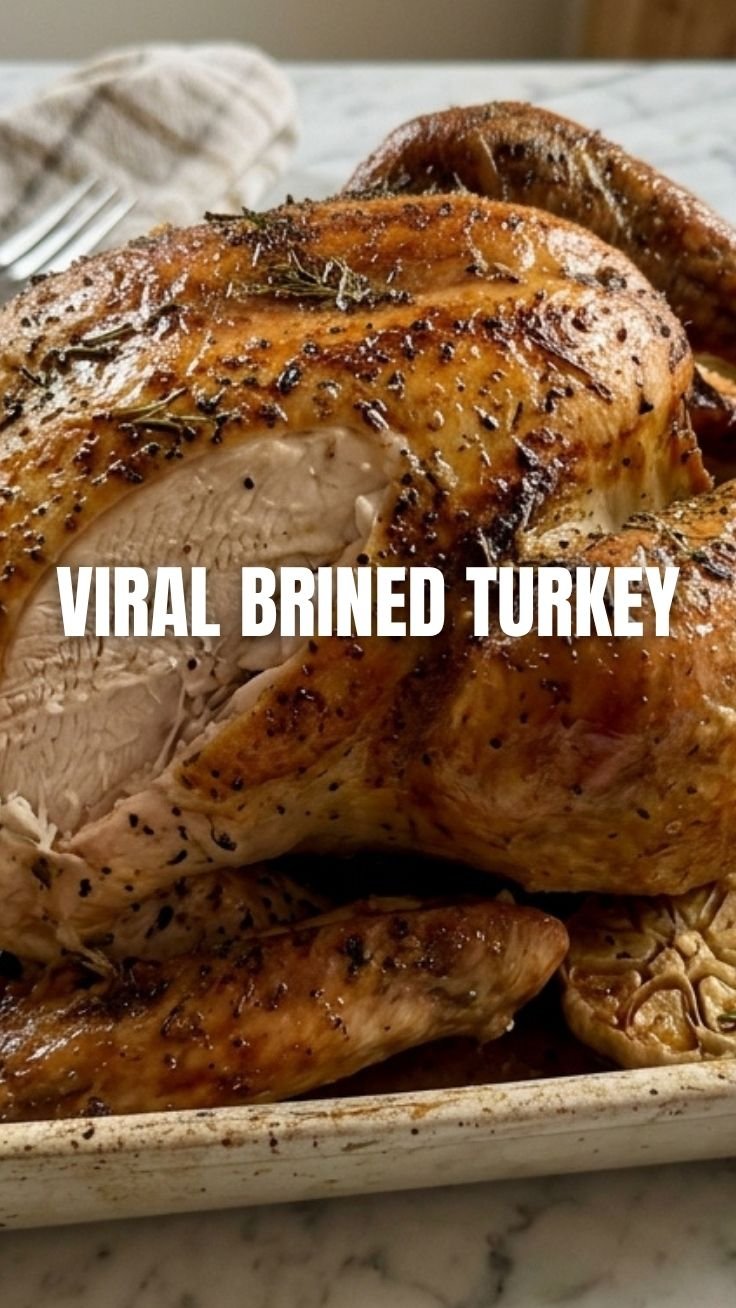
Preheat your oven to 350°F. Rub the turkey all over with olive oil or melted butter. Season lightly with fresh black pepper (skip salt—it’s already seasoned from the brine). Stuff the cavity with the quartered onion and extra fresh herbs. Truss the legs with kitchen twine (this ensures even cooking). Place the turkey breast-side up on a rack in the roasting pan. Roast until the internal temperature of the thickest part of the thigh reaches 165°F—about 2.5–3 hours. Texture cue: The skin should be deep golden brown and crispy to the touch. Baste every 45 minutes with pan drippings for extra shine.
Step 5: Rest and Carve
Remove the turkey from the oven and tent loosely with aluminum foil. Rest for 20–30 minutes—this allows juices to redistribute so your meat stays juicy rather than pooling on the cutting board. Carve and serve immediately.
Nutritional Benefits & Advantages
A Brined Turkey isn’t just delicious—it’s nutritionally smart. Turkey breast is an excellent lean protein source, offering about 25 grams of protein per 3-ounce serving with only 3 grams of fat (skinless). The brining process adds no significant fat or carbohydrates, making it keto and paleo-friendly. The mineral content from sea salt in the brine helps with hydration and electrolyte balance, while the herbs (rosemary, thyme) provide antioxidants like rosmarinic acid. Additionally, brining reduces the cooking time slightly (moisture conducts heat faster), meaning less muscle fiber breakdown and more nutrient retention. For those watching sodium, rest assured: most salt rinses off, leaving only the depth of flavor behind.
Tips Variations & Cooking Advice
Flavor Variations:
– Citrus-Herb Brine: Add 2 sliced oranges and 1 sliced grapefruit along with the lemon for bright, tangy notes.
– Spiced Brine: Include 1 tablespoon of allspice berries, 4 star anise, and 1 cinnamon stick for a warming, holiday twist.
– Maple-Glazed: Swap brown sugar for 1/2 cup pure maple syrup and brush with additional syrup during the last 30 minutes of roasting.
Alternative Cooking Methods:
– Spatchcocking: Butterfly the turkey by removing the backbone—this reduces roasting time to 90 minutes and ensures perfect even cooking.
– Smoking: Use the same Wet Brining method, but smoke the turkey at 225°F for 4–6 hours using fruitwood (apple or cherry) for a smoky-sweet profile.
– Deep Frying: Skip the Brined Turkey step if deep frying—brining adds moisture that can cause dangerous oil splattering. Instead, dry-brine.
Dietary Adaptations:
– Gluten-Free: All ingredients are naturally gluten-free, but double-check your spice blends (some are processed in facilities with wheat).
– Dairy-Free: Use olive oil instead of butter for the skin rub.
Common Mistakes to Avoid
– Brining Too Long: Staying in the brine for over 24 hours can make the meat mushy and overly salty. Stick to the 12–24 hour window.
– Using Table Salt: Iodized table salt has anti-caking agents that impart a metallic taste. Always use kosher or sea salt.
– Skipping the Dry Step: Roasting with damp skin traps steam, preventing that coveted crispy crackling. Air-chill for at least 1 hour.
– Overcrowding the Pan: Too many vegetables around the turkey hinder air circulation. Keep the pan clear for even heat flow.
– Relying on Pop-Up Timers: The plastic pop-up timers in store-bought turkeys are notoriously inaccurate. Trust your instant-read thermometer.
Storage & Meal Prep Tips
– Refrigeration: Store leftover carved turkey in an airtight container for up to 4 days. Keep dark and white meat separate (dark meat stays moist longer). Add a splash of chicken broth before reheating to prevent drying.
– Freezing: Freeze sliced turkey in vacuum-sealed bags for up to 3 months. Thaw overnight in the fridge. Note that reheated skin will be chewy—remove it before freezing.
– Reheating: For best texture, reheat in a 300°F oven covered with foil and a tablespoon of broth for 15 minutes, then uncover for 5 minutes to crisp. Avoid microwaves unless you’re okay with rubbery meat.
– Brine Reuse: Never reuse brine—it’s raw poultry bath. But you can freeze it for up to 1 month and use it only for another round of brining if you’re certain it wasn’t contaminated.
Conclusion
Mastering a Brined Turkey is the single most impactful step you can take toward a holiday feast that’s juicy, flavorful, and consistently impressive. The science behind Wet Brining transforms—not just the taste, but your entire cooking confidence. Whether you’re hosting a Thanksgiving for 20 or a Sunday dinner for four, this method delivers results that seem too good to be true. Now it’s your turn: try this recipe, share your golden-brown masterpiece on social media, and let us know if you prefer citrus or spiced variations. Your perfect turkey awaits!
FAQs
How long can I brine a turkey?
For optimal results, brine for 12–24 hours. Going beyond 24 hours risks mushy meat and excessive saltiness. If you’re short on time, 8 hours will still improve moisture.
Can I skip the rinsing step?
No. Rinsing removes surface salt that would otherwise make the skin overly salty. Even if you’re short on time, a quick rinse is mandatory.
What if I can’t find kosher salt?
Use sea salt or coarse Himalayan pink salt. Table salt is too fine and dissolves too quickly, risking over-salting. Reduce amount by 25% if using table salt.
My turkey skin is soggy—what went wrong?
Either you didn’t dry the skin enough (aim for an hour uncovered in the fridge) or the roasting rack was too low in the pan. Elevate the bird at least 2 inches above the drippings.
Can I brine a frozen turkey?
Yes, but thaw it completely in the refrigerator first (24 hours per 4–5 lbs). Brining a partially frozen turkey won’t allow the brine to penetrate evenly.
Is Wet Brining safe for food allergies?
Yes, if you avoid cross-contamination. However, always check spice blends for hidden allergens. The base brine (salt, sugar, water, herbs) is top-8 allergen-free.
Best way to grow a 12 lb Brined TurkeyBrined Turkey
Equipment
- Large Pot
- Large Food-Safe Container
- Paper Towels
- Roasting Rack
- Roasting Pan
- Meat Thermometer
- Aluminum Foil
Ingredients
Main Ingredients
- 1 whole 12 lb Turkey
- 1 cup Kosher Salt
- 1/2 cup Brown Sugar
- 1 gallon Vegetable Broth
- 3 Rosemary Sprigs
- 3 Thyme Sprigs
- 4 Bay Leaves
- 6 Garlic Cloves, crushed
- 1 tablespoon Black Peppercorns
- 2 Oranges, halved
Instructions
Brining the Turkey
- In a large pot, combine kosher salt, brown sugar, and 2 cups of vegetable broth; bring to a simmer, stirring until salt and sugar dissolve, then remove from heat.
- Add the remaining vegetable broth, rosemary, thyme, bay leaves, crushed garlic, peppercorns, and halved oranges to the pot, then allow the mixture to cool completely.
- Once cooled, submerge the 12 lb turkey in the brine in a large food-safe container, ensuring it is fully immersed; refrigerate for 12-24 hours.
- After brining, remove the turkey from the liquid, discard the brine, and pat the turkey completely dry with paper towels.
Roasting the Turkey
- Preheat your oven to 425°F (220°C) and place the turkey on a roasting rack in a large roasting pan.
- Roast the turkey for 30 minutes at 425°F (220°C) to brown the skin, then reduce the oven temperature to 350°F (175°C).
- Continue roasting for an additional 2-2.5 hours, or until a meat thermometer inserted into the thickest part of the thigh reads 165°F (74°C).
- Once cooked, remove the turkey from the oven, tent it loosely with foil, and let it rest for 20-30 minutes before carving and serving.