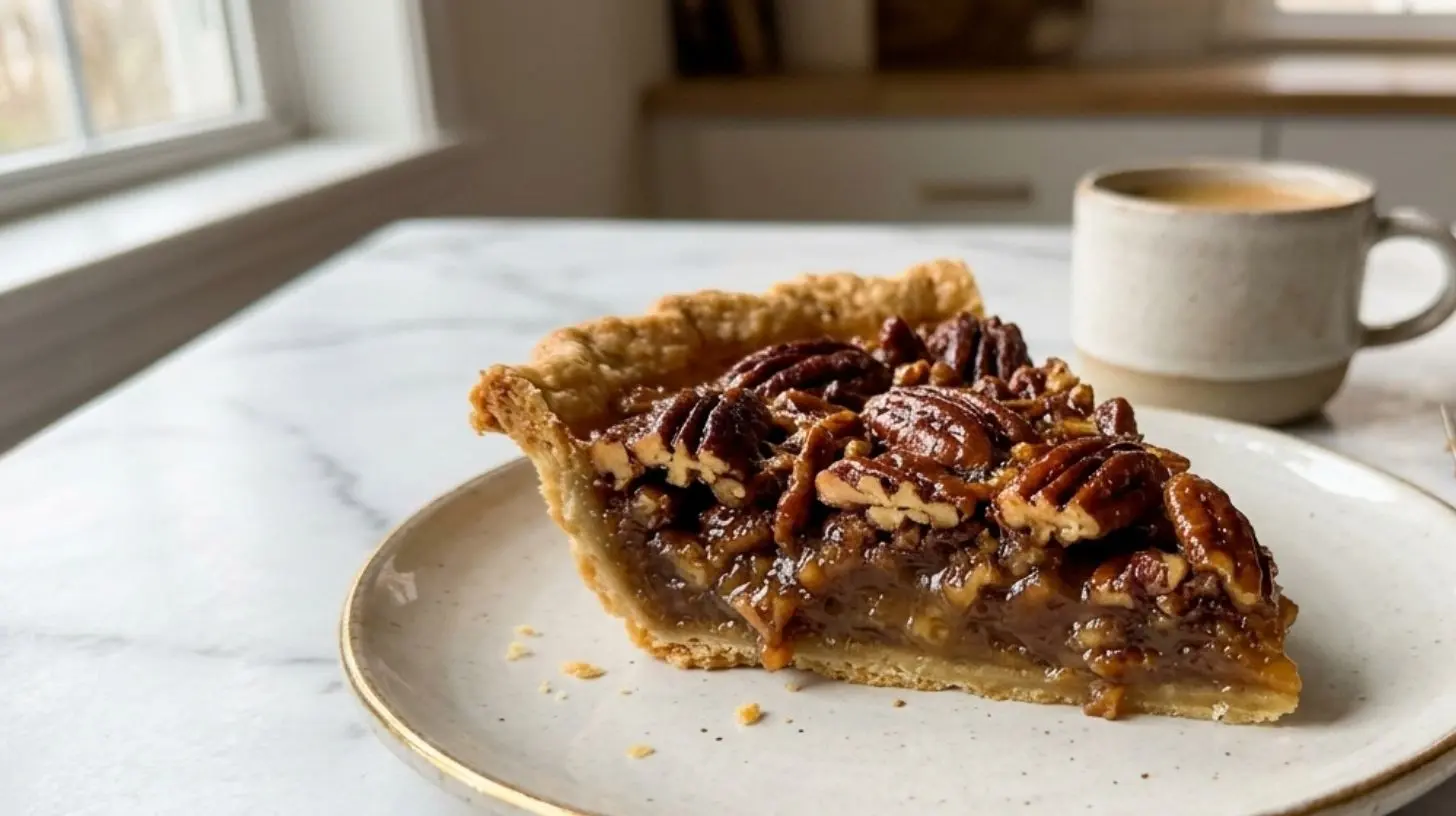
Best way to grow a perfect Pecan Pie
Learn how to make a delicious pecan pie from scratch.
Pecans
Butter
Sugar
Eggs
Pie crust
Mix melted butter and sugar together in a bowl.
Add eggs to the mixture and stir well.
Fold in the pecans gently.
Pour the mixture into the pie crust.
Bake in the oven for 45 minutes until golden brown.
Why This Homemade Pecan Pie Will Become Your Holiday Tradition
Have you ever wondered why bakery-bought pies never quite capture that magical balance of buttery crust, gooey caramelized filling, and perfectly toasted pecans? The answer lies in the love and precision of homemade preparation. When you master a classic Pecan Pie, you’re not just baking a dessert—you’re creating a centerpiece that brings people together. The beauty of making it at home is controlling every ingredient, ensuring fresh nuts, real butter, and no preservatives. Plus, you can explore countless pecan recipes once you understand the fundamentals of this Southern staple.
—
Ingredients & Kitchen Tools (H2)
For this Pecan Pie, gather precise ingredients that guarantee a rich, satisfying result:
For the Crust (Homemade or Store-Bought):
– 1¼ cups all-purpose flour (sifted for lightness)
– ½ teaspoon salt (enhances flavor)
– ½ cup cold unsalted butter (cubed; cold fat creates flakiness)
– 3–4 tablespoons ice water (adds moisture without activating gluten)
For the Filling:
– 1 cup light corn syrup (essential for classic texture; substitute with honey or maple syrup)
– 1 cup packed brown sugar (dark or light; dark adds deeper molasses notes)
– 3 large eggs (room temperature for even emulsification)
– ¼ cup melted unsalted butter (adds richness)
– 1 teaspoon vanilla extract (pure is preferred)
– ¼ teaspoon salt (balances sweetness)
– 1½ cups pecan halves (fresh, not rancid—toast first for extra depth)
Kitchen Tools:
– 9-inch pie dish (glass or ceramic for even heat distribution)
– Mixing bowls (stainless steel or glass)
– Whisk and rubber spatula
– Rolling pin (for crust)
– Pie weights or dried beans (for blind baking)
– Cooling rack
Optional substitutions: For corn syrup concerns, try agave nectar or Lyle’s golden syrup. Gluten-free crust works beautifully with a 1:1 baking blend.
—
Prep Time & Cooking Schedule (H2)

Planning is key to stress-free baking. Here’s your timeline:
| Stage | Time | Notes |
|——-|——|——-|
| Dough chilling | 1 hour | Don’t skip—cold dough prevents shrinking |
| Blind baking crust | 15 minutes | Prevents soggy bottom; use weights |
| Filling prep | 10 minutes | While crust bakes |
| Baking pie | 45–55 minutes | Until center jiggles slightly |
| Cooling | 2 hours minimum | Essential for setting; 4 hours ideal |
Total active time: about 30 minutes. Total time from start to slice: roughly 4 hours (mostly passive). The pie needs patience—cutting too early leads to a runny mess.
—
Step-by-Step Instructions (H2)
1. Prepare the Crust
Combine flour and salt in a bowl. Cut in cold butter using a pastry blender until pea-sized crumbs form. Drizzle ice water, 1 tablespoon at a time, mixing until dough holds together when squeezed. Form into a disc, wrap in plastic, and refrigerate for at least 1 hour.
Pro tip: If dough cracks when rolling, let it warm slightly at room temperature for 5 minutes.
2. Blind Bake the Crust
Roll chilled dough to ⅛-inch thickness on a floured surface. Transfer to pie dish, trim edges, and crimp decoratively. Line with parchment and fill with pie weights. Bake at 375°F for 15 minutes. Remove weights and parchment, then bake 5 more minutes until lightly golden.
3. Toast the Pecans
Spread pecan halves on a baking sheet. Toast at 350°F for 5–7 minutes until fragrant. Watch closely—they burn quickly. This step elevates the nutty flavor dramatically.
4. Make the Filling
Whisk corn syrup and brown sugar together until smooth. Beat in eggs one at a time. Stir in melted butter, vanilla, and salt. The mixture should be glossy and homogeneous.
5. Assemble and Bake
Arrange toasted pecans evenly in the pre-baked crust. Pour filling slowly over the nuts—they will float, creating that iconic top layer. Bake at 350°F for 45–55 minutes. The perfect Pecan Pie has a set edge but a slight jiggle in the center (like gelatin). If the crust browns too quickly, tent with foil.
Temperature cue: Internal temperature should reach 175°F when done. Avoid overbaking, which makes the filling weep.
This classic dessert remains one of my favorite pecan recipes because the nuts toast further during baking, releasing their oils for unbeatable flavor.
6. Cool Completely
Place on a wire rack. Cool 2 hours minimum—this allows the custard to set properly. Refrigerating speeds cooling but may cause condensation.
—
Nutritional Benefits & Advantages (H2)
While Pecan Pie is undeniably indulgent, pecans themselves offer surprising health perks. Pecans are rich in monounsaturated fats (heart-healthy), magnesium (muscle function), and vitamin E (antioxidant). A single ounce provides 10% of daily fiber. The butter and eggs add protein and fat-soluble vitamins. Making it at home allows you to moderate sugar (try reducing brown sugar to ¾ cup) and avoid high-fructose corn syrup often found in commercial versions. This homemade version contains roughly 380 calories per slice versus 450+ in store-bought alternatives.
—
Tips Variations & Cooking Advice (H2)
Flavor Variations:
– Bourbon Pecan Pie: Replace vanilla with 2 tablespoons bourbon—adds warmth.
– Chocolate Pecan Pie: Fold in ½ cup dark chocolate chips before baking.
– Maple Pecan Pie: Swap corn syrup for pure maple syrup (reduce sugar slightly).
Dietary Adaptations:
– Gluten-free: Use almond flour crust or gluten-free pastry blend.
– Dairy-free: Substitute coconut oil for butter in crust; use plant-based butter in filling.
– Low-sugar: Try sugar-free syrup and monk fruit sweetener.
Cooking Advice:
– For extra crunch, scatter chopped pecans on top before baking.
– Pre-baking crust prevents a soggy bottom—non-negotiable.
– Let eggs come to room temperature for smoother filling.
—
Common Mistakes to Avoid (H2)
1. Skipping crust pre-baking: Leads to raw, doughy bottom layer. Always blind bake.
2. Overmixing filling: Whisk just until combined—too much air causes cracks.
3. Baking too long: Filling continues setting as it cools. Remove when center still wobbles.
4. Using old pecans: Rancid nuts ruin flavor. Always taste before using.
5. Cutting too early: Runny pie disaster! Cool minimum 2 hours; refrigerate for cleaner slices.
—
Storage & Meal Prep Tips (H2)
Refrigeration: Cover with foil or plastic wrap. Stays fresh 4–5 days. The filling remains firm when cold.
Freezing: Wrap tightly in plastic, then foil. Freeze up to 3 months. Thaw overnight in fridge before serving. Note that texture softens slightly but flavor remains excellent.
Reheating: Warm slices at 300°F for 10–15 minutes. For crispier crust, use a toaster oven. Microwaving is quick but softens crust.
Meal prep tip: Make crust and toast pecans 1–2 days ahead. Assemble and bake fresh on serving day.
—
Conclusion (H2)
Mastering this Pecan Pie rewards you with a dessert that surpasses any bakery version—deeply caramelized, perfectly nutty, and endlessly shareable. The joy of homemade baking lies in customization: adjust sweetness, experiment with spices, or try different shapes like mini tarts. Remember, the best pecan recipes are built on practice and passion. I encourage you to try this recipe for your next gathering, snap a photo of your creation, and share your results. For even more inspiration, explore our collection of pecan recipes to keep the nutty goodness flowing all year round.
—
FAQs (H2)
Can I use maple syrup instead of corn syrup?
Yes. Maple syrup works beautifully, though the filling will be slightly thinner and less sweet. Reduce brown sugar to ½ cup to balance the flavor.
Why did my pie crust shrink during baking?
Too much water or insufficient chilling causes shrinkage. Ensure dough is cold before rolling and use pie weights to anchor the crust during blind baking.
How do I know when pecan pie is fully baked?
Jiggle test: The center should wobble like gelatin while the edges are set. Temperature test: 175°F internal temperature. The top should be deep golden brown.
Can I make this gluten-free?
Absolutely. Use a gluten-free flour blend for the crust (add ¼ teaspoon xanthan gum if not included). The filling is naturally gluten-free.
Why is my pie runny after cooling?
Common causes: underbaking (remove when center jiggles only slightly), insufficient cooling (needs 2+ hours), or too much corn syrup. Let pie cool completely at room temperature before slicing.
Best way to grow a perfect Pecan Pie
Equipment
- Shovel
- Gardening gloves
- Pruning shears
Ingredients
Pecan Tree Planting
- 1 Pecan sapling
- 2 bags Well-draining soil
- 1 bag Compost
- Water as needed
- Shovel for digging
- Gardening gloves
Pecan Tree Care
- 1 cup Fertilizer pecan tree specific
- Pruning shears for maintenance
- Pest control spray organic recommended
Instructions
Planting the Pecan Tree
- Choose a sunny spot with well-draining soil.
- Dig a hole twice as wide and as deep as the root ball of the pecan sapling.
- Mix the removed soil with compost to enrich it.
- Carefully place the sapling in the hole, ensuring the root collar is level with the ground.
- Backfill the hole with the soil mixture, gently tamping it down to remove air pockets.
- Water thoroughly after planting until the soil is saturated.
Caring for Your Pecan Tree
- Water regularly, especially during dry periods, to keep the soil consistently moist but not waterlogged.
- Fertilize the tree annually in early spring with a pecan tree-specific fertilizer.
- Prune young trees to establish a strong central leader and remove any dead or crossing branches.
- Monitor for pests and diseases, applying organic pest control as needed, and consider consulting a local agricultural extension for specific regional advice.
Harvesting Pecans
- Pecans are typically ready for harvest in the fall after they have fallen from the tree.
- Shake the branches gently or use a long pole to dislodge stubborn nuts.
- Gather the fallen pecans and remove any debris or husks.