Best Way to Grow Your 5 Healthy Fall Soup Recipes
Learn how to make delicious and healthy soups to enjoy this fall season.
Pumpkin
Carrots
Potatoes
Onion
Chicken Broth
Peel and chop all the vegetables.
Boil the vegetables in chicken broth until soft.
Blend the vegetables until smooth.
Simmer the soup on low heat for 10 minutes.
Warm Up This Autumn: Your Ultimate Guide to Healthy Fall Soup Recipes
What if your bowl of soup could do more than just warm you on a chilly evening—what if it could actively support your heart, boost your immunity, and save you time during the week? That’s the promise of these healthy fall soup recipes, crafted to turn seasonal produce into nourishing meals you’ll crave all season long. Preparing them at home means you control the sodium, skip the preservatives, and pack in nutrient-dense ingredients without sacrificing flavor. Whether you’re cooking for one or feeding a family, these soups are the cozy, guilt-free answer to autumn’s call—plus, they double as heart healthy soups when made with smart swaps like low-sodium broth and lean protein.
—
Ingredients & Kitchen Tools
For the Base Soup (serves 6)
– Butternut squash (1 medium, ~3 lbs) – Peeled, seeded, cubed; natural sweetness and beta-carotene.
– Carrots (3 large) – Diced; add earthy sweetness and vitamin A.
– Celery (3 stalks) – Chopped; aromatics that boost savory depth.
– Yellow onion (1 large) – Diced; base flavor, prebiotic fiber.
– Garlic (4 cloves) – Minced; immune-supporting allicin.
– Low-sodium vegetable or chicken broth (6 cups) – Control salt; use bone broth for extra collagen.
– Canned diced tomatoes (14 oz) – Unsalted, fire-roasted for smokiness.
– Cooked chickpeas (1 can, drained) or shredded rotisserie chicken – Protein choice; chickpeas add fiber.
– Fresh kale (3 cups, stems removed) – Torn; iron, vitamins K and C.
– Dried thyme (1 tsp) + smoked paprika (½ tsp) + cayenne (¼ tsp) – Warm spices; adjust heat to taste.
– Olive oil (2 tbsp) – For sautéing; heart-healthy monounsaturated fats.
– Salt & black pepper – To season; use sparingly if broth is salted.
Optional Substitutions
– Swap squash for sweet potato or pumpkin.
– Use coconut milk (1 cup) instead of extra broth for creamy texture.
– Replace kale with Swiss chard or spinach (add at the end).
Kitchen Tools
– Large heavy-bottomed pot (5–6 qt) – Even heat distribution prevents scorching.
– Chef’s knife & cutting board – For prep.
– Immersion blender or countertop blender – For smooth or semi-chunky texture.
– Ladle – For serving.
– Measuring cups & spoons – Precision for spices.
—
Prep Time & Cooking Schedule

– Prep time: 20 minutes (peeling, chopping, mincing)
– Cook time: 35 minutes
– Resting time: 5 minutes (allows flavors to meld)
– Total time: 1 hour
Planning tip: Prep veggies the night before and store in airtight bags. Make a double batch on Sunday—this soup tastes even better on day two.
—
Step-by-Step Instructions
1. Sauté the aromatics – Heat olive oil in your large pot over medium heat. Add onion, carrots, and celery. Cook 6–8 minutes until softened and fragrant, stirring occasionally. Add garlic and cook 1 more minute.
2. Bloom the spices – Stir in thyme, smoked paprika, and cayenne. Cook 30 seconds until aromatic. This unlocks fat-soluble flavors.
3. Add squash and broth – Pour in the broth and add cubed butternut squash. Bring to a boil, then reduce to a simmer. Cover and cook 15 minutes until squash is fork-tender.
4. Incorporate tomatoes and protein – Stir in diced tomatoes with their juices and your chosen protein (chickpeas or chicken). Simmer uncovered 10 minutes to thicken slightly.
5. Blend (optional) – For a creamy texture, use an immersion blender directly in the pot. Pulse until smooth or leave half-chunky for more bite.
6. Finish with greens – Add torn kale and cook 3 minutes until wilted. Season with salt and pepper to taste.
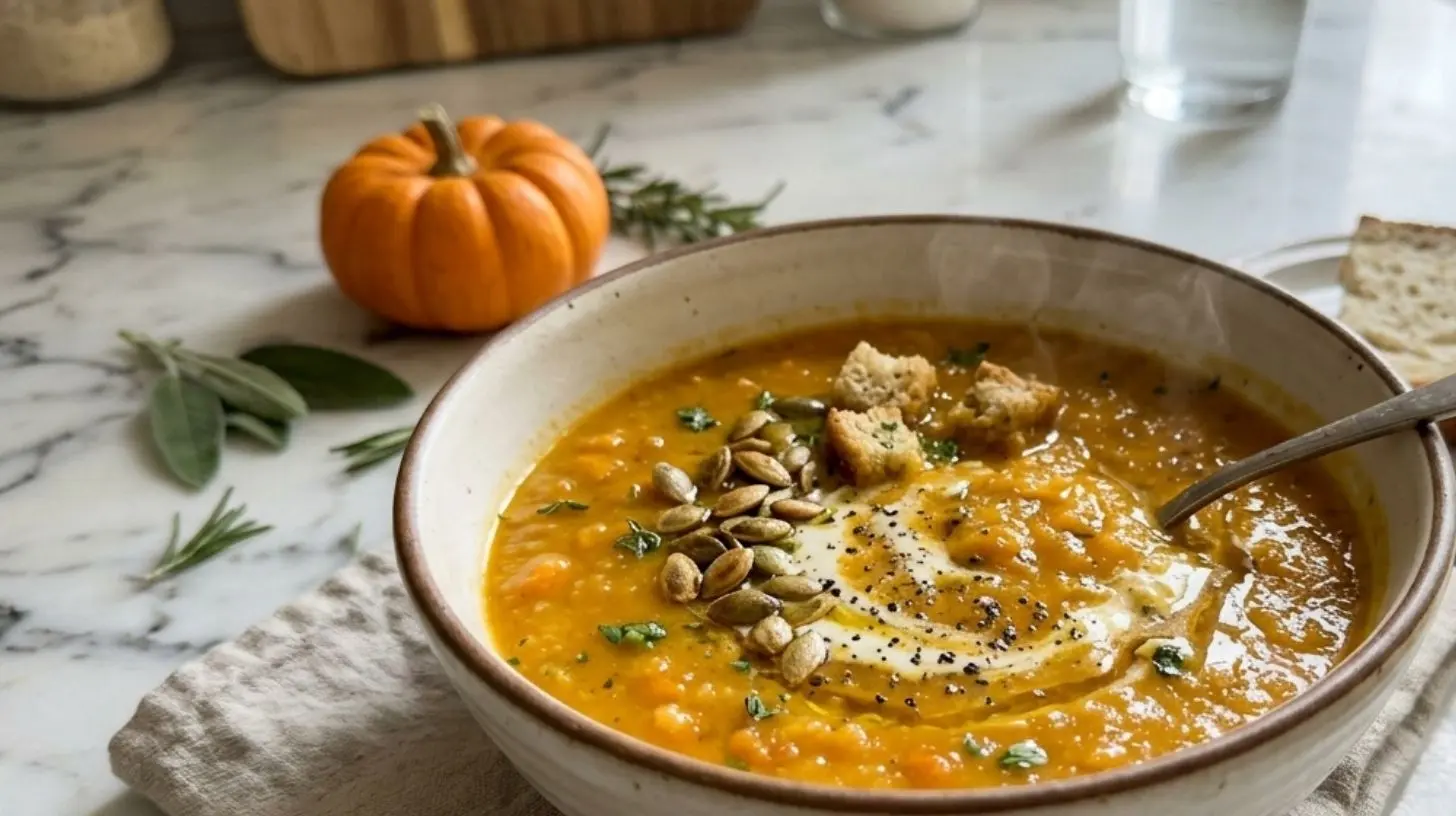
7. Serve & garnish – Ladle into bowls. Top with a dollop of Greek yogurt, pumpkin seeds, or a drizzle of olive oil. Enjoy immediately.
> Pro tip: For perfectly tender kale, don’t boil aggressively—gentle simmering preserves its vibrant color and avoids bitterness. These healthy fall soup recipes become heart healthy soups when you choose low-sodium broth and skip the cream.
—
Nutritional Benefits & Advantages
This soup is a nutritional powerhouse:
– Butternut squash provides vitamin A (over 450% DV per serving) for eye health and immunity.
– Kale delivers calcium, vitamin K, and antioxidants that reduce inflammation.
– Chickpeas add 12g fiber per cup, supporting digestion and stabilizing blood sugar.
– Olive oil contributes heart-protective polyphenols.
– Low sodium (by using unsalted broth) keeps blood pressure in check.
Per serving (1.5 cups): ~220 calories, 8g protein, 8g fiber, 35g carbs, 6g fat. Naturally vegan and gluten-free—ideal for dietary flexibility.
—
Tips, Variations & Cooking Advice
– Flavor variations: Add a tablespoon of curry powder or ginger for an Indian twist; swap thyme for rosemary and sage for a woodsy profile.
– Ingredient swaps: Use frozen cubed squash to save prep time. Replace chickpeas with white beans or lentils.
– Cooking methods: For a slow cooker, sauté aromatics first, then add all ingredients except kale; cook on low 6–8 hours. Add kale 20 minutes before serving.
– Dietary adaptations: Make it dairy-free by omitting Greek yogurt; it’s already gluten-free. For lower carbs, reduce squash and increase kale.
– Portion changes: Freeze half in individual containers for quick lunches.
—
Common Mistakes to Avoid
1. Overcooking the greens – Kale becomes slimy if boiled too long. Add only at the end.
2. Skipping the spice bloom – Adding dry spices directly to liquid mutes their flavor. Always sauté first.
3. Using too much salt early – Broth and tomatoes already contain sodium. Season at the end.
4. Blending too hot – Blending hot liquid in a countertop blender can cause explosions. Cool slightly, or use an immersion blender.
5. Thin texture – If soup is too watery, simmer uncovered 10 more minutes to reduce, or mash some squash against the pot wall.
—
Storage & Meal Prep Tips
– Refrigeration: Cool soup completely, then store in airtight containers for up to 5 days. Flavor improves overnight.
– Freezing: Portion into freezer-safe bags or jars (leave 1-inch headspace). Freeze for up to 3 months. Thaw overnight in fridge.
– Reheating: Warm on stovetop over medium-low heat, stirring occasionally. Add a splash of broth or water if too thick. Avoid microwaving in sealed containers—pressure can build.
– Meal prep bonus: Make a double batch; use half as is and puree the rest for a silky base to add different proteins later.
—
Conclusion
There you have it—a bowl of warmth that tastes like autumn should, without the hidden fats or excess salt of store-bought versions. By following these healthy fall soup recipes, you’re not just making dinner; you’re building a meal that nourishes your body with fiber, vitamins, and anti-inflammatory spices. They are truly heart healthy soups that align with a balanced lifestyle—proving that comfort food and wellness can coexist beautifully. Try this recipe tonight, snap a photo, and share your creation in the comments. While you’re here, explore more seasonal dishes to keep your fall menu vibrant and satisfying.
—
FAQs
1. Can I use frozen butternut squash instead of fresh?
Absolutely. Use about 4 cups of frozen cubes. No need to thaw—just add directly to the pot and adjust cooking time by 5 minutes.
2. How can I thicken the soup without cream?
Mash some of the cooked squash with a potato masher, or stir in 2 tablespoons of ground flaxseed or almond flour. A cornstarch slurry also works (1 tbsp cornstarch mixed with 2 tbsp cold water).
3. My soup tastes bland—what went wrong?
Likely under-salted or the spices weren’t bloomed. Add a squeeze of lemon juice, a dash of smoked paprika, or a pinch of salt. Umami boosters like a teaspoon of miso paste or nutritional yeast help.
4. Can I make this in an Instant Pot?
Yes. Use Sauté mode for aromatics, then add broth, squash, tomatoes, and protein. Pressure cook on High for 8 minutes, quick release, then stir in kale and use immersion blender if desired.
5. How do I keep the soup from turning brown after blending?
Oxidation causes browning. Stir in a splash of lemon juice or apple cider vinegar right after blending—acidity preserves color and brightens flavor.
Best way to grow your 5 healthy fall soup recipes
Equipment
- Large pot or Dutch oven
- Cutting board
- Chef's knife
- Measuring cups and spoons
- Immersion blender or standard blender (for creamy soups)
- Ladle
Ingredients
General Ingredients
- 1000 g Assorted fall vegetables (e.g., pumpkin, butternut squash, carrots, sweet potatoes, kale, spinach)
- 2000 ml Broth (vegetable or chicken)
- 200 g Aromatics (e.g., onions, garlic, ginger)
- 50 g Herbs and spices (e.g., thyme, rosemary, sage, bay leaf, nutmeg, cinnamon, salt, pepper)
- 250 g Legumes or grains (e.g., lentils, chickpeas, quinoa, wild rice)
- 100 ml Healthy fats (e.g., olive oil, coconut milk)
Specific Soup Ingredients (Example for one soup)
- 500 g Butternut squash, peeled and cubed
- 150 g Carrots, chopped
- 100 g Onion, chopped
- 15 g Garlic cloves, minced
- 1000 ml Vegetable broth
- 200 ml Coconut milk (light)
- 10 g Curry powder
- 5 g Fresh ginger, grated
- 5 g Salt and pepper to taste
Instructions
Preparation
- Gather all your ingredients for the chosen soup recipe and prepare them by washing, peeling, and chopping as needed.
- Pre-heat your pot or Dutch oven over medium heat and add a tablespoon of healthy fat like olive oil or coconut oil.
Cooking
- Sauté the aromatics such as onions, garlic, and ginger until they are fragrant and translucent, usually about 5-7 minutes.
- Add the harder root vegetables like squash, carrots, and sweet potatoes to the pot and cook for 5-10 minutes, stirring occasionally, to begin softening them.
- Pour in the broth and add any herbs, spices, and legumes or grains; bring the mixture to a boil, then reduce heat and simmer partially covered until vegetables are tender.
- For creamy soups, carefully blend a portion or all of the soup using an immersion blender or by transferring batches to a regular blender until smooth, then return to the pot.
- Stir in any leafy greens like kale or spinach during the last 5-10 minutes of cooking until they are wilted, and if using, add coconut milk or another healthy fat for richness.
- Taste and adjust seasonings as needed with additional salt, pepper, or other spices to achieve your desired flavor profile, and serve hot.
Serving Suggestions
- Serve the autumn soups warm, accompanied by a sprinkle of fresh herbs, a swirl of extra virgin olive oil, or a handful of toasted seeds for added texture and flavor.