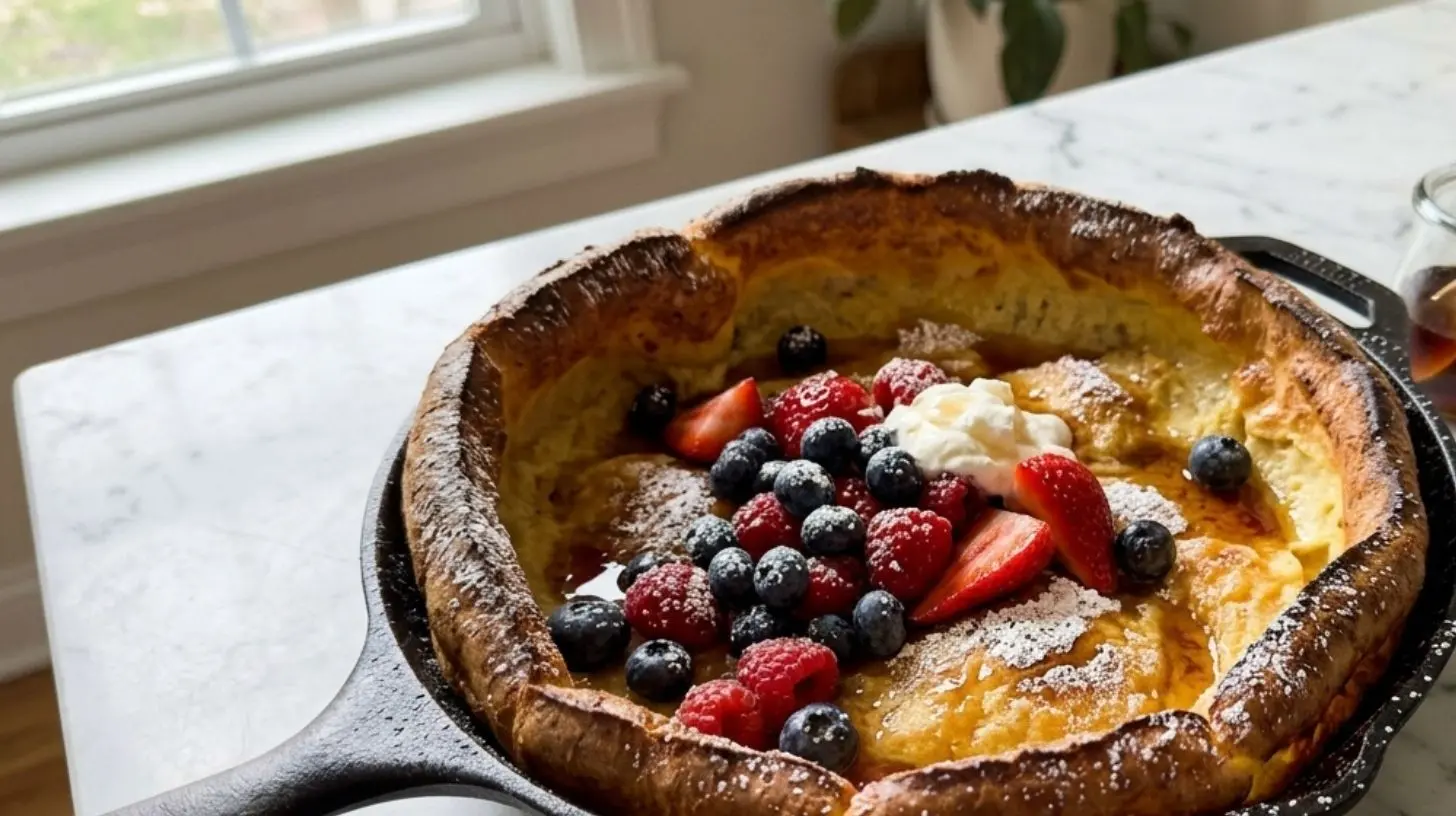
Dutch Baby Pancake
A quick recipe to make a delicious 6-inch Dutch Baby Pancake.
Flour
Milk
Eggs
Butter
Salt
Preheat the oven to 425°F.
Whisk together flour, milk, eggs, and a pinch of salt.
Melt butter in a cast-iron skillet in the oven.
Pour the batter into the hot skillet.
Bake for 15-20 minutes until puffed and golden.
The Ultimate Guide to Making a Perfect Dutch Baby Pancake at Home
Have you ever craved a breakfast that feels both indulgent and effortless? Imagine a dish that puffs up dramatically in the oven, creating golden, buttery edges with a soft, custard-like center. If you’ve been searching for that perfect morning treat, you’re in the right place. This Dutch Baby Pancake is a showstopper that requires minimal effort yet delivers maximum impact—and making it at home saves you from expensive brunch outings while filling your kitchen with an irresistible aroma.
Preparing this recipe at home is valuable because it transforms simple pantry staples into a restaurant-quality dish in under 30 minutes. Whether you call it a Dutch Baby Pancake or a German Pancake, this versatile creation welcomes endless customizations. Let’s dive into everything you need to know to master this breakfast classic.
Ingredients & Kitchen Tools
For the Perfect Batter
– 3 large eggs – Bring to room temperature for better rise
– ½ cup all-purpose flour – Sifted to avoid lumps
– ½ cup whole milk – Warm milk helps the batter incorporate smoothly
– 1 tablespoon granulated sugar – Adds subtle sweetness
– 1 teaspoon vanilla extract – Enhances the aromatic profile
– ¼ teaspoon salt – Balances flavors
– 2 tablespoons unsalted butter – For the pan; don’t substitute oil
Kitchen Essentials
– 10-inch cast-iron skillet – Retains heat best for that dramatic puff
– Blender or whisk – Blender ensures silky-smooth batter
– Measuring cups and spoons
– Oven mitts – The handle gets extremely hot
– Optional: Lemon wedges and powdered sugar for serving
Prep Time & Cooking Schedule
Total Time: 25 minutes | Prep Time: 5 minutes | Cooking Time: 18-20 minutes | Resting Time: 5 minutes (for batter)
Plan this recipe when you have a solid 25-minute window. The batter needs no more than 5 minutes to rest—longer isn’t necessary. Preheat your oven while you prepare the ingredients, and serve immediately as the pancake deflates quickly.
Step-by-Step Instructions
1. Preheat oven to 425°F with the cast-iron skillet inside for 10 minutes. This hot pan is crucial for the Dutch Baby Pancake to achieve its signature puff.
2. Blend the batter: Combine eggs, flour, milk, sugar, vanilla, and salt in a blender for 20 seconds until completely smooth. Scrape down sides if needed.
3. Rest the batter: Pour into a measuring cup and let sit for 5 minutes while the oven finishes preheating. This allows gluten to relax.
4. Add butter: Carefully remove the hot skillet. Drop in 2 tablespoons butter and swirl until melted and sizzling.
5. Pour carefully: Immediately pour batter into the center of the hot butter. Do not stir.
6. Bake without peeking: Place in preheated oven for 18-20 minutes. The German Pancake will climb the sides dramatically. Look for deep golden brown edges and a puffy center.
7. Serve instantly: Slide onto a plate. The pancake will deflate within minutes. Top with powdered sugar, lemon juice, or fresh berries.
Nutritional Benefits & Advantages
This dish offers surprising nutritional value despite its decadent taste. Each serving (one-quarter of a large pancake) provides 12g protein from eggs, supporting muscle repair. The Dutch Baby Pancake contains less sugar than traditional pancakes at only 5g per serving. Eggs supply choline for brain health, while the butter provides vitamin A for vision. Compared to waffles, this has 40% fewer carbohydrates per serving, making it a smarter indulgent breakfast choice.
Tips Variations & Cooking Advice
Flavor Boosters: Add ¼ teaspoon cinnamon or nutmeg to the batter. Try 1 tablespoon of orange zest for a citrus twist.
Dietary Swaps: For a gluten-free version, substitute 1:1 gluten-free flour—add 1 extra tablespoon of milk for moisture. For dairy-free, use oat milk and coconut oil, though the puff will be slightly reduced.
Texture Secrets: The Dutch Baby Pancake works best with eggs at room temperature. Cold eggs create a less dramatic rise. If using a stainless steel pan instead of cast iron, increase oven temperature to 450°F.
Common Mistakes to Avoid
– Skipping pan preheating: The single most critical step. A cold pan won’t create steam, preventing the Dutch Baby Pancake from puffing.
– Over-blending the batter: Blend only until smooth. Over-blending develops too much gluten, creating a tough pancake.
– Opening the oven: Peeking releases heat and deflates the German Pancake prematurely. Use the oven light instead.
– Using cold ingredients: Milk and eggs straight from the fridge reduce the chemical reaction needed for rise.
Storage & Meal Prep Tips
Leftovers keep refrigerated in an airtight container for up to 2 days. To reheat, place in a 350°F oven for 5 minutes on a baking sheet—microwaving destroys the texture. Freeze individual slices between parchment paper for up to 1 month, though the texture becomes slightly denser. For meal prep, make the batter up to 24 hours ahead and store covered in the refrigerator.
Conclusion
The Dutch Baby Pancake is a triumph of simplicity—five ingredients, one hot pan, and a few minutes of patience create a breakfast that feels special without the effort of traditional pancakes. Whether you call it a German Pancake or a Dutch baby, this recipe proves that the best meals often come from the simplest techniques. Try it this weekend: preheat your oven, grab your skillet, and watch the magic happen. Your family will ask for this again and again, and you’ll love how quickly it comes together.
FAQs
Can I make this without a blender?
Yes. Whisk vigorously by hand for 2 minutes until no lumps remain. Sift flour to avoid clumps.
Why did my pancake not puff?
Three common causes: the oven wasn’t hot enough, you opened the door mid-bake, or the pan wasn’t preheated long enough.
Can I use almond flour?
Not directly. Almond flour lacks gluten and won’t create the same structure. Use a 1:1 gluten-free blend instead.
How do I prevent it from sticking?
Preheat the pan with butter inside. The hot fat creates a nonstick surface. Avoid nonstick pans—they don’t hold heat well.
Can I add cheese or herbs?
Absolutely. Add ¼ cup shredded cheese and herbs to the batter for a savory German Pancake variation—reduce sugar to 1 teaspoon.
Quick way to grow a 6-inch Dutch Baby Pancake. Dutch Baby Pancake
Equipment
- oven
- 6-inch cast-iron skillet
- blender
Ingredients
Pancake
- 1 large egg
- 2 tablespoons all-purpose flour
- 2 tablespoons milk
- 1 tablespoon unsalted butter
- 1 pinch salt
Instructions
Preparation
- Preheat your oven to 425°F (220°C) with a 6-inch cast-iron skillet inside.
- In a blender, combine the egg, flour, milk, and salt; blend until the mixture is smooth and lump-free.
Cooking
- Carefully remove the hot skillet from the oven and add the butter, swirling to coat the bottom as it melts.
- Pour the batter into the hot, buttered skillet and immediately return it to the oven.
- Bake for 12-15 minutes, or until the pancake is significantly puffed and golden brown around the edges.
Serving
- Carefully remove the Dutch Baby from the oven and serve immediately with your favorite toppings like fruit, powdered sugar, or syrup.