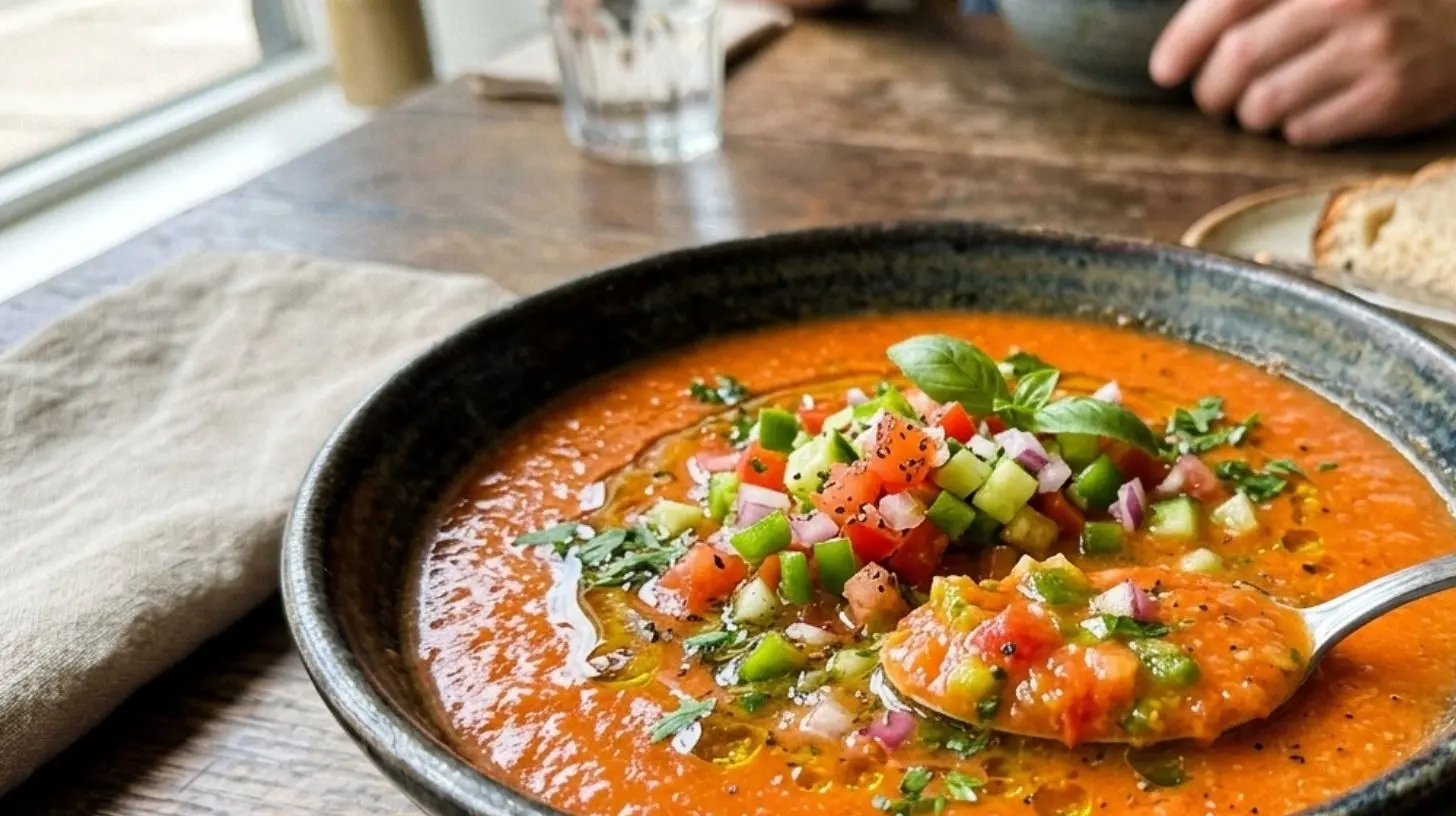
Best Gazpacho (Classic)
Learn how to make the perfect classic Gazpacho in just 3 steps.
Tomatoes
Cucumber
Red bell pepper
Red onion
Garlic
Bread
Olive oil
Red wine vinegar
Chop the tomatoes, cucumber, red bell pepper, and red onion.
Blend the vegetables with garlic, bread, olive oil, and red wine vinegar.
Chill in the fridge for at least an hour before serving.
The Ultimate Guide to Making Authentic Gazpacho Classic: A Chilled Spanish Soup That Will Transform Your Summer Cooking
What if I told you that the world’s most refreshing summer soup requires exactly zero cooking time? That’s the magic of Gazpacho (Classic)—a vibrant, no-cook Andalusian staple that has been cooling down Spanish kitchens for centuries. In an age of complicated culinary trends, this simple yet elegant Gazpacho (Classic) proves that the best recipes often demand the least effort. When you make this Spanish recipe at home, you gain complete control over the ripeness of your tomatoes, the quality of your olive oil, and the balance of acidity—something no store-bought version can replicate. Modern nutrition science backs what grandmothers always knew: raw tomatoes retain more lycopene and vitamin C than cooked ones, making this chilled soup both a pleasure and a powerhouse. Whether you are battling a heatwave or simply craving something light yet deeply satisfying, this classic gazpacho delivers.
Ingredients & Kitchen Tools
Core Ingredients
– Ripe Roma tomatoes (2 lbs) – Choose heavy, deeply red specimens for maximum sweetness and low seed content. Overripe is actually better here.
– English cucumber (1 medium, about 8 oz) – The thin skin and minimal seeds mean less peeling work. If using garden cucumbers, peel and seed them.
– Red bell pepper (1 large) – Adds natural sweetness and that signature vibrant crimson hue. Yellow or orange peppers work but change the color profile.
– Red onion (½ medium) – Provides a gentle bite. Soak diced pieces in cold water for 10 minutes to mellow the sharpness before blending.
– Garlic (1 small clove, or 2 if you love bold flavor) – Raw garlic is potent here, so adjust according to your tolerance. Remove the green germ for milder taste.
– Day-old rustic bread (2 slices, about 3 oz) – Stale bread is traditional; it thickens the soup and adds body. Gluten-free sourdough works if needed.
– Sherry vinegar (2–3 tablespoons) – Non-negotiable for authentic flavor. Red wine vinegar can substitute but will lack the nutty depth.
– Extra-virgin olive oil (½ cup, best quality you can afford) – This is not the place for cheap oil. The fruity, peppery notes define the soup’s character.
– Cold water (½ cup, plus more to adjust texture) – Use filtered water to avoid chlorine flavors.
– Salt (1 teaspoon fine sea salt, plus more to taste) – Season generously; cold temperatures mute salt perception.
Kitchen Tools & Equipment
– High-speed blender – Vitamix or similar yields the silkiest result, but a standard blender works if you blend in batches.
– Fine-mesh strainer or food mill – Optional but recommended if you want that velvety, restaurant-quality texture. If you prefer rustic texture, skip this.
– Large mixing bowl – For combining ingredients before blending.
– Sharp chef’s knife and cutting board – Dull knives crush tomatoes, releasing juice prematurely.
– Wooden spoon or rubber spatula – For folding in olive oil.
– Glass or ceramic storage container – Metal can impart unwanted flavors during chilling.
– Measuring cups and spoons – Precision matters with vinegar and salt, especially since you cannot taste properly until chilled.
Optional Substitutions
– Bread-free version – Replace bread with ¼ cup blanched almonds for a lower-carb, nutty variation.
– Vinegar swap – Use champagne vinegar for a milder acidity or apple cider vinegar for fruity notes.
– Pepper alternative – Fire-roasted red peppers from a jar add smoky complexity; reduce fresh pepper quantity by half.
Prep Time & Cooking Schedule
– Active prep time: 20 minutes
– Resting time after blending: 15 minutes at room temperature for flavors to meld
– Chilling time: Minimum 2 hours (overnight is vastly better)
– Total time until serving: About 2 hours 35 minutes
Planning advice: Make this gazpacho the day before you plan to serve it. The flavors deepen dramatically overnight as the garlic mellows, the bread absorbs the tomato juice, and the olive oil integrates into a creamy emulsion. Unlike cooked soups where flavors marry during simmering, this cold soup develops character during a long, quiet rest in the refrigerator. I recommend starting early in the morning for dinner service, or making it at lunch for a next-day treat.
Step-by-Step Instructions
Step 1: Prepare your vegetables. Core the tomatoes and roughly chop them into 2-inch chunks—no need to peel. Seed and dice the cucumber (peel first if using waxy commercial varieties). Remove the stem, seeds, and white pith from the bell pepper, then chop into coarse pieces. Dice the onion into small chunks to help the blender process evenly.
Step 2: Soak the bread. Tear the stale bread into 1-inch pieces and place in a small bowl. Pour ¼ cup of cold water over the bread and let it sit for 5 minutes until completely softened. Squeeze out excess water gently, but do not wring it dry—the absorbed moisture helps emulsify the soup.
Step 3: Blend the base. In your blender, combine the tomatoes, cucumber, bell pepper, onion, garlic clove, and soaked bread. Pulse 5–6 times to break down the chunky vegetables, then blend on medium speed for 30 seconds. You are looking for a rough puree at this stage—the emulsification comes next.
Step 4: Emulsify with olive oil. With the blender running on low speed, slowly drizzle in the extra-virgin olive oil through the top opening. This should take about 20 seconds. The oil will transform the texture from watery to velvety. Add the sherry vinegar and salt, then blend on high for 45 seconds until completely smooth.
Step 5: Strain (optional but transformative). Pour the blended mixture through a fine-mesh strainer into a large bowl, using a rubber spatula to push the liquid through. You will be left with about 1 cup of dry pulp—discard it. This step removes the tomato seeds and tough pepper skins that can create a bitter, gritty texture. If you prefer a heartier, more rustic Spanish recipe, skip the straining entirely.
Step 6: Adjust and chill. Stir in ½ cup of cold water to reach your desired consistency. Taste a small spoonful—but remember that cold dulls saltiness, so the soup should taste slightly saltier and more acidic than you want at room temperature. Cover tightly and refrigerate for at least 2 hours. This is where you balance the acidity with the sweetness of the tomatoes, and the gazpacho reveals its true character. Before serving, whisk vigorously or shake in a sealed jar to re-emulsify any separated oil.
Nutritional Benefits & Advantages
Gazpacho classic is a nutritional paradox: it feels indulgent thanks to the generous olive oil, yet it is one of the most micronutrient-dense soups you can eat. A standard 1-cup serving delivers approximately 150 calories, 10 grams of heart-healthy monounsaturated fat, 3 grams of fiber, and only 4 grams of sugar—most of which comes naturally from the vegetables rather than added sweeteners.
Tomatoes are the star: one serving provides 30% of your daily vitamin C needs and a significant dose of lycopene, an antioxidant linked to reduced risk of prostate cancer and cardiovascular disease. Cooking typically destroys lycopene’s bioavailability, but here you consume it raw, retaining its full power. Cucumbers contribute silica for skin health and hydration—they are 96% water by weight. Red bell peppers pack more vitamin C than oranges (by weight) and contain capsaicin-like compounds that may boost metabolism. The extra-virgin olive oil is crucial not just for flavor but for absorption: the fat-soluble carotenoids in the tomatoes become 4–5 times more absorbable when consumed with healthy fats. Garlic offers allicin, a compound with antimicrobial and anti-inflammatory properties.
For anyone following plant-based, gluten-free (if bread is omitted), or low-calorie diets, this soup fits beautifully. It is naturally vegan, dairy-free, and can be made low-FODMAP by omitting garlic and onion.
Tips Variations & Cooking Advice
Flavor Variations
– Spicy Andalusian – Add ½ seeded jalapeño or serrano pepper to the blender, and finish with a dash of smoked paprika before serving.
– Green gazpacho – Replace red bell pepper with green bell pepper, add a handful of fresh cilantro and mint, and swap sherry vinegar for white wine vinegar. The color shift is stunning.
– Berry twist – Add ½ cup of ripe strawberries to the blender. The sweetness and acidity complement the tomatoes beautifully, and the color deepens to a rich ruby.
Texture Adjustments
– For a thicker texture – Reduce the water to 2 tablespoons and add an extra slice of bread. Let the gazpacho rest 30 minutes before serving to allow the bread to fully absorb liquid.
– For a thinner, soupier version – Increase water to 1 cup and skip the bread entirely. This yields a lighter sipping-style soup perfect for hot days.
Dietary Adaptations
– Gluten-free – Use gluten-free sourdough or omit the bread entirely (add ¼ cup peeled almonds for body).
– Low-sodium – Use potassium chloride (Nu-Salt) and increase the vinegar slightly to compensate for missing salt.
– Low-fat – Reduce olive oil to 2 tablespoons and add an extra cucumber for moisture. The texture will be thinner but still refreshing.
Chef’s Advice
– Temperature control is everything – Serve gazpacho in chilled bowls. Place your bowls in the freezer for 10 minutes before plating. The temperature contrast between the cold bowl and summer heat is half the experience.
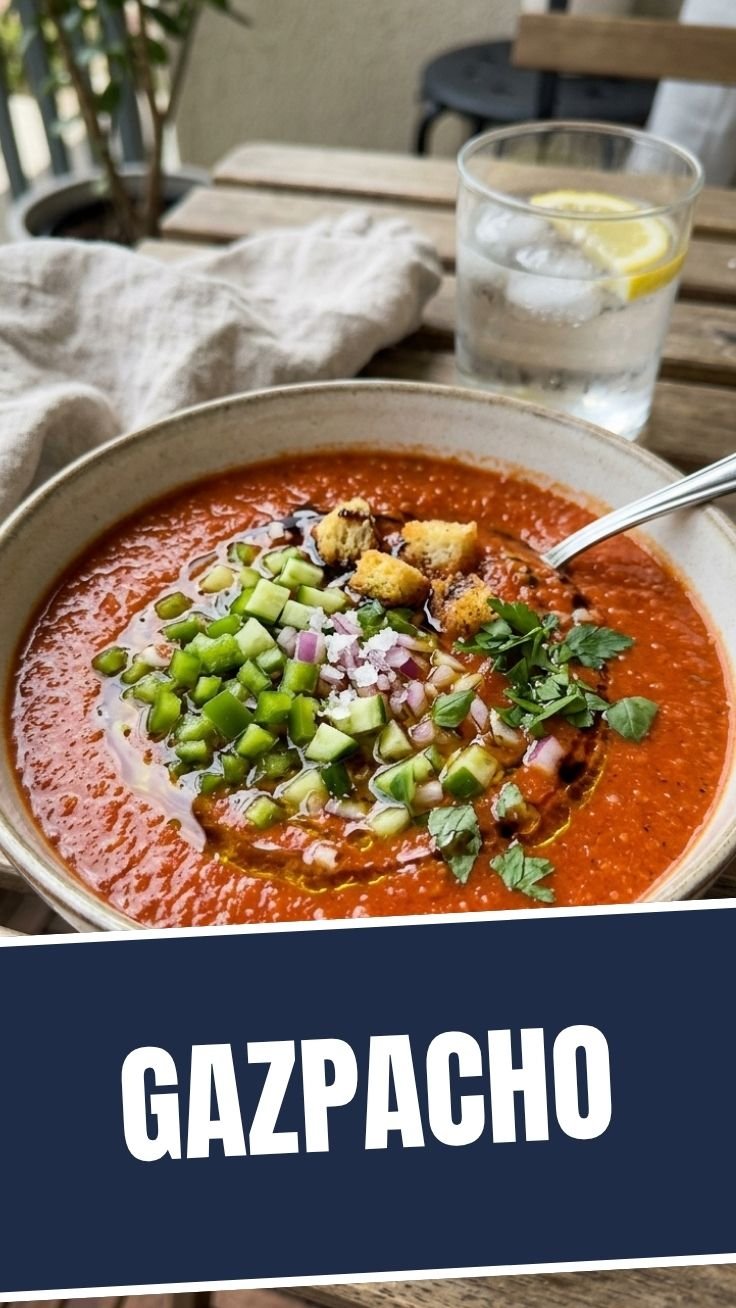
– Garnish thoughtfully – Diced cucumber, croutons, a drizzle of good olive oil, and fresh micro-basil transform the visual appeal. Never serve plain gazpacho without some textural contrast.
– Seasoning shift – Because cold numbs your palate, you may need 25–30% more salt and acid than you think. Always adjust seasoning after chilling, not before.
Common Mistakes to Avoid
1. Using unripe tomatoes – Pale, hard, out-of-season tomatoes produce astringent, watery gazpacho. If tomatoes are not in peak summer season, supplement with 2 tablespoons of tomato paste to boost umami depth.
2. Over-blending the oil – If you blend olive oil at high speed for more than 60 seconds, you risk emulsifying it too aggressively, resulting in a mayonnaise-like texture that is thick and cloying. Drizzle slowly and blend only until smooth.
3. Skipping the salt rest – Salt draws water from the vegetables, affecting the final consistency. If you do not let the soup rest before serving, the flavors will seem muted and the texture watery.
4. Using extra-virgin olive oil that is too grassy or bitter – Some high-end oils are wonderful on salads but overwhelm the delicate tomato flavor in gazpacho. Choose a medium-intensity oil with notes of almond or apple rather than an aggressive, peppery Tuscan style.
5. Forgetting to re-emulsify – After chilling, the olive oil will separate and float to the top. Always whisk vigorously or shake the container before serving to restore the creamy emulsion.
6. Serving too cold – Gazpacho that is straight from the refrigerator (below 40°F) will have muted flavors. Let it sit at room temperature for 15 minutes before serving to bring the temperature to about 50–55°F, where the flavors sing.
Storage & Meal Prep Tips
Refrigeration: Store gazpacho in an airtight glass container in the refrigerator for up to 4 days. Glass is preferable because plastic can absorb the vinegar and garlic odors, and metal can impart a metallic taste. The soup actually improves significantly after 24 hours as the flavors meld, but after day three, the garlic becomes overpowering and the vegetables start losing vibrancy.
Freezing: Gazpacho freezes surprisingly well for a raw soup, but with one caveat: the texture changes. The olive oil can become slightly grainy after thawing, and the vegetables lose their crisp freshness. If you must freeze, omit the oil and bread, freeze the vegetable puree in portion-sized containers, then blend in fresh oil and bread after thawing. Frozen gazpacho lasts up to 3 months.
Reheating (or rather, re-chilling): Never reheat gazpacho. If it seems too thick after refrigeration, stir in 1–2 tablespoons of ice-cold water or cucumber juice to loosen it. If it tastes dull, add a splash of sherry vinegar and a pinch of salt to revive it.
Meal prep containers: Portion into 8-ounce mason jars for grab-and-go lunches. Leave ½ inch of headspace, and pack a small bag of croutons and diced cucumber separately to add just before eating. The soup will stay fresh for 2–3 days in jars.
Key Takeaways & Inspiration
This Gazpacho (Classic) represents everything wonderful about summer cooking: zero heat, maximal flavor, and a deep connection to traditional Spanish recipe techniques. You have learned that the secret lies not in complicated methods but in ingredient selection—riotously ripe tomatoes, bold olive oil, and a patient chill that allows the flavors to harmonize. The nutritional payoff is substantial: a soup that hydrates, nourishes, and protects your cells, all while delighting your taste buds. I encourage you to make a batch this weekend, serve it to friends at a summer gathering, and watch their surprise when they realize this silky, savory soup requires absolutely no cooking. Share your results in the comments below, and tell us which variation you tried—or better yet, experiment and create your own signature version of this gazpacho. Your summer will never taste the same.
Frequently Asked Questions
1. Can I make gazpacho without a blender?
Yes, but it requires significant elbow grease. Finely dice all vegetables (mince them as small as possible), crush the garlic into a paste with salt using a mortar and pestle, and whisk in the olive oil by hand. Pass everything through a food mill or fine strainer to achieve the desired consistency. Expect a chunkier texture—this is actually how gazpacho was made before blenders existed.
2. Why is my gazpacho bitter, and how can I fix it?
Bitterness usually comes from three sources: over-blending the olive oil (blend it only until emulsified), using bell pepper seeds or white pith (remove them carefully), or adding too much garlic (one small clove is the max for a standard batch). To fix a bitter batch, add a pinch of sugar, a tablespoon of additional sherry vinegar (acidity balances bitterness), or ½ cup of peeled, diced cucumber to dilute the bitter compounds.
3. What is the ideal consistency for gazpacho?
Traditional Andalusian gazpacho should be slightly thicker than heavy cream but thinner than a smoothie. When you tilt the bowl, the soup should coat the back of a spoon but not cling to it. If it is too thick, add cold water, ice cubes (which dilute as they melt), or a splash of tomato juice. If too thin, blend in an extra slice of soaked bread or ¼ cup of blanched almonds.
4. Can I use canned tomatoes for off-season gazpacho?
Absolutely, but with adjustments. Use whole peeled San Marzano tomatoes (imported from Italy) and drain them slightly to avoid excess juice from the can. Add 1 tablespoon of tomato paste to boost umami, and reduce the vinegar by about ½ tablespoon because canned tomatoes are often more acidic. The texture will be slightly different—less fresh, more uniform—but still delicious. Some chefs prefer canned tomatoes in winter because they are consistently better than hothouse tomatoes.
5. How long does homemade gazpacho last in the refrigerator?
Properly stored in an airtight glass container, homemade gazpacho stays fresh for 3 to 4 days. The flavor actually peaks around day 2 as the garlic and vinegar integrate fully. By day 5, the garlic becomes potentially harsh, and the vegetables begin to lose their bright flavor. If you notice any off odor, separation that does not re-emulsify, or a sour taste beyond the expected vinegar tang (a sign of fermentation), discard immediately.
Best way to grow the perfect Gazpacho (Classic) in 3 stepsGazpacho (Classic)
Equipment
- Blender
- Knife
- Cutting board
Ingredients
Main Ingredients
- 1 kg ripe tomatoes
- 1 cucumber
- 0.5 green bell pepper
- 0.25 red onion
- 1 garlic clove
- 50 g stale bread crusts removed
- 60 ml extra virgin olive oil
- 2 tbsp red wine vinegar
- 100 ml cold water
- salt to taste
- black pepper to taste
Instructions
Preparation
- Roughly chop the tomatoes, cucumber, bell pepper, red onion, and garlic. Tear the stale bread into small pieces.
Blending
- Combine all chopped vegetables, bread, olive oil, red wine vinegar, and cold water in a blender. Blend until completely smooth.
Seasoning and Chilling
- Season the gazpacho with salt and pepper to taste, then chill for at least 1 hour before serving to allow the flavors to meld.