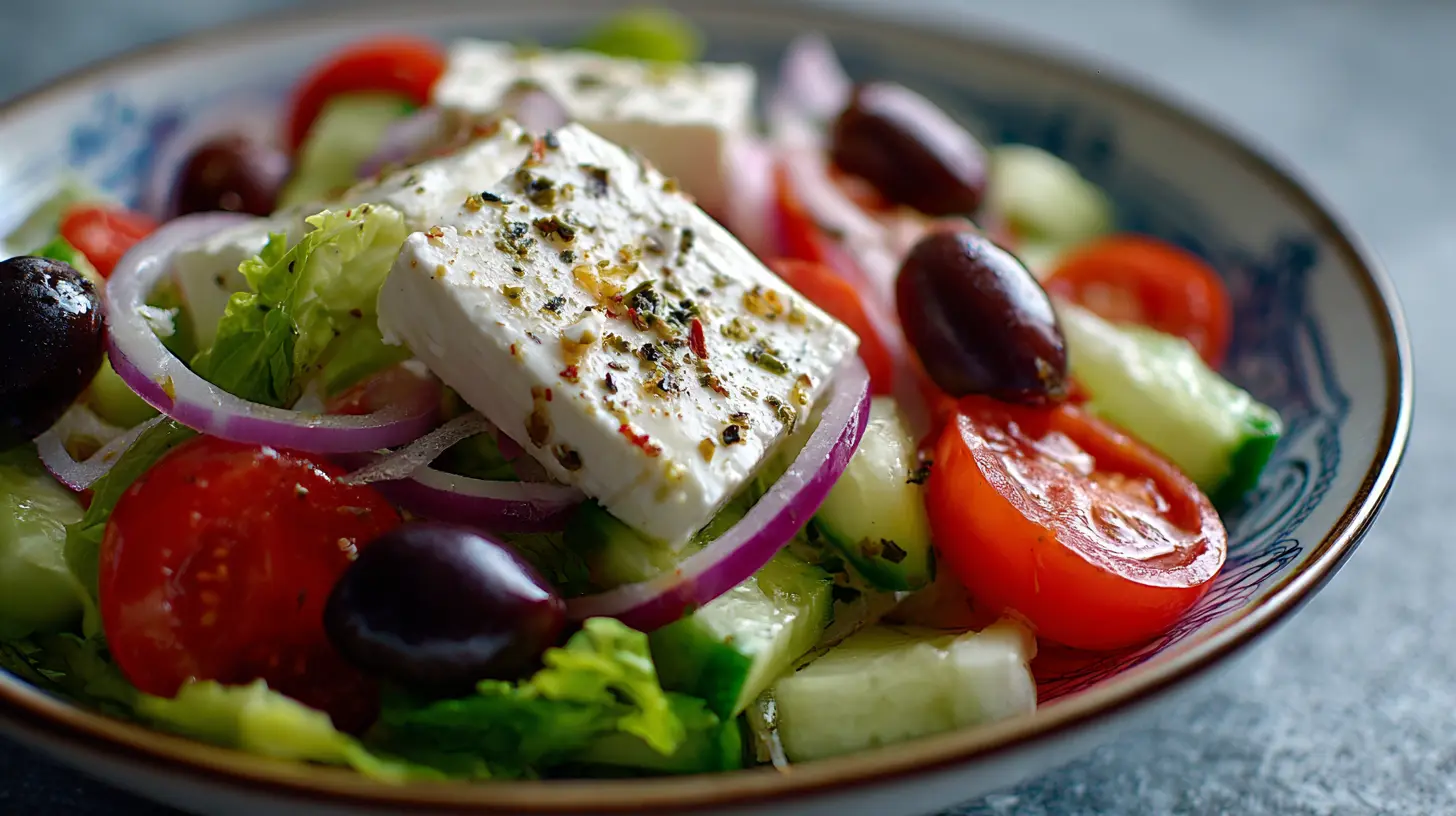
Best way to grow a classic Greek Salad in 5 steps
Learn how to make a tasty Greek salad with fresh ingredients.
Tomatoes
Cucumbers
Red Onion
Feta Cheese
Olives
Dice the tomatoes and cucumbers.
Slice the red onion thinly.
Crumble the feta cheese.
Pit and slice the olives.
Mix all the ingredients in a bowl and toss with olive oil and vinegar.
How to Make the Perfect Maroulosalata: Authentic Greek Lettuce Salad
Have you ever tried a truly authentic Greek Salad that transports your taste buds straight to the islands of Greece? Maroulosalata, a traditional Greek lettuce salad, is a refreshing dish that perfectly captures the essence of the Mediterranean diet. Unlike the Americanized Greek salad most people know, this authentic version focuses on crisp romaine lettuce, fresh herbs, and a simple yet flavorful dressing. Preparing this Greek Salad at home allows you to experience genuine Greek flavors while incorporating the health benefits of the Mediterranean diet into your meal routine.
Ingredients & Kitchen Tools
For the Salad:
– 2 large heads of romaine lettuce (washed and chopped) – Use the crisp inner leaves for best results
– 1 cup fresh dill (finely chopped) – Provides distinctive flavor, can substitute with half the amount of dried dill if necessary
– ½ cup fresh mint leaves (chopped) – Adds brightness, optional but recommended
– 4 green onions (thinly sliced) – White and green parts
– 1 cucumber (peeled and diced) – English cucumbers work best for their fewer seeds
– 200g feta cheese (crumbled) – Traditional Greek feta recommended, but any feta works
For the Dressing:
– ½ cup extra virgin olive oil – Use high-quality oil for best flavor
– 3 tablespoons fresh lemon juice – Approximately 1-2 lemons
– 1 teaspoon dried oregano – Greek oregano preferred
– Salt and freshly ground black pepper to taste
Kitchen Tools:
– Large salad bowl
– Small mixing bowl for dressing
– Sharp knife and cutting board
– Salad tongs or servers
– Lemon juicer or reamer
– Measuring cups and spoons
Prep Time & Cooking Schedule
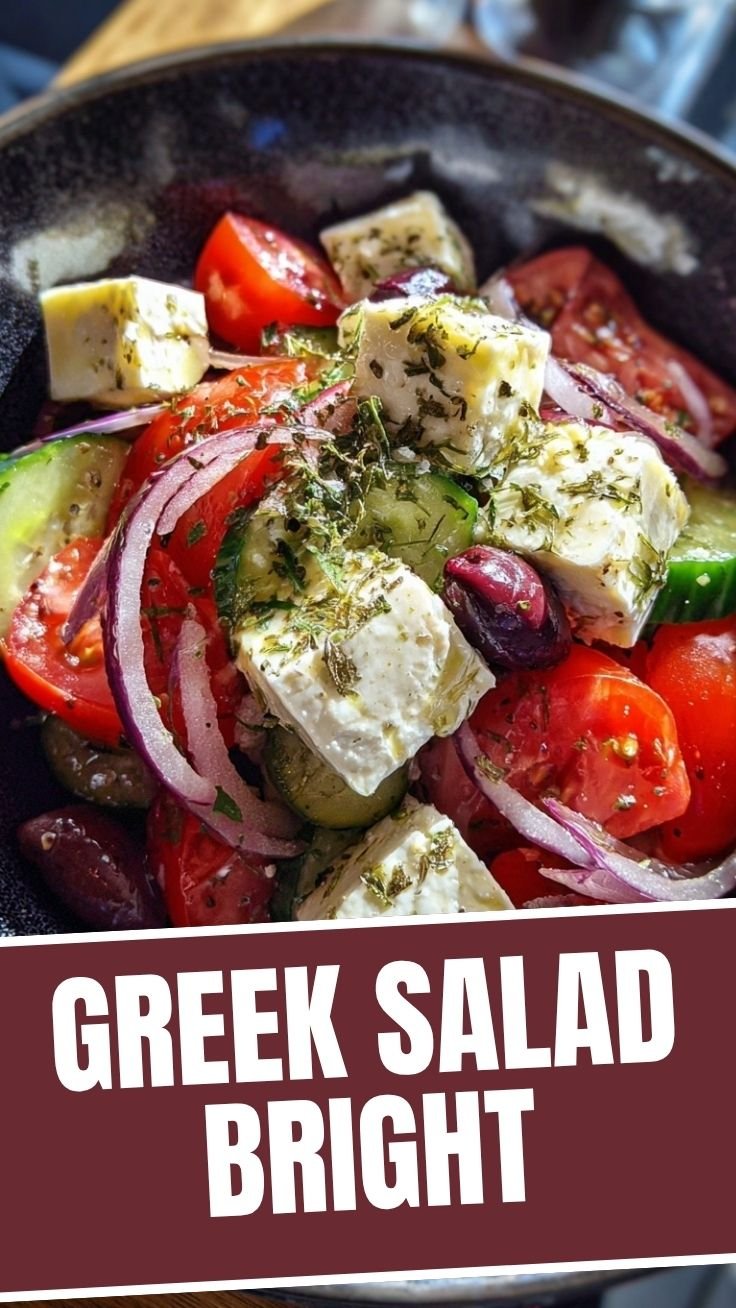
– Prep Time: 15 minutes
– Total Time: 20 minutes (including 5 minutes rest time for flavors to meld)
– Difficulty: Easy
– Servings: 4-6
This salad comes together quickly, making it perfect for weeknight dinners. I recommend preparing it about 5-10 minutes before serving to maintain optimal crispness while still allowing the flavors to mingle slightly.
Step-by-Step Instructions
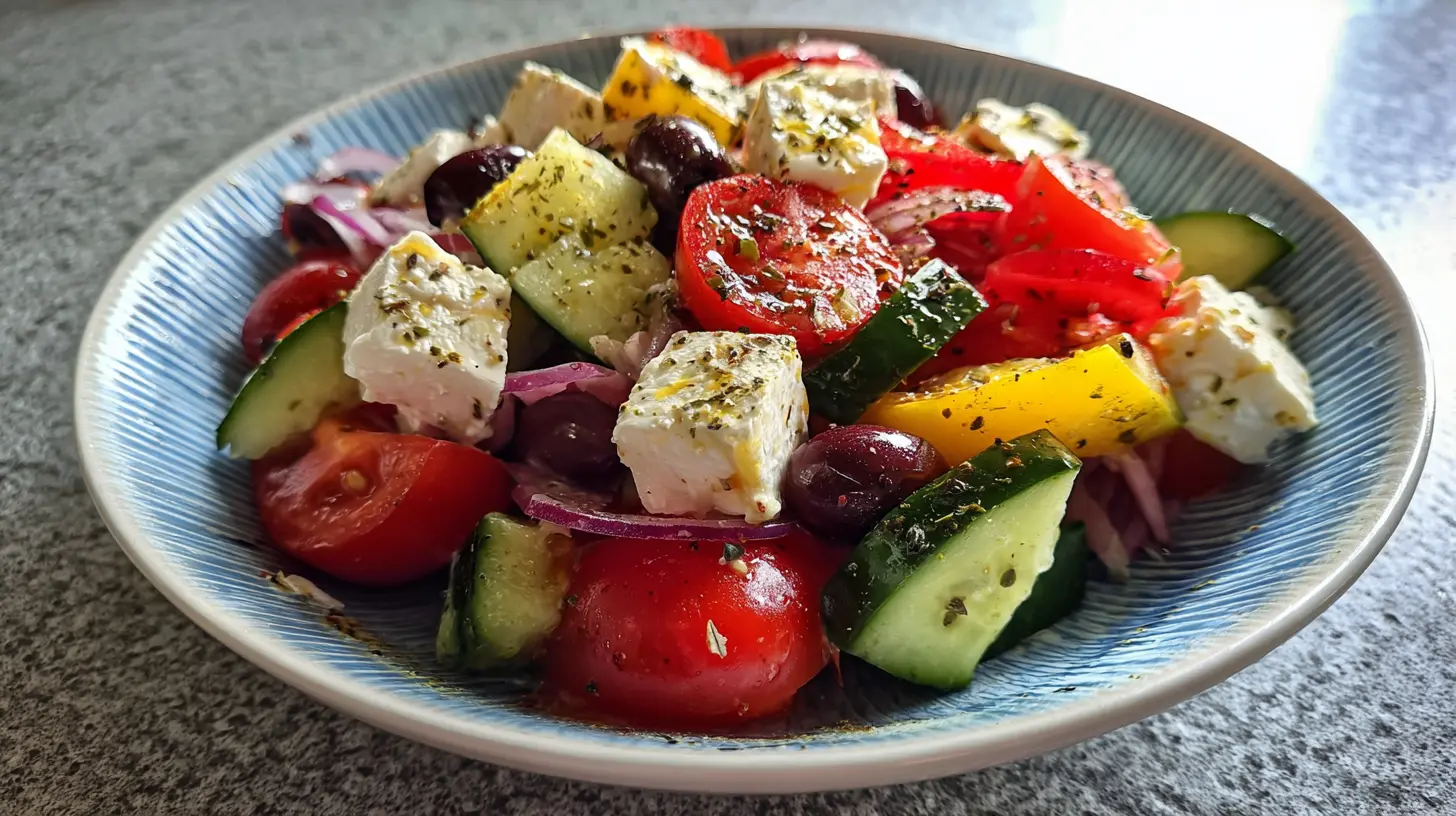
1. Prepare the lettuce: Wash the romaine thoroughly, dry well (a salad spinner works perfectly), and tear or chop into bite-sized pieces. A proper Greek Salad relies on very crisp, dry lettuce.
2. Chop the herbs and vegetables: Finely chop the dill and mint. Slice the green onions thinly. Dice the cucumber into small cubes.
3. Make the dressing: In a small bowl, whisk together the olive oil, lemon juice, oregano, salt, and pepper until emulsified. The tangy dressing is a cornerstone of the Mediterranean diet approach to salads.
4. Assemble the salad: In a large bowl, combine the lettuce, herbs, green onions, and cucumber. Toss gently to mix.
5. Dress and finish: Drizzle about two-thirds of the dressing over the salad and toss gently. Add more dressing as needed. Top with crumbled feta cheese and serve immediately.
Nutritional Benefits & Advantages
Maroulosalata is not just delicious but also incredibly nutritious. The romaine lettuce provides vitamin K, folate, and fiber. Fresh herbs like dill and mint add antioxidants and essential oils with anti-inflammatory properties. The olive oil delivers heart-healthy monounsaturated fats, while feta offers calcium and protein. This combination makes the salad a nutrient-dense meal component that supports heart health, digestion, and overall wellness.
Tips, Variations & Cooking Advice
– Herb variations: Try adding parsley or oregano for different flavor profiles
– Make it a meal: Add grilled chicken, shrimp, or chickpeas for protein
– Texture additions: Include toasted pine nuts or walnuts for crunch
– Vegetable options: Add cherry tomatoes, bell peppers, or radishes for more color and nutrients
– Vegan version: Omit the feta or substitute with a plant-based alternative
Common Mistakes to Avoid

1. Not drying the lettuce thoroughly: Wet lettuce dilutes the dressing and creates a soggy salad
2. Using pre-crumbled feta: Blocks of feta cheese crumbled fresh have better flavor and texture
3. Over-dressing the salad: Start with less dressing and add more if needed
4. Preparing too far in advance: The lettuce will wilt if dressed too early
5. Skimping on herbs: The abundant fresh herbs are what make this salad special
Storage & Meal Prep Tips
This salad is best enjoyed fresh, but you can prepare components ahead of time:
– Store washed, dried lettuce in a sealed container with paper towels for up to 3 days
– Chop herbs and store in airtight containers for 1-2 days
– Make dressing up to 5 days ahead and store refrigerated
– If you have leftover dressed salad, it will keep for about 24 hours but will be less crisp
Conclusion
Maroulosalata represents the beautiful simplicity of authentic Greek Salad tradition – fresh ingredients, balanced flavors, and straightforward preparation. By making this at home, you’re embracing the Mediterranean diet principles of using whole, unprocessed foods rich in nutrients and flavor. Whether served as a side dish or a light main course, this refreshing salad will bring a taste of Greece to your table with minimal effort and maximum enjoyment.
FAQs
Can I make Maroulosalata without fresh herbs?
While fresh herbs provide the best flavor, you can substitute with dried herbs in a pinch. Use 1 tablespoon dried dill instead of fresh, and omit the mint if unavailable.
How can I make this salad more filling?
Add protein sources like grilled chicken, hard-boiled eggs, or chickpeas to transform it into a complete meal. You can also serve it with a side of whole grain bread.
Is this salad keto-friendly?
Yes, this salad is relatively low in carbohydrates and fits well with a ketogenic diet, especially if you moderate the amount of onions.
Can I use a different type of lettuce?
While romaine is traditional, you can substitute with green leaf lettuce or a mix of crisp lettuces. Avoid butter lettuce, which is too soft for this preparation.
What can I use instead of feta for a dairy-free version?
For a dairy-free alternative, try using avocado chunks for creaminess or olives for saltiness, or look for plant-based feta alternatives made from nuts or tofu.
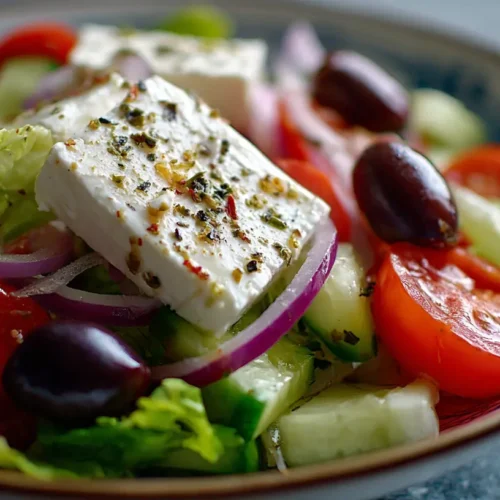
Best way to grow a classic Greek Salad in 5 stepsGreek Salad
Equipment
- Large salad bowl
- Cutting board
- Knife
- Small bowl
- Whisk
Ingredients
Vegetables
- 2 cups Tomatoes (e.g., Roma, cherry)
- 1 large Cucumbers (e.g., English, Persian)
- 0.5 medium Red Onion
- 1 large Bell Peppers (green or red)
Other Ingredients
- 0.5 cup Kalamata Olives
- 4 oz Feta Cheese block or crumbled
Dressing
- 0.25 cup Extra Virgin Olive Oil
- 2 tbsp Red Wine Vinegar
- 1 tsp Dried Oregano
- 0.5 tsp Salt or to taste
- 0.25 tsp Black Pepper freshly ground, or to taste
Instructions
Preparation
- Wash and chop all vegetables. For tomatoes, cut into wedges or halve if cherry tomatoes. Slice cucumbers and bell peppers into bite-sized pieces. Thinly slice the red onion.
- Combine all chopped vegetables, Kalamata olives, and feta cheese in a large salad bowl. If using a block of feta break it into large pieces or crumble it over the salad.
- In a small bowl, whisk together the olive oil, red wine vinegar, dried oregano, salt, and black pepper to create the dressing.
- Pour the dressing over the salad ingredients and gently toss to ensure everything is evenly coated.
- Serve immediately as a refreshing side or light meal. For best flavor, allow the salad to sit for 10-15 minutes before serving.